
Sunroom Renovation: Bring the Outdoors Inside
Create a bright and inviting sunroom with proper glazing, comfortable furniture, and year-round usability tips.
RoomRenovation.AI Team
Updated March 24, 2026
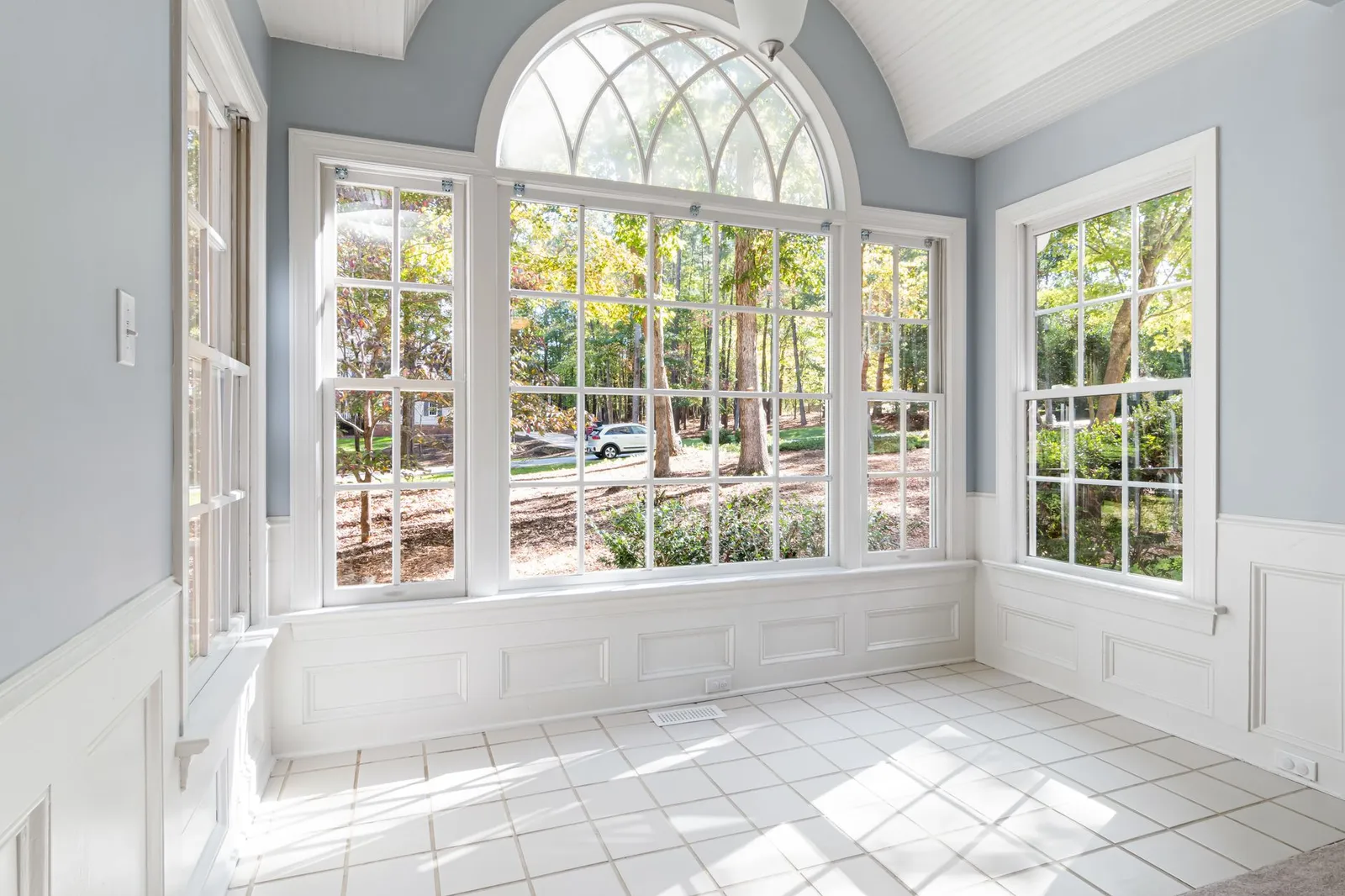
A sunroom renovation offers something almost no other home improvement project can match: the experience of outdoor living — natural light, a view of the garden, a connection to the seasons — in a space that's genuinely comfortable year-round. Whether you're converting an existing enclosed porch, upgrading a dated three-season room, or adding new glazing to a concrete slab, the design decisions that determine a sunroom's success are specific and consequential. Get them right, and this becomes the most-used room in the house.
Defining Your Sunroom's Primary Function
Before selecting glazing systems, furniture, or flooring, define how the room will be used, because that brief determines almost every other decision. A sunroom used primarily for morning coffee and reading has different requirements than one that functions as a dining extension, a home office with a view, or a plant conservatory. Sunrooms that try to serve too many roles without adequate square footage end up serving none of them well. A 200-square-foot sunroom can be a perfect reading room or a comfortable dining area for four — but probably not both simultaneously.
Glazing: The Most Important Sunroom Decision
Understanding Glass Performance Ratings
Sunroom glazing quality determines the room's thermal comfort, energy efficiency, and usability range. The key metrics to understand:
- U-factor: Measures insulation value. Lower is better (more insulating). A U-factor of 0.30 or below is good; triple-pane glass achieves 0.15–0.20.
- Solar Heat Gain Coefficient (SHGC): Measures how much solar heat passes through. In cold climates, a higher SHGC (0.40+) helps warm the room passively; in hot climates, lower is better to prevent overheating.
- Low-E coating: A thin metallic coating that blocks UV and infrared radiation while allowing visible light through. Essential for protecting furniture and flooring from fading and for controlling seasonal heat gain.
Three-Season vs. Four-Season
A three-season sunroom uses single-pane or basic double-pane glass, is typically unheated, and is comfortable in spring, summer, and fall in most climates. Cost is significantly lower ($10,000–$30,000 for a prefabricated three-season addition). A four-season sunroom uses insulated double- or triple-pane glazing, has its own HVAC connection, and is usable year-round in all but the most extreme climates. Cost is higher ($25,000–$80,000+) but the room is genuinely livable for 12 months rather than eight.
Flooring for Sunrooms
Sunroom flooring must handle thermal cycling (expansion and contraction as temperature changes), high UV exposure, and often a direct transition from the outdoors. The best options:
Porcelain or Ceramic Tile
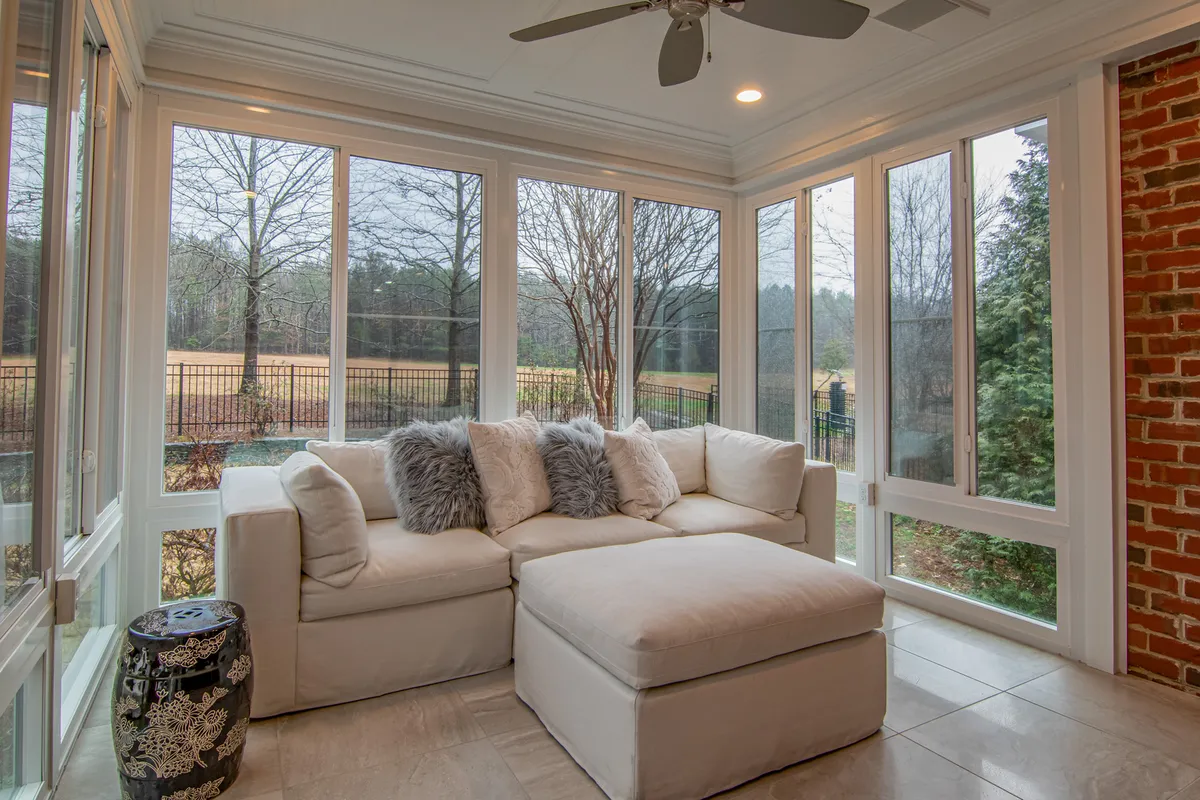
The most practical sunroom floor material: dimensionally stable, UV-resistant, easily cleaned, and available in a wide range of looks. Wood-look porcelain tile gives the warmth of a natural wood floor without the warping risk. Large-format tiles (24×24 or larger) reduce grout lines and make the room feel more expansive. Heated floor mats under tile ($300–$600 for a small sunroom) dramatically improve four-season comfort.
Luxury Vinyl Plank
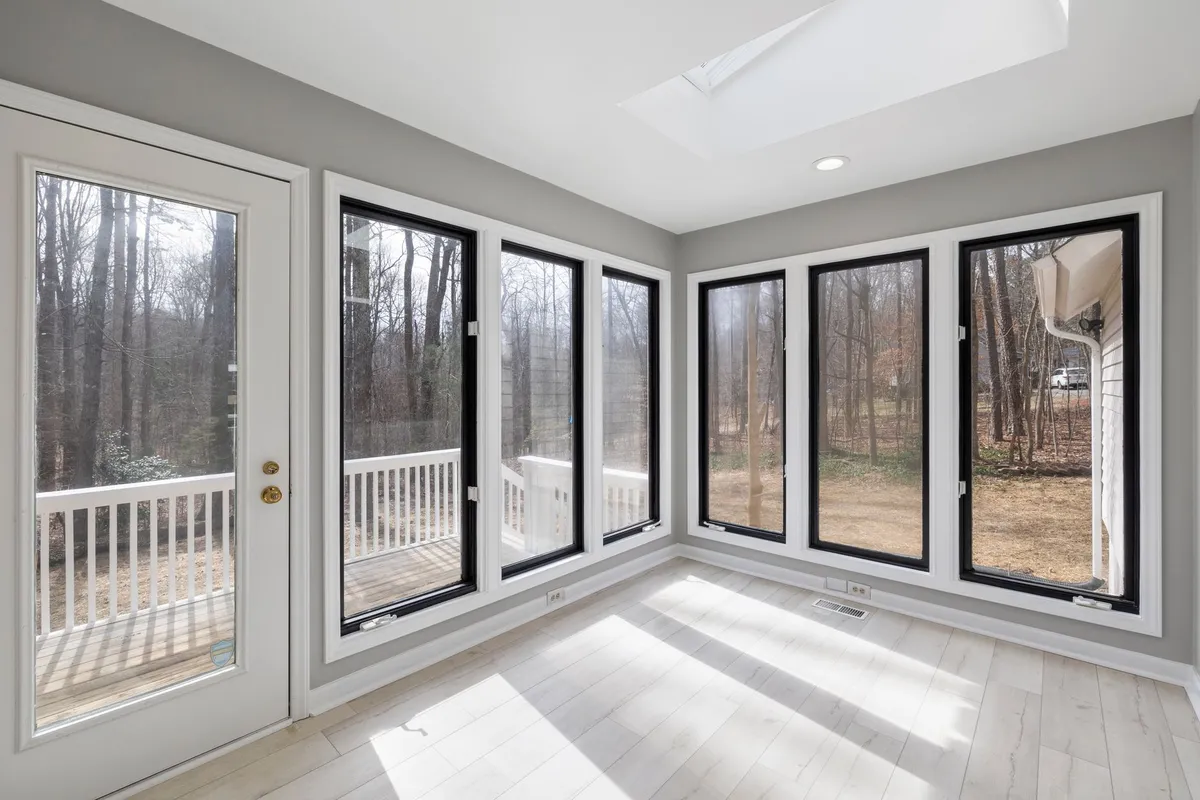
LVP handles thermal variation better than real hardwood, is waterproof (useful when wet shoes or pets track in from outside), and installs easily over existing concrete slabs. Look for LVP rated for high-UV environments; some standard LVP products can fade or yellow with extended direct sun exposure.
Polished or Stamped Concrete
Existing concrete slabs can be polished, stained, or stamped to create finished floors at lower cost than new material installation. Radiant floor heating integrated under or into a concrete slab is the most efficient heating method for a four-season sunroom and creates exceptional comfort underfoot in winter months.
Furniture Selection for Year-Round Comfort
Sunroom furniture faces conditions that indoor furniture is not designed for: UV exposure that fades upholstery, humidity swings that stress wood joinery, and occasional temperature extremes in inadequately insulated rooms. The most practical choices:
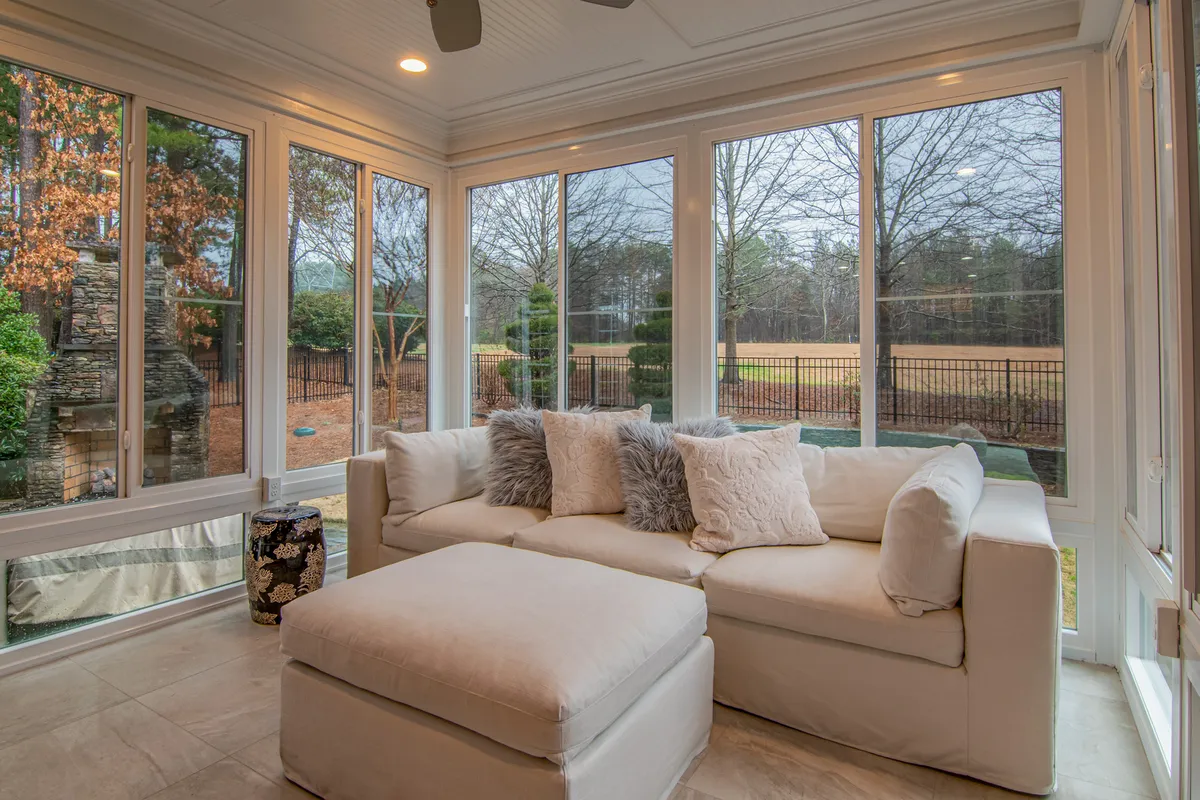
- Solution-dyed acrylic fabric: Brands like Sunbrella use fabric where color is embedded in the fiber rather than applied to the surface. It resists fading, cleans with soap and water, and is rated for genuine outdoor use. Most high-quality sunroom furniture uses this fabric.
- Wicker or rattan over solid wood: Woven natural fiber furniture is traditional in sunrooms and works well, but natural rattan requires indoor conditions. Synthetic resin wicker (often called all-weather wicker) provides the same look with resistance to humidity and UV.
- Powder-coated aluminum frames: Lighter than wrought iron, corrosion-resistant, and structurally sound. The most common frame material for high-quality sunroom furniture in 2026.
Heating and Cooling Strategies
Even a well-insulated four-season sunroom benefits from a dedicated heating and cooling solution rather than relying on the home's central HVAC to extend to the addition. A mini-split heat pump ($1,500–$3,500 for unit and installation) is the most efficient solution for a sunroom: it provides both heating and cooling, doesn't require ductwork, and can be zoned independently so you only condition the sunroom when it's in use. For three-season rooms, a space heater for shoulder-season use ($50–$200) and a ceiling fan for summer ventilation ($150–$400) are sufficient.
Bringing the Outdoors In: Plants and Biophilic Design
A sunroom is the ideal environment for a serious indoor plant collection. The combination of high light levels and controlled temperature creates conditions where many plants that struggle indoors will thrive. Design considerations for a plant-integrated sunroom:
- Drainage management: A waterproof floor with a floor drain or careful placement of drip trays prevents water damage from regular plant watering.
- Watering access: A small utility sink or a recessed hose bib makes plant care practical rather than an exercise in hauling watering cans through the house.
- Tiered plant staging: Stepped metal plant stands, hanging planters from the glazing structure, and floor-level statement plants in large ceramic pots create multiple visual layers that make the room feel like a genuine transition between interior and garden.
- Light-loving species: Citrus trees, jasmine, plumeria, and tropical succulents thrive in the conditions a sunroom provides. A Meyer lemon tree in the corner of a sunroom is one of the most reliably delightful design elements in residential interiors.
Privacy and Light Control
Full-glazed rooms have obvious advantages for light — and obvious challenges for privacy and temperature control. Solutions:
- Cellular shades: The most energy-efficient window treatment for sunrooms. Honeycomb construction traps air in each cell, providing insulation value. Top-down/bottom-up operation allows privacy at eye level while maintaining a view above.
- Solar shades: Mesh fabric shades that block UV and reduce glare without fully blocking the view or light. Available in openness factors from 1% (near-blackout) to 14% (light filter with minimal view block).
- Exterior shading: Overhangs, pergola attachments, or exterior roller shades address heat gain at the source (before glass absorption) rather than managing it after it enters the room.
Visualizing a Sunroom Renovation Before You Build
Sunroom renovations involve a higher level of financial commitment than most interior upgrades — typically $15,000–$60,000 for a meaningful four-season room. That scale justifies careful visualization before finalizing design decisions. RoomRenovation.ai lets you upload a photo of your existing sunroom or the space you plan to convert, and preview furniture arrangements, flooring choices, and style treatments with photorealistic AI renders in your actual space. See how a tile floor with a wicker seating arrangement compares to a wood-look LVP with a more formal setup — in your specific room, with your specific light conditions. Try a free render to explore the options before committing.
Budget Ranges for Sunroom Renovation in 2026
- Three-season room refresh ($3,000–$8,000): Updated furniture, new flooring, better window treatments, and improved ceiling fan. No glazing changes.
- Three-season room addition ($10,000–$30,000): Prefabricated kit or site-built three-season sunroom on an existing patio or deck foundation.
- Four-season room addition ($25,000–$80,000+): Insulated construction, proper foundations, HVAC connection, electrical, and high-performance glazing. Treated as a full addition rather than a porch enclosure.
FAQ
What is the difference between a sunroom and a conservatory? The terms are used interchangeably in the U.S. but technically differ: a conservatory has a full glass roof, while a sunroom typically has a solid insulated roof with glass or glazed walls. Conservatories are more expensive, require more careful thermal management, and are more popular in the UK design tradition. Sunrooms with solid roofs are more practical for most American climates.
Can I add a sunroom to any house? Most houses can accommodate a sunroom addition, but site-specific factors — foundation conditions, local building codes, utility locations, and HOA rules — all affect what's possible and at what cost. A design-build contractor specializing in sunrooms can assess your specific site for $0–$500 in most markets.
How do I prevent a sunroom from overheating in summer? Low-E glazing reduces solar heat gain passively. Exterior shading (overhangs, exterior shades, or pergola) addresses heat before it enters the glass. A mini-split or ceiling fan moves air. And thermal mass — tile or concrete floors — moderates temperature swings by absorbing heat during the day and releasing it in the evening.
What furniture should I avoid in a sunroom? Avoid solid wood furniture in three-season rooms with temperature swings — the wood expansion and contraction will eventually open joints and damage finish. Avoid fabric upholstery without UV protection (untreated cottons, polyesters, and linens fade quickly under direct sun). And avoid furniture that's purely decorative and not comfortable to actually sit in for hours — sunrooms succeed when they're genuinely lived in.
Does adding a sunroom increase home value? A well-built four-season sunroom typically recoups 50–80% of its cost in home resale value, based on national averages. Three-season rooms recover a lower percentage but add strong appeal to buyers in markets where outdoor living is prioritized. A sunroom adds more value than a similar addition of finished basement space in most markets.