
Garage Renovation Ideas: From Storage Space to Livable Square Footage
Garage renovation and conversion ideas. Transform your garage into a home office, gym, guest suite, or entertainment space with AI visualization.
RoomRenovation.AI Team
Updated March 22, 2026

A garage is often the most underutilized square footage in a home—a space that houses old bikes, off-season decorations, and cardboard boxes instead of being the room you actually need. Garage renovation and conversion projects consistently rank among the highest-ROI home improvements, transforming dead storage into livable, functional space that adds real value to a home and quality of life to the people in it.
What Can a Garage Become?
Before settling on a conversion concept, understand the range of possibilities. The right conversion for your garage depends on your household's actual needs, the garage's existing dimensions, your local building codes, and whether you're optimizing for resale value or personal use.
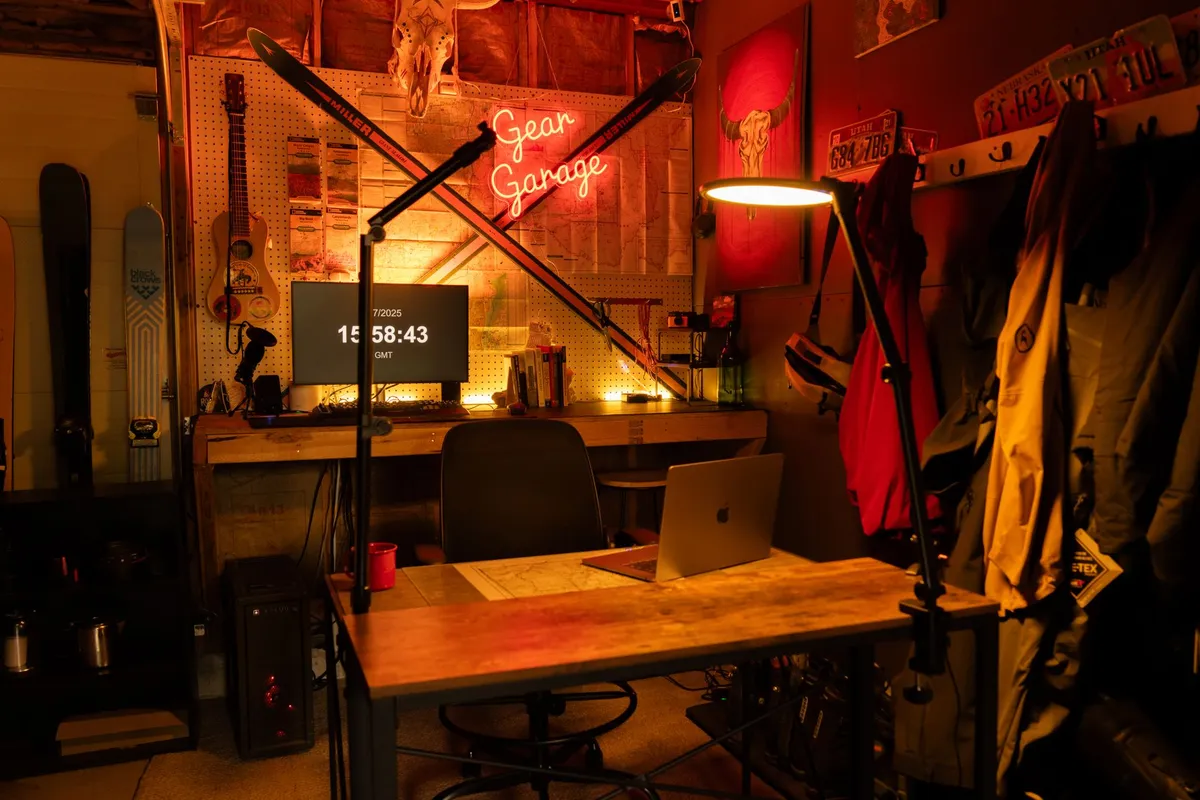
Home Office or Studio
The demand for dedicated home office space that's physically separated from the main living area has driven more garage conversions in the 2020s than any other category. A two-car garage (typically 20'×20' or 400 sq ft) provides enough room for a large office with a dedicated video call background, storage for equipment, and a daybed or sofa for occasional break time. Single-car garages (10'×20', 200 sq ft) work as focused single-desk studios.
Key requirements: insulation, HVAC extension or mini-split installation, electrical upgrades for computer and lighting loads, and appropriate internet cabling. A good internet connection is non-negotiable for most home office conversions and should be planned in the structural phase before drywalling.
Home Gym
A garage gym may be the highest-ROI personal use conversion available. A two-car garage comfortably holds a power rack, cardio equipment, free weights, and a stretching area without the crowding that makes home gyms feel claustrophobic. Flooring is critical: rubber gym flooring ($1.50–$3/sq ft installed) protects both the concrete slab and your equipment from impact.
Ventilation matters more in a gym than in any other conversion: a mini-split system with cooling capacity handles the heat load from both people and equipment. High ceilings help—standard 8-foot garage ceilings are functional but 10+ feet allow for overhead movements and feel less enclosed during intense workouts.
Guest Suite or Accessory Dwelling Unit (ADU)
Converting a garage to a legal ADU—with a bathroom, sleeping area, and kitchenette—is the highest-complexity and highest-value conversion type. ADU legality varies dramatically by municipality: many California, Oregon, and Colorado cities actively encourage ADU creation with simplified permitting; other markets have restrictive zoning that makes full ADU conversion difficult or impossible. Check with your local planning department before budgeting for an ADU conversion.
Legal ADUs can generate rental income or provide housing for family members, and in markets where ADUs are permitted they've driven the largest single-project property value increases of any renovation category.
Entertainment Room or Home Theater
Garages make excellent entertainment spaces because they're typically separated from bedroom areas by at least one wall, reducing the sound transmission that makes basement or first-floor media rooms problematic. The separation is especially valuable for home theater applications where bass-heavy audio would otherwise penetrate sleeping areas.
Garage Conversion Costs: Realistic 2026 Ranges
Basic Conversion (Insulation, Drywall, Flooring, Lighting)
A minimal conversion that makes a garage habitable—insulated walls, drywall, new flooring (LVP or concrete coating), and basic lighting—runs $8,000–$18,000 for a standard two-car garage. This budget doesn't include HVAC, significant electrical work, or a bathroom addition.
Full Home Office or Gym Conversion
Adding a mini-split system ($3,000–$6,000 installed), electrical panel upgrade if needed ($1,500–$3,000), internet cabling, and appropriate floor treatment brings a functional home office or gym conversion to $15,000–$30,000 for a two-car garage. Single-car garages run $8,000–$18,000 for the same scope.
ADU Conversion with Bathroom and Kitchen
A full legal ADU with bathroom (plumbing rough-in is the single biggest cost driver at $8,000–$20,000 alone), kitchenette, sleeping area, and separate entrance runs $40,000–$120,000 depending on local labor costs, permit fees, and finish quality. In high-cost markets like the San Francisco Bay Area or Seattle, ADU conversions routinely exceed $150,000 for full builds.
Cost Drivers to Watch
- Existing insulation: None or inadequate insulation adds $3,000–$8,000 for spray foam or batt installation before drywall
- Foundation slab condition: Cracking, settling, or drainage issues must be addressed before any finished floor installation
- Electrical panel capacity: Most garages are served by a subpanel that needs upgrading for habitable use
- Local permit fees: Vary from $500 to $5,000+ depending on jurisdiction and conversion scope
- HVAC system type: Mini-splits (most common for garages) require professional installation at $3,000–$6,000; extending existing HVAC is often more expensive and less effective

Design Considerations for Garage Conversions
Handling the Garage Door Opening
How you address the garage door opening defines the character of the conversion more than almost any other decision. Options range from:
- Retain and insulate the existing door: Lowest cost ($200–$800 for insulation kit), maintains resale flexibility (the space can revert to a garage), but loses significant heat/cool through the door even when insulated
- Replace with a glass garage door: Transforms the space with natural light while maintaining an opening that can be used for ventilation; glass doors run $2,500–$6,000 installed
- Infill with new construction: Remove the door, frame and insulate the wall, add windows and potentially a new door; provides full insulation performance and best long-term energy efficiency; $3,000–$8,000 depending on how much window area is incorporated
Natural Light
Standard garages are poorly lit by natural light. If you're infilling the garage door opening, maximize window area in the new wall section. Side windows in adjacent walls, skylights (if the roof allows), and glass-panel doors all help prevent the conversion from feeling like a converted box.
Ceiling Treatment
Exposed garage ceiling joists and any ductwork create an immediate industrial aesthetic that works for gym or studio conversions but feels raw for office or guest suite uses. Drywall ceiling adds cost and complexity but dramatically improves livability. Painted exposed-beam ceilings are a middle ground that feels intentional in the right style context.
Visualizing Your Garage Conversion Before Starting
Garage conversions involve too many irreversible decisions—window placement, door infill, floor finish selection—to make without strong visual references. The RoomRenovation.AI tool accepts photos of your actual garage interior and renders realistic conversions across different use cases and finish styles.
Take photos of your empty garage from multiple angles, upload them, and test a home office conversion against a gym configuration. See how different ceiling treatments and flooring choices read in your specific space. These renders can be shared directly with contractors as visual references for the work you want done. Browse completed conversion examples for inspiration and try the free render to start.

Permits and Code Requirements
Garage conversions almost universally require permits, and working without them creates significant problems: insurance claims may be denied in converted unpermitted spaces, resale requires disclosure of unpermitted work that often requires retroactive correction, and mortgage lenders may require unpermitted additions to be reversed as a condition of financing.
Permit requirements for garage conversions typically cover structural work, electrical, plumbing (if any), HVAC, and egress (the conversion must have adequate exits for occupants). Most jurisdictions also have energy code requirements that specify minimum insulation R-values for conditioned spaces—requirements that existing garages often don't meet without upgrade.
Maximizing Resale Value
The highest-resale-value conversions are those that maintain the option to function as a garage again (convertible configurations), or those that create a legal ADU in markets where ADU demand is strong. Home gym and home office conversions without a bathroom tend to appraise below their construction cost as permanent additions; they deliver value primarily as lifestyle improvements rather than appraised value increases.
If resale value is a primary concern, consult a local real estate agent before selecting a conversion type. Market-specific demand varies significantly—ADU conversions are highly valued in California but may add little appraised value in suburban Midwestern markets.
FAQ
Do I need a permit to convert my garage into a living space? In virtually all US jurisdictions, yes. Converting a garage to a habitable space involves structural, electrical, and HVAC work that requires permits and inspections. Operating without permits creates liability at resale and may invalidate your homeowner's insurance for the converted space.
How long does a garage conversion take? A basic conversion (insulation, drywall, flooring, electrical) takes 3–6 weeks for a licensed contractor team. An ADU conversion with plumbing typically takes 3–6 months including permitting delays.
Will converting my garage hurt my home's resale value? It depends on the conversion type and local market. In markets with parking constraints, losing a garage space can hurt resale. In markets where ADU demand is strong, a legal ADU conversion typically adds more value than it costs. A convertible design—where the garage door is retained and the space can revert—minimizes resale risk.
What's the most cost-effective garage conversion? A home gym conversion delivers the highest return on personal use per dollar spent: rubber flooring, basic drywall and insulation, and a mini-split system can transform a two-car garage for $15,000–$25,000 into a gym that would otherwise cost $150–$200/month in gym memberships indefinitely.
Can I rent out a converted garage legally? Only if the conversion meets all ADU requirements and is permitted as a legal dwelling unit. Converting a garage into a rental without proper permits and ADU designation creates legal liability and may violate your mortgage terms.