
Basement Renovation Ideas: Turn Unfinished Space into Living Area
Basement renovation ideas for extra living space. From home theaters to gym suites, see how AI visualizes basement conversions before you start.
RoomRenovation.AI Team
Updated March 23, 2026
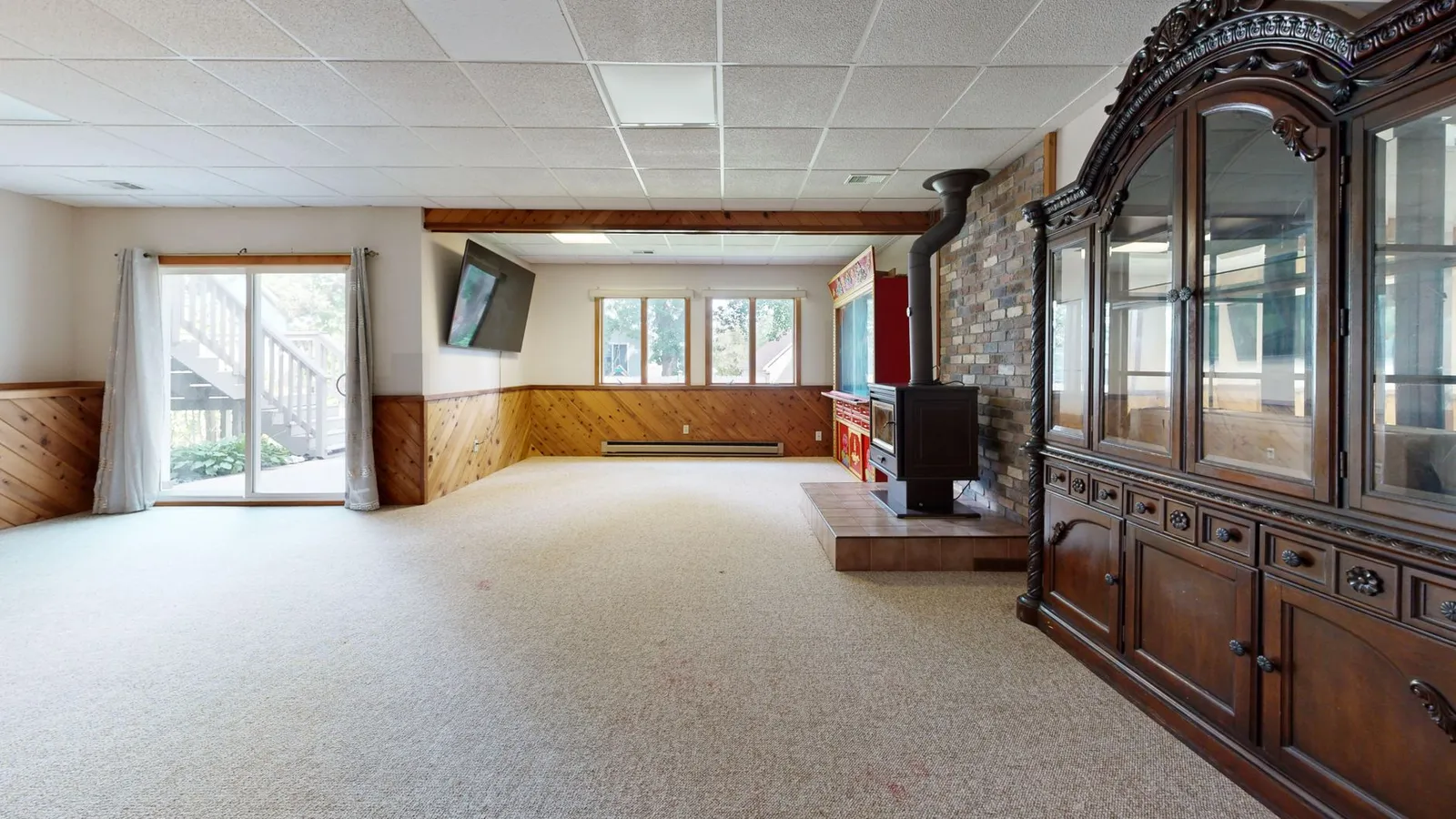
An unfinished basement is the most expensive storage space in your home. It pays property taxes, contributes to your heating bill, and occupies square footage that could be functioning living area—often at a fraction of the cost per square foot of an above-grade addition. Finishing a basement consistently ranks among the highest-return renovation categories, and with modern moisture management, insulation technology, and design tools, the results are livable rooms indistinguishable from any other floor of the home.
Assessing Your Basement's Potential
Before design planning, a structural and moisture assessment determines what your basement can realistically become. Skip this step and you may invest in a finished basement that fails within three years due to water intrusion or structural issues.
Ceiling Height
Standard basement ceiling height after drywall installation is the most common limiting factor. Building codes generally require a minimum of 7 feet finished ceiling height for habitable spaces; some jurisdictions allow 6'8" for certain areas. Measure from the concrete floor to the lowest obstruction (often a beam or duct) across the entire basement footprint before planning any room that requires full-height occupancy. Ceilings under 7 feet work for storage, mechanical rooms, and crawl areas but limit use as primary living spaces.
Moisture and Water Infiltration
Any active water intrusion—staining on the foundation walls, efflorescence (white mineral deposits), musty odor, or a high-water-table indicator from a local groundwater table map—must be addressed before finishing. Finishing over moisture problems doesn't hide them; it amplifies them. Interior drainage systems (French drains, sump pump, interior waterproofing membrane) run $3,000–$12,000 depending on basement perimeter and severity. This is not optional; it's the foundation of every other investment you make.
Egress Requirements
Most building codes require at least one egress window (minimum 5.7 sq ft net opening, not less than 24" high and 20" wide, sill no more than 44" above floor) in any bedroom you plan to include. Egress window installation in a basement requires cutting the foundation wall and costs $3,000–$6,000 per window. Plan for this in the initial design so egress window placement can inform room layout.
Basement Conversion Use Cases
Family Room and Entertainment Space
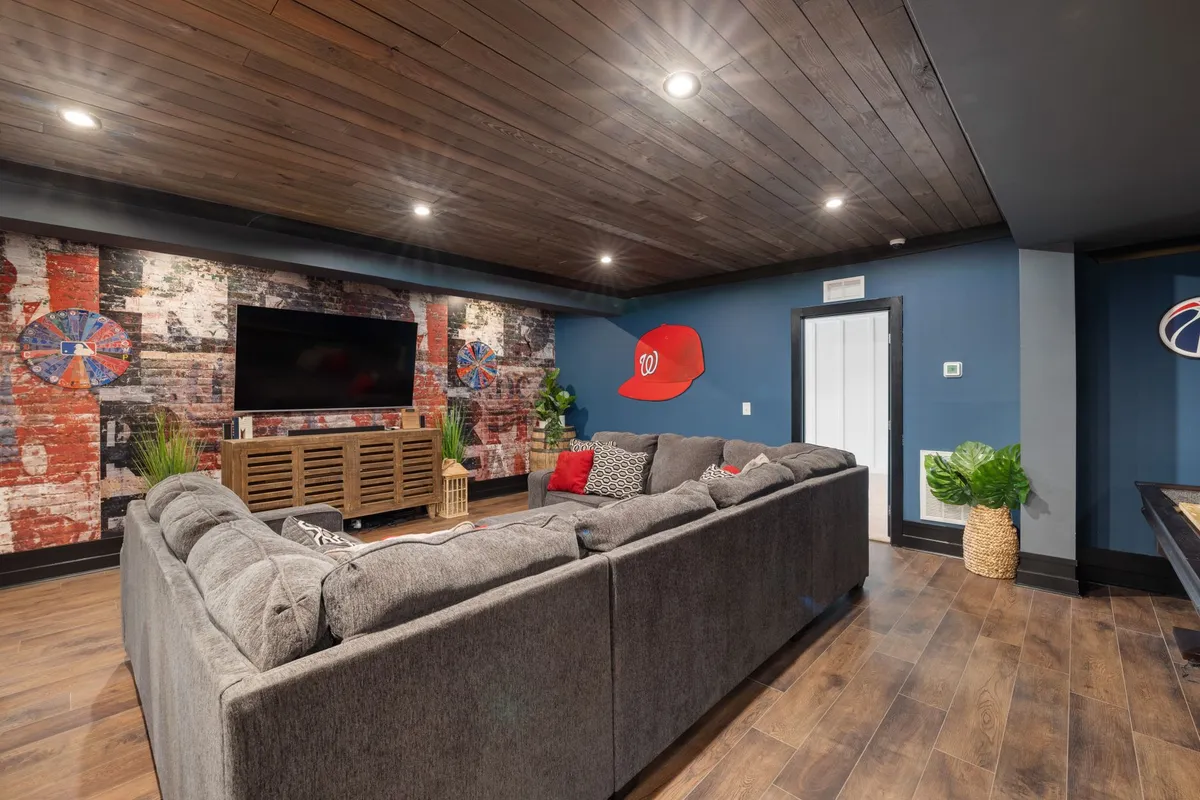
The most common finished basement use is a family room that serves as overflow living space—somewhere the kids can be loud, guests can watch a game, or teenagers can have independence without taking over the main floor. A well-designed basement family room requires good artificial lighting (no natural light problem-solving is the main design challenge in basement rooms), acoustic treatment to contain sound, and flooring rated for below-grade moisture exposure.
Luxury vinyl plank (LVP) has become the dominant basement flooring choice because it handles moisture that would destroy hardwood, resists the cold of a concrete slab, and looks indistinguishable from engineered hardwood in photographs and in person. Budget $3–$7/sq ft for material and installation.
Home Theater
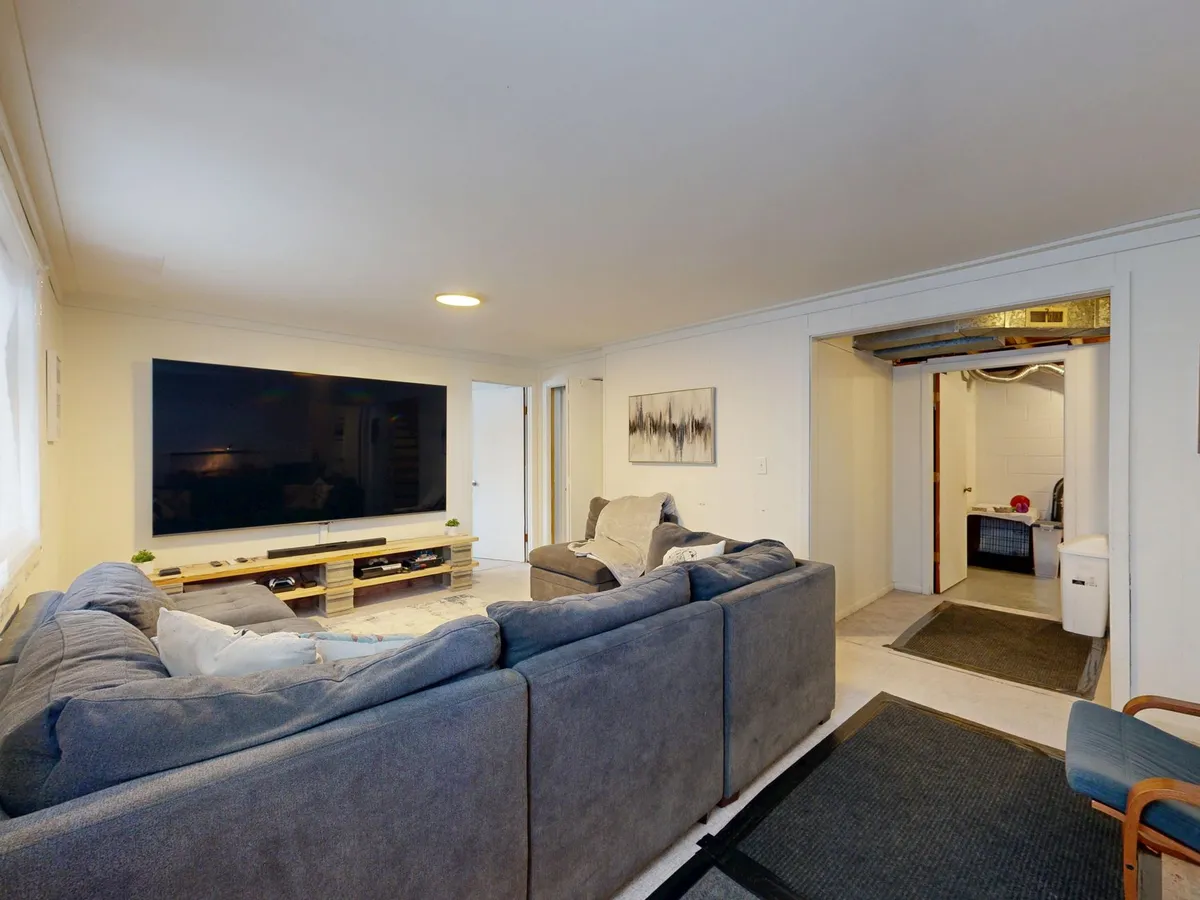
Basements are objectively the best home theater location in a house: they're naturally dark, below-grade sound propagation is limited (neighbors above won't hear bass), and the concrete floor and walls provide thermal mass that keeps temperatures stable—important for electronics longevity. A purpose-built home theater can be designed into a basement room of as little as 12'×15', with a 100"+ screen and a 5.1 or 7.1 surround sound system.
Home theater basement buildouts range from $15,000 for a comfortable screen room with basic acoustic treatment to $50,000+ for a fully decked-out dedicated cinema with riser seating, acoustic panels, and a commercial-grade projection system.
Home Gym
A basement gym has all the advantages of a garage gym without the temperature extremes. The below-grade location keeps the space cooler in summer (a genuine advantage during high-intensity workouts), and sound—both your weights and your music—travels up rather than out, making bass and impact far less disruptive to neighbors. The concrete slab subfloor under rubber gym flooring creates a surface that can handle any impact load.
Home Office Suite
A basement home office provides the separation from household activity that above-grade rooms rarely offer. With a window well providing natural light, a high-quality lighting package compensating where daylight falls short, and a small egress window for code compliance, a basement office is often more functional for focused work than any room on the main floor.
In-Law Suite or Guest Apartment
A basement in-law suite is the most complex and valuable basement conversion, requiring a bedroom with egress window, a full bathroom (requires breaking the concrete slab for plumbing, the highest-cost single element in any basement conversion), and often a kitchenette. Well-designed basement suites add genuine appraisal value and, in markets that permit it, can generate rental income.
Kids' Playroom
A dedicated basement playroom is a quality-of-life investment that many families find transformative: toys, crafts, and noise are contained below grade while the main floor remains adult-functional. LVP or sealed concrete floors handle spills; impact-resistant wall finishes (thicker drywall, wainscoting) handle the inevitable contact from active play. Built-in storage along the perimeter walls maximizes the playroom's ability to actually contain the mess it's designed to absorb.
Basement Renovation Costs: 2026 Reality
Basic Finishing (Framing, Insulation, Drywall, LVP, Paint, Lighting)
A basic finish that converts raw basement space to a usable room—without a bathroom or kitchen—runs $25–$50 per square foot in most US markets. A 1,000 sq ft basement finished to this standard costs $25,000–$50,000. High-cost markets (Northeast, Pacific Coast) run 20–40% higher.
Adding a Bathroom
A full bathroom addition in a basement requires breaking the concrete slab for plumbing rough-in (the sewer line runs under the slab). This work alone adds $8,000–$20,000 to a basement conversion budget, making bathroom-inclusive basement suites significantly more expensive per square foot than above-grade bathrooms. A half-bath (toilet and sink only) can sometimes be plumbed without slab work if the drain can connect at an accessible point; budget $5,000–$10,000 for a half-bath addition.
Home Theater Upgrade
Upgrading a finished room to a dedicated home theater—acoustic wall panels, projector mount and screen, 5.1+ audio system with in-wall wiring, riser platform, and tiered seating—adds $10,000–$40,000 to a standard basement finish. The range depends heavily on the quality of the A/V system selected.
Design Strategies for Basement Spaces
Solving the Natural Light Problem
Basements with limited or no natural light require a layered artificial lighting strategy to avoid the flat, institutional quality of a single overhead fixture. The approach that works:
- Ambient base: Recessed LED lights on a dimmer, spaced every 6–8 feet across the ceiling, provide even ambient fill without glare
- Task lighting: Pendant lights or under-cabinet lighting in work and activity zones
- Accent lighting: LED strip lighting along soffits, behind built-in shelving, or at toe-kick level adds dimension and warmth
- Warm color temperature: 2700K–3000K LEDs throughout prevent the cold, sterile quality that higher-kelvin basement lighting often produces
Concealing Mechanicals
Most basements house the HVAC system, water heater, electrical panel, and structural beams—none of which disappear just because you're finishing the space. Three approaches: build a mechanical room around them with a door, create a dropped soffit ceiling to conceal ductwork while leaving the rest at full height, or embrace an industrial aesthetic with painted exposed mechanicals and structural beams. The first two are more flexible; the last requires commitment to an aesthetic that works with exposed pipes and ducts.
Color and Material Choices
Basements benefit from lighter wall colors and reflective surfaces that bounce limited light around the space. White, off-white, and light warm grays are consistently the most effective basement wall colors. Dark basement walls require excellent artificial lighting to avoid a cave-like quality. Built-in shelving painted the same color as the walls, rather than contrasting, visually expands the room.
Visualizing Your Basement Before You Commit
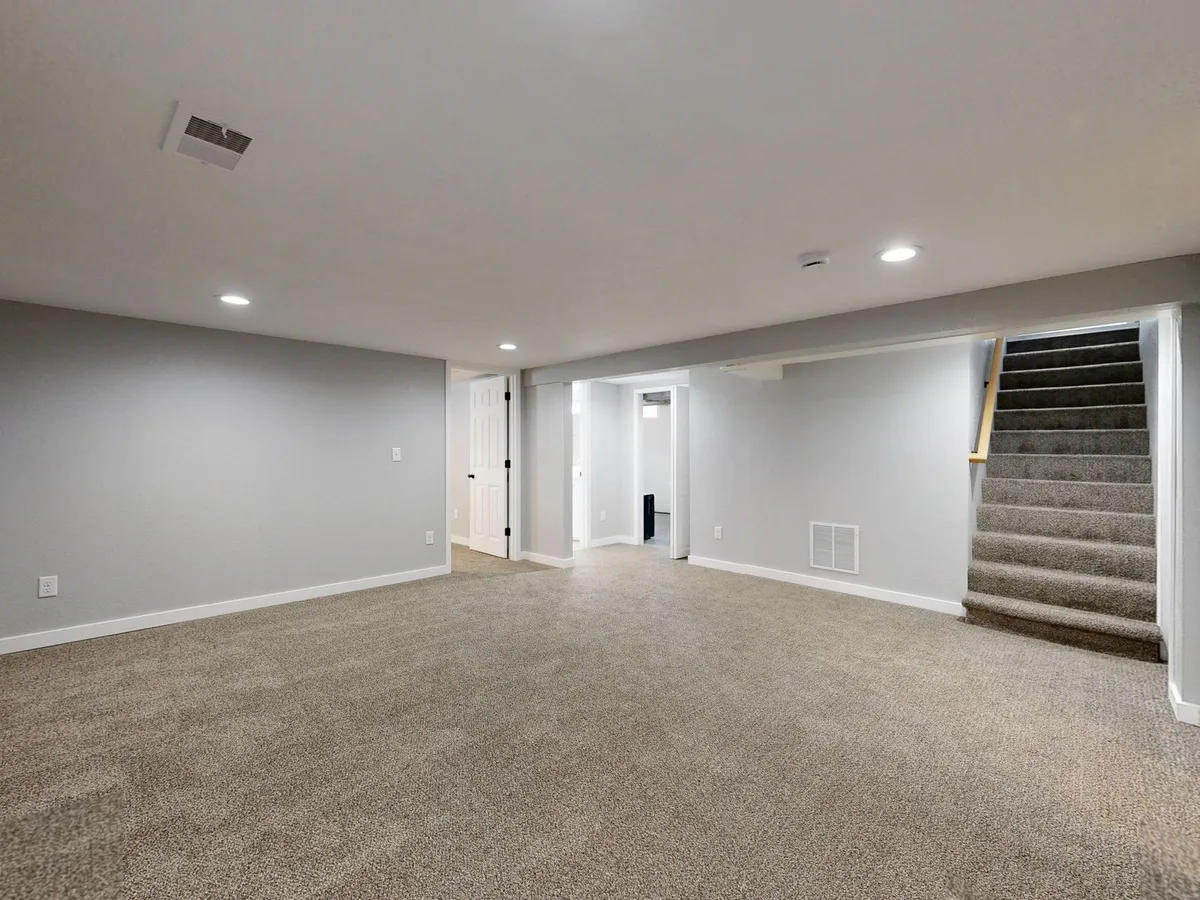
Choosing between a home theater, a family room, and a gym suite for the same basement square footage is difficult without seeing each option rendered in your specific space. The RoomRenovation.AI visualization tool accepts photos of your basement (even unfinished) and generates realistic finished-room renders across different use cases and style directions.
Use the tool to test: does a dark theater treatment or a light family room finish make better use of your basement's proportions? Does an open floor plan or a divided-room layout work better for your household's needs? See transformation examples from similar basement configurations, and try the free render on your own space.
The Permit Process for Basement Finishing
Basement finishing requires permits in most US jurisdictions. Required inspections typically cover: framing (before insulation and drywall cover structural members), electrical rough-in (before drywall), insulation (before drywall), and final occupancy. A licensed general contractor manages permit filing and inspections as part of normal project management; homeowners doing significant work themselves should expect permit timelines of 2–6 weeks before work can begin.
The permit requirement is most critical for basement bedrooms: a bedroom in an unpermitted, non-code-compliant basement space (no egress, inadequate ceiling height, improper egress window) creates legal liability at resale and real safety risk in an emergency.
FAQ
How long does it take to finish a basement? A standard basement finishing project with a general contractor team takes 6–12 weeks from permit approval to completion. Complex projects with bathroom additions, custom built-ins, or home theater installation run 3–5 months. Permit approval timelines (2–8 weeks) precede this.
What's the best flooring for a finished basement? Luxury vinyl plank (LVP) is the best choice for most basement applications: it tolerates moisture that would damage hardwood, installs directly over concrete with underlayment, and is available in styles that convincingly replicate wood grain. Tile works well in bathroom areas; carpet is comfortable in media rooms but vulnerable to moisture and difficult to remediate after flooding.
Does finishing a basement add to my home's appraised value? Yes, but typically at a rate of 50–75 cents per dollar spent rather than 100%. Basement square footage generally appraises at 50–75% of above-grade square footage in most markets. The exception is legal ADU basement conversions in markets with strong ADU demand, which can recover closer to 100% of investment.
Can I finish my own basement to save money? Framing, insulation, painting, and flooring are DIY-achievable for experienced homeowners. Electrical work, HVAC, and plumbing require licensed professionals in most jurisdictions and should not be DIY'd in permitted projects. DIY on permitted work creates inspection complications that slow the project and may require professional correction.