
Basement Renovation Ideas: Turn Unused Space Into Living Area
Transform your basement into a functional living space with entertainment areas, home gyms, or additional bedrooms.
RoomRenovation.AI Team
Updated March 24, 2026
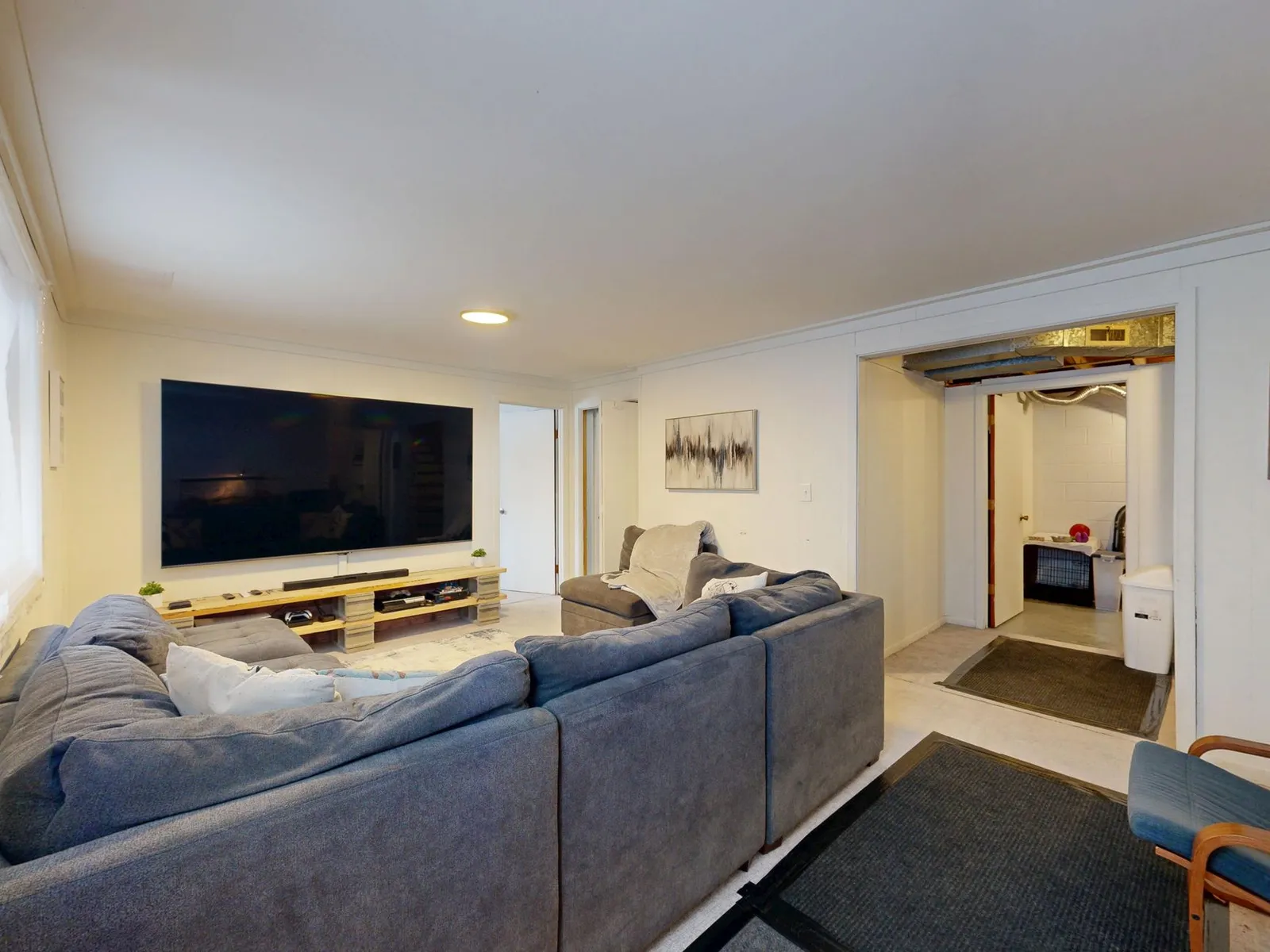
A finished basement is one of the highest-value renovations available to homeowners with unfinished underground space — it adds livable square footage, increases resale value, and solves the storage-versus-living-space tension that afflicts many homes. But basement renovation is also one of the most complex projects homeowners undertake, with unique technical challenges around moisture, egress, ceiling height, and natural light that don't exist above grade. This guide covers the most effective basement conversion ideas, the design approaches that make basements feel genuinely livable rather than like converted basements, and realistic cost ranges for 2026.
The Fundamental Challenges of Basement Design
Before discussing what you can create in a basement, it helps to understand what makes basement design categorically different from above-grade room design. Every design decision below is shaped by these realities:
- Moisture: Below-grade spaces are in contact with the water table and soil; moisture infiltration can destroy finishes, damage health, and undermine structural elements. Any basement renovation begins with moisture assessment and remediation, not design.
- Ceiling height: Older homes often have 7-foot or lower basement ceilings; once you account for the floor build-up, HVAC ducts, and mechanical runs, usable headroom may be 6'8" or less. Design choices must accommodate this.
- Natural light limitation: Egress windows, light wells, and window wells are the only natural light sources in a typical basement; the design must compensate through artificial lighting strategy.
- Egress requirements: Building codes require emergency egress (a window or door large enough to climb through) in any room used for sleeping; this affects where bedrooms can be legally placed.
Basement Conversion Idea 1: Home Theater or Media Room
The basement is the ideal location for a dedicated home theater. The below-grade position provides natural sound isolation from the rest of the house; the absence of natural light becomes an advantage rather than a limitation; and the typically rectangular footprint suits theater-style seating layouts well.
Design Approach
The key to a basement theater that feels intentional rather than improvised is committing to the design direction fully: a projector and screen (or 85"+ display) on a finished feature wall, tiered seating on a raised platform if ceiling height allows, acoustic panels to control sound, dark wall and ceiling colors to eliminate reflections, and recessed low-voltage step lighting along the seating platform edges.
Ceiling height matters here — you need at minimum 8 feet for a convincing theater effect, and 9 feet is significantly better. If you have 7-foot ceilings, a dedicated theater room is still possible but requires a smaller screen and modified seating arrangement.
2026 Cost Range
- Basic media room (drywall, flooring, built-in cabinet): $8,000–$18,000
- Mid-range dedicated theater (acoustic treatment, tiered seating, projector + screen): $20,000–$45,000
- High-end home cinema: $60,000+
Basement Conversion Idea 2: Family Room or Rec Room
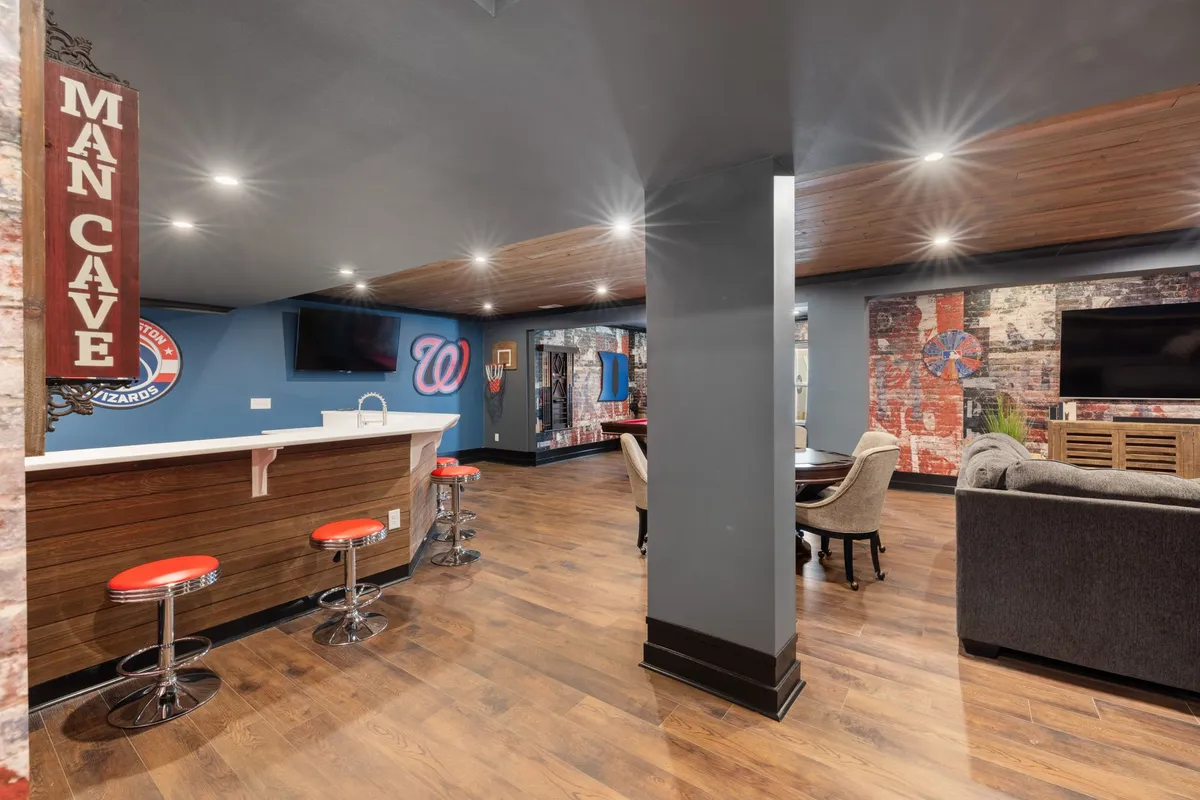
The most versatile basement conversion: a general-purpose family room that handles television, games, children's play, exercise, and casual entertaining without committing to a single function. This is the right choice when the household's needs are varied and the basement needs to serve multiple ages and activities simultaneously.
Design Approach
Zone the space rather than treating it as a single undifferentiated room. A sectional sofa facing the TV occupies one zone; a game table or billiards table occupies a second; a built-in wet bar or beverage station anchors a third. Zoning is achieved through furniture arrangement, area rugs, and ceiling treatment differences — not necessarily through walls.
Flooring for family rooms: luxury vinyl plank is the dominant choice in 2026 — waterproof, durable, warm in appearance, comfortable underfoot, and significantly less expensive than hardwood. Carpet is warmer but less forgiving of moisture events; tile is durable but cold and hard.
Ceiling approaches: if you have adequate height (8+ feet), drywall ceilings look best and feel most like above-grade living space. Drop ceilings (suspended acoustic tile) are less expensive and provide access to mechanical systems above, but reduce headroom by 4–6 inches and have a more institutional aesthetic. Painted exposed ceilings (all ductwork and joists painted black or dark grey) are increasingly popular in contemporary and industrial-leaning basements with adequate height.
Basement Conversion Idea 3: Home Gym
Basement home gyms have become one of the most requested basement conversions in the post-2020 period. The space requirements are substantial (a meaningful gym needs 300–500 sq ft minimum), and the basement's tolerance for noise and impact is ideal for equipment use that would disturb the rest of the house.
Design Approach
The functional requirements drive the design: rubber or cork flooring to absorb impact and protect subfloor, mirror panels on one or more walls (standard gym mirrors are inexpensive and immediately change the spatial feel), dedicated 20-amp circuits for cardio equipment, and strategic lighting that illuminates the workout area without creating glare during floor exercises.
A gym doesn't need to look institutional. Built-in storage for small equipment, an accent wall in a motivated color, a sound system with in-wall or ceiling speakers, and a mini-fridge for post-workout nutrition all convert a functional equipment room into a space you actually want to use.
2026 Cost Range
- Basic gym (rubber flooring, mirrors, electrical): $4,000–$10,000
- Mid-range gym (full finish, built-ins, sound system): $12,000–$25,000
- Equipment is separate from renovation cost; budget $3,000–$15,000 for a meaningful equipment set
Basement Conversion Idea 4: Additional Bedroom (ADU or In-Law Suite)
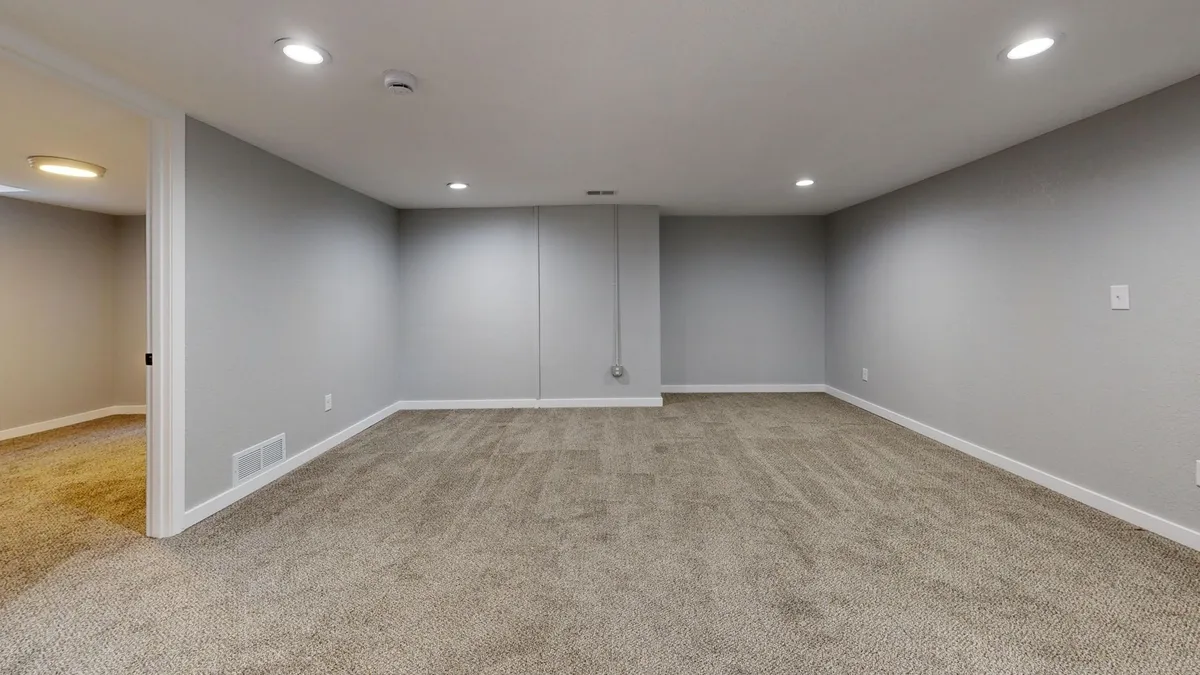
A basement bedroom suite can solve multi-generational living needs, generate rental income (where zoning permits), or provide privacy for a teenager or frequent guest. The legal requirements are stricter than for other conversion types because sleeping spaces carry life-safety obligations.
Key Requirements
- Egress window of sufficient size (minimum 5.7 sq ft opening, minimum 24" height, maximum 44" sill height per IRC) — this typically requires new window installation
- Smoke and carbon monoxide detectors
- Minimum 7-foot ceiling height in sleeping areas (IRC requirement in most jurisdictions)
- If rental unit: kitchen or kitchenette, separate entrance, and compliance with local ADU regulations
Design Approach
The light limitation is the primary design challenge. Maximize window area (multiple egress windows if possible), use very light wall colors (warm white or pale grey), install high-output warm-light ceiling fixtures with dimmer control, and use mirrors strategically to multiply the light that exists. Below-grade bedrooms can be genuinely comfortable and attractive; the design simply must work harder on light and air circulation than above-grade rooms.
2026 Cost Range
- Basic bedroom suite (egress windows, bathroom, closet, finish): $25,000–$60,000
- Full ADU (kitchen, separate entrance, full finish): $60,000–$150,000 depending on scope and location
Basement Conversion Idea 5: Home Office
The basement is an increasingly popular home office location for households where above-grade space is at a premium. The sound isolation from family activity and the separation from household traffic are genuine productivity advantages, and the typical basement footprint allows a substantial, well-organized workspace.
Design Approach
Built-in desks and shelving maximize the basement's typically longer walls and avoid the floating-furniture problem that makes small offices feel disorganized. Wainscoting or board-and-batten paneling on the lower half of walls adds visual warmth and elevates the space from storage-room-converted-to-office to purposefully designed workspace. Lighting is the critical investment: add recessed ambient on a dimmer, dedicated task lighting at the desk surface, and a window well addition if the space lacks egress windows, to introduce natural light.
Visualizing Your Basement Renovation
Basement renovations are among the hardest projects to visualize before they're complete because the starting point — bare concrete floor, exposed joists, mechanical equipment — looks nothing like the finished product. AI visualization helps bridge that gap.
Upload a photo of your existing basement to the RoomRenovation.ai dashboard and generate a render in your target direction — theater, gym, bedroom suite, or family room. The output shows your basement's actual dimensions and existing architectural constraints transformed into a finished space. It's particularly useful for ceiling treatment decisions (drywall versus exposed versus drop) and flooring choices that are difficult to evaluate in isolation.
For detailed cost planning across the full renovation, the living room renovation cost guide provides comparable finish-level costs that apply to many basement family room scenarios. For bedroom-specific cost context, the full suite of bathroom renovation and bedroom guides cover the component costs that make up a basement bedroom suite. You can also explore transformation examples that include before-and-after basement conversions for additional inspiration.
Moisture: The Non-Negotiable First Step
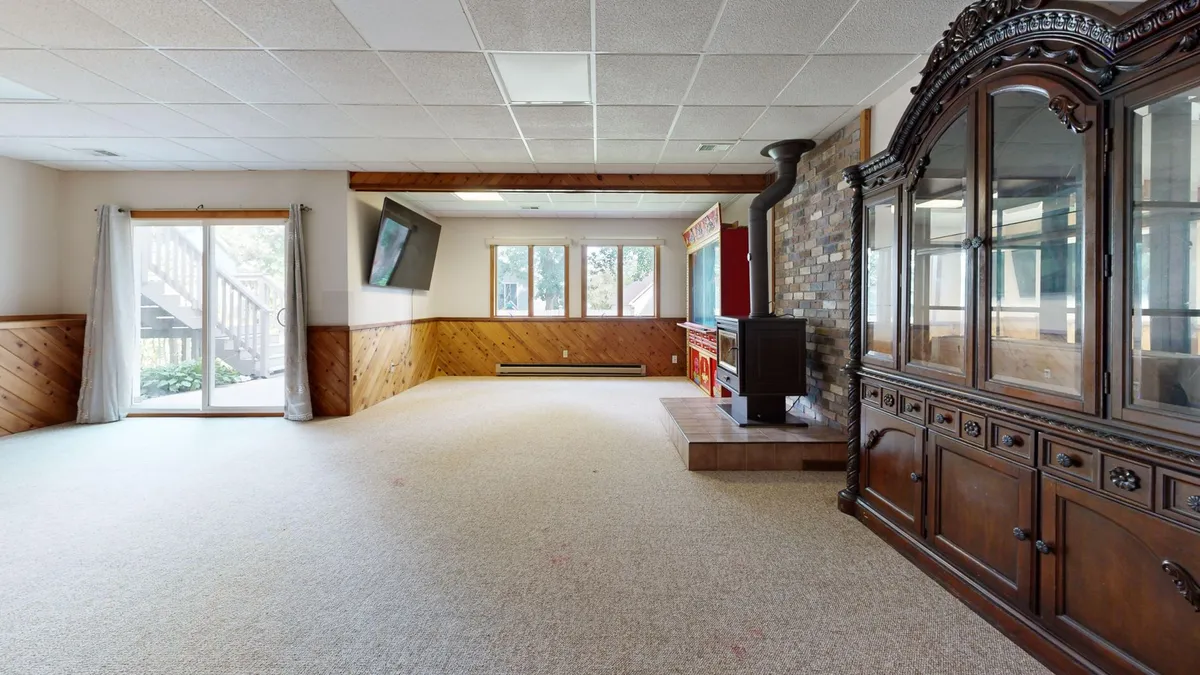
No matter which conversion you choose, moisture assessment and remediation must come before any finish work. A finished basement that develops moisture infiltration after completion faces complete demolition of the drywall, flooring, and potentially insulation — a loss that dwarfs the cost of upfront moisture mitigation.
Have a waterproofing contractor assess the space before design work begins. Identify the moisture source (hydrostatic pressure, surface water intrusion, or condensation), remediate it appropriately (interior drainage system, exterior waterproofing, or vapor barrier and dehumidification), and verify effectiveness before any finishes go in. The cost of basement waterproofing ranges from $2,000 for basic interior drainage to $15,000+ for comprehensive exterior waterproofing on a full perimeter.
FAQ
Does finishing a basement actually increase home value? Yes, consistently. Finished basement additions return 60–75% of cost in resale value on average, and significantly more in markets where finished basement space is scarce. The incremental cost per square foot is dramatically lower than above-grade additions, making it one of the best cost-per-square-foot investments in home improvement.
How long does a typical basement renovation take? A straightforward family room or home office finish: 6–12 weeks. A bedroom suite with egress windows and full bathroom: 10–16 weeks. A complete ADU conversion: 4–8 months depending on permit timelines. Egress window permits are often the longest lead-time item.
Can I do a basement renovation without permits? Not legally for work that involves structural changes, electrical, plumbing, or egress windows. Unpermitted work in sleeping spaces is a code violation and creates significant liability. Work with a licensed contractor who pulls permits — it protects you, the future buyers of your home, and the occupants of the space.
What's the minimum ceiling height for a comfortable basement living space? Seven feet is the IRC minimum for habitable rooms; 7'6" is where most people stop noticing the ceiling height; 8 feet and above feels fully normal. Below 7 feet, options are limited to storage and utility functions.
How do I make a windowless basement bedroom feel less claustrophobic? Legally, bedrooms must have egress windows — so the first step is installation. Beyond that: warm, high-output lighting, very light wall colors, mirrors positioned to reflect light, and furnishings that don't crowd the perimeter. The free AI render can show you how different wall color and lighting combinations affect the perceived spaciousness of a specific basement room photo.