
Summer Patio Renovation: Create Your Outdoor Oasis
Transform your patio into a summer retreat with outdoor kitchens, comfortable seating, and entertaining spaces.
RoomRenovation.AI Team
Updated March 24, 2026
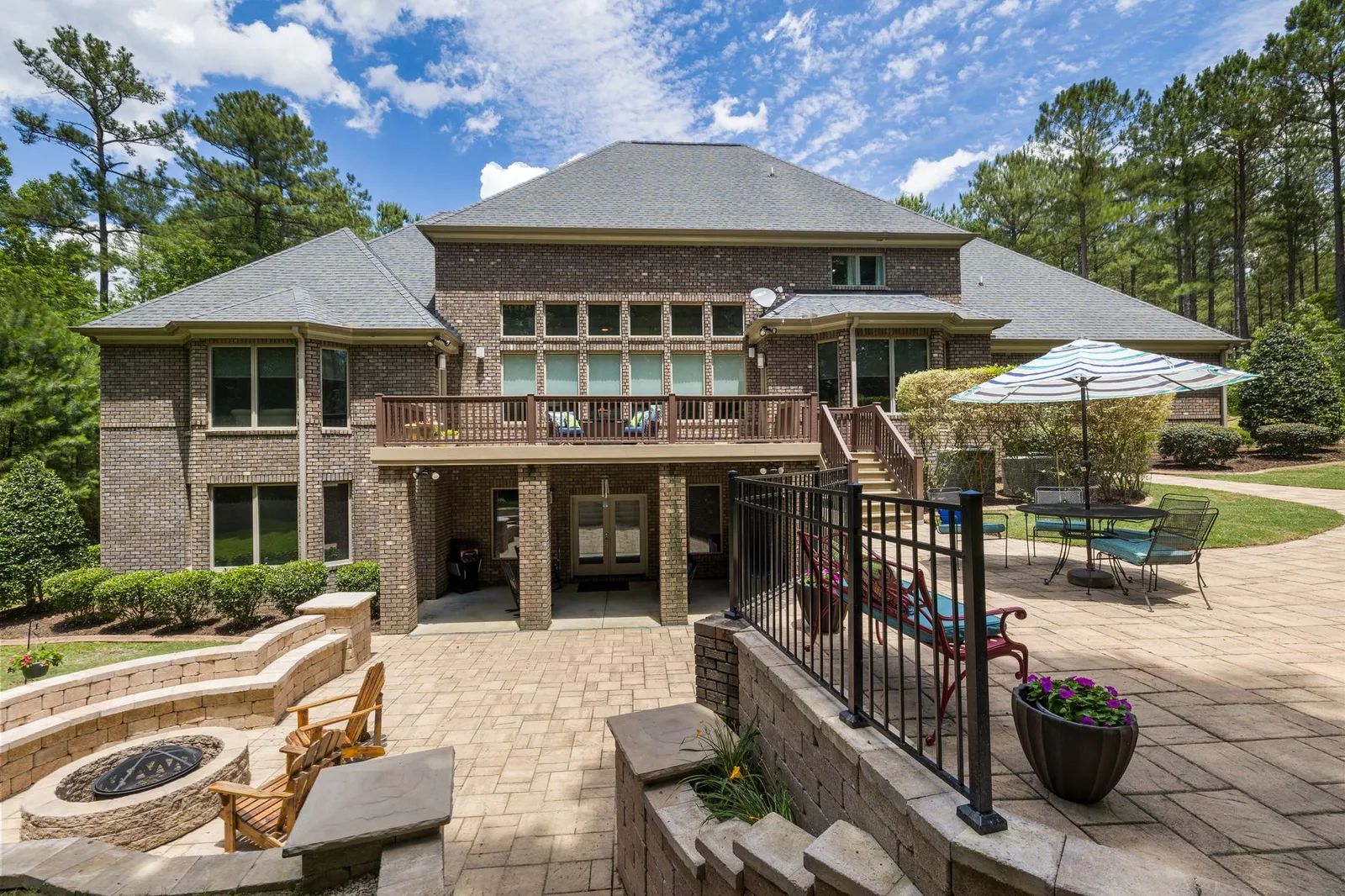
A summer patio renovation can be one of the most satisfying home improvement projects you'll undertake — the returns are immediate and social. Unlike a kitchen remodel that disappears behind cabinet doors or a bathroom upgrade that serves one person at a time, a well-designed patio transforms how your entire household and your guests experience summer. It adds functional living space, creates a natural gathering point, and extends your home's usable square footage at a fraction of the cost of interior renovation.
Assessing Your Current Patio: What Are You Starting With?
Before designing, evaluate what exists:
- Surface condition: Is the concrete cracked, settled, or stained? Is existing brick or stone loose? Surface repair or replacement is the foundation of every other improvement.
- Size and shape: Is the patio large enough for your intended use? A dining table for six requires at least a 10x12 foot area; a lounge grouping for four needs similar. Many existing patio slabs are undersized for how people actually want to use them.
- Sun exposure: Which direction does the patio face? South- and west-facing patios are hot in summer afternoon sun and benefit most from shade structures. North-facing patios may be too shady in early and late season.
- Drainage: Does water pool on the patio after rain? Poor drainage creates a muddy perimeter and can damage the structure over time. Addressing drainage during renovation is critical.
Patio Surface Materials: The Foundation Matters
The surface material sets the visual tone and practical performance of the entire patio:
Concrete (Poured or Stamped)
Poured concrete is the most economical base material and the most common. Plain gray concrete can be significantly upgraded with surface treatments: acid etching, concrete stain in warm tones, or a broom-finish texture. Stamped concrete patterns replicate stone, brick, or tile at lower cost — typically $8–$18 per square foot installed versus $15–$40 for natural stone.
Natural Stone
Travertine, bluestone, limestone, and slate offer genuine character and durability. Each has specific performance characteristics: travertine is warm and Italian in tone but porous (needs sealing); bluestone is durable and weather-resistant; slate provides interesting texture but can be slippery when wet. Cost: $15–$40 per square foot installed.
Porcelain Tile
Large-format outdoor porcelain tiles (24x24 inch or 24x48 inch) in stone-look finishes offer the visual quality of natural stone with less maintenance. Frost-resistant options work in all climates. Cost: $10–$25 per square foot installed.
Composite Decking
For a deck rather than a ground-level patio, composite decking (Trex, TimberTech, Fiberon) outperforms natural wood in maintenance requirements while closely approximating its appearance. Cost: $15–$30 per square foot installed. Natural hardwood decks (ipe, teak) cost $20–$40 per square foot and require annual sealing.
Shade and Shelter: Extending Usable Hours
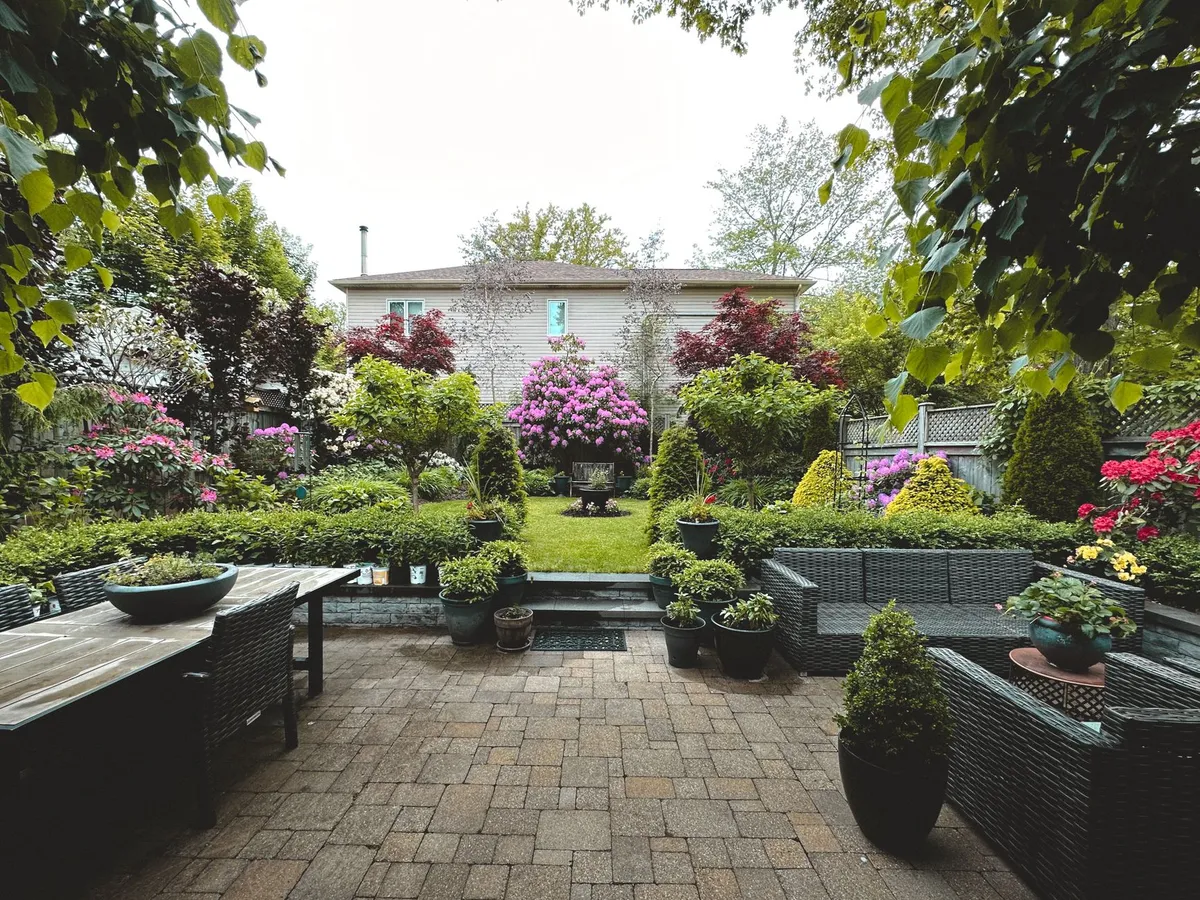
An exposed patio in a warm climate is only comfortable for a narrow window of hours each day. Shade structures dramatically extend this window and make the space usable from morning to evening:
- Attached pergola: A wood or aluminum pergola attached to the house creates dappled shade and can support climbing plants, string lights, and retractable shade curtains. Cost: $3,000–$8,000 for a 12x16 foot DIY wood kit; $8,000–$20,000 professionally installed in aluminum with a louvered roof.
- Louvered pergola roof: Motorized louvers that open and close to control shade and rain protection are the premium solution. Brands like StruXure and Pergola Concepts produce systems that function in light rain. Cost: $12,000–$30,000 for a 12x16 foot system.
- Market umbrellas: The most flexible and affordable solution. A quality 9–11 foot commercial-grade umbrella (Treasure Garden, Frankford Umbrella) provides excellent shade at $200–$600. Weighted bases are essential.
- Sail shades: Tensioned polyester shade sails strung between posts or the house and posts create a modern, architectural shade solution at $200–$600 for the fabric; $500–$2,000 with post installation.
Outdoor Furniture: Comfort and Durability
Outdoor furniture selection is where many patio renovations go wrong. The most common mistakes:
- Buying a single matched set rather than mixing pieces for a curated look
- Choosing the cheapest option, which fades and rusts within two seasons
- Undersizing the dining table for the number of people who regularly visit
- Skipping outdoor rugs, which define the space and add enormous warmth
Lounge Area
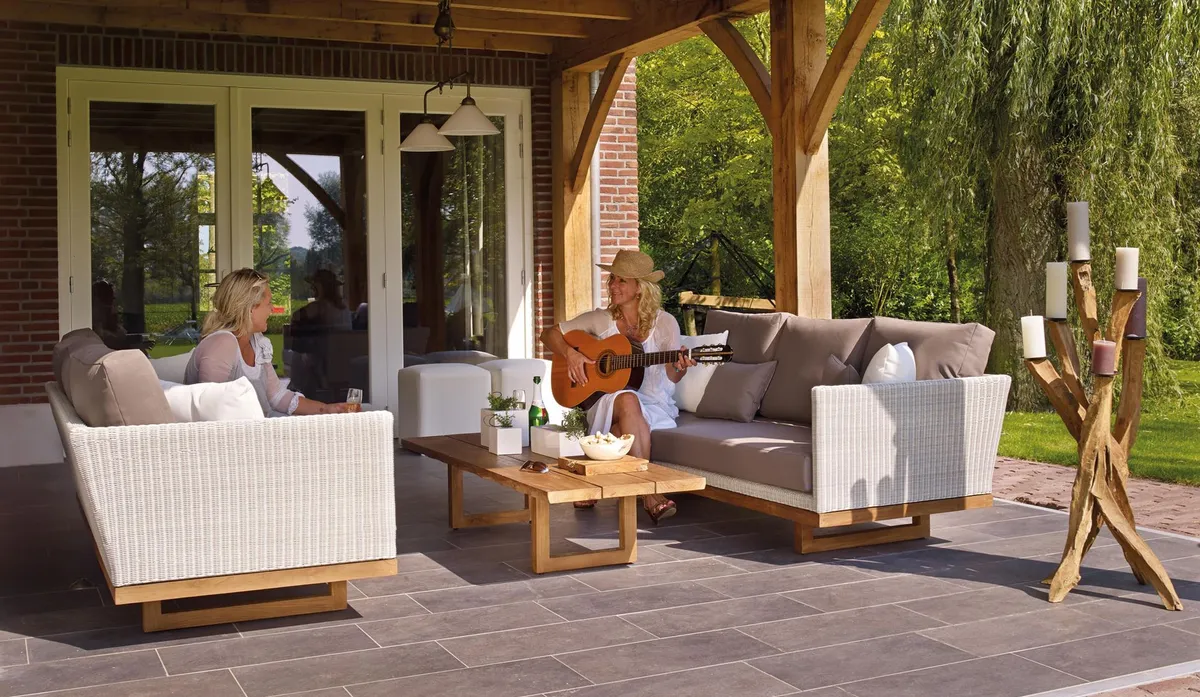
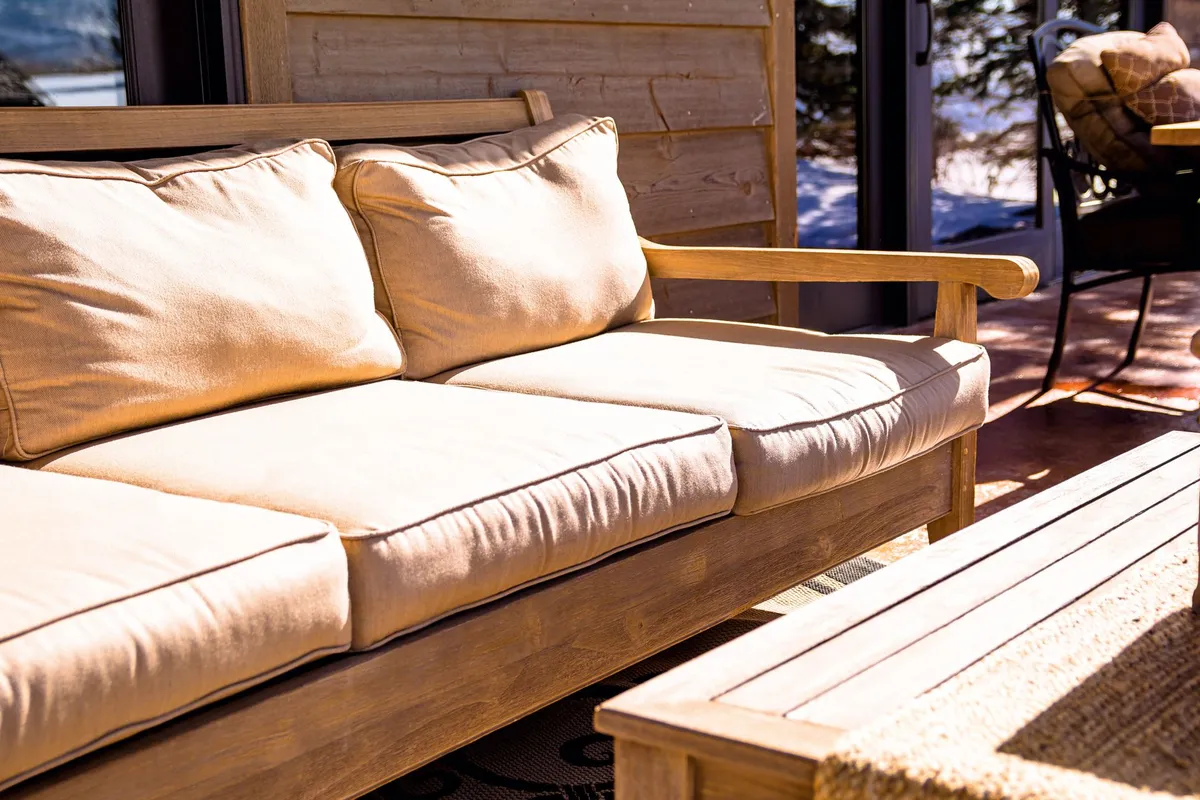
Deep-seated outdoor sofas and chairs with weather-resistant cushions define the conversational gathering area. Quality all-weather wicker (resin over aluminum frames) or powder-coated aluminum with Sunbrella cushions is the standard mid-range choice at $1,500–$4,000 for a four-piece set. Teak furniture is the premium, low-maintenance natural option at $3,000–$8,000.
Dining Area
Outdoor dining tables need to accommodate more people than you think — when the weather is good, everyone comes. A 60-inch round table seats six comfortably and allows flexibility; a 72–96 inch rectangular table accommodates eight to ten. Extension tables for occasional large gatherings are worth the investment if space permits.
Lighting: Making the Patio Work After Dark
Without lighting, even a beautifully designed patio goes dark at 8 PM. Layered outdoor lighting transforms an evening gathering:
- String lights: The single most versatile and popular outdoor lighting solution. Strung above the dining table or lounge area on catenary cables or a pergola frame, commercial-grade LED bistro strings (not the cheap chain-store variety) last for years. $50–$200 for 50 feet of quality string lighting.
- In-ground path and step lighting: Low-voltage LED fixtures recessed into deck boards, along steps, or bordering paths provide safety and ambient glow without glare.
- Pendant or wall sconces: If you have a covered pergola or outdoor room with a ceiling surface, pendant lights or wall sconces provide focused task light over dining and cooking areas.
- Landscape uplighting: Ground-level spotlights aimed up at trees, specimen plants, or the home's exterior wall create dramatic visual depth and extend the perceived boundary of the space.
Outdoor Kitchen and Bar: Worth the Investment?
For homeowners who entertain regularly, an outdoor kitchen is among the highest-return patio improvements. The minimum useful outdoor kitchen — a built-in gas grill, 18 inches of counter space on each side, and an undercounter refrigerator — runs $5,000–$10,000 installed. A full outdoor kitchen with a pizza oven, sink, and bar seating runs $15,000–$40,000.
For homeowners who use the outdoor space primarily for casual dinners and family meals, a quality freestanding grill ($400–$1,200) plus a rolling bar cart ($150–$400) provides 80% of the functionality at 10% of the cost.
Plant Integration and Landscaping
Plants soften the hard edges of a patio and create the feeling of a room within the landscape rather than a slab beside a lawn. Effective integration strategies:
- Large container plants: Mediterranean olive trees, Japanese maples, and ornamental grasses in large terracotta or concrete planters anchor the corners and entry points of the patio.
- Perimeter planting beds: Where the patio meets the lawn or garden, a planting bed transitions the hard material to landscape and provides a visual frame.
- Vertical greenery: Climbing roses, wisteria, or clematis on a pergola frame creates living shade and extraordinary seasonal color.
AI-Powered Patio Design Visualization
Before spending on a new surface, shade structure, or furniture set, use RoomRenovation.ai to visualize your patio transformation. Upload a photo of your current outdoor space and preview different design approaches — from a Mediterranean tiled terrace to a sleek modern deck — in photorealistic renders. This is particularly useful for major decisions like surface material, where the visual impact is hard to judge from small samples. Explore our design style guides for inspiration, or browse before-and-after examples from homeowners who've transformed their outdoor spaces.
FAQ
What's a realistic budget for a summer patio renovation? A cosmetic update (paint, new furniture, lighting, plants) runs $1,500–$5,000. A mid-range renovation with surface replacement and a shade structure runs $8,000–$20,000. A full outdoor room with kitchen, pergola, and quality hardscaping runs $25,000–$75,000. Our tool pricing can help you visualize designs at a fraction of the design consultation cost.
How long does a patio renovation take? A surface-only replacement (existing patio demolished, new concrete or pavers installed) takes one to three weeks for a standard residential patio. Adding a pergola adds one to two weeks. Full outdoor kitchen installation adds two to four weeks. Weather delays are common — budget additional time in climates with unpredictable summer weather.
What outdoor furniture material lasts the longest? Powder-coated aluminum frames with Sunbrella cushions require the least maintenance and last 15–25 years with basic care. Teak also lasts decades if oiled annually. Resin wicker over aluminum frames typically last 8–12 years. Avoid painted steel, which rusts, and cheap wicker over plastic frames, which degrades in UV exposure.
Do I need permits for a patio renovation? Ground-level patios on existing slabs typically don't require permits. Adding a freestanding pergola may require a permit depending on local code. Attached structures, outdoor kitchens with gas lines, and any electrical work always require permits and licensed contractors. Check with your local building department before starting any structural work.
Can I do a patio renovation as a DIY project? Yes, partially. Furniture selection, planting, lighting, and accessories are straightforward DIY. Surface work with concrete or large stone pavers is achievable for skilled DIYers but requires tool rental and physical capacity. Gas line work, electrical installation, and structural pergola anchoring should always be done by licensed contractors.