
Open Plan Living Renovation: Opening Up Closed-Off Rooms
Open plan living design for spaces that flow. See how AI visualizes the removal of walls, reconfigured kitchens, and consolidated living areas.
RoomRenovation.AI Team
Updated March 24, 2026
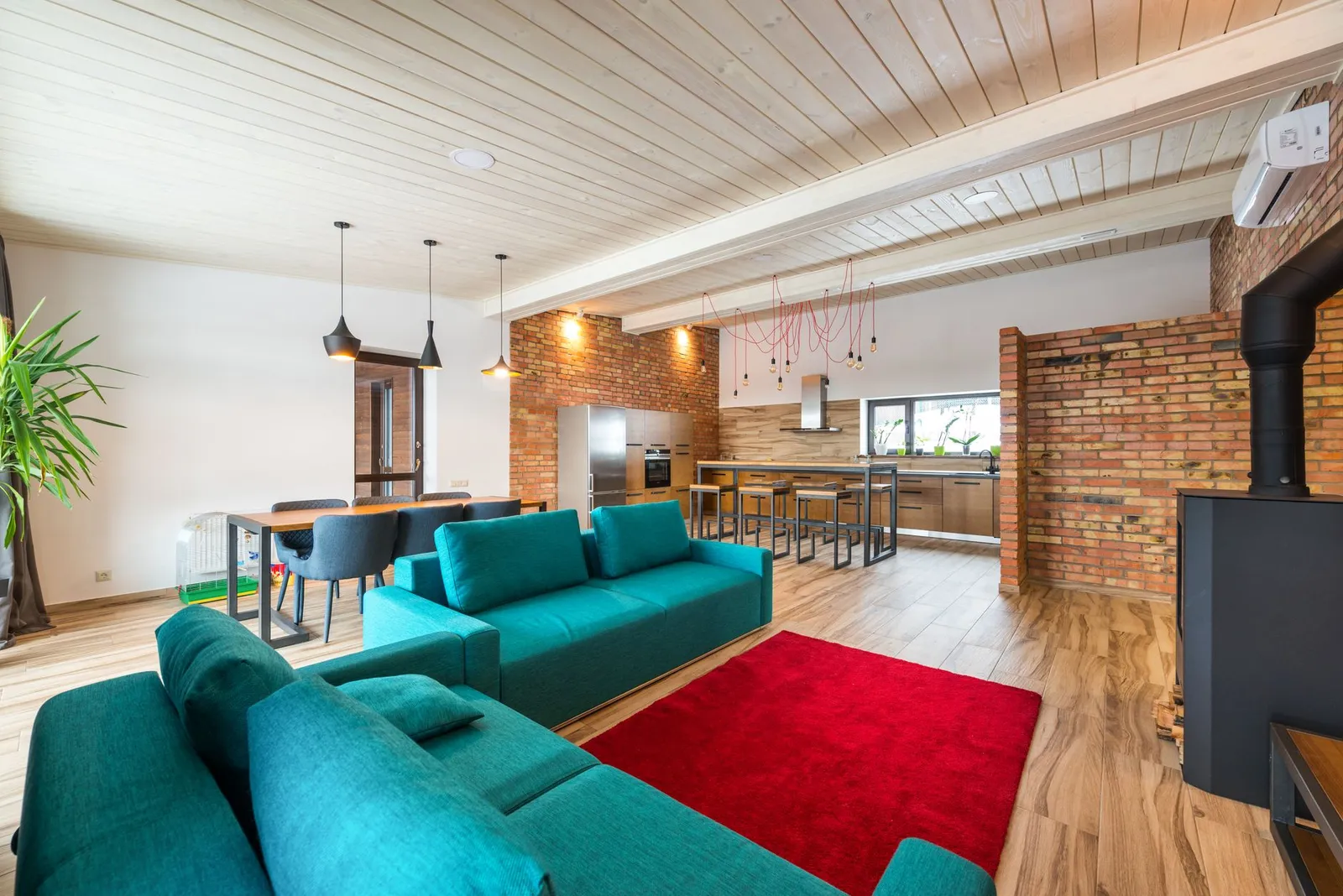
Opening up a closed-off floor plan is consistently one of the highest-impact renovations you can make to a home built before 1990—and one of the most structurally demanding. The appeal is obvious: an open plan living renovation creates the connected, light-filled spaces that define contemporary American home design. The execution requires a clear-eyed understanding of what's structural, what's cosmetic, and what the transition between kitchen, dining, and living areas actually needs to work at a practical level once the walls come down.
Understanding What Can and Cannot Move
The first question in any wall removal project isn't aesthetic—it's structural. Before any design discussion is useful, you need to know whether the walls you want to remove are load-bearing, where your mechanical systems (HVAC ducts, electrical panels, plumbing stacks) run, and what your home's foundation layout means for reconfiguration options.
Load-Bearing Walls
A wall running perpendicular to your floor joists, positioned directly above a foundation wall or beam, and with walls directly above it on upper floors is almost certainly load-bearing. Removing it doesn't mean it can't be done—it means the load it carries has to be transferred to a beam and point loads at each end, which requires a structural engineer's calculation and, in most jurisdictions, a building permit. Engineered LVL beams that span kitchen-to-living distances typically run $2,000–$8,000 for material and installation, not including the permit, engineering fee, or drywall restoration around the new beam.
A wall running parallel to floor joists, with no walls above it and no foundation wall beneath it, is more likely to be a partition wall that can be removed with significantly less structural intervention—though a structural engineer should still confirm this before demo begins.
Mechanical Obstacles
Electrical wiring is the easiest mechanical obstacle to reroute. HVAC ductwork is more involved and more expensive—moving supply and return runs when removing a wall can cost $1,500–$4,000 depending on how much of the system needs to be reconfigured. Plumbing is the most constraining: if a wall contains a drain stack or supply pipes, removal may be technically possible but expensive enough that it changes the project calculus entirely. This is the reason many kitchen-side walls that homeowners want to remove contain the kitchen's plumbing—the drain configuration that made sense in 1965 frequently conflicts with contemporary open-plan priorities.
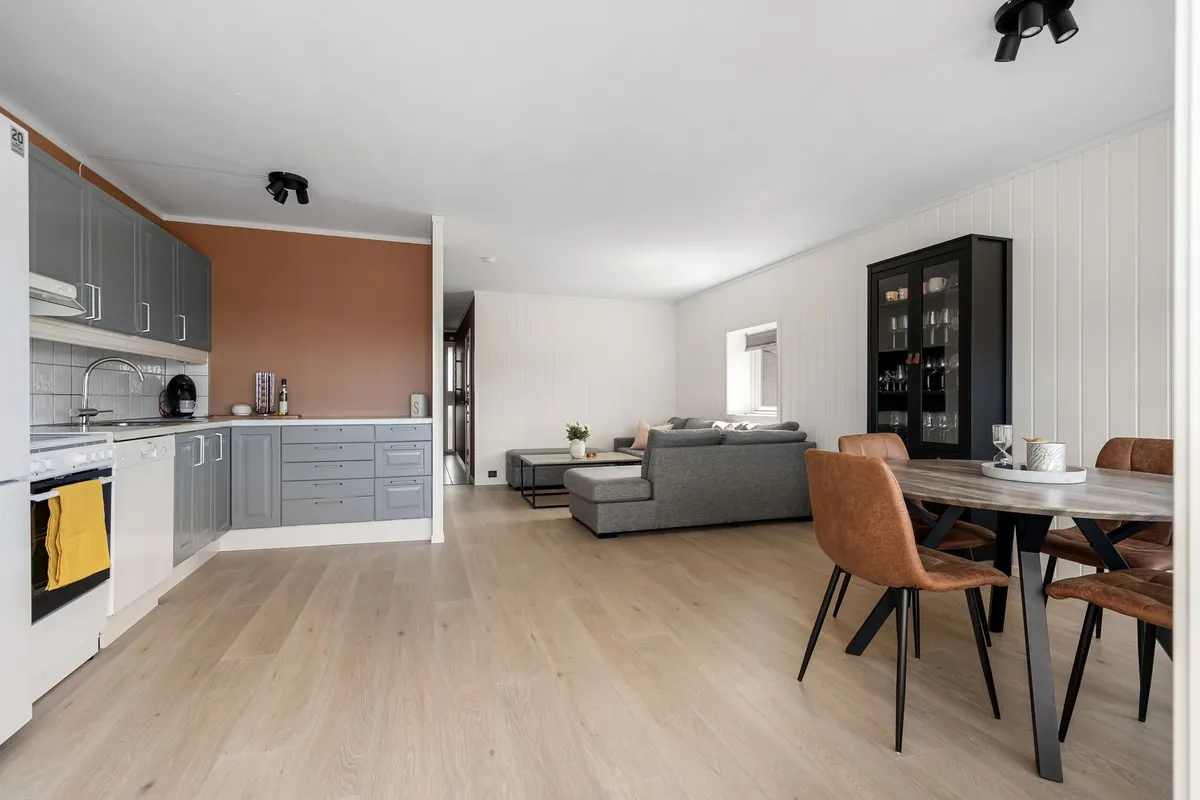
Designing the Open Plan Layout
Defining Zones Without Walls
The risk of an open plan conversion that isn't thought through is that you replace a defined set of rooms with one large undifferentiated space that serves none of its functions well. The goal isn't to eliminate zones—it's to define them with tools other than walls: ceiling height changes, flooring transitions, area rugs, furniture arrangement, and lighting.
A kitchen island creates a functional and visual boundary between kitchen and dining area without blocking sightlines. A large area rug defines the living zone against a continuous hardwood floor. A change from recessed lighting to a pendant cluster over the dining table marks that space as distinct from the kitchen work zone beside it. These non-architectural zone definitions are what make open plan living actually livable rather than simply large.
Kitchen Reconfiguration
Most pre-open-plan kitchens were designed as galley or U-shaped layouts with walls on all sides. Opening the kitchen to adjacent spaces usually means converting one side of the kitchen to an island or peninsula configuration—a significant reconfiguration that involves moving upper cabinet runs, potentially relocating appliances, and often extending countertop and cabinet runs into the newly opened space. Budget $15,000–$45,000 for a full kitchen reconfiguration as part of an open plan conversion, depending on your region and the quality of materials. This is the largest single cost driver in most open plan projects.
The alternative—leaving the kitchen largely intact and simply opening the wall between it and the dining room—is significantly less expensive ($5,000–$15,000 for the structural work, beam, and finishing) but produces a kitchen that feels bolted on to the open plan rather than integrated into it.
Flooring Continuity
One of the most effective visual tools in an open plan conversion is continuous flooring throughout the entire space. In homes where the kitchen had vinyl, the dining room had carpet, and the living room had hardwood, a unified floor in a single material creates the sense of spatial expansion that motivated the renovation in the first place. Wide-plank hardwood in white oak or a large-format porcelain tile run continuously from kitchen to living room costs significantly more than replacing each room independently but delivers a disproportionate visual return. If budget requires a compromise, run the primary flooring material through and use a contrasting but harmonious material only in the wet kitchen zone.
Acoustics, Light, and Privacy Tradeoffs
The Acoustic Reality
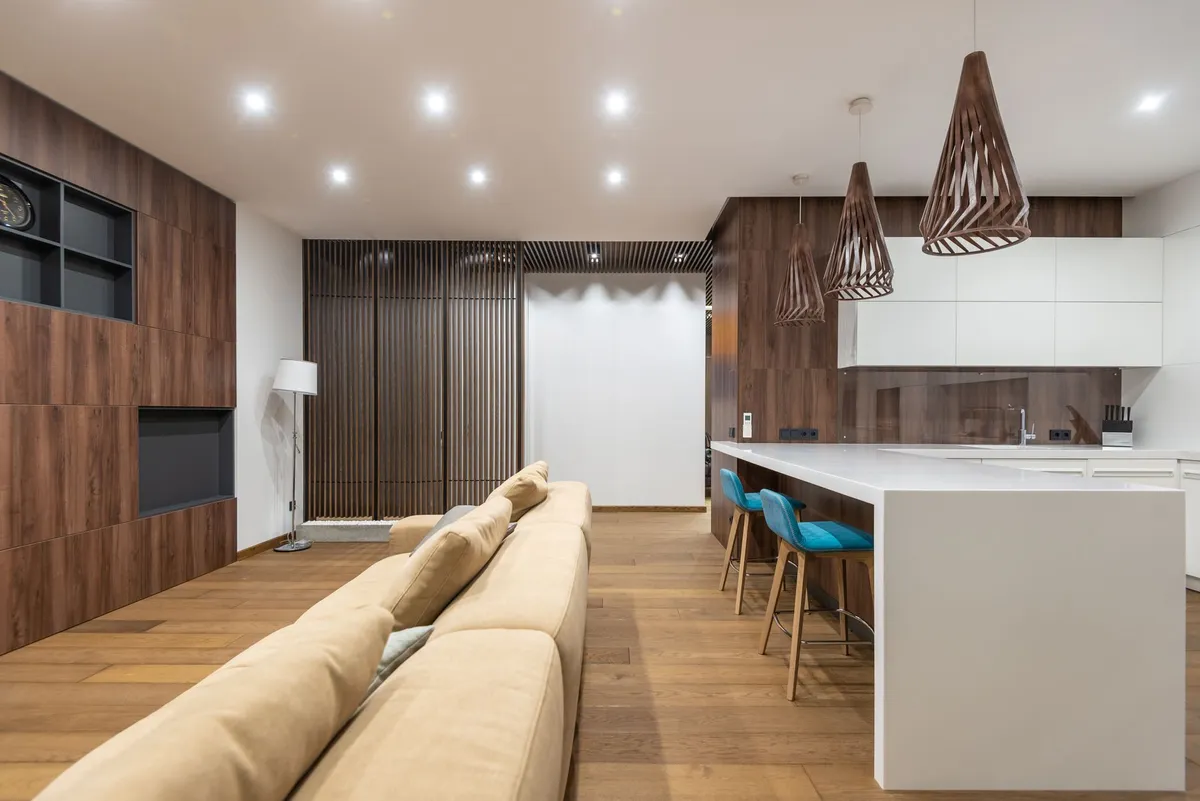
Walls absorb sound. Removing them means kitchen noise—the dishwasher, the exhaust fan, conversation—travels freely into the living space. This is the most common complaint from homeowners who've completed open plan conversions without addressing acoustics. Practical mitigation: high-quality range hoods with better acoustic enclosures, soft furnishings in the living zone (area rugs, upholstered seating, fabric curtains at windows) that absorb reflected sound, and if budget allows, acoustic plaster or ceiling panels in the kitchen zone.
The acoustic problem is worst in open plans with high ceilings and hard surfaces throughout. A concrete floor, glass backsplash, quartz countertops, and drywall walls create a reverberant environment that makes normal conversation uncomfortable. Balancing hard materials in the kitchen with soft materials in the adjacent zones is both aesthetic and acoustic strategy.
Light and Views
This is where open plan conversions deliver their most dramatic return. A kitchen that shared no natural light with a darker adjacent living room suddenly participates in the same light environment once the wall comes down. In north-facing homes or homes where one side of the main floor has better light exposure, this can transform the experience of the entire space. For layouts where windows are concentrated on one side, the open plan lets light travel deeper into the floor plate than any other single renovation would allow.
Privacy Considerations
Open plan living is an inherently social configuration. It works best for households where multiple people inhabit the kitchen and living space simultaneously and want to be aware of each other. It works less well for households where one person cooks while another works from home, where the kitchen mess isn't something everyone wants to see, or where sound from one activity (a phone call, a cooking show) would disrupt another. If any of these apply, partial openings—a pass-through window, a wide cased opening without an island, or a half-wall with a bar counter—preserve more spatial connection than the original wall while maintaining some functional separation.
What an Open Plan Conversion Costs
The range is wide because the structural complexity varies so dramatically. A simple partition wall removal with no mechanical conflicts and minimal finishing: $3,000–$7,000. A load-bearing wall removal with beam installation, permit, engineering, and restoration: $10,000–$20,000. A full open plan conversion including kitchen reconfiguration, continuous flooring, and updated lighting: $35,000–$80,000. These ranges reflect 2026 labor costs in mid-size American markets; coastal major metros will run 20–40% higher. The kitchen renovation cost guide covers the kitchen reconfiguration component in detail.
Using AI to Visualize Open Plan Layouts Before Demo
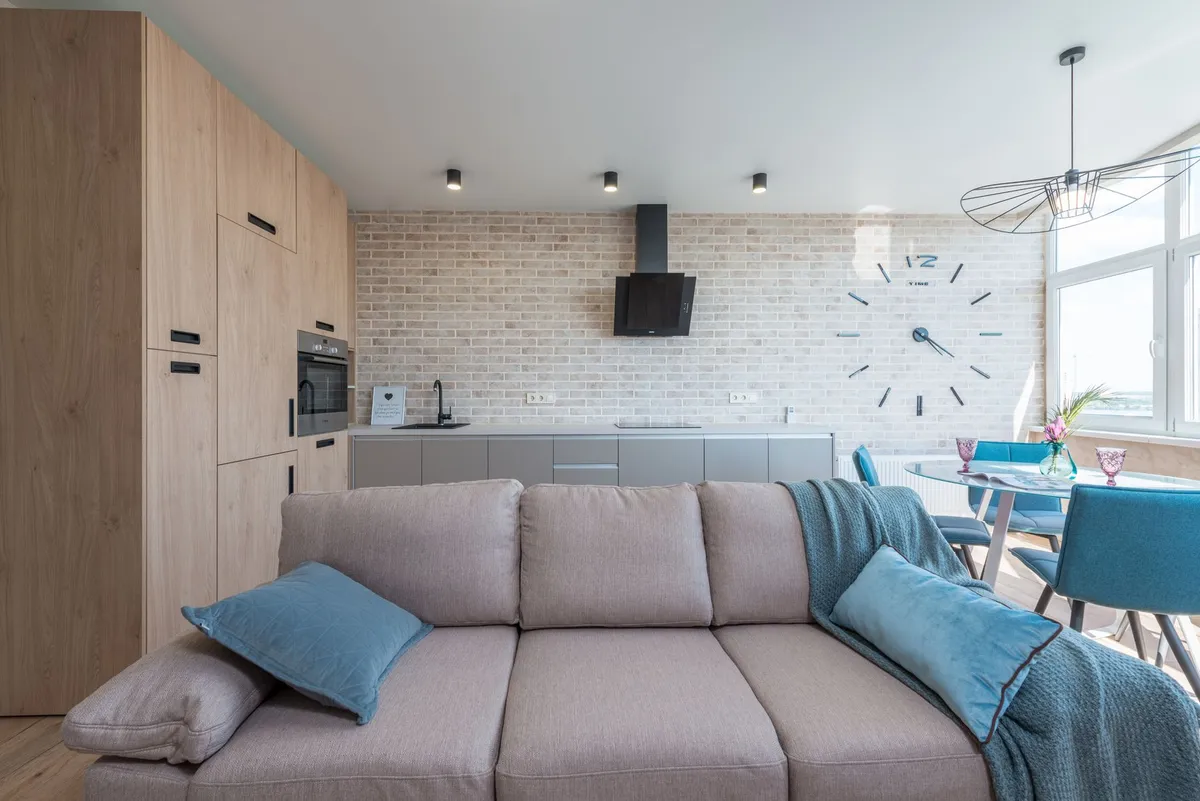
The single most useful application of AI room visualization in renovation planning is testing wall removal before committing to it. Upload a photo of your existing closed-plan layout to the free AI render tool and see a realistic interpretation of the space with the wall removed—different island configurations, flooring continuity, and furniture arrangements in the resulting open space. This is particularly useful for identifying problems in advance: an open plan that leaves the refrigerator awkwardly exposed to the dining table, or a layout where removing the wall eliminates the only practical place for the sofa. You can also compare it against related renovations using the full design dashboard. See more transformation examples in the before-and-after gallery.
Open Plan Living Renovation FAQ
How do I know if a wall is load-bearing before I demo it? The most reliable method is to have a structural engineer inspect it—typically $300–$600 for a residential consultation. Warning signs that a wall is likely load-bearing: it runs perpendicular to joists, it's centered in the floor plan, it sits above a beam visible in the basement or crawlspace, or there's a wall directly above it on the floor above. None of these are definitive without structural analysis, which is why professional confirmation before demo is non-negotiable for walls that may be structural.
Is an open plan renovation worth it for resale? In most American markets, yes—particularly for homes built before 1980 where the closed-plan layout is a genuine functional limitation relative to comparable properties. The caveat is that the quality of execution matters as much as the fact of the conversion; a poorly planned open plan with awkward island placement, inconsistent flooring, and no acoustic mitigation can actually hurt a home's presentation relative to a well-maintained closed-plan original.
Can I open up my kitchen without removing a load-bearing wall? Often, yes. Many kitchens are partially bounded by partition walls that can be modified or removed without structural intervention, while the load-bearing perimeter and center walls remain. A structural assessment will identify exactly which walls are and aren't candidates. In some cases, widening an existing doorway opening to a cased opening 6–8 feet wide achieves most of the visual openness of full wall removal at a fraction of the structural cost.
How long does an open plan conversion take? Structural wall removal alone, once the permit is obtained, typically takes a crew 1–3 days for demolition, beam installation, and rough finishing. A full kitchen-to-open-plan conversion including kitchen reconfiguration runs 6–12 weeks depending on cabinetry lead times, which have ranged from 4–14 weeks for custom or semi-custom work in the current supply environment.