
Before & After Kitchen Transformation: 10 AI-Powered Renovations
10 stunning before and after kitchen transformations visualized with AI. See dated kitchens become modern masterpieces across 10 different design styles.
RoomRenovation.AI Team
Updated March 24, 2026
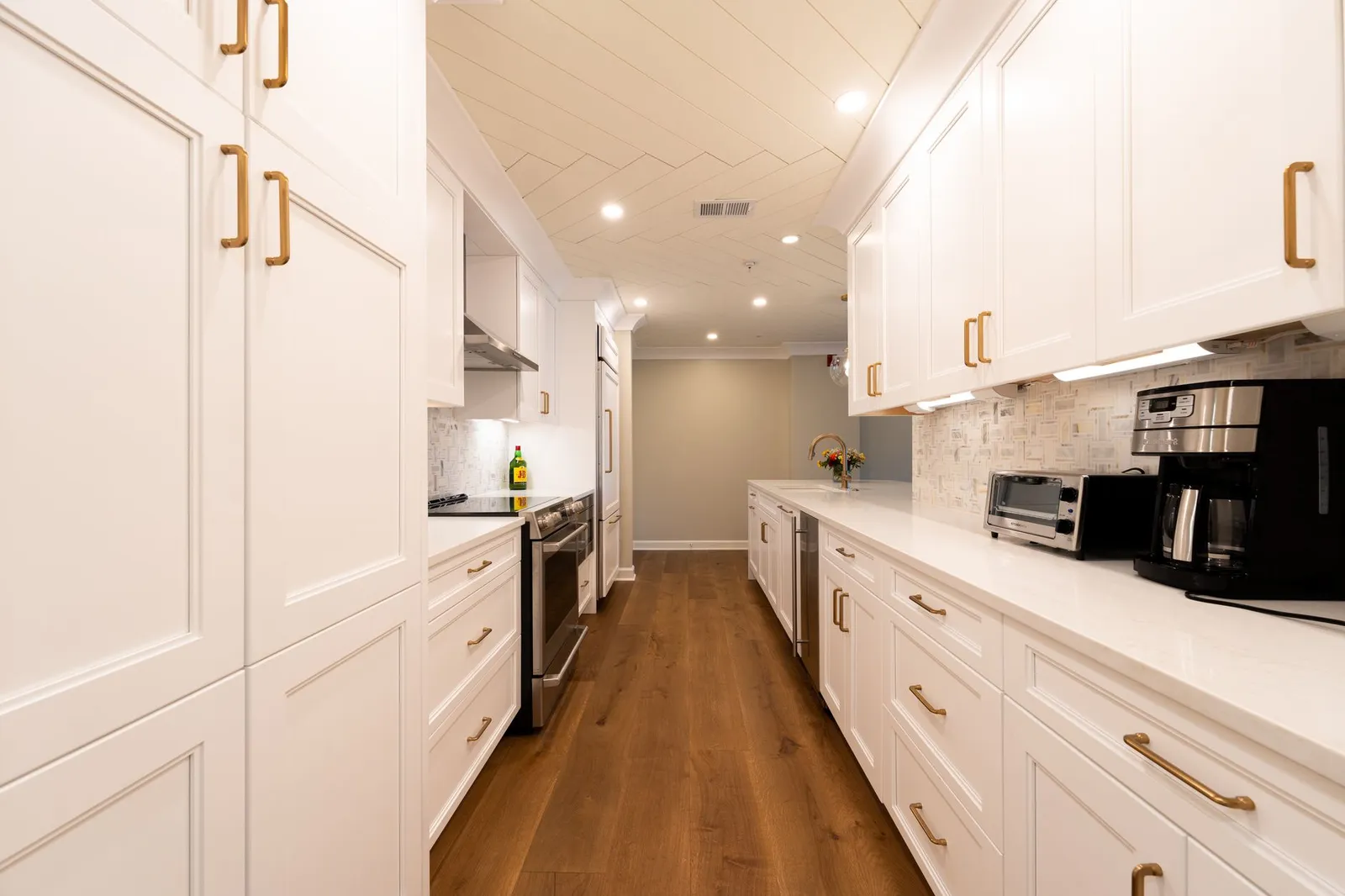
Kitchen transformations are some of the most dramatic room changes you'll ever see — a dated, dark, or dysfunctional space becomes something that genuinely improves daily life. With AI-powered kitchen visualization, homeowners can now see exactly what their kitchen would look like after a transformation before spending a single dollar on labor or materials. This article walks through 10 different kitchen transformation scenarios, the design decisions driving each one, and what they realistically cost in 2026.
Why Kitchens Are the Most Transformative Room in the House
No room affects daily life — and home resale value — as directly as the kitchen. It's where most households spend 2–3 hours every day; where the quality of materials, lighting, and layout becomes obvious through constant use; and where dated choices (oak cabinets with rope-edge detail, laminate countertops in almond, fluorescent tube fixtures) announce themselves loudest to both residents and buyers.
The transformations below represent real starting conditions that homeowners face across different home types and price points — not curated showrooms with photogenic starting points.
Transformation 1: Dark Oak to White Shaker
The most common 1990s kitchen: dark oak raised-panel cabinets, laminate countertops, and a drop ceiling with fluorescent lighting. Visually heavy, light-absorbing, and dated in ways that feel pervasive rather than fixable with accessories.
AI visualization approach: Upload the existing kitchen photo and select a transitional-white style. The render replaces oak with painted shaker-style cabinets in off-white, introduces a marble-look quartz countertop, and adds pendant lighting over the island or peninsula.
What the transformation requires: Cabinet repainting ($1,500–$3,500 by a professional painter), new hardware ($150–$400), countertop replacement ($2,500–$6,000 for quartz), and new lighting ($300–$800). Total: $4,500–$10,000, which is significantly less than new cabinets at $15,000–$40,000.
Transformation 2: Builder-Grade Beige to Modern Black and White
Builder-grade kitchens from 2005–2015 typically feature honey maple or medium-brown cabinets, black laminate countertops, and minimal hardware. Functional but characterless — the absence of design intent is its defining quality.
AI visualization approach: Select a modern-contrast style. The render introduces matte black lower cabinets, white uppers, quartz countertops with dramatic veining, open floating shelves replacing upper cabinets on one wall, and brushed gold hardware and faucet.
What it requires: Cabinet painting or refacing ($2,000–$5,000), countertop replacement ($3,000–$7,000), hardware swap ($200–$500). The two-tone paint approach is achievable as a weekend DIY project with proper prep. Total for professional execution: $5,000–$12,000.
Transformation 3: Closed Galley to Open Concept
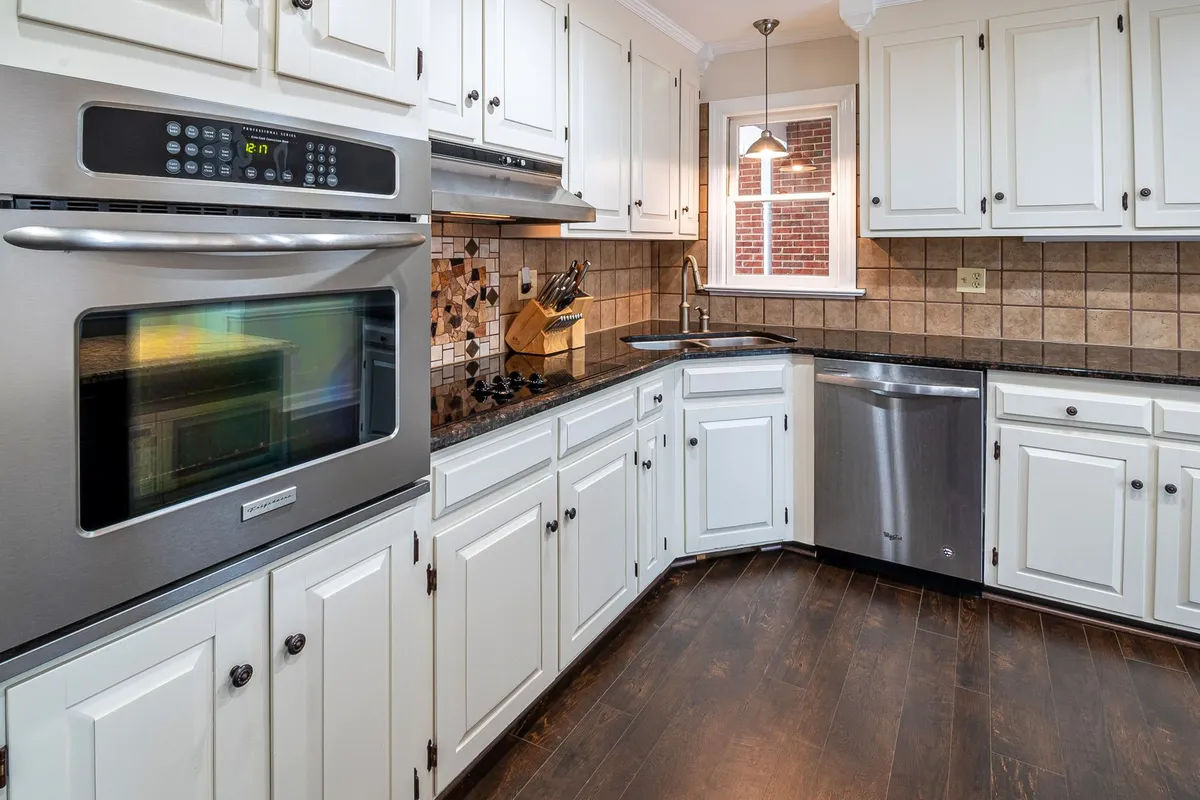
Pre-1980s galley kitchens are often closed off from dining and living areas by a combination of wall and upper cabinet partitions. While galley kitchens are functionally efficient, the visual and social isolation is a significant quality-of-life limitation.
AI visualization approach: Select an open-concept style. The render removes the wall between kitchen and dining room, extends the counter into a peninsula with barstool seating, and introduces a cohesive visual language across both spaces.
What it requires: A structural assessment first (this wall may be load-bearing — never remove without engineer sign-off). Non-structural wall removal and finishing: $2,000–$5,000. If load-bearing: $8,000–$20,000 including beam installation. This is the transformation where AI visualization pays for itself fastest — knowing whether the open-concept direction works spatially before paying for structural evaluation is real value.
Transformation 4: Dated Tile Backsplash to Subway or Statement
The early 2000s produced an enormous quantity of kitchens with 4×4 ceramic tile backsplashes in cream or off-white with contrasting grout lines. The tile itself isn't offensive; the pattern and grout scale date it instantly.
AI visualization approach: Try two versions — a classic white subway tile with white grout (clean, timeless) versus a statement zellige or handmade tile in a color drawn from the countertop material. The contrast between these two outputs helps identify which direction genuinely suits the kitchen.
What it requires: Tile removal and new installation by a tile contractor: $800–$2,500 depending on area and material. A backsplash refresh is one of the highest-value-per-dollar kitchen investments available.
Transformation 5: Open Shelving Conversion
Upper cabinets create a visually heavy kitchen perimeter, closing off the space and creating dark zones between the wall cabinets and counter. Removing some or all upper cabinets and replacing with floating shelves opens the room, adds visual lightness, and — if you have attractive dishware — creates a curated display rather than hidden storage.
AI visualization approach: Select an open-shelving style. The render removes 2–4 upper cabinet runs and replaces them with floating wood or metal shelves displaying ceramics, glassware, and plants.
What it requires: Upper cabinet removal (demolition can be DIY), shelf mounting ($40–$120 per shelf for quality brackets and solid wood shelf), and patching/painting the wall where cabinets were removed ($200–$600 for the wall repair). One of the more achievable transformations for a confident DIYer. Total: $300–$1,200 depending on number of shelves and DIY involvement.
Transformation 6: Fluorescent to Layered Lighting
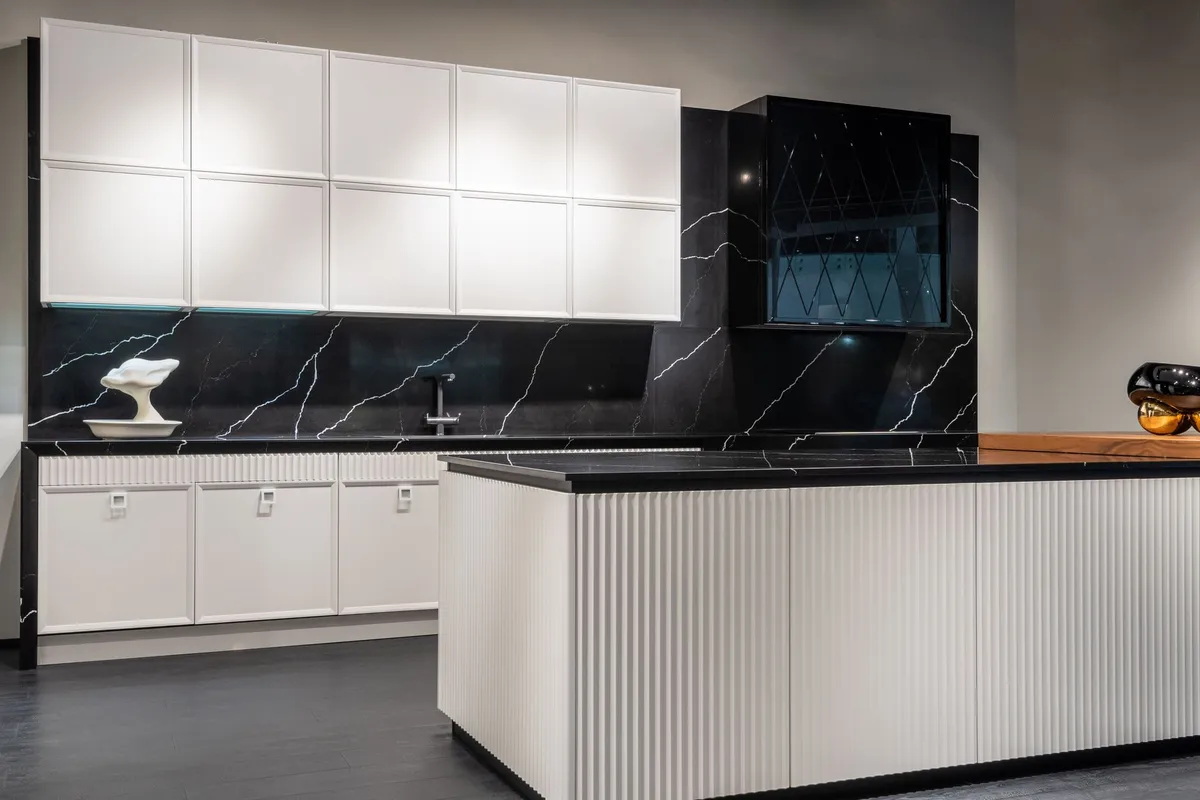
Fluorescent tube fixtures are among the most visually damaging elements in a dated kitchen. They flatten the space, render food and materials in unflattering color, and signal age more loudly than almost any other single element.
AI visualization approach: Select a warm-lighting direction. The render introduces recessed LED downlights on a dimmer as ambient light, pendant lights over the island or peninsula as the accent layer, and under-cabinet strip lighting for task illumination.
What it requires: Electrical work for new circuits and recessed fixtures ($500–$2,000 depending on complexity), pendant fixtures ($150–$600 each), under-cabinet strips ($100–$300 for a typical run). This is the transformation that makes all others look better — proper lighting reveals the quality of materials; poor lighting hides it.
Transformation 7: Laminate to Luxury Vinyl Plank Flooring
Vinyl sheet flooring and peel-and-stick tile from the 1990s have usually aged poorly by now — seams are visible, corners have lifted, and the pattern has dated. Luxury vinyl plank (LVP) is the 2026 high-value kitchen flooring solution: waterproof, durable, warm in appearance, and installable as a floating floor without requiring tear-out of the existing subfloor in most cases.
AI visualization approach: Test a warm oak-look plank versus a cool grey plank versus large-format porcelain tile to see which direction grounds the kitchen most naturally given your cabinet and countertop colors.
What it requires: LVP materials: $2–$6 per square foot. Professional installation adds $2–$5 per square foot. A typical 150 sq ft kitchen: $600–$1,650 in materials plus $300–$750 in labor. Total: $900–$2,400.
Transformation 8: Farmhouse Style Renovation
Farmhouse kitchen aesthetics have proven remarkably durable — shiplap accents, apron-front sinks, open shelving, and warm wood accents continue to read as both current and timeless simultaneously. This transformation works especially well in older homes with existing period character that can be referenced and amplified.
AI visualization approach: Select a farmhouse or cottage style. The render introduces white shaker cabinets, an apron-front sink, open shelving with styled dishware, a shiplap or beadboard accent element, and warm pendant lighting.
What it requires: The apron-front sink replacement alone is $400–$1,200 (fixtures vary widely), including installation ($200–$400). Combined with cabinet painting, hardware, and lighting: $3,000–$8,000 for a comprehensive farmhouse conversion.
Transformation 9: Small Kitchen Space Maximization
Not all kitchen transformations are about aesthetics — some are about function. A small kitchen that's awkwardly laid out, understorage'd, or visually cramped can often be significantly improved through targeted changes that make the space both work better and feel larger.
AI visualization approach: Specify a small-kitchen-optimization direction. The render introduces light cabinet colors (white or pale grey to visually expand), vertical storage (floor-to-ceiling pantry cabinets), under-sink pullout organization, and minimal hardware to reduce visual noise.
What it requires: Primarily cabinet painting, organization hardware ($100–$400 for pullouts, drawer organizers), and possibly a floor-to-ceiling pantry cabinet addition ($300–$800 for an IKEA-system solution). For more extensive kitchen overhauls, the kitchen renovation cost guide provides full 2026 budget ranges.
Transformation 10: From Basic to Entertainer's Kitchen
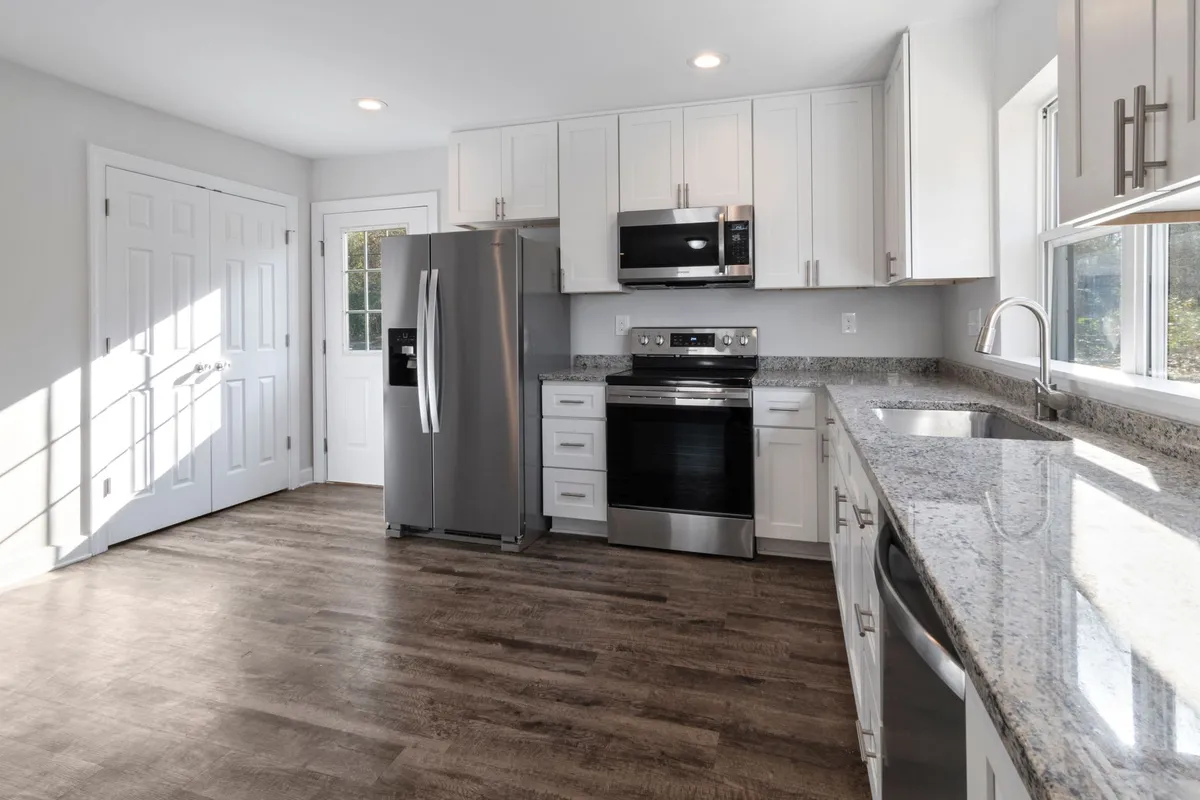
Some kitchens are adequate for daily cooking but actively work against entertaining — poor traffic flow, no space for guests to stand and converse, a layout that isolates the cook from the gathering. An entertainer's kitchen transformation prioritizes flow, seating, and visual coherence with the adjacent living and dining spaces.
AI visualization approach: Select an open-concept entertainer style. The render introduces a peninsula or island with seating, streamlined storage (concealing small appliances and clutter), a statement range or hood as a focal point, and materials consistent with the adjacent dining area.
What it requires: A custom island addition ($1,000–$5,000), range hood upgrade ($400–$2,500), and possibly countertop extension. This is the transformation where phasing pays off most — island first, then range area, then materials refresh.
How to Use AI to Visualize Your Kitchen Transformation
Every transformation above starts with the same step: uploading your current kitchen photo to the RoomRenovation.ai dashboard. The tool analyzes your kitchen's dimensions, cabinet configuration, lighting conditions, and existing materials, then generates a photorealistic render showing your specific space transformed. The free render option lets you test the concept before subscribing.
For any transformation involving significant renovation costs, use the pricing guide to understand what comprehensive packages cost, and reference the kitchen renovation cost guide for contractor pricing context. Seeing the transformation in your actual kitchen — not a showroom — is what makes AI visualization genuinely useful rather than merely entertaining.
FAQ
Which kitchen transformation delivers the best return on investment? Cabinet painting consistently delivers the best ROI — dramatic visual impact at a fraction of replacement cost. Lighting updates are the second-highest-impact change per dollar. Full cabinet replacement is rarely necessary if existing boxes are structurally sound.
How accurate are AI kitchen renders? They're accurate for style direction, color palette, and general spatial arrangement. Scale relationships between elements (cabinet height, counter depth) may not be pixel-perfect — treat renders as high-quality concept visualization, not architectural drawings.
Can AI predict how a new countertop material will look in my kitchen? Yes, with good accuracy. The AI models different materials (quartz, marble, butcher block, concrete) and can show how each interacts with your existing cabinet colors and flooring in your specific light conditions.
Do I need to commit to one transformation type or can I mix approaches? Mix freely — most real kitchens benefit from combinations (new lighting + backsplash + countertop, for instance). Generate renders for each approach and for combinations to identify the most impactful package for your budget.
Is a kitchen renovation worth it in a home I might sell in 2–3 years? Minor kitchen updates (paint, hardware, lighting, backsplash) recoup 70–90% of cost in resale value and sell homes faster. Major renovations ($30,000+) in homes not priced to support them often recoup less. AI visualization is especially useful in this context — it identifies the highest-impact changes without overbuilding.