
Kids Room Makeover Ideas: AI Visualization for Fun, Functional Spaces
Kids room design ideas visualized with AI. From toddler to teen, see playful themes, smart storage solutions, and stylish updates for growing children.
RoomRenovation.AI Team
Updated March 21, 2026
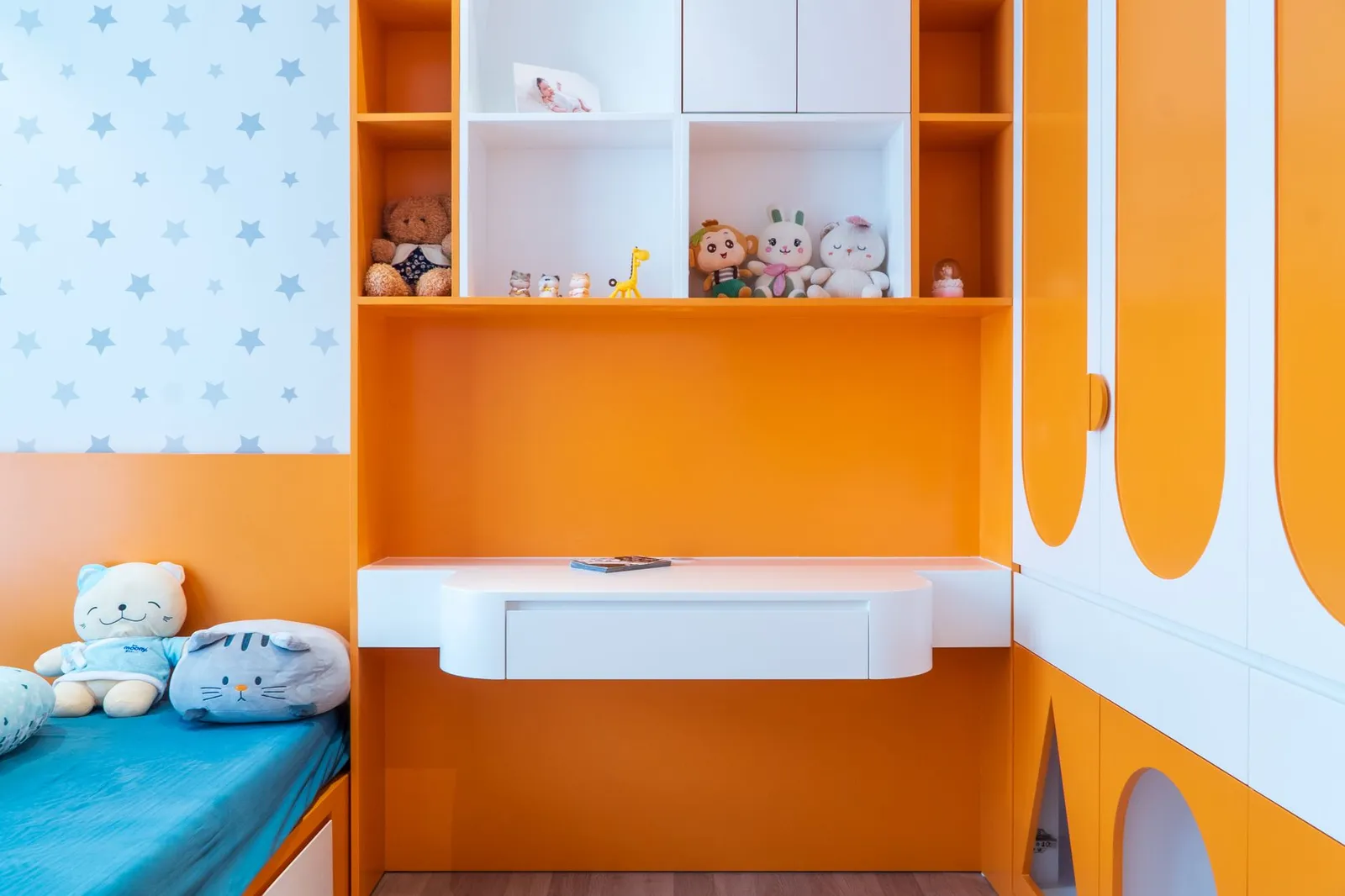
A kids room makeover is one of the most rewarding design projects in any home — and one of the trickiest to get right. Children's spaces need to balance imagination with function, durability with beauty, and a child's current personality with a room that won't need replacing in two years. AI visualization makes this balance much easier to strike by letting you test ideas on your actual room before buying anything — which is particularly valuable when your eight-year-old insists on an all-purple room and you're not entirely convinced.
The Core Challenge: Rooms That Grow
The biggest design mistake in children's rooms is building too specifically for one age. A toddler space covered in cartoon characters becomes an embarrassment to a seven-year-old; a teen-focused design confuses a twelve-year-old who hasn't arrived there yet. The smartest kids room designs build a flexible foundation that adapts through accessories and paint rather than requiring structural renovation every three years.
The framework: neutral-ish walls (a soft warm white, a light sage, a dusty blue — not stark grey or bright primary colors), quality furniture in real wood or powder-coated metal that survives through multiple childhood phases, and personality delivered through textiles, art, and accessories that swap easily as interests evolve. When you visualize this approach versus the fully character-themed alternative, the longevity difference becomes obvious.
Age-by-Age Kids Room Design Ideas
Toddler (Ages 1–4): Safe, Stimulating, and Manageable
Toddler rooms need low furniture (beds close to the ground, accessible toy storage), soft surfaces, and no sharp corners at head height. The design priorities are safety first, then sensory engagement. Color matters more in toddler rooms than any other age — research consistently shows that young children respond strongly to warm, saturated colors, particularly reds, oranges, and yellows at low saturation. Think dusty terracotta, warm butter yellow, or coral rather than primary-level brightness.
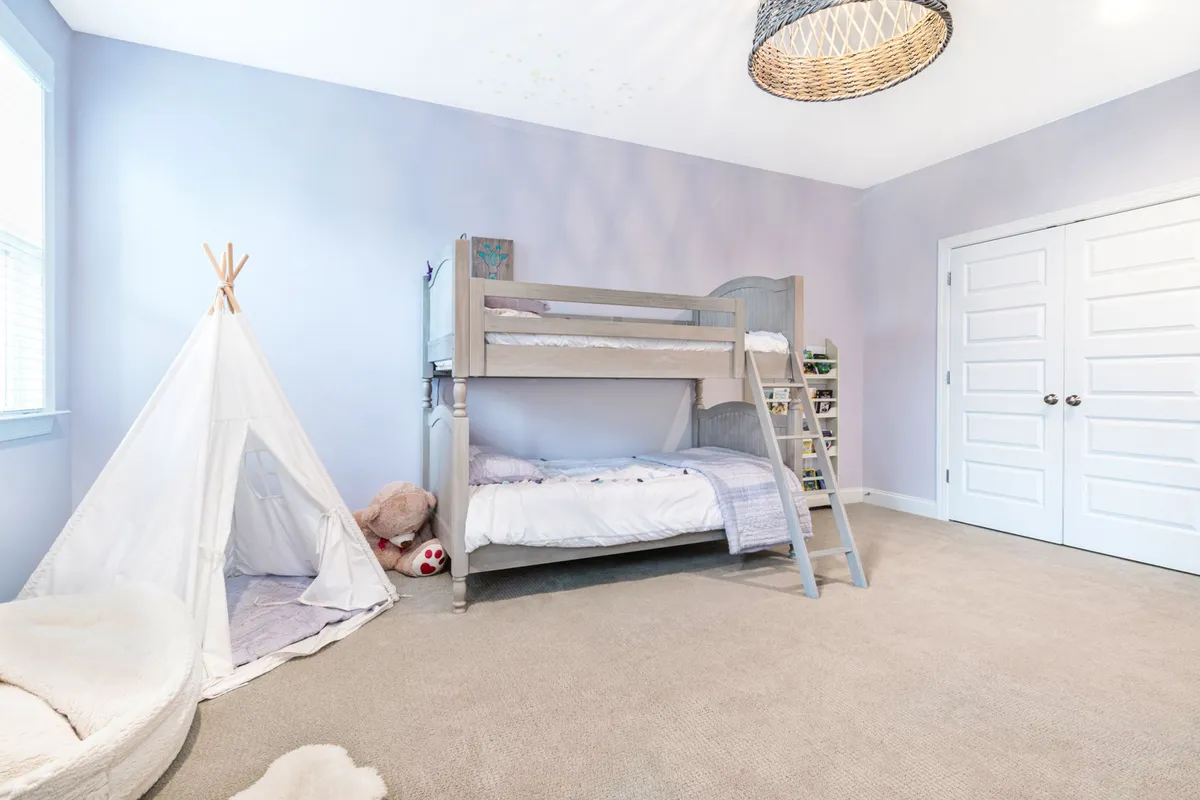
A reading nook — even a simple tent over a bean bag with a basket of books — creates an enclosed, cozy space that toddlers gravitate toward naturally. Built low enough to be independent, it encourages early literacy habits without any formal instruction. AI visualization can show you exactly how a canopy or tent structure would look in your room's corner before you build or buy anything.
Elementary Age (Ages 5–10): Function Meets Fantasy
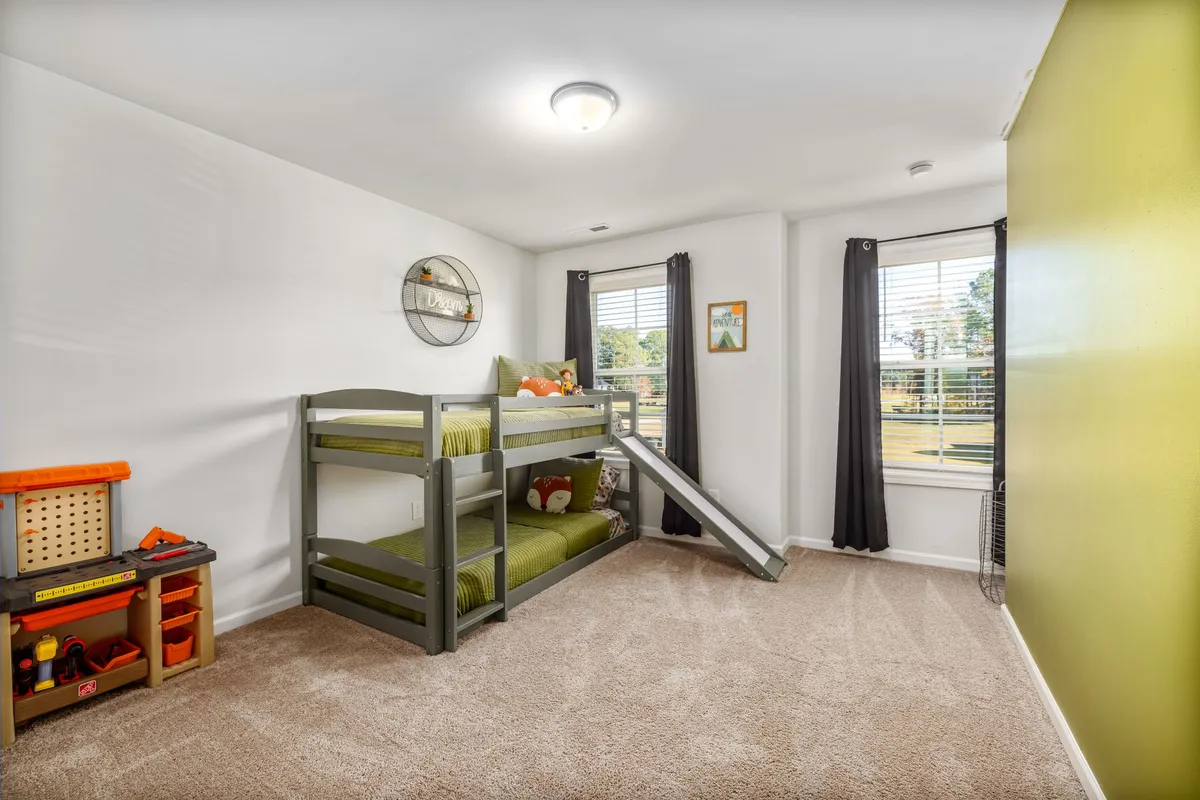
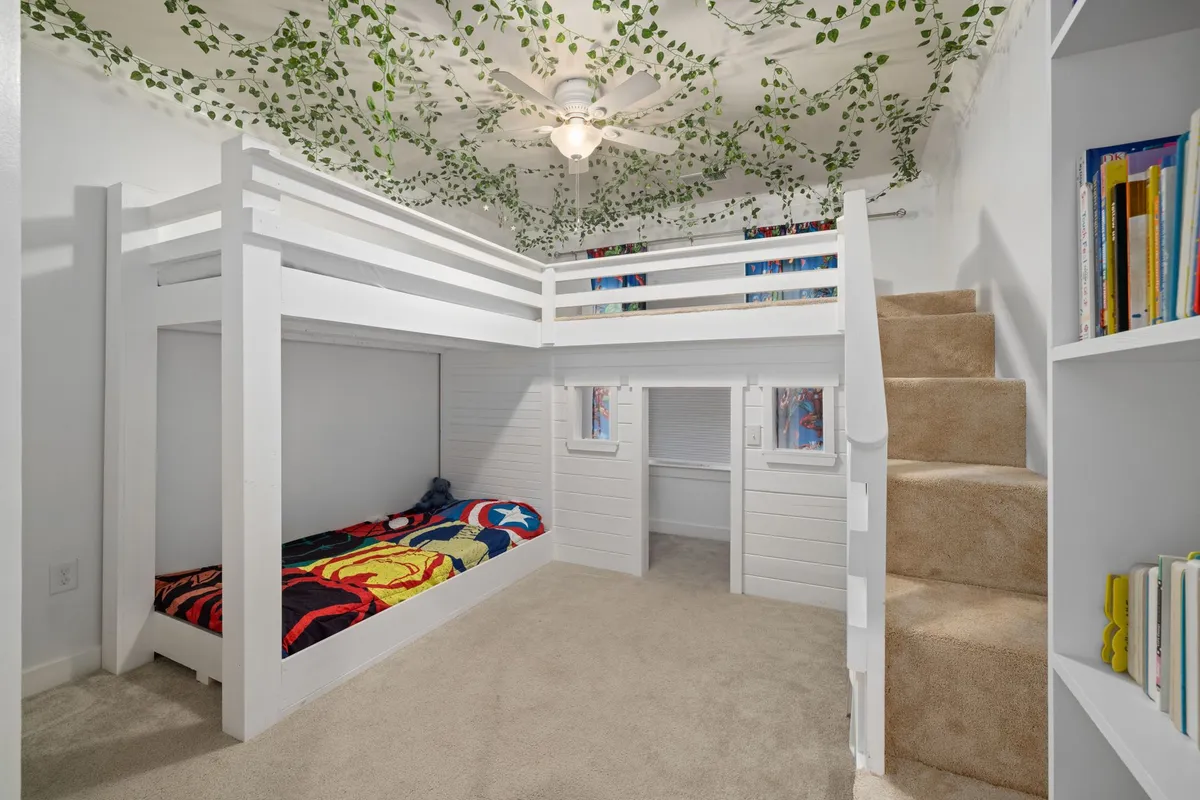
School-age children need homework space, dedicated storage for art supplies and collections, and still want some whimsy. The loft bed becomes useful here — sleeping is elevated, creating a functional zone below for a desk or reading nook that makes better use of vertical space in smaller rooms. This is the phase where a theme can work without feeling oppressive, provided it's executed through textiles and wall art rather than themed furniture that locks you into one look.
Storage walls are transformative at this age: full-height shelving systems with bins, baskets, and open shelves for display give children agency over their own space while keeping surfaces clear. The IKEA KALLAX or similar grid systems customized with fabric bins in two to three coordinating colors — let the child pick them — provide enough personalization to feel special.
Tween (Ages 11–13): The Transition Room
Tweens are acutely aware of how their rooms compare to peers' and to aspirational spaces they see online. This is when gender-specific themes feel constraining and the room needs to feel more grown-up without losing all warmth. The tween room benefits from a clean, almost-adult aesthetic with personality delivered through a gallery wall, a comfortable reading chair, and better lighting than most children's rooms receive.
Swap character bedding for solid colors or subtle patterns. Invest in good task lighting for the desk — a quality desk lamp makes homework measurably more pleasant. Add a full-length mirror (essential for a self-conscious tween). Remove the bottom tier of storage bins and replace with a low dresser that reads as adult furniture. These changes cost $400–$900 and make a radical difference in how the room feels to the child who has to sleep in it.
Teen (Ages 14–18): A Real Room for a Real Person
The teen room should function essentially as a studio apartment: sleeping, studying, socializing (virtually and in person), and expressing a developing identity. The design goal is a space the teenager actually wants to spend time in, which typically means good lighting, comfortable seating for friends, meaningful personalization (their own art, photos, objects), and surfaces that aren't cluttered with childhood furniture they've outgrown.
Gallery walls at teen age are particularly powerful — a curated collection of band posters, photographs, art prints, and found objects tells the story of who this person is becoming. Unlike wallpaper or painted murals, it's completely rearrangeable and evolves naturally. Use painter's tape strips as an alternative to command strips if your walls are sensitive. The bedroom design guide covers teen-specific layout strategies in more detail.
Smart Storage Solutions for Kids Rooms
Storage is where most children's rooms succeed or fail as functional spaces. The design principle is that children cannot maintain order they haven't been set up for — if the storage system requires sorting, labeling, and careful placement, it will be ignored by every child under fifteen and most children over fifteen. Design for the path of least resistance:
- Open bins, not lidded boxes: Things get put away when the gesture is one motion, not three
- Labeled zones, not labeled individual bins: "Art" section, not seven labeled containers within it
- Under-bed storage: Rolling drawers or bins for seasonal clothes, extra bedding, or larger toys
- A catch-all basket at the door: Daily gear (school bag, sports equipment) has a home that requires zero organization
- Toy rotation: Store 60% of toys out of the room; rotate monthly. Children play more deeply with fewer options and value their toys more
Using AI to Visualize Kids Room Makeovers
The practical advantage of AI room visualization for children's spaces is that you can involve the child in the decision without committing to their first impulse. Show your daughter the all-purple render, the sage green alternative, and the warm white with purple accents. Let her see all three before she decides. Most children, when given a genuine visual choice rather than an abstract one, choose more thoughtfully than their first request suggested.
This also works for convincing reluctant partners. "I want to do the jungle theme in their room" lands differently when you can show a photorealistic render of what that actually looks like versus a theoretical description. Upload your child's room photo to RoomRenovation.ai and run through five or six style options together as a family — the design process becomes a shared project rather than a parental imposition. Try a free room render first to see how faithfully the tool captures your room's specific architecture and light.
Budget Ranges for Kids Room Makeovers
Children's rooms don't need to be expensive to be excellent. The most over-designed kids rooms are often the least livable:
- $500–$1,500: Paint + new bedding + storage reorganization + a few curated accessories. Transformative without replacing furniture.
- $2,000–$5,000: Add a new bed frame or loft bed, quality storage unit, desk and chair, and updated lighting. The full functional renovation.
- $8,000–$15,000: Custom built-ins, quality flooring, complete furniture replacement, and a thoughtful lighting plan. Worth it for a room that will serve for ten or more years.
The nursery is a related but distinct challenge — see our nursery renovation cost guide for age-zero-specific planning. And if you're planning a full bedroom renovation alongside other rooms in the house, the RoomRenovation.ai pricing page explains credit packs that make sense for multi-room visualization projects.
FAQ
How do I design a shared kids room that works for two different ages? Define clear, separate zones — each child's bed, storage, and display area should be distinctly theirs. Use the same base palette but give each child accent color authority within their zone. Avoid shared storage; individual responsibility is impossible with shared bins.
What's the best flooring for a kids room? Luxury vinyl plank (LVP) is the practical champion: waterproof, scratch-resistant, comfortable underfoot, and available in beautiful finishes that read as hardwood. Add a large area rug for play comfort. Hardwood is lovely but shows every scuff; carpet holds allergens and stains permanently.
How do I create a room my child will love for more than two years? Build the structural elements (paint, flooring, furniture) in the neutral-but-warm direction, and deliver personality through accessories that can change: bedding, art, throw pillows, and small decorative objects. The neutral base lets the personality layer evolve without requiring renovation.
Can AI visualization handle bunk beds and loft beds? Yes — the AI interprets your existing room and applies style transformations that account for whatever furniture is present. Uploading a photo with an existing loft bed will show you how the overall room style works around that anchor piece.
When should I involve my child in room design decisions? From age four onward, children can meaningfully participate in color choices when given visual options rather than abstract ones. This is exactly where AI renders help — instead of asking "do you want blue or green?" you show them renders of each and get an informed answer.