
Mudroom Renovation: The Ultimate Entryway Organization
Design an efficient mudroom with built-in storage, bench seating, and organizational systems that handle daily chaos.
RoomRenovation.AI Team
Updated March 24, 2026
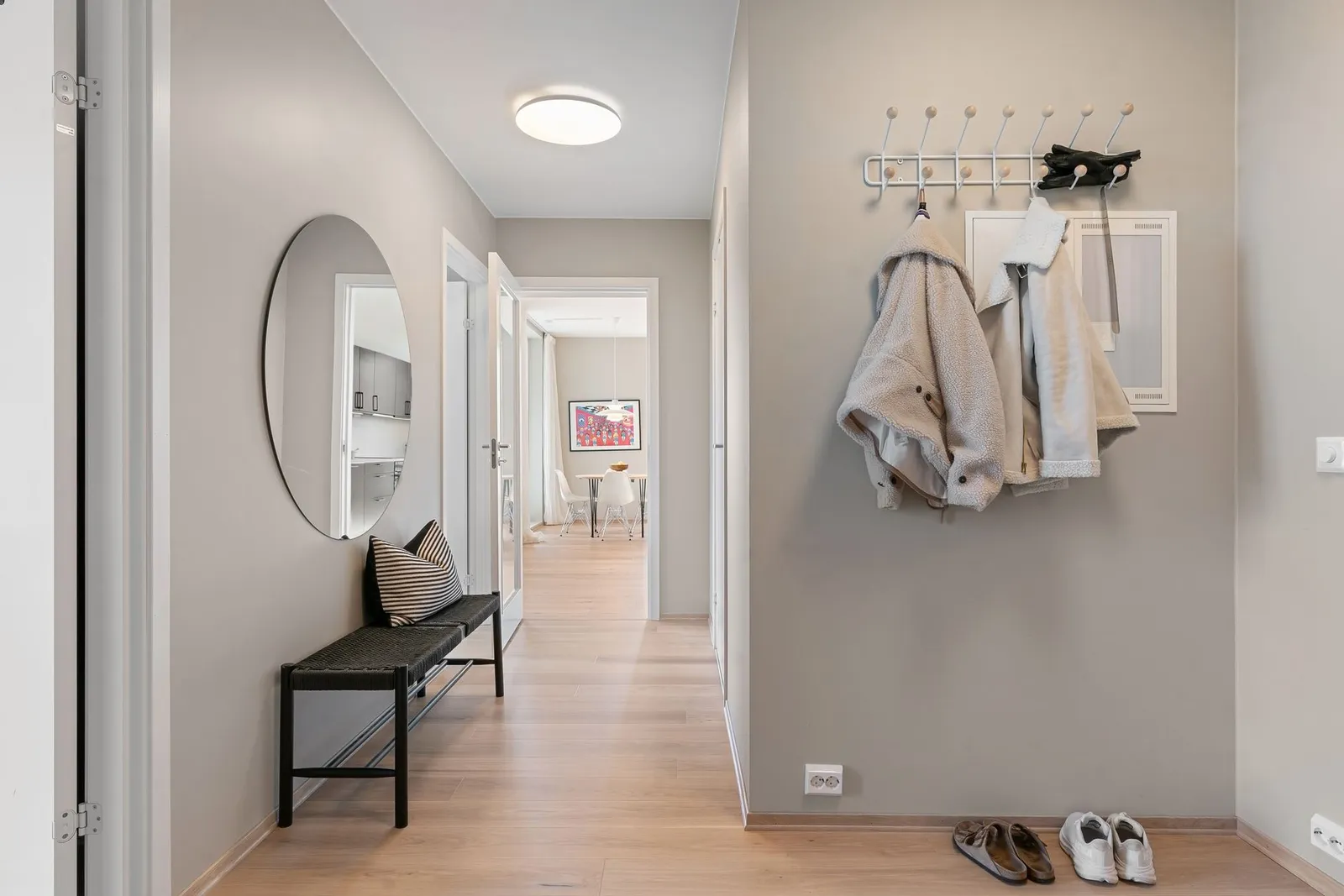
The mudroom is the hardest-working room in a family home, and also the most neglected. It absorbs backpacks, jackets, boots, sports equipment, dog leashes, and school papers in a daily tidal wave of household entropy. An ineffective mudroom means all of that chaos migrates to the kitchen, the hallway, and everywhere else you don't want it. A well-designed mudroom contains the chaos, organizes it, and presents a composed face to anyone who walks through the front or back door.
Start With a Program: What Does Your Mudroom Need to Do?
Before selecting materials or fixtures, map the actual daily use of your entryway. Ask:
- How many people use this entry regularly? Each person needs dedicated hooks and ideally a designated locker or cubby.
- What comes in through this door? School backpacks, sports gear, groceries, pet supplies, and outdoor gear all require different storage solutions.
- Is there a dog? Dog storage (leashes, collars, poop bags, towels) needs a specific zone near the door.
- Do kids change from outdoor shoes at the door? A shoe storage bench becomes the primary design element.
- Do you need to sort mail and manage household admin here? A task surface and charging station may be worth including.
A mudroom that doesn't address all of these specific needs will revert to chaos regardless of how well it's built.
The Core Elements: What Every Functional Mudroom Needs
Bench Seating
A bench at seated height (17–19 inches) directly inside the door is the anchor of any mudroom. It provides a place to sit while removing boots and shoes, and acts as the visual centerpiece around which hooks, storage, and lockers are organized. Built-in benches with storage drawers below or cubbies for baskets are significantly more functional than standalone furniture benches. A typical bench depth of 18–20 inches provides comfortable seating while allowing floor space in front.
Hooks: Type, Height, and Number
Wall hooks are the most-used element in a mudroom. Key decisions:
- Height: Adult-height hooks at 60–66 inches for outerwear. Child-height hooks at 42–48 inches for kids' jackets and backpacks. Both at each family member's locker is ideal.
- Type: Double hooks (a main hook plus a lower auxiliary hook) maximize capacity per linear foot. Heavy-duty hooks that accept a loaded backpack or a winter parka — typically rated for 25+ lbs.
- Number: Minimum two hooks per family member plus two spare hooks for guests. A family of four needs at least 10 hooks.
Shoe Storage
Shoes are the primary organizational problem in most mudrooms. Cubbies below the bench with individual slots per person are the most common solution. Angled shoe shelves in cubbies allow more pairs per linear foot than flat shelves. Ventilated door panels or open cubbies prevent odor buildup. Minimum: two pairs of shoe space per family member in the mudroom; seasonal overflow in a closet nearby.
Built-In Lockers: The Premium Solution
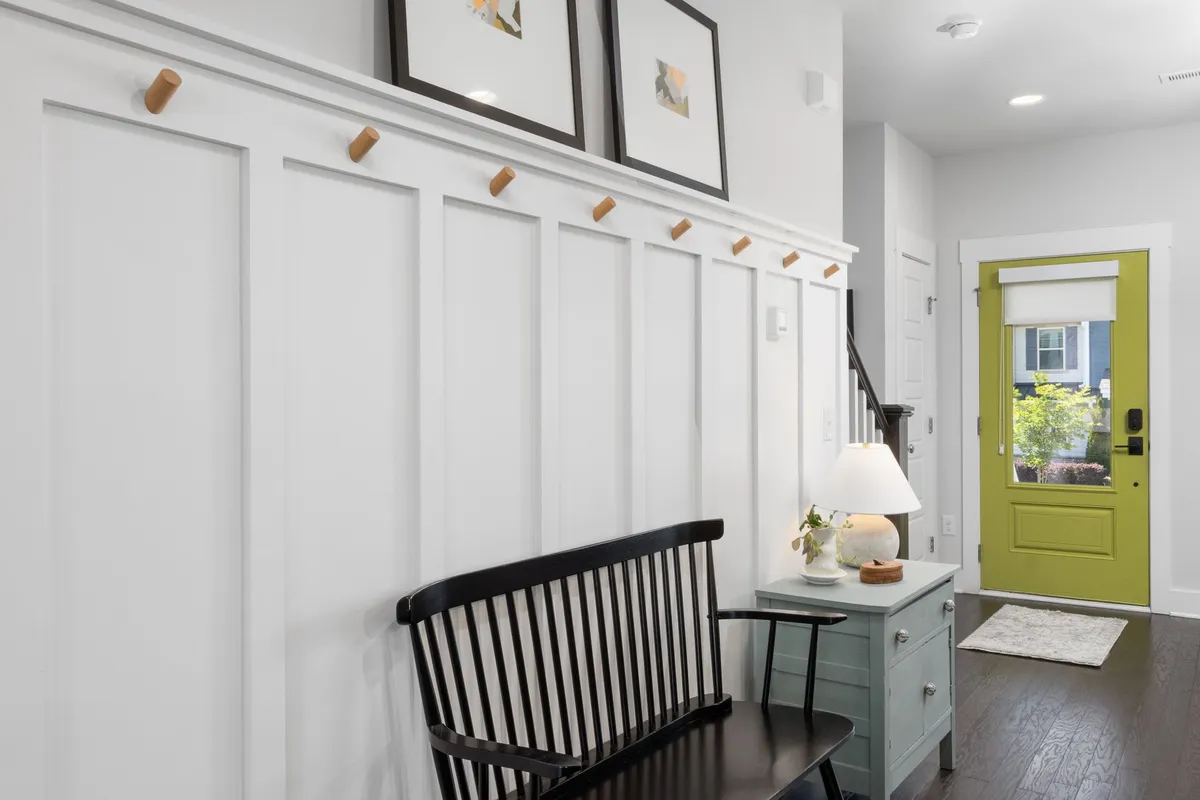
Individual built-in lockers for each family member — a floor-to-ceiling unit with a dedicated hook zone, upper shelf, and lower bench/cubby — are the gold standard for mudroom organization. Each person has an assigned place for everything, which eliminates the "whose jacket is on whose hook" negotiation and makes the space self-maintaining.
Standard locker width is 18–24 inches per person. A family of four needs 72–96 linear inches of locker space. In a small entry hall, this often means organizing lockers on two walls or incorporating narrower 15-inch units.
Cost for built-in mudroom lockers:
- Budget-friendly: IKEA Pax wardrobes customized with mudroom-style hooks and pull-out baskets: $400–$1,200
- Mid-range: Pre-manufactured built-in locker systems (California Closets, The Container Store Elfa): $2,000–$6,000
- Custom built-in cabinetry: $5,000–$15,000 for a full mudroom, depending on complexity and materials
Flooring: The Most Abused Surface in Your Home
Mudroom flooring takes more abuse than any other surface in the house — wet boots, muddy paws, dropped groceries, and the daily friction of family life. Flooring must be:
- Water-resistant: Tile, luxury vinyl plank (LVP), or sealed concrete are the appropriate materials. Hardwood and carpet are not.
- Easy to clean: Grout lines in tile collect dirt. Large-format tiles (12x24 or larger) minimize grout and clean faster. Dark grout hides dirt between cleanings.
- Durable: Look for porcelain tile with PEI hardness rating of 4 or 5, or commercial-grade LVP with 20+ mil wear layer.
- Non-slip: Textured or matte-finish tile provides better traction for wet boots than polished stone or high-gloss LVP.
A machine-washable rug runner in front of the bench provides warmth and traps dirt before it migrates further into the home. Replace or clean it seasonally.
Drop Zone: Command Central for Daily Life
Many families find a mudroom most useful when it includes a "command center" component — a place to drop mail, charge devices, pin school schedules, and handle the administrative friction of daily life:
- A small counter or desk surface at standing height for mail sorting
- A charging drawer or built-in outlet strip for device charging while stored
- A small corkboard or chalkboard paint surface for notes and reminders
- A key rack at eye level beside the door
This "command center" function works best in mudrooms with enough depth to include a task surface without blocking the entry flow. In smaller entries, a single row of hooks with a shelf above for mail is sufficient.
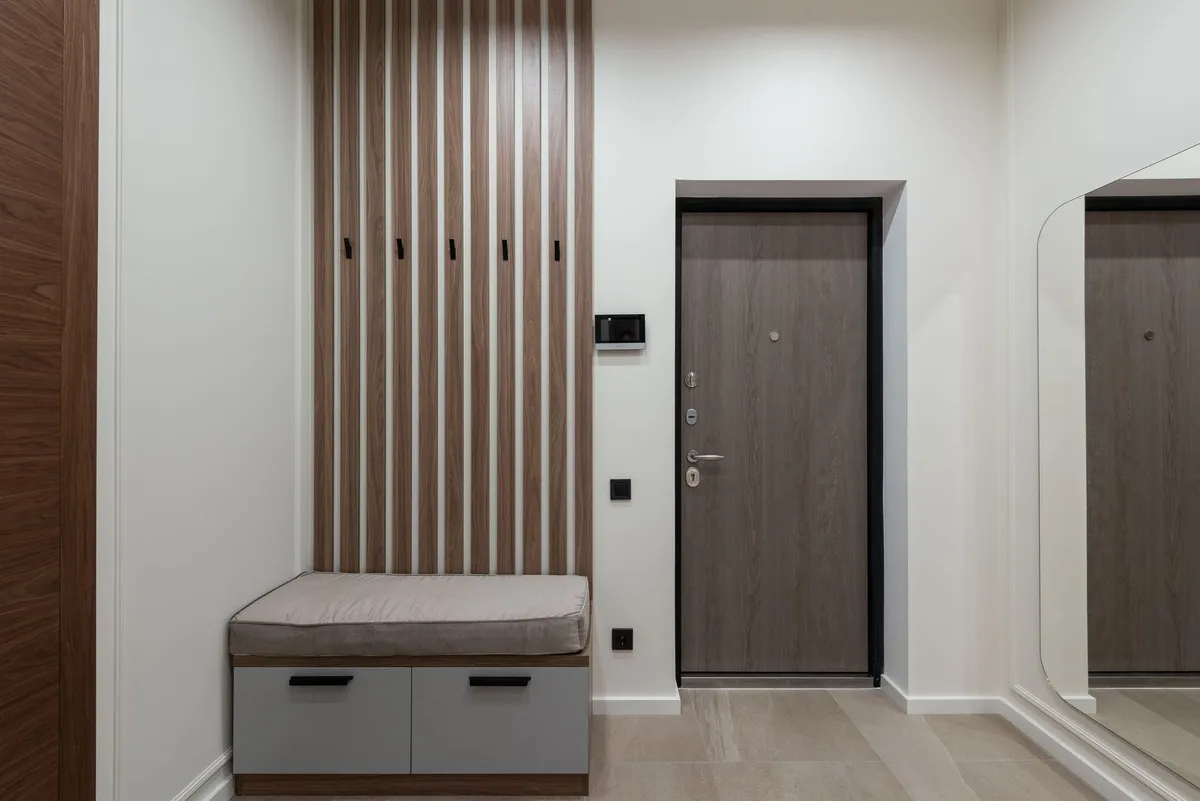
Pet-Specific Mudroom Features
Dogs have their own mudroom requirements that most design guides ignore:
- Dog wash station: A low-set sink or a shower-style wash station with a handheld wand allows cleaning muddy paws before they track through the house. Particularly valuable for larger dogs.
- Towel hooks at dog level: A dedicated hook for the dog towel, reachable while holding a dog, is a small but practical addition.
- Leash and collar storage: A dedicated hook or basket near the door for leashes, harnesses, and poop bags prevents these from migrating.
- Food storage: If the mudroom is adjacent to the back door and garage, a sealed container for dog food stored here reduces kitchen cabinet clutter.
Small Mudroom Solutions for Tight Spaces
Not everyone has a dedicated mudroom room. In an apartment entry hall or a small foyer, a functional mudroom system can be assembled with:
- A wall-mounted bench with fold-up seat (takes 12 inches of floor depth when closed)
- Vertical hook rails on both sides of the entry above the bench
- Woven baskets on a shelf above hooks for hats, gloves, and miscellaneous items
- A shoe tray or low shoe shelf under the bench
An 18-inch-deep by 48-inch-wide alcove can contain a two-person mudroom system if designed intentionally. The key is going vertical — using wall height for storage rather than expanding the floor footprint.
Visualizing Your Mudroom Transformation
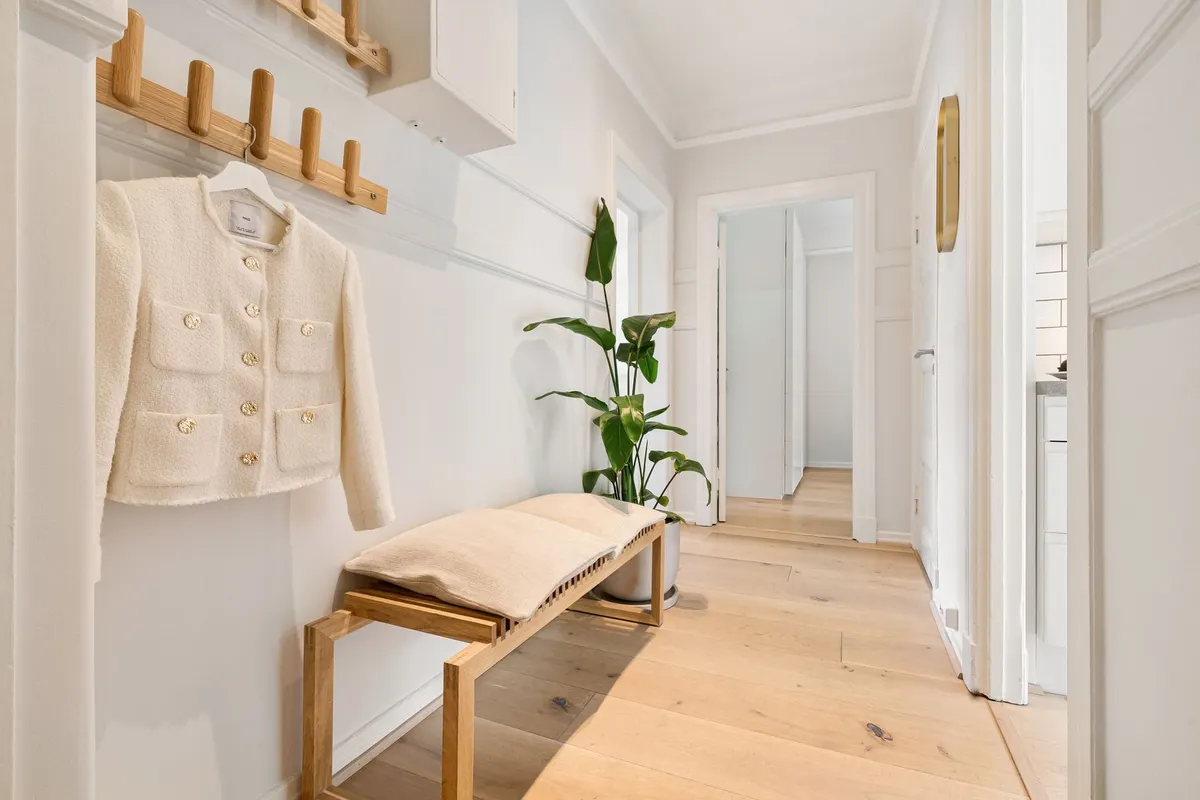
Before investing in built-in cabinetry, use RoomRenovation.ai to visualize different mudroom configurations in your actual entry space. A photorealistic render of a full locker system versus a simpler bench-and-hook arrangement helps you understand the spatial impact before committing. Explore our before-and-after examples for real renovation transformations.
FAQ
How large does a mudroom need to be? A minimum functional mudroom is 4 feet wide and 5 feet deep — enough for a bench on one wall with clearance to stand and remove shoes. A full-featured mudroom with two walls of lockers and a dog wash station comfortably requires 80–120 square feet. Most family mudrooms are between 35 and 80 square feet.
Should mudroom cabinets go to the ceiling? Yes, whenever ceiling height permits. The space between cabinet tops and the ceiling accumulates dust and visual clutter, and the dead storage zone above standard-height cabinets wastes valuable space. Floor-to-ceiling cabinetry provides maximum storage, looks more custom and finished, and eliminates a cleaning problem.
What's the best mudroom bench material? Solid wood is the classic choice and refinishes when scratched. For heavy-duty family use, a painted MDF bench with a hardwood seat insert (easier to repaint and more durable in the painted components) is a practical choice. Upholstered bench cushions look better but collect dirt faster — a removable, machine-washable cushion cover solves this.
Can I convert a closet into a mudroom? Yes — a standard 24-inch-deep closet becomes a miniature mudroom by removing the closet rod, adding a bench with drawers at the base, installing hooks on the back wall and sides, and adding shelving above. The closet door can be replaced with a barn door or bi-fold door to maximize the opening. This conversion typically costs $800–$3,000 in materials and labor.