
Laundry Room Renovation: Efficient and Beautiful Spaces
Design a laundry room that makes chores enjoyable with smart storage, functional layouts, and aesthetic upgrades.
RoomRenovation.AI Team
Updated March 24, 2026
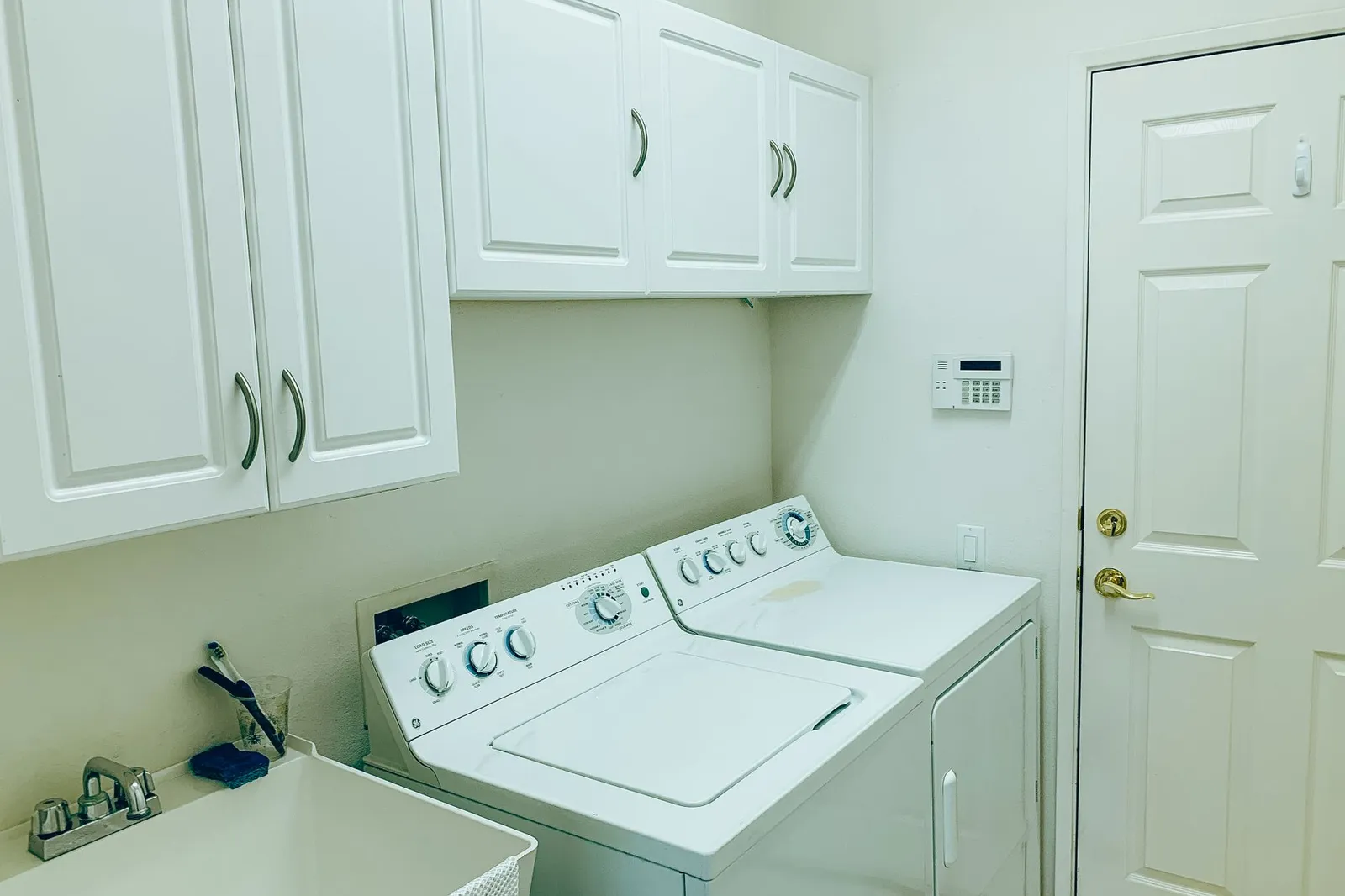
The laundry room occupies a paradoxical position in most homes: it is used more frequently than many spaces that receive far more design attention and renovation investment, yet it is routinely finished as an afterthought — builder-grade vinyl flooring, a shelf above the machines, a bare bulb overhead. A thoughtfully designed laundry room is one of the highest-value-per-dollar renovations you can undertake, delivering functional improvement that affects daily life while adding meaningfully to a home's resale appeal. Laundry room renovation done well transforms drudgery into efficiency and even — improbably — pleasure.
Understanding Your Starting Point
Laundry rooms vary from a generous dedicated room to a closet-sized alcove to a stacked unit in a hallway. The renovation approach must be calibrated to the specific configuration, but the core design principles apply across all scales. Before beginning, assess:
- Square footage and configuration: Can the existing layout accommodate new cabinetry or a folding counter, or must the renovation focus on optimizing an extremely tight footprint?
- Plumbing locations: Moving plumbing adds $500–$1,500+ per line; working with existing locations dramatically simplifies the project.
- Electrical capacity: Dryers typically require a dedicated 240V circuit; adding circuits requires an electrician and permit in most municipalities.
- Ventilation: Dryer exhaust must be properly ducted to the exterior; a renovation is the right moment to verify this is done correctly if not already confirmed.
- Natural light: Even a small window transforms a laundry room from oppressive to tolerable; if one exists, design around it.
Layout Optimization: The Most Important Decision
Side-by-Side vs. Stacked Configuration
The first layout decision is the machine configuration. Side-by-side front-loading washer and dryer on pedestals (raising the drums to a comfortable working height) allow a continuous folding counter above them — one of the most functionally important elements in a well-designed laundry room. The counter should be at least 24 inches deep and as long as the machines plus any adjacent cabinet allows.
Stacked front-loaders free up floor space for additional storage or a utility sink in a narrow room. Stacking kits lock the machines securely and allow shelving or cabinetry to flank the stacked unit. The trade-off is the top-loader accessibility — the dryer drum is at head height for most adults, which suits some users and frustrates others.
Top-loaders (agitator or impeller models) cannot be stacked and require open clearance above the drum lid — this limits overhead storage options significantly. Front-loaders are generally recommended for renovated laundry spaces specifically because they enable the full suite of ergonomic counter and storage solutions above them.
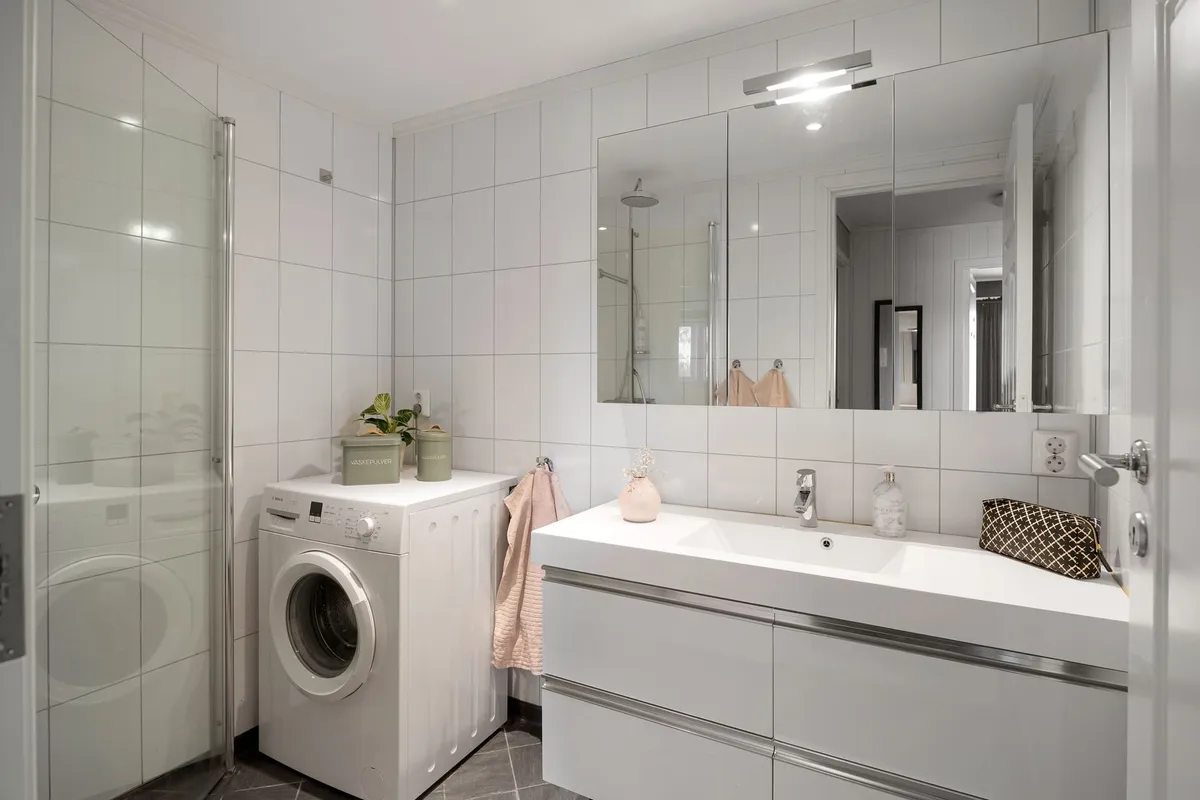
Storage: The Heart of a Functional Laundry Room
Upper Cabinets
Wall-mounted upper cabinets above and flanking the machines are the most efficient storage solution for a laundry room. They keep detergent, fabric softener, stain removers, and cleaning supplies organized, dust-free, and out of reach of children. Standard upper cabinet depth of 12–13 inches doesn't project far enough to obstruct access to the machines. IKEA SEKTION and similar flat-pack cabinet systems offer an accessible solution; semi-custom cabinetry in painted MDF or melamine gives a more considered finish.
The Utility Sink
A utility sink (also called a laundry sink or slop sink) is one of the most used features in a well-equipped laundry room — for hand-washing delicates, pre-treating stains, cleaning dirty shoes, bathing small pets, and countless household tasks. A composite or stainless basin in a dedicated cabinet or on an undermount bracket satisfies the function; a deeper farmhouse-style composite sink adds visual character. Budget $150–$600 for the sink and $300–$800 for installation depending on plumbing proximity.
Hanging Rod and Drying Options
A hanging rod at appropriate height to hang full-length garments directly from the dryer is one of those features that seems minor until it exists and then feels essential. A ceiling-mounted retractable drying rack (also called an airer or Sheila Maid) above the main room area provides drying capacity for delicates that cannot go in the dryer without occupying permanent floor space. Pull-out drying racks that extend from a cabinet also work well in compact spaces.
Laundry Sorting Station
Sorting laundry into lights, darks, and delicates before wash day saves time and reduces errors. A three-section sorting station — either a purchased rolling sorter or custom-built pull-out hamper drawers within cabinetry — addresses this efficiently. Placing it near the door or chute entry point creates a logical flow: laundry arrives, gets sorted, gets washed, gets folded at the counter, gets hung, and departs.
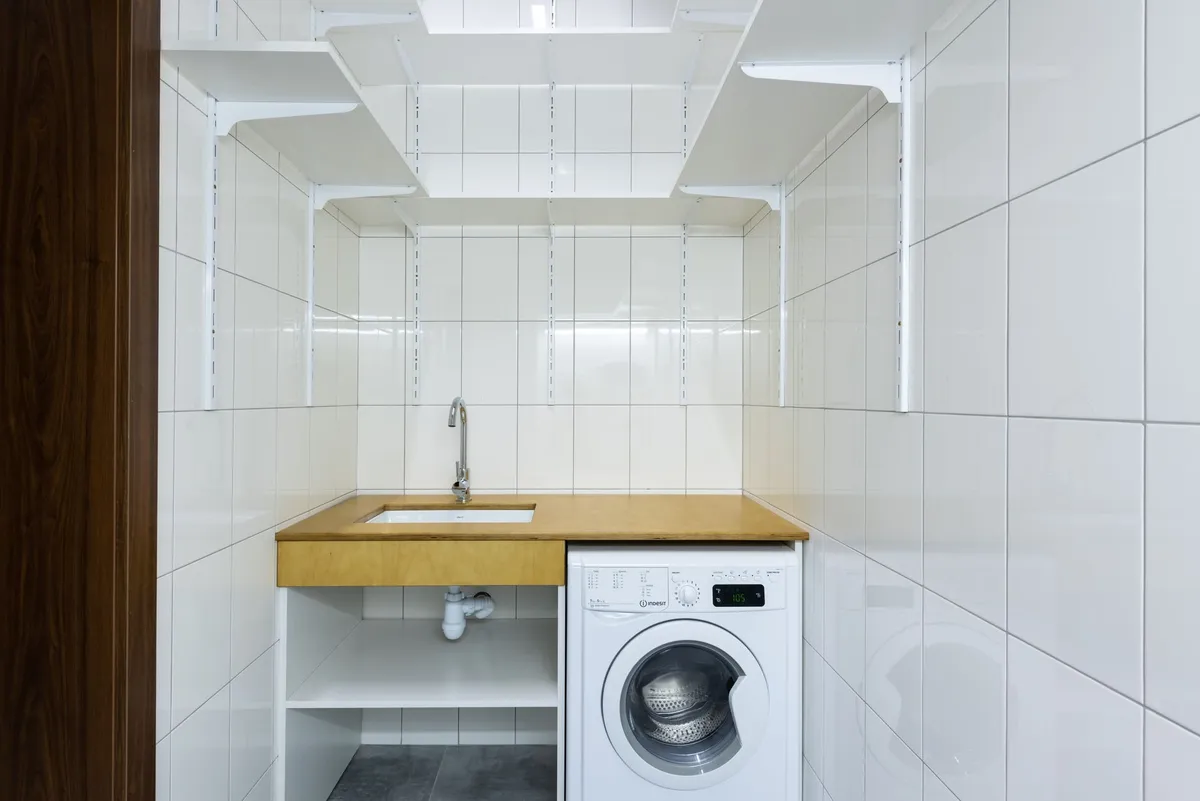
Surface Materials: Durability and Aesthetics
Flooring
Laundry room flooring must withstand moisture, occasional floods, foot traffic, and the vibration of spinning machines. The best choices in 2026:
- Ceramic or porcelain tile: The gold standard for laundry rooms — impervious to water, durable, available in every aesthetic. Heated tile flooring is a legitimate and affordable luxury addition. The main downside is installation cost ($6–$14 per square foot installed) and cold underfoot.
- Luxury vinyl plank (LVP) or tile (LVT): 100% waterproof construction, comfortable underfoot, and available in convincing tile and wood looks. Excellent value at $3–$8 per square foot installed. Specify commercial-grade thickness (6mm+) for durability.
- Avoid: Hardwood (water damage risk), laminate (swells with moisture exposure), cork (holds moisture and mold risk).
Countertops
The folding counter must withstand moisture, detergent contact, and the weight of full laundry loads. Quartz countertop material is the most versatile: non-porous, stain resistant, and available at approximately $50–$90 per square foot for standard colors. Butcher block is warm and appealing but requires regular sealing for water resistance. Laminate countertops in a commercial finish work adequately at lower cost.
Walls
Walls adjacent to machines and the utility sink should be tileable or at minimum paintable with a moisture-resistant primer and washable finish paint. A backsplash behind the utility sink in the same material as the kitchen backsplash or a complementary tile creates a polished, designed look. Even a few rows of subway tile above the sink elevates the room significantly.
Lighting That Makes the Room Work
Laundry rooms are commonly under-lit, with a single ceiling fixture that creates shadows exactly where precision tasks — stain checking, color sorting, delicate inspection — occur. An effective lighting plan includes:
- Overhead ambient lighting: A bright flush-mount fixture or recessed lights on a circuit with a dimmer
- Task lighting under upper cabinets: LED strip lights or puck lights illuminate the folding counter and machine controls without shadow
- Color-accurate lighting for stain inspection: At least one fixture in the 3500–4000K range provides accurate color rendering
Design Character: Making the Space Worth Being In
The functional argument for laundry room renovation is straightforward; the aesthetic argument is equally valid. Time spent in a well-designed space is qualitatively different from time in a neglected one, regardless of the task being performed. Small investments in character pay outsized experiential dividends:
- Wallpaper on one wall: A bold, cheerful pattern in a water-resistant or moisture-protected installation transforms a utilitarian space. Peel-and-stick wallpaper in a laundry room is a legitimate low-commitment option that can be updated as tastes change.
- A single significant paint color: Navy, deep sage, or a warm terra cotta wall behind the machines makes the space feel deliberately designed rather than functionally finished.
- Intentional hardware: Swapping builder-grade silver knobs on cabinetry for matte black, brass, or ceramic pulls costs $2–$8 per piece and takes 30 minutes with a screwdriver.
- Decanting supplies: Moving detergents and supplies into matching glass or ceramic dispensers on an open shelf creates visual order and reduces visual noise from competing label graphics.
Budget Breakdown for 2026
- Cosmetic refresh (new flooring, paint, hardware, lighting): $800–$2,500
- Mid-range renovation (cabinets, countertop, utility sink, new flooring): $3,500–$8,000
- Full gut renovation (all of the above plus plumbing moves, new machines, tile backsplash, custom cabinetry): $10,000–$20,000
Laundry room renovations have a strong resale story: in 2026 buyer surveys, dedicated laundry rooms consistently rank as high-priority features, and a renovated laundry space returns a high proportion of its cost in resale value while delivering daily quality-of-life benefits during the years you live with it.
Before committing to a layout or aesthetic direction, use RoomRenovation.AI's visualization tool to see your laundry room redesigned in your actual space. The bathroom renovation cost guide covers adjacent renovation considerations that often pair with laundry room projects. See pricing for render options.
FAQ
Can I add a laundry room if I don't currently have a dedicated space? Converting a closet, pantry, or unused hallway into a laundry alcove is feasible with the right plumbing and electrical access. Costs vary widely — $3,000–$10,000 — depending on how far new supply lines and drain connections must run from existing stacks.
What is the best way to reduce laundry room noise and vibration? Anti-vibration pads under machines ($20–$50) significantly reduce transmitted vibration. Front-loaders on pedestals position the machines higher, reducing floor-transmitted vibration further. If the laundry room shares a wall with a bedroom or office, adding acoustic insulation to that wall during renovation is worthwhile.
Is it worth converting to a gas dryer during renovation? If gas is already available in the home, a gas dryer typically dries faster and costs less per load than electric. Running a new gas line specifically for a dryer ($200–$600 for the line; local permits required) is worth evaluating if you plan to remain in the home for several years.
How do I handle a laundry room that also serves as a mudroom entry? The combination laundry-mudroom is extremely functional but requires careful zone separation: assign one wall to mudroom (hooks, boot storage, bench) and the opposite to laundry, with a hard-wearing floor throughout that handles both mud and water. A utility sink serves both zones. A half-door or dutch door at the exterior entry is a useful functional detail in these spaces.
What single change would most improve a basic laundry room? Adding a folding counter above front-loading machines, if the configuration allows. It transforms a room where laundry piles on a single machine from an efficient workspace into one where the full wash-dry-fold cycle completes without leaving the room.