
Complete Kitchen Renovation Guide: From Planning to Completion
Everything you need to know about kitchen renovation in 2026. Budget planning, design trends, and step-by-step guide for homeowners.
RoomRenovation.AI Team
Updated March 24, 2026
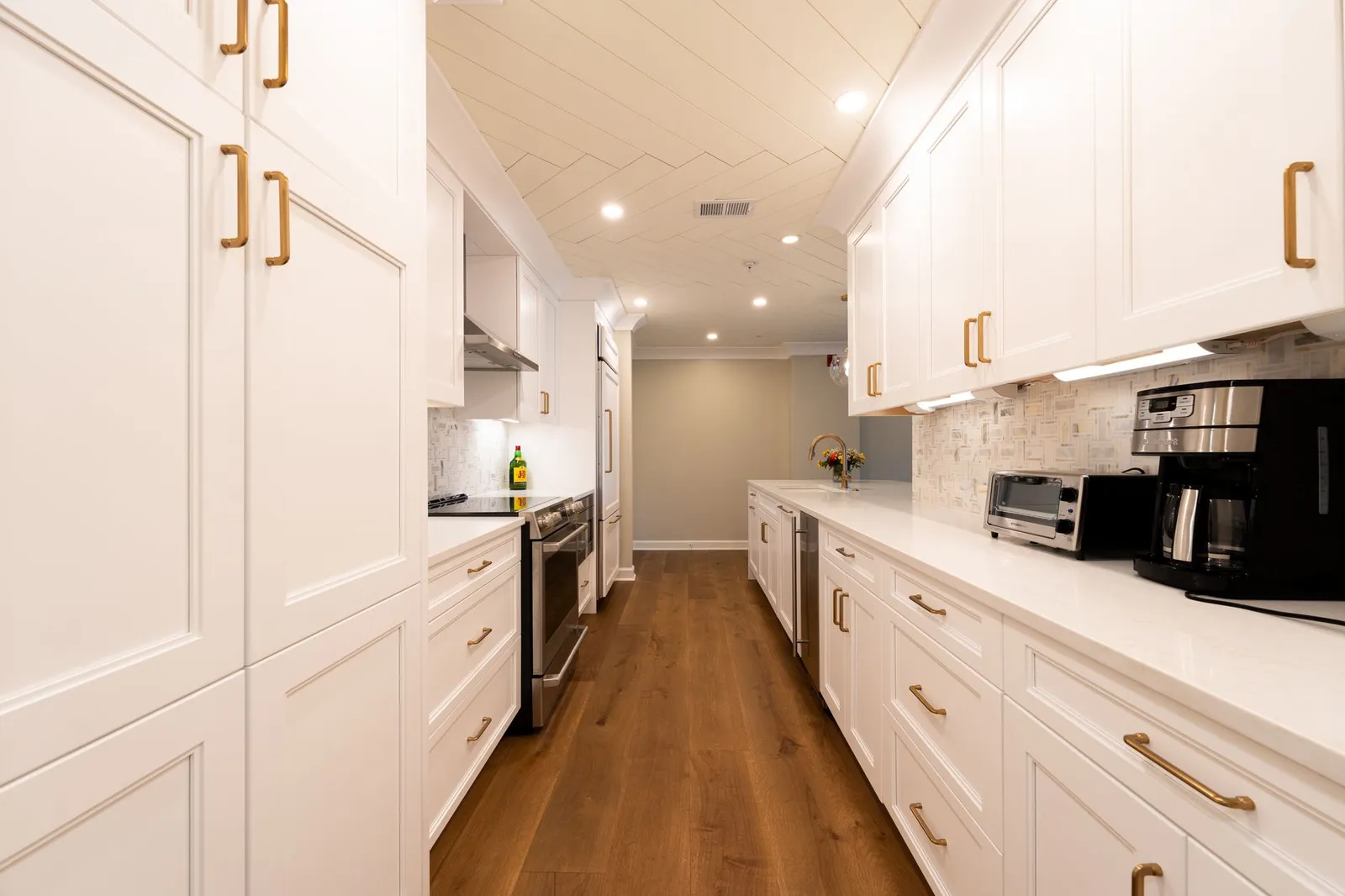
A kitchen renovation is the most complex and highest-stakes home improvement project most homeowners ever undertake—and the one with the most variables that can go sideways between concept and completion. This complete kitchen renovation guide covers the planning framework, budget allocation, design decisions, and contractor management process that determines whether your renovation finishes on time, on budget, and looking the way you imagined.
Setting Your Kitchen Renovation Budget
Budget is the single most important variable in kitchen planning. It determines your cabinet quality, countertop material, appliance tier, and whether you can achieve structural changes that open up the space. Before engaging any designer or contractor, establish a real number—not a wish number.
Budget Tiers in 2026
- Budget kitchen renovation ($10,000–$25,000): Painted or refaced existing cabinets, laminate or entry-level quartz countertops, standard appliances, new hardware, paint, backsplash tile, and possibly new lighting. No structural changes. Best for kitchens with good bones and poor cosmetics.
- Mid-range renovation ($25,000–$60,000): Semi-custom or stock cabinet replacement, quartz countertops, stainless mid-tier appliances (GE Profile, KitchenAid), new flooring, under-cabinet lighting, tile backsplash with layout complexity, and potentially a non-load-bearing wall removal. This is the most common complete kitchen renovation scope.
- High-end renovation ($60,000–$150,000+): Custom cabinetry, natural stone (marble, quartzite) countertops, professional-grade appliances (Sub-Zero, Wolf, Miele), custom range hood, hardwood or high-end tile flooring, structural changes including load-bearing wall modifications or kitchen footprint expansion.
Where Your Budget Actually Goes
Most homeowners underestimate how budget is distributed in a kitchen renovation. Typical allocation:
- Cabinetry: 30–40% of total budget—the single largest line item
- Labor (installation, plumbing, electrical): 20–35%
- Appliances: 15–20%
- Countertops: 10–15%
- Flooring: 5–10%
- Lighting, hardware, backsplash: 5–10%
- Design fees (if using a designer): 5–15%
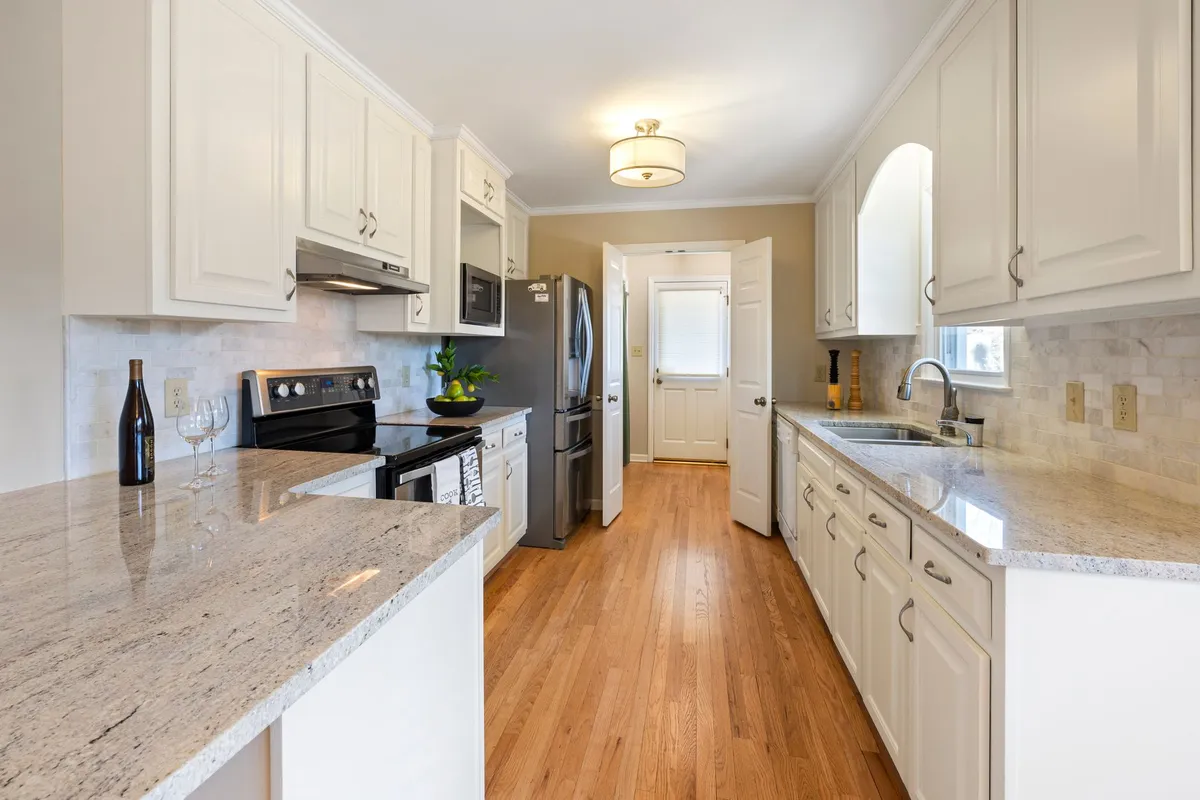
Kitchen Design Decisions: The Sequence That Matters
Kitchen design decisions are interdependent in a way that's easy to underestimate. Making one decision before another often requires reversals that cost time and money. The correct sequence:
1. Establish the Layout First
Layout is the hardest thing to change after a renovation is complete and the most important thing to get right. The classic kitchen work triangle (refrigerator–sink–range) remains the functional foundation, but contemporary kitchens increasingly organize around a work zone concept instead: prep zone (with sink), cooking zone (range and oven), storage zone (refrigerator and pantry), and cleanup zone. The zones concept works better for kitchens with islands or multiple cooks.
If your current layout is functional, changing it for aesthetic reasons alone rarely justifies the additional plumbing and electrical relocation cost. If your layout is functionally poor—traffic runs through the work zone, the refrigerator opens into the prep space, there's inadequate counter space adjacent to the range—layout reconfiguration is worth the investment.
2. Select Cabinets Before Countertops or Appliances
Cabinet lead times of 6–16 weeks for semi-custom and 12–24 weeks for custom cabinets drive the project schedule. Every other decision—countertop material, sink size, appliance dimensions—must fit within the cabinet specification. Lock in cabinets first, then order appliances to fit the allocated space dimensions, then template and fabricate countertops after cabinets are installed.
3. Decide on Countertop Material
The countertop material decision involves tradeoffs between aesthetics, maintenance, and cost:
- Quartz (engineered stone): Most popular for good reason—non-porous, no sealing required, consistent appearance, available in marble-look patterns. $50–$150/sq ft installed.
- Marble: Unmatched aesthetic but requires annual sealing and etches from acid (citrus, wine, coffee). A cooking-heavy kitchen will show wear. $75–$200/sq ft installed.
- Quartzite: Natural stone with harder properties than marble, less prone to etching. $80–$200/sq ft installed.
- Granite: Durable natural stone with unique pattern variation; requires periodic sealing. $40–$100/sq ft installed.
- Butcher block: Warm, natural aesthetic; requires oil maintenance; unsuitable for near-range or wet areas without discipline. $40–$100/sq ft installed.
- Laminate: Budget-friendly, improved quality from 20 years ago; not a long-term investment piece but significantly better than its reputation suggests at $20–$50/sq ft.
Cabinet Selection: The Decision That Makes or Breaks the Kitchen
Cabinet Quality Tiers
Cabinet quality varies enormously at similar price points. Key differentiators to evaluate:
- Box construction: Plywood boxes (⅝" or ¾") vs. particleboard; plywood is significantly more durable and moisture-resistant
- Dovetail drawer construction: Indicates quality joinery; standard box construction is a cost-cutting sign
- Soft-close hardware: Now standard in quality cabinets; absent in low-end cabinets and can be retrofitted but feels different than factory-installed
- Full-extension drawer guides: Allow full access to drawer contents; partial-extension is a cost reduction measure
Stock vs. Semi-Custom vs. Custom
Stock cabinets (IKEA SEKTION, Home Depot Hampton Bay, Lowe's Diamond) are available immediately and run $100–$300 per linear foot installed. They come in fixed sizes with fewer finish options but have become significantly better in quality over the past decade.
Semi-custom cabinets (KraftMaid, Fabuwood, Midwood) are ordered in fixed sizes but with more finish, door style, and interior accessory options. Lead time 6–12 weeks; $250–$500 per linear foot installed.
Custom cabinets are built to exact specification in any size, finish, and configuration. Best choice when your kitchen has unusual dimensions, ceiling heights, or requires built-in appliance integration. 12–24 week lead time; $500–$1,500+ per linear foot installed.
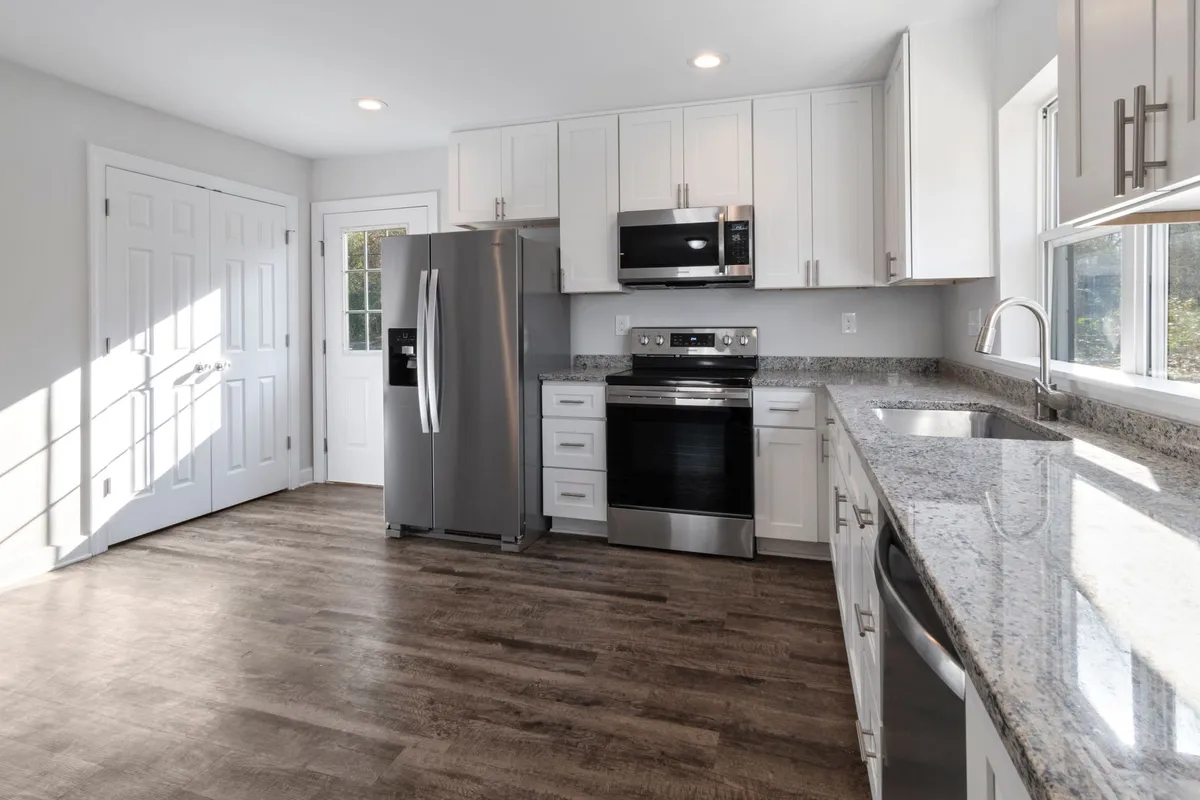
Working With Contractors
The Right Team for a Kitchen Renovation
A complete kitchen renovation requires coordinated work from multiple trades. The typical team:
- General contractor: Manages the project, coordinates subcontractors, pulls permits
- Plumber: Sink drain and supply, dishwasher hookup, gas line for range if applicable
- Electrician: New circuits for appliances, GFCI outlets, under-cabinet lighting wiring
- Cabinet installer: Often subcontracted by the cabinet company or GC
- Countertop fabricator: Templates after cabinets are installed, fabricates and installs
- Tile installer: Backsplash installation after countertops are set
Getting and Comparing Bids
Get three bids for any kitchen renovation over $20,000. Ensure all bids are scoped identically—the same materials, same labor scope, same allowances. A bid that comes in 30% below the other two is almost always excluding something: demolition cost, permit fees, electrical panel upgrade, structural work, or using lower-quality materials than specified. Ask each contractor to itemize the bid and explain any major differences from the others.
Kitchen Design Trends in 2026
What's Working Now
- Two-tone cabinets: Upper cabinets in white or light cream, lower cabinets in color (navy, sage, black, forest green); island in a contrasting tone
- Integrated appliances: Refrigerators and dishwashers with matching cabinet panel fronts that hide the appliance behind a continuous cabinet face
- Unlacquered brass hardware: Warm, develops patina over time; replacing brushed nickel as the dominant hardware finish in kitchen renovations
- Natural materials: Butcher block islands, rattan pendant lights, terracotta or cement tile backsplash as counterpoints to engineered quartz countertops
- Statement range hoods: Plaster, zellige tile, or custom-shaped hoods over the range as focal points
Using AI Visualization in Kitchen Planning
Kitchen renovation involves so many simultaneous visual decisions—cabinet color, hardware finish, countertop material, backsplash pattern, lighting—that even professional designers struggle to communicate the end result before execution. AI visualization renders your actual kitchen with proposed changes applied, so you can see how navy lower cabinets read against your specific flooring and lighting before you order anything.
Upload your kitchen to RoomRenovation.AI and test color combinations, cabinet styles, and countertop materials before committing to any purchase. Use the render as a reference document when communicating with your contractor—a shared visual target reduces misunderstandings significantly. See kitchen renovation cost guides for scope-specific budget planning, and try the free kitchen render to start.
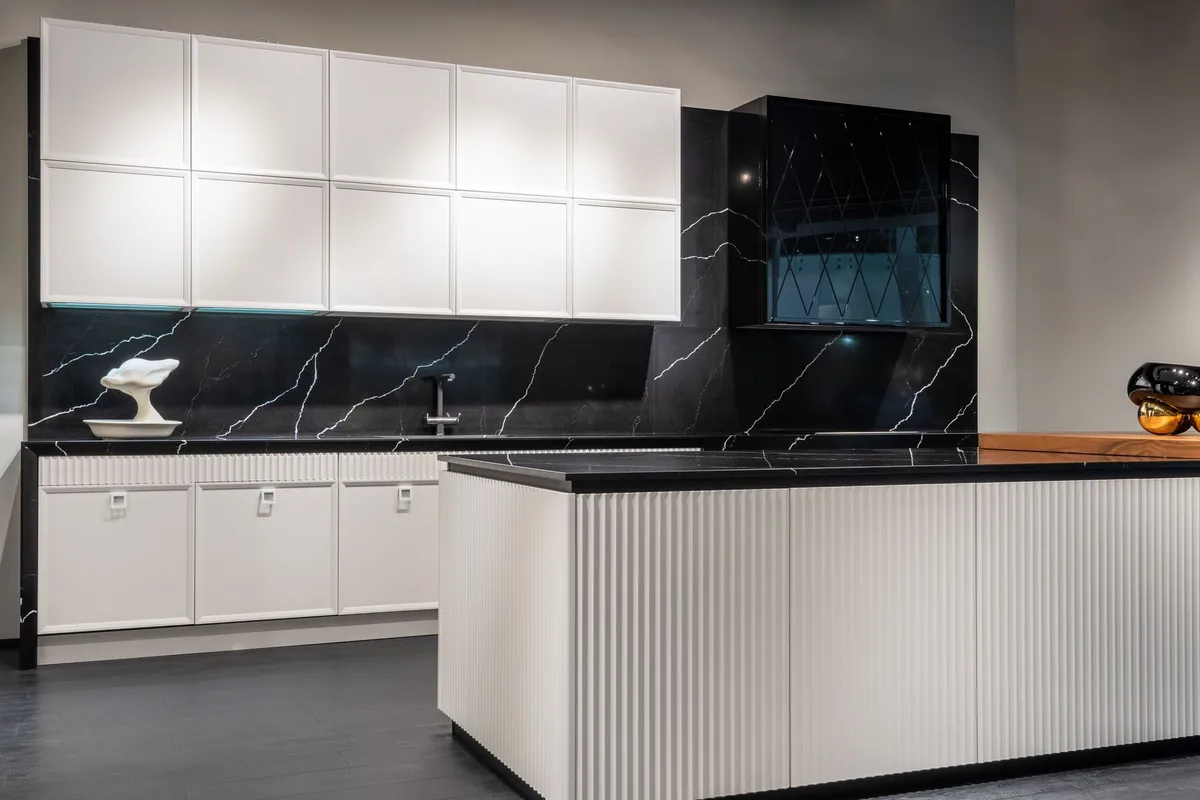
Project Timeline: Realistic Expectations
- Planning and design phase: 4–8 weeks (layout finalized, materials selected, contractor chosen)
- Permits and cabinet order: 6–16 weeks (permits 2–6 weeks; cabinet lead time varies)
- Demolition and rough-in work: 1–2 weeks (demo, plumbing rough-in, electrical rough-in, any structural work)
- Cabinet installation: 3–7 days for most kitchens
- Countertop template and fabrication: 1–2 weeks after cabinet installation
- Appliance delivery and installation: 1–3 days
- Backsplash, hardware, and finish work: 1–2 weeks
- Total elapsed time from planning start to completion: 4–6 months is typical; 3 months is aggressive; 8 months is common with custom cabinets or structural changes
FAQ
What's the single biggest mistake homeowners make in kitchen renovations? Under-budgeting and discovering scope expansion after work begins. Hidden plumbing or electrical issues, asbestos or lead paint in older homes, and structural surprises are common. Add a 15–20% contingency to every kitchen budget; if you don't use it, you've saved money—if you need it, you're protected.
Should I renovate my kitchen before selling? Partial renovations (paint, hardware, backsplash, countertop replacement) typically recover well at resale in most markets. Full cabinet replacements before selling rarely recover 100% of their cost but may accelerate sale speed and support higher asking prices in competitive markets. Consult a local agent before committing to a full renovation with resale as the primary motivation.
Can I live in my home during a kitchen renovation? Yes, most homeowners do. Plan for a fully functional kitchen being unavailable for 3–6 weeks in the middle of the project. Set up a temporary kitchen with a microwave, toaster oven, electric burner, and mini-fridge in an adjacent room. Budget for more restaurant meals than usual during this period.
Is it worth opening a kitchen wall to create an open floor plan? In most homes, yes—especially when the wall between the kitchen and adjacent living or dining room is non-load-bearing. An open plan kitchen dramatically improves the sense of space and social function. A load-bearing wall can also be removed but requires a structural engineer to design a beam and header, adding $3,000–$10,000 to the project depending on span.