
Entryway and Mudroom Renovation Ideas for Busy Households
Entryway and mudroom design for organization, style, and first impressions. AI visualization shows you practical layouts and beautiful designs for high-traffic areas.
RoomRenovation.AI Team
Updated March 24, 2026
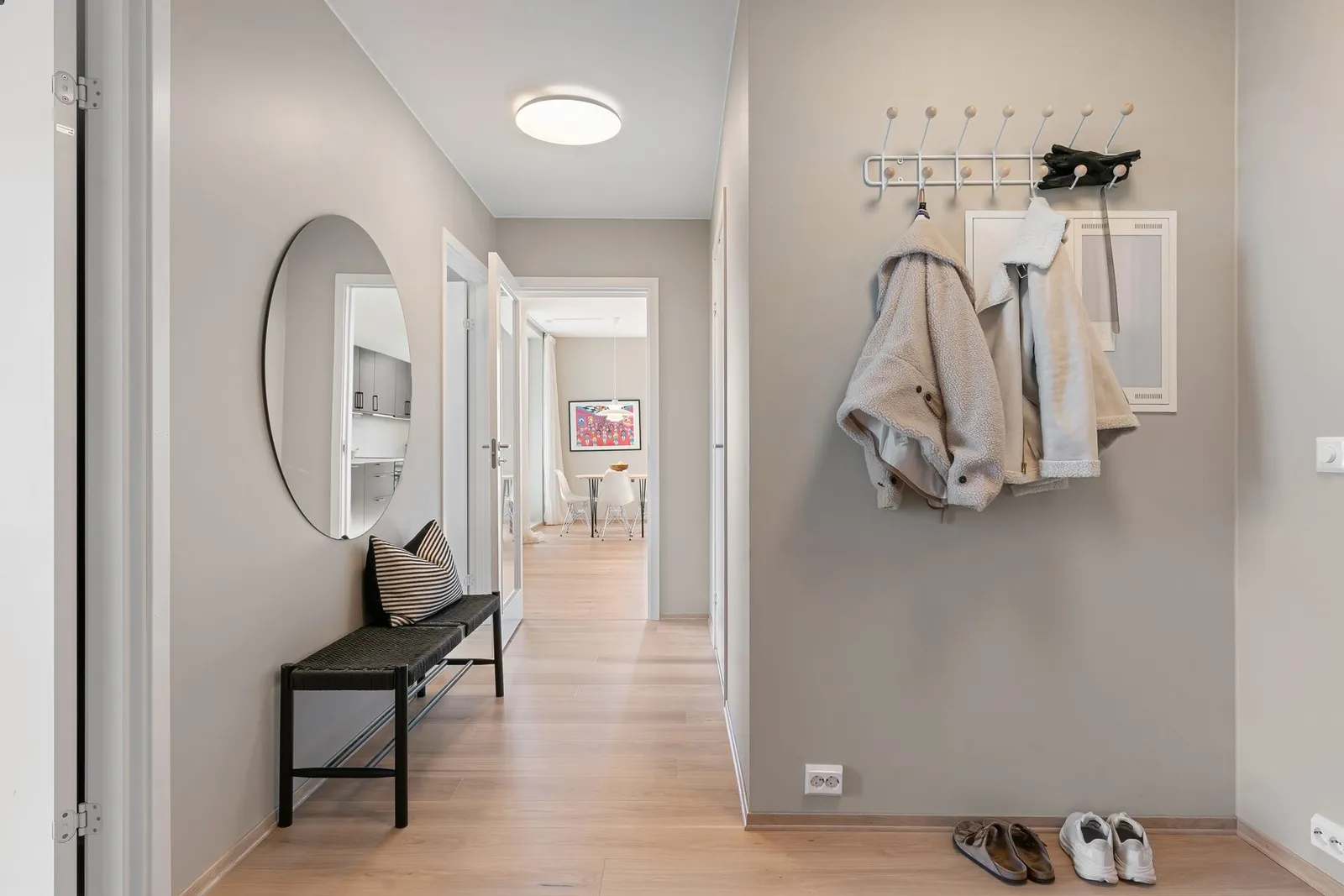
The entryway is the room that sets every visitor's first impression of your home and the room your family passes through dozens of times a day—making it simultaneously your home's most public-facing space and its hardest-working functional room. A well-designed entryway or mudroom doesn't just look good; it creates the organizational infrastructure that determines whether your household runs smoothly or accumulates daily chaos at the front door.
Entryway vs. Mudroom: Understanding the Difference
These terms are often used interchangeably but describe distinct spaces with different design priorities.
The Entryway (Foyer)
A formal entryway or foyer prioritizes first impression and transition from public to private. It's the space visible from the front door and typically photographed in real estate listings. Design decisions here weight aesthetics heavily alongside function: a console table, a statement mirror, coordinated lighting, and a properly scaled rug contribute more to how the home is perceived than how it's used daily.
The Mudroom
A mudroom is a dedicated drop zone—typically at a side or back entry—designed entirely around functional organization. It's where shoes come off, coats get hung, backpacks get deposited, and dogs get wiped down after walks. In a mudroom, function leads completely: storage capacity, surface durability, and easy cleaning matter far more than aesthetic finesse, though the two don't have to be mutually exclusive.
Many homes have both: a formal front entryway that visitors see and a functional mudroom at the garage or side entry that the family actually uses daily. Design priorities should be allocated accordingly.
Formal Entryway Design
The Statement Mirror
A large mirror is the single highest-impact element in an entryway. It visually doubles the space, bounces light into what is often a poorly lit corridor, and serves a daily practical function. Scale matters enormously: the mirror should be at least 24" wide and 36" tall in a standard entryway, proportionally larger in bigger spaces. A sunburst, arch-topped, or ornately framed mirror reads as a deliberate design statement; a plain frameless mirror reads as utilitarian.
Console Table and Styling
A narrow console table (14"–18" depth accommodates most entryways without blocking traffic) provides the surface for keys, mail, a lamp, and decorative objects. Styling the console table in thirds—one tall element (lamp or vase), one medium element (decorative object or plant), one horizontal element (tray or books)—creates visual interest without clutter. A single decorative tray corrals small objects (keys, AirPods, sunglasses) and maintains the styled appearance even when real objects live on it.
Flooring Transitions
Entry flooring must handle the transition from outdoor conditions to interior spaces: tracked-in dirt, water, and salt in winter months. Tile (porcelain or natural stone) is the most durable and easiest to clean choice for entryway floors. Wood or wood-look flooring works if the entryway is covered and protected from water; avoid in climates with heavy snow or rain. A quality entry mat (not a thin decorative option but a true absorbent mat) is the first line of defense regardless of flooring material.
If the entryway's existing flooring extends from the main living area, consider a defining area rug rather than different flooring. A geometric or pattern-forward rug in a durable flat-weave construction (easier to clean than pile) defines the entry zone visually without requiring flooring replacement.
Lighting
Entryway lighting is chronically underinvested. A single ceiling fixture that was adequate for new construction rarely creates the welcoming warmth that good entryway design requires. A statement pendant or flush mount with adequate lumen output, supplemented by a lamp on the console table or sconces flanking the mirror, creates dimensional light that photographs beautifully and feels genuinely welcoming to arrive home to.
Functional Mudroom Design
The Essential Elements
A functional mudroom contains at minimum:
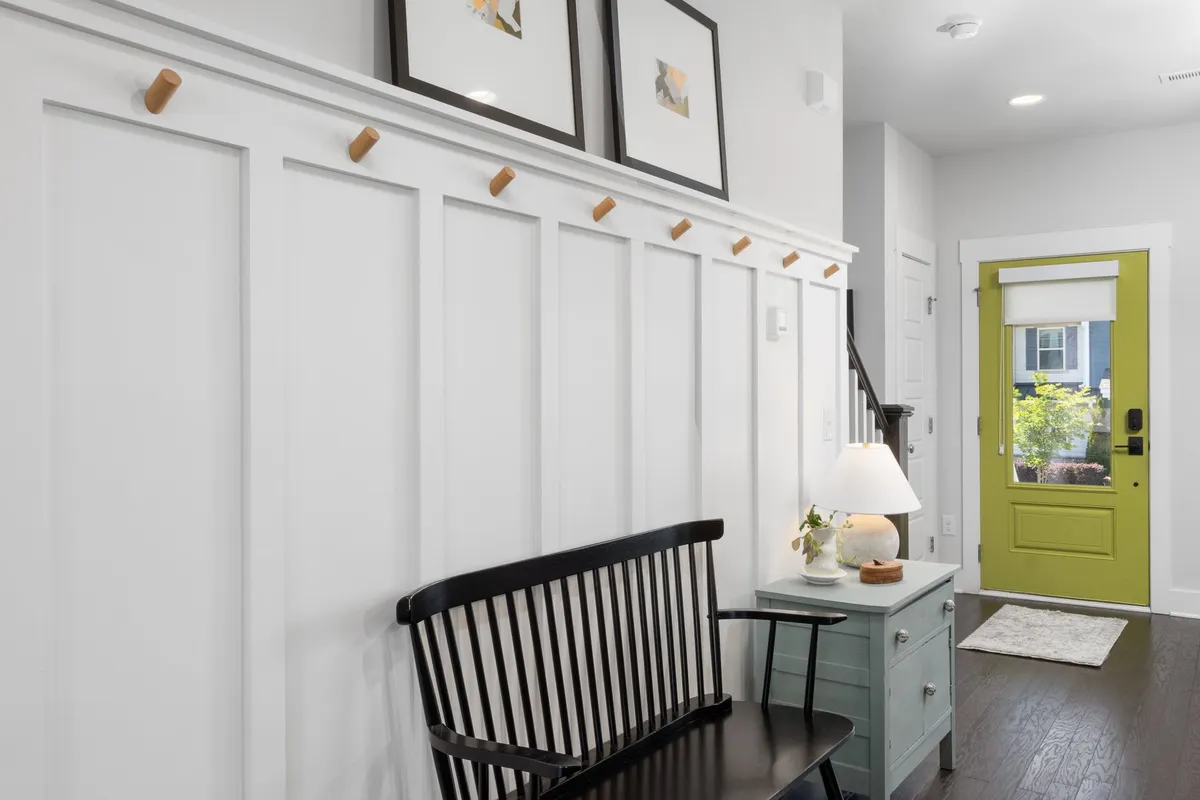
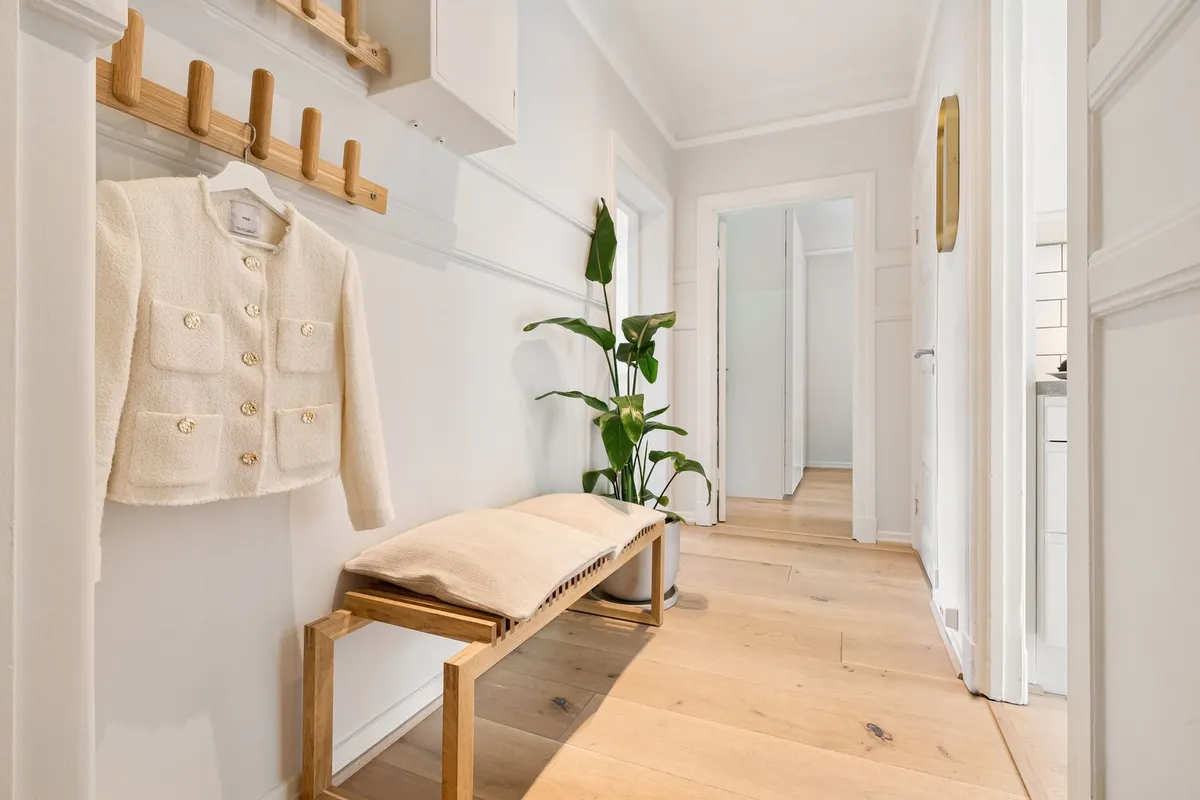
- Coat hooks: One hook per household member plus two extras for guests; mounted at adult height (60"–66") with a lower rail at child height (36"–42") in family homes
- Shoe storage: A bench with open shelf below (for daily-use shoes) or cubbies with doors (for a tidier appearance); allow 10"–12" depth per person for adult shoe storage
- A bench: Critical for putting on and removing shoes without hopping on one foot; standard bench height is 17"–19" seat height
- A surface: A shelf, counter, or table surface above shoe storage for bags, mail, and outgoing items
Mudroom Storage Systems
Custom built-in mudroom cabinetry runs $3,000–$12,000 installed and delivers the most functional storage in a given footprint. IKEA's HEMNES and PAX systems, along with METOD kitchen cabinet applications, are the most cost-effective alternatives at $800–$3,000 for a comparable footprint. Freestanding systems from Target, Wayfair, or Amazon work for smaller budgets ($300–$800) but rarely maximize the space as effectively as built-ins.
The most effective mudroom layout for a family: individual cubbies or lockers per household member (named or assigned), each with a hook above, a shelf, and a pull-out bin below for shoes. This system places organization responsibility on each person's own zone rather than a shared surface that inevitably becomes a communal pile.
Flooring and Surface Durability
Mudroom flooring must survive the worst of what's tracked in from outside. Best options:
- Porcelain tile: Most durable, waterproof, and easy to mop; choose a matte or textured finish for slip resistance when wet
- Luxury vinyl tile (LVT): Nearly as durable as porcelain, warmer underfoot, easier DIY installation, and softer on items dropped on it
- Sealed concrete: Excellent in homes with an industrial or modern aesthetic; requires periodic resealing; cold in winter without radiant heat
- Avoid: Hardwood, carpet, or natural stone without sealing—all vulnerable to moisture and heavy traffic damage at the mudroom's entry point
Mudroom Renovation Costs
Budget Range ($1,500–$5,000)
An effective budget mudroom uses IKEA cabinetry or freestanding storage systems, new hooks, a new bench, and possibly a flooring update. At this range you can achieve excellent function without custom millwork; the limitation is fitting exactly your space's unique dimensions.
Mid-Range ($5,000–$15,000)
Mid-range mudroom renovation includes custom or semi-custom built-in cabinetry from companies like California Closets or a local carpenter, professional installation, new flooring, updated lighting, and possibly a reconfigured entry door with sidelight glass for more natural light. This range delivers the most dramatic before/after transformation.
High-End ($15,000–$40,000)
A full mudroom addition or gut renovation that incorporates a dog wash station (a deep utility sink on legs at dog height, with a hand sprayer), laundry functions, a powder room, and custom millwork with painted cabinets and stone countertops represents high-end mudroom investment. In family homes, this level of investment consistently appears in the top-cited spaces when homeowners list what they love most about their home.
Small Entryway Solutions
Not every home has space for a dedicated mudroom. A functional entry zone can be created in as little as 24" of hallway wall with the right approach:
- A floating shelf at 60"–66" height with hooks below and a mirror above
- A narrow wall-mounted shoe storage unit (8"–10" depth) below the hooks
- A small rug (3'×5') that defines the drop zone without blocking traffic
This minimal system captures the essential function of a mudroom—a place to hang coats, store shoes, and drop bags—in a fraction of the space and budget of a built-out mudroom.
Visualizing Your Entryway Redesign
Entryways are notoriously difficult to visualize in advance because their proportions—narrow, often dark, with architectural constraints—make them hard to assess objectively. A render that shows your actual entryway with new paint, a mirror, updated lighting, and a console table in place is worth dozens of Pinterest images from unrelated spaces.
Use the RoomRenovation.AI free render tool on your entryway photo to see style directions—modern minimalist, warm traditional, coastal—before committing to paint or fixtures. The full dashboard lets you compare a formal entryway treatment against a more functional mudroom-oriented approach in the same space. See before/after examples for similar entry configurations.
Entryway Organization Systems That Actually Stick
The best-designed entryway still fails if the organizational system it supports doesn't get used. The most reliable entryway organization principles:
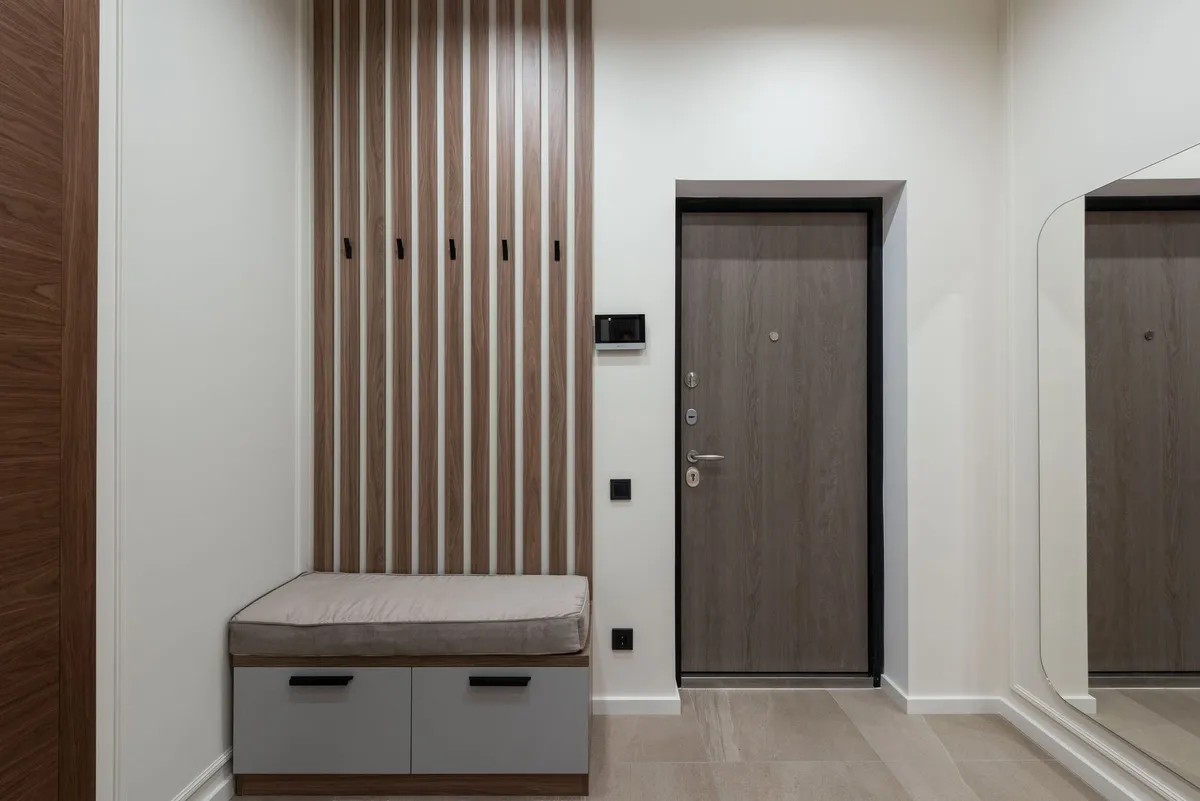
- One dedicated hook per person, labeled or assigned: Shared hooks inevitably pile up and eventually become unusable
- A "launch pad" tray or shelf: A designated place for items that need to leave the house (permission slips, library books, dry cleaning)—items placed here don't get forgotten
- Zero threshold for in-house shoes: Shoe removal at the entry dramatically reduces cleaning time throughout the home; a built-in bench makes this habit physically easy to maintain
- Weekly reset: Even the best-organized mudroom accumulates over time; a 5-minute weekly reset that returns items to their correct locations maintains the system indefinitely
FAQ
What size mirror works best in an entryway? At minimum, a mirror should be visible from the front door and large enough to check a full outfit—at least 24"×36" for a standard hallway width. In wider entryways, a 36"×48" or larger mirror reads appropriately. The common mistake is under-sizing: a small mirror in a large entryway looks tentative and doesn't achieve the space-expanding effect a properly scaled mirror provides.
Should entryway flooring be different from the rest of the main floor? Not necessarily. If your main floor is hardwood, continuing it into the entryway creates visual flow and makes the space feel larger. A differentiated tile entry can also work, especially if it creates a practical "dirty zone" distinction. The decision should be driven by your material's durability for entry use and your aesthetic preference, not a rule.
How do I add a mudroom when I don't have a separate entry area? A mudroom zone can be created in an existing hallway, garage entry, or side door area by installing a wall-mounted storage system (hooks, floating shelf, small shoe storage). In homes with an attached garage, the garage entry is often the most practical location for full mudroom functionality even without a traditional mudroom room.
What's the most important thing to get right in a mudroom renovation? Hook quantity and placement. Inadequate hooks—not enough of them, or not easily accessible—cause coat-throwing-on-the-floor behavior that defeats the entire purpose of the space. More hooks than you think you need, at ergonomically correct heights for every member of the household, is the single highest-return decision in mudroom design.