
Kids Room Renovation: Design Spaces That Grow With Your Child
Create functional and fun kids rooms with creative storage solutions, flexible layouts, and age-appropriate design elements.
RoomRenovation.AI Team
Updated March 24, 2026
A well-designed kids room is one of the most practically demanding spaces in a home because it has to perform across a decade or more of use as the occupant's needs change dramatically. The kids room renovation that a parent designs for a three-year-old can feel oppressively childish to a ten-year-old and utterly unusable by fourteen. Getting the design right means building in flexibility from the start—choosing furniture that ages forward, storage that scales, and a visual treatment that can evolve without requiring another full renovation every three years.
The Design Brief: What a Kids Room Actually Needs
Before choosing a theme or paint color, build a functional brief around what the room needs to do across its lifespan. A children's bedroom typically needs to serve as: a sleep environment (the non-negotiable baseline), a play space for younger children, a homework and study zone from around age six onward, a social space as kids reach early adolescence, and increasingly a semi-private retreat by the middle school years. These functions require different furniture, different lighting, and different amounts of open floor space—often in direct conflict with each other.
Sizing the Zones
A room under 100 square feet requires choices about which functions to prioritize; larger rooms can accommodate multiple zones simultaneously. In a small room, a loft bed configuration that places the sleeping surface above creates usable floor space beneath for a desk or play area—a genuine functional gain, not just a space-saving trick. In larger rooms, explicit zone definition through furniture arrangement and area rugs makes the space feel intentional and helps a child understand where different activities belong.
Storage First: The Structural Priority
The single greatest enemy of a well-functioning kids room is inadequate storage. Children accumulate belongings faster than adults, the category mix shifts constantly (blocks give way to LEGOs give way to model kits give way to art supplies and instruments), and disorganized storage means a room that looks chaotic regardless of how well it was designed.
Built-In vs. Freestanding
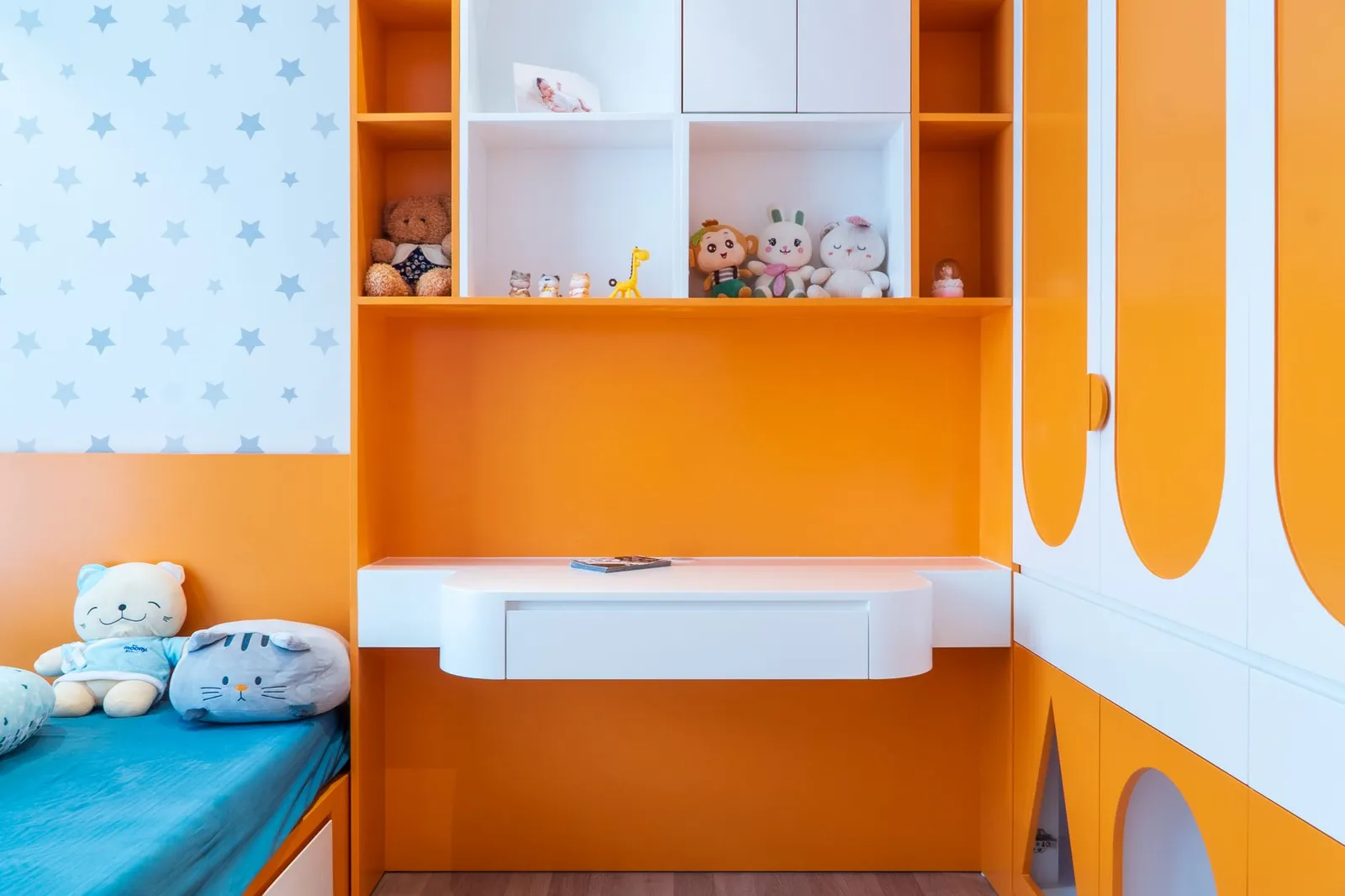
Built-in storage delivers the best use of wall space and the most coherent visual result, but it's a commitment. A wall of floor-to-ceiling built-in cabinetry and shelving in a kids room runs $3,000–$9,000 installed depending on material quality and your region—a real investment that earns its cost in rooms that will stay organized and usable for the full lifecycle of the space. If budget doesn't support built-ins, modular systems like IKEA's PAX and KALLAX, which can be extended, reconfigured, and mixed as needs change, are the pragmatic alternative. Their visual flexibility is also useful: a KALLAX unit in a toddler room holds bins of toys; the same unit in a teenage room holds books, records, and display items.
The Toy-to-Storage-to-Toy Ratio
The practical rule for children's storage: closed storage (drawers, cabinet doors, bins with lids) for items that need to be put away but don't need to be displayed; open shelving for items that are actively in rotation and need to be accessible; dedicated display ledges for books, awards, and items the child wants to see. About 70% of storage should be closed to prevent visual clutter, with 30% open for things the child interacts with regularly. Label everything at the level the child can read or recognize so that putting things away is feasible without adult intervention.
Furniture That Ages Forward
The Bed and Sleeping Zone
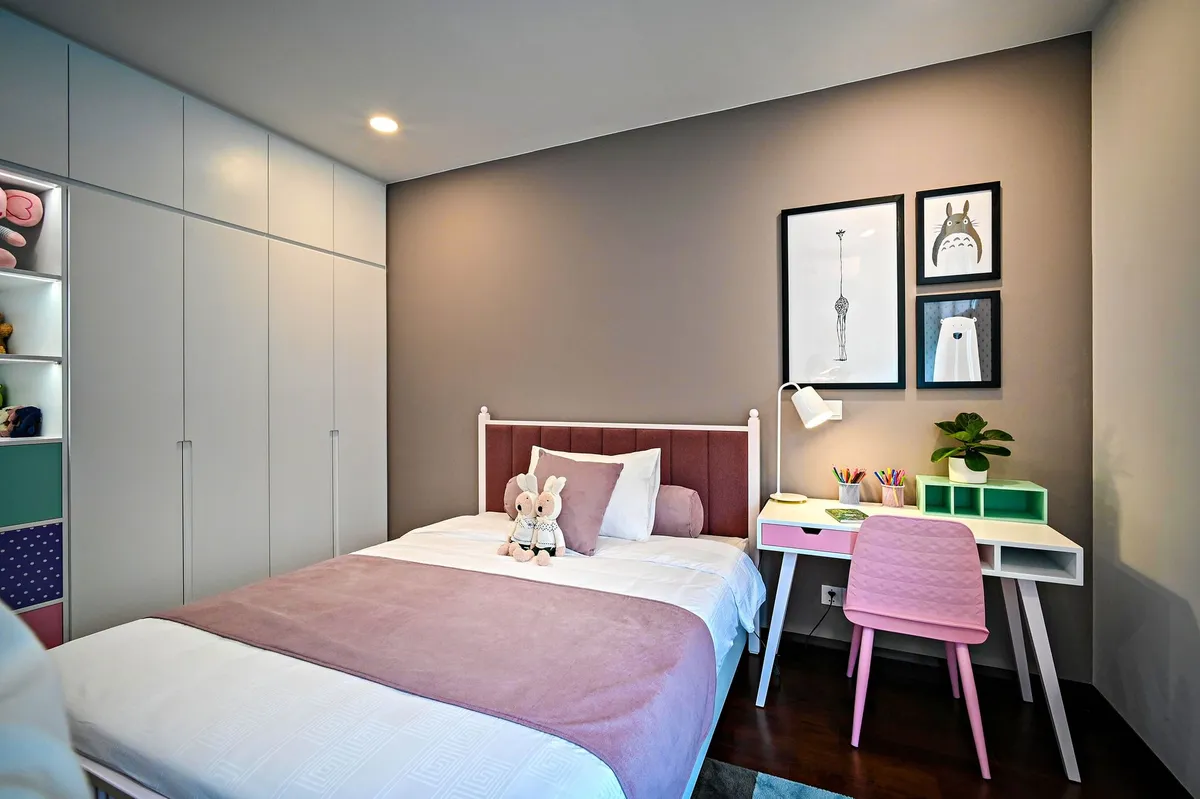
The most future-proof sleeping configuration for a child who will be in the room through adolescence is a standard twin or full-size bed at conventional height, on a frame that can be dressed simply and doesn't reference a specific childhood theme. A full-size bed in a child's room from age five or six onward is a worthwhile upgrade over a twin—it accommodates growth, can host a friend for sleepovers, and doesn't need to be replaced when the child reaches adult proportions.
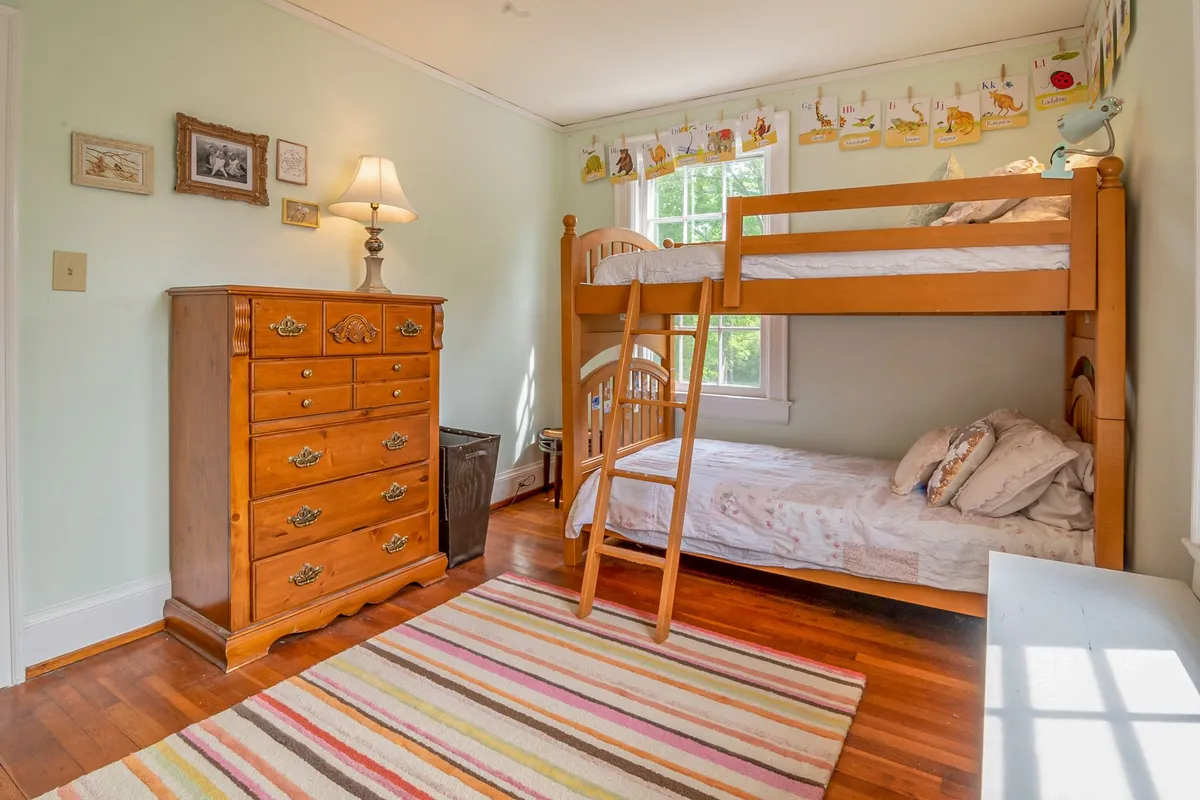
Loft beds and bunk configurations serve specific functions: the loft is excellent for small rooms where floor space below is genuinely needed for a desk or play area; bunks work when two children share a room. Both are harder to make age-appropriately as a child reaches twelve or thirteen, so consider them a 7–10 year investment rather than a permanent fixture. If buying a loft or bunk, weight ratings and ladder configuration matter—buy from a manufacturer whose specs you can verify rather than a low-cost unit whose structural claims are difficult to assess.
Desk and Study Zone
A desk becomes essential from around first grade onward. A wall-mounted fold-down desk is a good solution for small rooms where floor space is at a premium—closed, it occupies minimal visual space; open, it provides a full work surface. In larger rooms, a simple table-desk with adjustable-height legs extends usability across a child's full growth range. The chair matters as much as the desk: an adjustable task chair is genuinely better for a child who will spend years at this surface than a cute but ergonomically compromised option.
Light the desk independently of the room's overhead lighting. A swing-arm desk lamp or a simple LED clip light eliminates the shadows and glare that make homework harder. This is a $30–$80 investment that significantly affects how the space actually functions.
Color and Visual Design: Flexibility Over Theme
Why Theme Rooms Age Badly
A room designed around a specific character, franchise, or theme has a guaranteed lifespan defined by how long the child's interest in that theme lasts—often two to four years. The renovation cost of repainting and replacing themed furniture and textiles is real. A more durable approach uses color and form rather than literal imagery: a room in navy, white, and warm wood tones with good storage and a comfortable bed can accommodate a toddler's playful accessories, an eight-year-old's sports equipment, and a teenager's music setup without requiring any structural changes.
Color That Transitions
Deeper, more saturated colors for children's rooms are a better investment than pastels. A soft pastel designed around infancy reads as babyish within a few years; forest green, warm terracotta, navy, dusty sage, and warm gray read as sophisticated at any age and can be refreshed with different textiles and accessories as the occupant grows. The wall color is the most expensive element to change in a room renovation, so choose it for the long term and let pillows, curtains, and rugs carry the age-appropriate decoration that will change.
Nursery to Kids Room Transition
If you're renovating a nursery into a room that will grow with the child, the physical changes are typically: remove the crib and install a full-size bed or loft, add a proper desk and task lighting, expand storage beyond the infant-focused dresser-and-changing-table configuration, and update textiles and accessories while keeping the same wall color if it still works. See the nursery renovation cost guide for baseline renovation costs in the infant configuration, and note that the transition to a full children's room typically involves $2,000–$6,000 in furniture and storage additions rather than a full renovation.
Safety Considerations
A children's room renovation needs to address four baseline safety requirements from the start: anchor brackets on all tall furniture (anything over 30 inches should be secured to studs); tamper-resistant electrical outlets throughout; cordless window treatments rather than blinds with pull cords; and limited-opening window mechanisms or guards on any window above the first floor. These aren't afterthoughts—they affect furniture placement and outlet layout, so they belong in the initial design brief rather than as post-renovation additions.
What a Kids Room Renovation Costs
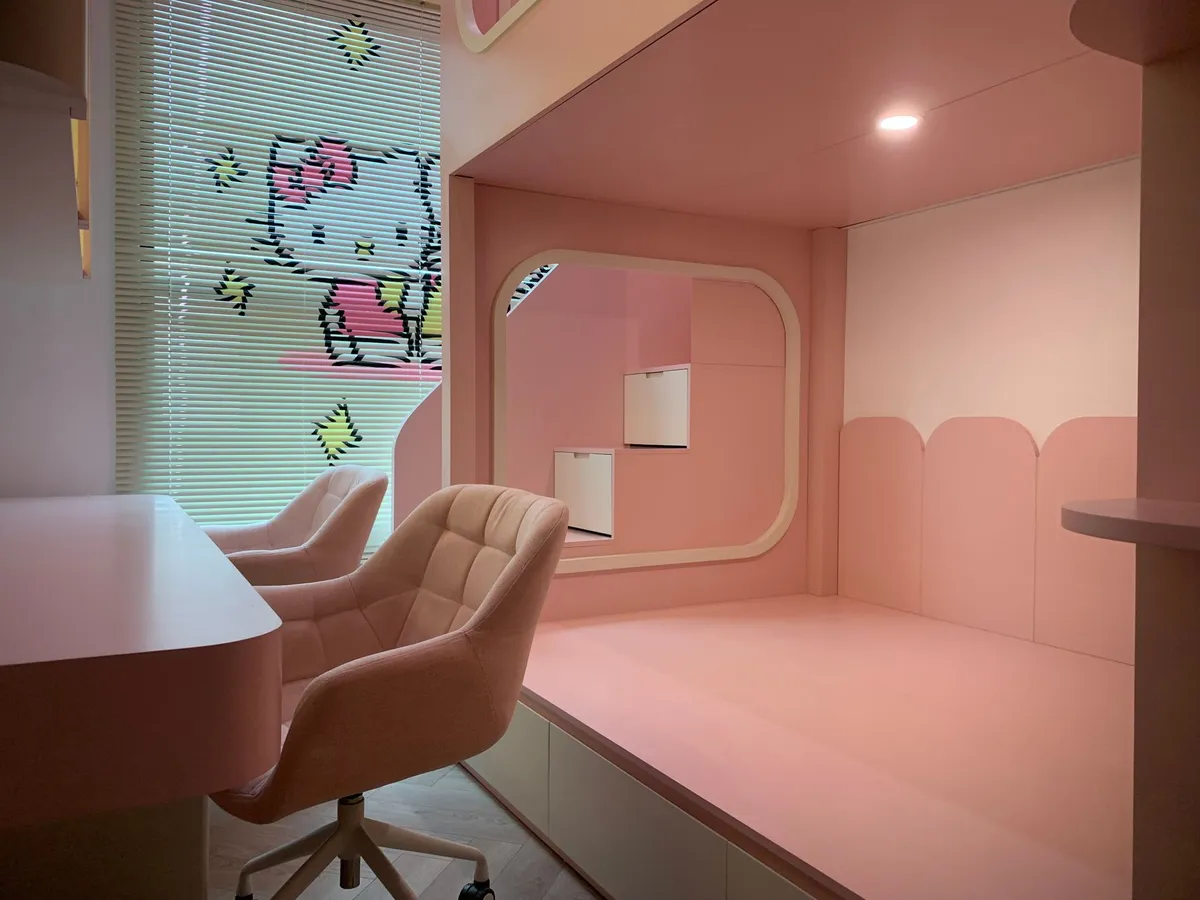
A straightforward refresh—paint, new bedding, updated lighting, reorganized storage—runs $800–$2,500 in materials without professional labor. A partial renovation adding a loft bed, new desk area, and expanded storage runs $3,000–$7,000 including installation. A full room renovation including flooring, built-in storage, new window treatments, and complete furniture runs $8,000–$18,000 in most markets. These figures reflect 2026 costs and don't include structural work; if you're adding a closet, expanding a room, or adding an egress window, those are separate scopes. The living room renovation cost guide provides a useful baseline for understanding regional labor cost variations that apply to bedrooms as well.
Visualizing the Design Before Committing
A loft bed configuration, a new built-in storage wall, or a color change in a child's room are all choices with real stakes because the occupant will live with the result for years. Testing these decisions with an AI render before purchasing or building is genuinely useful—upload your existing room photo to the free room render tool to see different configurations. The design dashboard lets you compare multiple layouts side by side, which is particularly useful for small rooms where the difference between a loft-bed-plus-desk configuration and a conventional bed-plus-wardrobe layout has major implications for how the room actually functions.
Kids Room Renovation FAQ
At what age should I stop designing around a theme and design for the long term? Most designers recommend designing for ages six and up from the beginning if the child will be in the room until high school. If the room starts as a nursery, that first renovation toward a toddler room can include themes knowing they'll be refreshed; by the time a child is in kindergarten, the smart investment is in durable, neutral architectural choices and flexible furniture that doesn't need to change again until the child leaves the house.
What flooring works best in a children's room? Hardwood or luxury vinyl plank is the most practical choice for durability, allergen control, and cleanability—all relevant in a room where a child will play on the floor for years. Add a large area rug to provide a soft play surface and define the room's zones. Carpet is softer underfoot but holds allergens and is harder to clean when the inevitable spills occur; if carpet is the starting point, a large washable area rug is an effective substitute for the child's primary play zone.
Is it worth spending on built-in storage in a kids room? If you expect the child to be in the room for more than five years, yes. Built-in storage adds more value per dollar than any other renovation in a children's bedroom because it solves the room's primary functional problem (inadequate storage) in a way that's visually cohesive, space-efficient, and durable. The cost of constantly replacing inadequate freestanding furniture over a decade often approaches or exceeds what built-ins would have cost initially.