
Free AI Room Design: Test Renovation Ideas Before You Spend
Use free AI room design to test styles on your actual space before you buy furniture, book contractors, or commit to a paid plan.
RoomRenovation.AI Team
Updated April 8, 2026

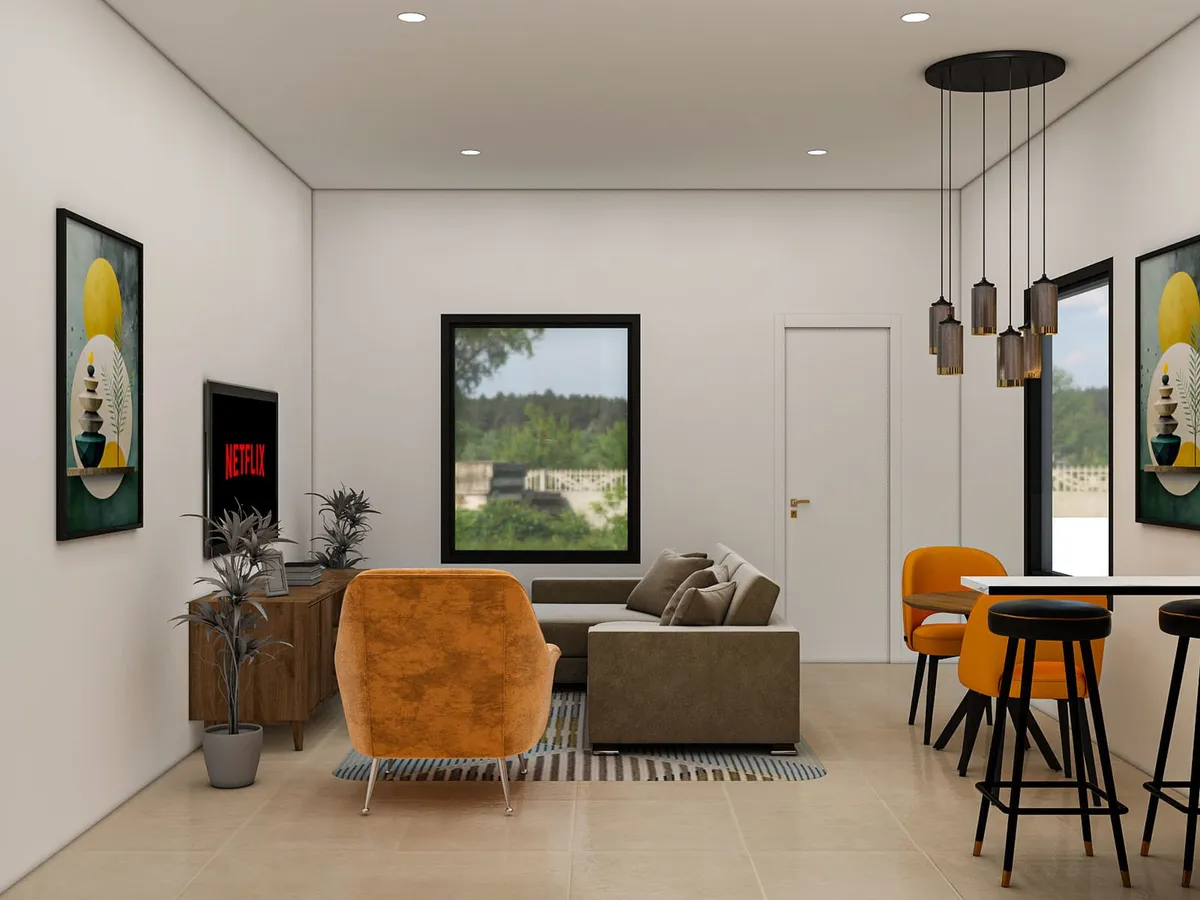
Free AI room design is the most practical first step you can take before spending money on renovation. The core idea is simple: instead of committing to a direction based on inspiration boards that show other people's rooms in other people's light conditions, you test a design direction on a photo of your actual space. The result is your room, in your light, at your proportions, rendered in photorealistic detail in the style you are considering — before you buy a single piece of furniture or open a paint can.
Why Free Testing Prevents Expensive Mistakes
Most renovation mistakes happen before a contractor is hired. Homeowners commit to a style too early, order furniture at the wrong scale for their room, choose a paint color that looks entirely different in their specific light conditions, or discover after installation that the direction they chose does not suit the space's proportions. A free AI room design workflow catches these problems at the planning stage — when they cost nothing to correct.
The numbers make the case clearly. A paint color mistake costs $150–$400 to repaint. A sofa that does not fit or suit the room runs $1,000–$4,000. A tile choice you regret after installation can cost $8,000–$20,000 to redo. A free render that prevents any one of those errors has paid for itself before you upload the photo.
What One Free Render Can Tell You
A single free render is enough to answer several high-value questions before any money is spent:
- Style compatibility: Does the aesthetic you are drawn to actually suit your room's proportions, ceiling height, and existing fixed elements like flooring and trim? An inspiration photo of a Scandinavian loft does not tell you whether the look works in a 9-foot-ceiling ranch house. Your room rendered in that style does.
- Palette behavior: Will the warm white you are considering read as cream or yellow in your specific light? Does a darker feature wall make the room feel intimate or merely small?
- Furniture scale: Does the large sectional sofa you are considering overwhelm the living room, or does the room actually need generous furniture to feel anchored and proportional?
- Direction viability: Is the concept worth pursuing at all, or does seeing it rendered in your actual room reveal that it is not what you want?
If the render answers "not this direction," you have saved the cost of designer consultations, paint samples, fabric swatches, and possibly the delivery fee on furniture you would return — all before spending anything.
How to Photograph Your Room for the Best Result
The quality of the AI render depends directly on the quality of the input photograph. These practices consistently produce better results:
- Shoot in natural daylight. Mid-morning is typically ideal — enough light to illuminate the space without harsh direct sun creating washed-out patches. Turn off overhead artificial lights to avoid mixed color temperatures.
- Shoot from a corner. A corner view captures two or three walls, the floor, and ceiling simultaneously, giving the AI the most spatial information about your room's proportions.
- Landscape orientation. Horizontal photos capture more context than vertical shots.
- Clear major clutter. Personal items on counters and floors do not need to be removed, but the cleaner the major surfaces, the more useful the render is for evaluating the design direction.
- Avoid extreme angles and fisheye lenses. Wide-angle distortion misrepresents room proportions and produces less accurate scale relationships in the render.
Free vs. Paid: Where the Line Is
The free room render at RoomRenovation.AI gives you one render in your chosen style without creating an account or entering payment information. That single render is the direction-validation tool — enough to establish whether the concept is worth pursuing or fundamentally wrong for your space.
Upgrading to a paid package makes sense once you have confirmed a direction and need to:
- Compare two or three style directions side by side in the same room
- Render multiple rooms in a consistent style for a full-home renovation plan
- Generate cleaner, higher-resolution assets for contractor briefings, family decisions, or real estate staging
- Test material variations within a confirmed direction — oak versus concrete flooring, white walls versus warm greige
Check the pricing page for what each tier includes. Explore the examples gallery to see how other homeowners have used the tool to plan living rooms, kitchens, and bedrooms before committing to renovation costs.
The Best Use Cases for a Free Render
Testing Two Broad Style Directions
The most common early renovation question is "which direction do we go?" — Scandinavian or coastal, minimalist or warm traditional, industrial or contemporary. These feel abstract until you see them in your room. One render per direction answers the question with visual evidence rather than gut feeling and inspiration board approximations.
Paint Color Validation
Paint is the cheapest renovation material and the one that looks most different from the chip card in real conditions. A 2x2-inch chip on a white showroom wall tells you almost nothing about how that color reads across a full 12-foot ceiling-height wall in your specific room. An AI render shows the full wall relationship — against your flooring, at your ceiling height, in your light direction.
Pre-Purchase Visualization for a Home You Are Buying
If you are under contract on a house and planning renovations before move-in, upload listing photos of the rooms and test renovation directions before closing. Projects completed in an empty house are significantly cheaper than those done around furniture — validating the direction before you close lets you time the work correctly.
Staging for Sale
Empty rooms in a listing are difficult for buyers to evaluate. A rendered version of a staged living room or bedroom communicates scale, furniture potential, and the room's character in a way bare walls cannot. See the home staging guide for the full workflow.
What to Do With the Result
Once you have a render you want to pursue, use it actively in the planning process:
- Show contractors. A visual reference dramatically reduces scope misunderstanding. Contractors price to specific finish levels, and showing them the direction means you are quoting the same vision.
- Use it with a designer. If you are hiring a professional, the render gives them a starting brief that skips the early direction-finding phase and moves directly to refinement and specification.
- Share it with family decision-makers. A rendered image of the actual room communicates the plan to partners, family members, or landlords far more effectively than a verbal description or a mood board.
- Save it for material shopping. Take the render to tile showrooms, furniture stores, and paint counters. Matching materials to a rendered image is faster and more accurate than matching to an inspiration photo that does not share your room's proportions.
What Free AI Room Design Does Not Replace
AI visualization is a decision-support tool. For projects involving structural changes, complex mechanical systems, or high-precision specifications, a professional architect or interior designer adds value that renders cannot provide. What AI room design does not do:
- Assess load-bearing structural feasibility for wall removal
- Generate permit-ready drawings or construction documents
- Specify exact material SKUs, sourcing, or pricing
- Predict acoustic performance, thermal behavior, or material feel
Use it as the early planning tool it is — the fastest way to move from vague inspiration to a specific, defensible direction that can be priced, refined, and executed. Start with the free render, and if the direction is right, explore the full dashboard for the next planning phase.
Getting Started in Three Minutes
The full workflow:
- Photograph your room from a corner in natural morning light, landscape orientation, surfaces cleared of clutter.
- Go to the free render page.
- Upload your photo and choose a style.
- Review the result. Is the direction right? Does the scale work? Does the palette suit your light?
- If yes: move to the full dashboard to compare variations and generate contractor-ready assets. If no: choose a different direction and test again — still free.
Pair the render with our room-specific cost guides — kitchens, bathrooms, and living rooms — so once you have confirmed the design direction, you have realistic budget expectations to take into contractor conversations. Browse the full tools page for additional planning resources.
FAQ
Is the free AI room render genuinely free? Yes — one render, no credit card required. It is designed as a direction-validation tool that gives you a genuinely useful result before any purchase decision is made.
How accurate is the render compared to what the finished room will look like? AI renders are accurate in communicating style vocabulary, proportion relationships, and palette behavior. They are design references rather than exact predictions — specific shadow positions and material textures will vary in the physical space. For evaluating whether a direction is right, they are significantly more informative than mood boards or inspiration photos.
Can I use the render to brief a contractor? Yes, and it is strongly recommended. A visual reference dramatically improves contractor-homeowner communication, reduces scope creep, and makes quoting more accurate because both parties are working toward the same visible goal.
What rooms work best with AI visualization? Living rooms, bedrooms, and kitchens have the highest render quality because they have the most training data and clearly defined design vocabularies. Bathrooms and dining rooms work well. Very unusual spaces — curved walls, very low ceilings, heavy period architectural detail — produce more variable results.
Do I need design skills to use the tool? None. You upload a photo and select a style label. The only judgment you exercise is evaluating whether the render looks right for your goals — which requires no technical knowledge, only a clear sense of what you are trying to achieve.