
Contemporary Luxury Interior Design: Elegant Spaces for Modern Living
Discover contemporary luxury interior design. High-end materials, curated sophistication, and timeless elegance for living rooms, bedrooms, and beyond.
RoomRenovation.AI Team
Updated March 20, 2026
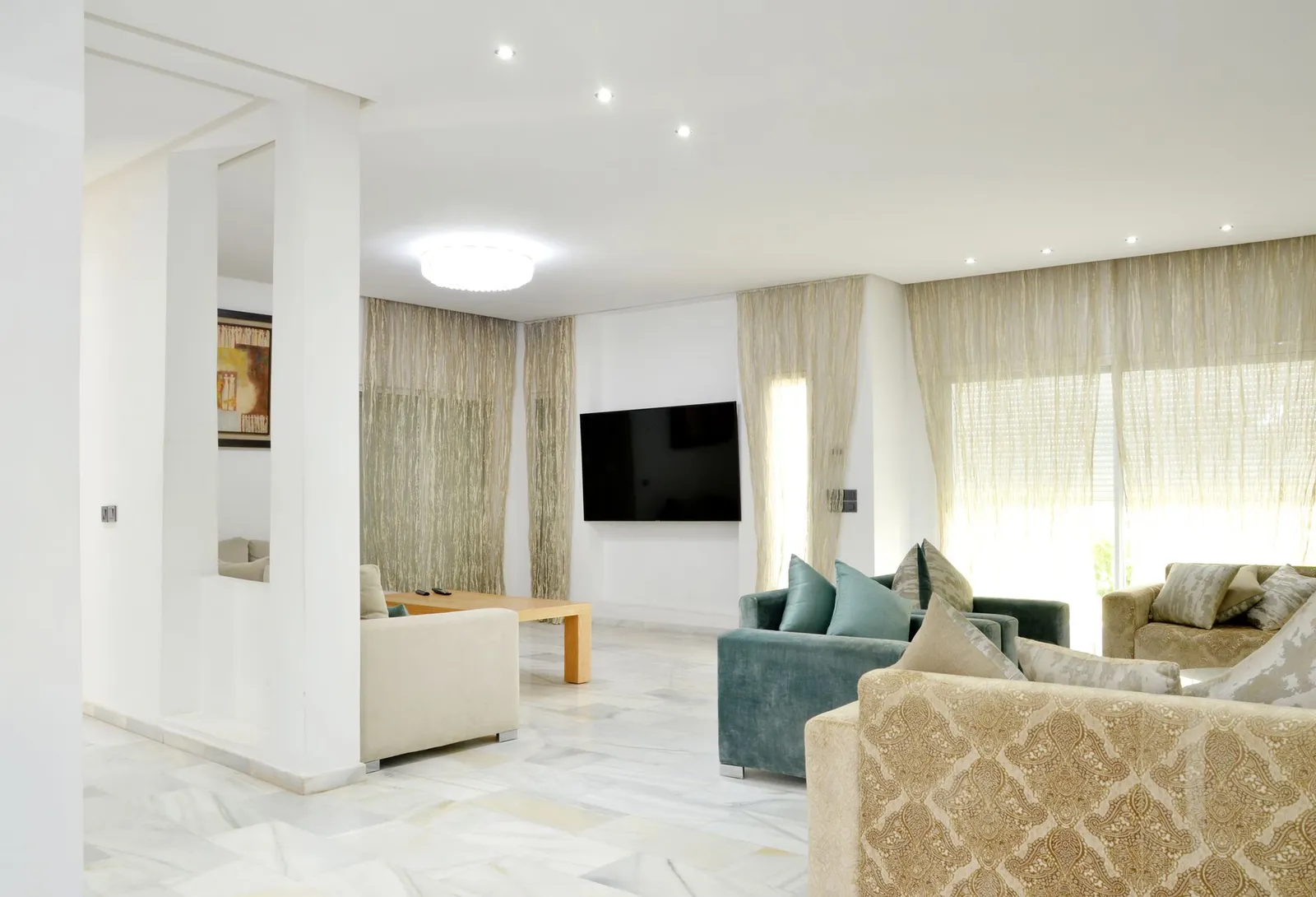
Contemporary luxury interior design occupies a precise and demanding position in the design spectrum: it demands the quality and material sophistication of high-end traditional design without the historical ornamentation, and the visual restraint of modern minimalism without the austerity. The result, when executed well, is a space that communicates affluence and refinement through texture, proportion, and material quality rather than through abundance of objects or display of price tags.
This guide explores the principles, materials, and room-by-room strategies that define contemporary luxury — and how to bring that level of considered elegance to your home at whatever budget you are working with.
Defining Contemporary Luxury: What It Is and Isn't
Contemporary luxury is frequently confused with adjacent styles. It is not maximalist opulence (gilded everything, room-filling chandeliers, trophy furnishings stacked for impact). It is not cold modernism (all hard surfaces, no texture, form divorced from comfort). And it is not traditional formality updated with neutral upholstery.
Contemporary luxury is defined by four qualities working in concert:
- Edited abundance: fewer, better things. Each piece justifies its presence through quality and intention.
- Material sophistication: an emphasis on natural stone, solid metals, fine textiles, and hand-finished surfaces over mass-produced equivalents.
- Spatial generosity: rooms that breathe. Negative space is a feature, not wasted square footage.
- Consistent craftsmanship: attention to detail that extends from the visible to the tactile — the weight of a drawer, the softness of upholstery, the precise alignment of joinery.
The Contemporary Luxury Palette
Neutrals as Sophistication
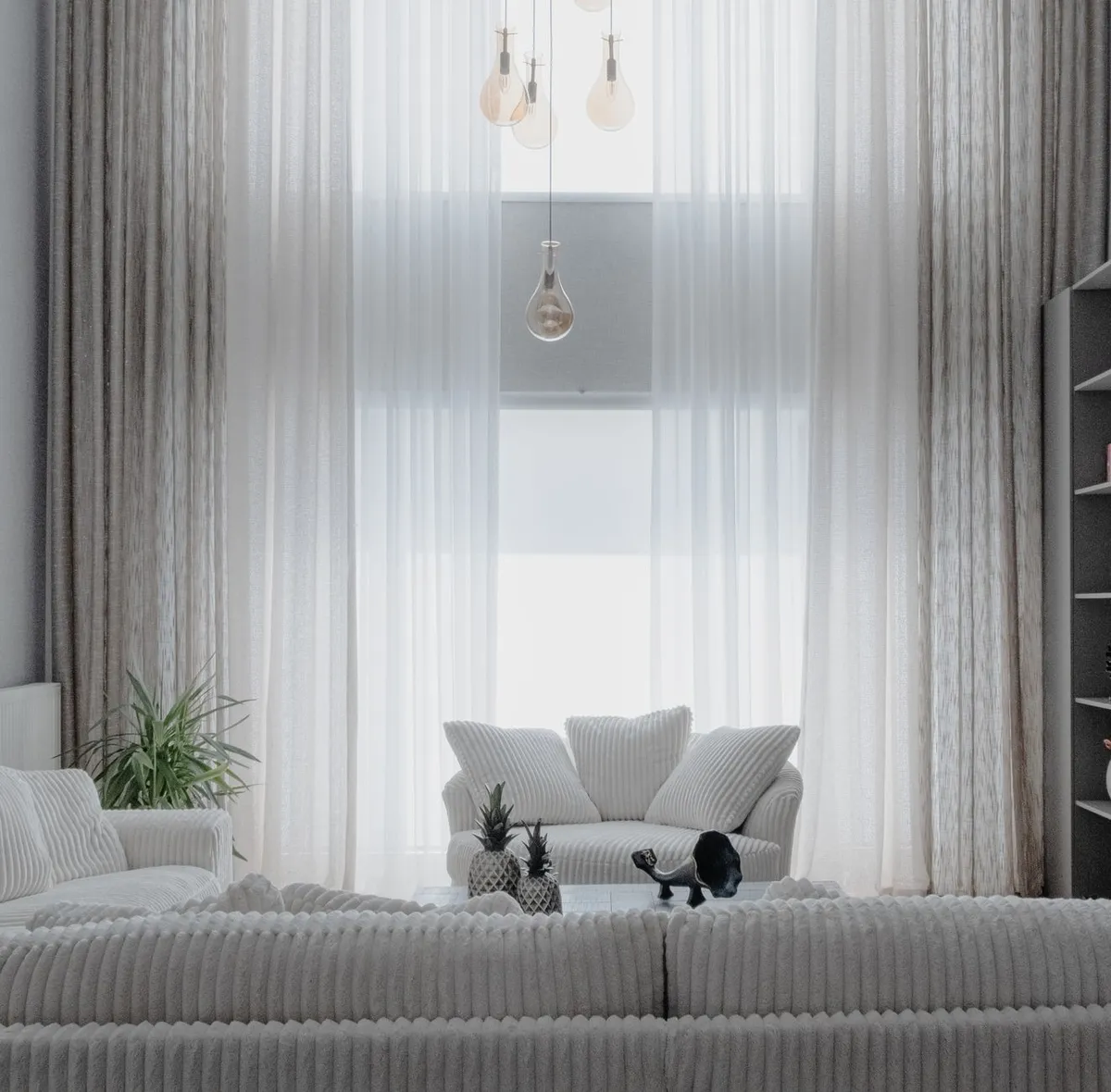
The foundation palette of contemporary luxury interiors is almost invariably neutral: warm whites, stone, greige, taupe, and the occasional deep charcoal or ink. But these are not flat, builder-grade neutrals — they are layered through material variation. Limestone tile, linen drapery, mohair upholstery, and white oak flooring can occupy the same tonal family while creating a deeply textured, visually rich environment that rewards close attention.
The neutrality is also strategic: it allows quality to speak without competition. A room filled with competing colors asks you to navigate its palette; a room in a refined neutral asks you to notice the grain of the stone, the sheen of the lacquer, the fall of the silk.
Strategic Accent Colors
When color appears in contemporary luxury interiors, it does so with intent and often restraint. A single upholstered piece in deep sapphire or forest green against a stone and white room carries enormous visual weight precisely because it is isolated. Bronze and aged brass introduce warm metallic color that reads as warm rather than cold or brash. Art is often the primary vehicle for color introduction — giving the space personality and unpredictability within an otherwise controlled environment.
Signature Materials and Why They Matter
Natural Stone
No material communicates contemporary luxury more efficiently than natural stone. Marble, limestone, travertine, quartzite, and onyx each have distinct personalities. Calacatta marble with bold veining reads as dramatic and hotel-like; honed limestone offers quieter, more residential warmth; book-matched quartzite panels on a fireplace surround create an architectural statement that cannot be replicated in manufactured stone.
Stone also has the advantage of aging into character rather than aging into fatigue — a honed marble surface that develops a slight patina over years looks better, not worse. Budget for stone where it counts most: countertops, bathroom floors and walls, and fireplace surrounds. In less tactile applications, high-quality porcelain stone-look tiles are a legitimate and cost-effective alternative.
Metals: Brass, Bronze, and Steel
Metal finishes in contemporary luxury interiors run toward warm tones — unlacquered brass that will develop a living patina, aged bronze, satin gold — or toward the crisp precision of brushed nickel and polished stainless. What distinguishes luxury application is weight and finish quality: solid brass hardware has a heft that hollow zamak substitutes lack, and the difference is immediately apparent to the hand even when the visual difference is minimal.
Architectural metal details — a steel-framed glass partition, a brass-inlaid floor threshold, a powder-coated steel stair railing — elevate a room's material narrative beyond furniture alone.
Textiles: Depth Through Layer
The most common shortcut in luxury interiors is skimping on textiles. Quality silk, high-thread-count linen, cashmere-blend throws, and hand-knotted wool or silk rugs are not decorative afterthoughts — they are primary surfaces that define how a room feels to occupy. A room with exceptional furniture and mediocre textiles reads as incomplete; a room with modest furniture and extraordinary textiles reads as curated and considered.
Layer textures within your neutral palette: a linen sofa, a velvet accent cushion, a mohair throw, a wool rug with a tight pile. The eye and the hand experience this layering as richness even when the individual pieces are not overtly expensive.
Room-by-Room Application
The Living Room
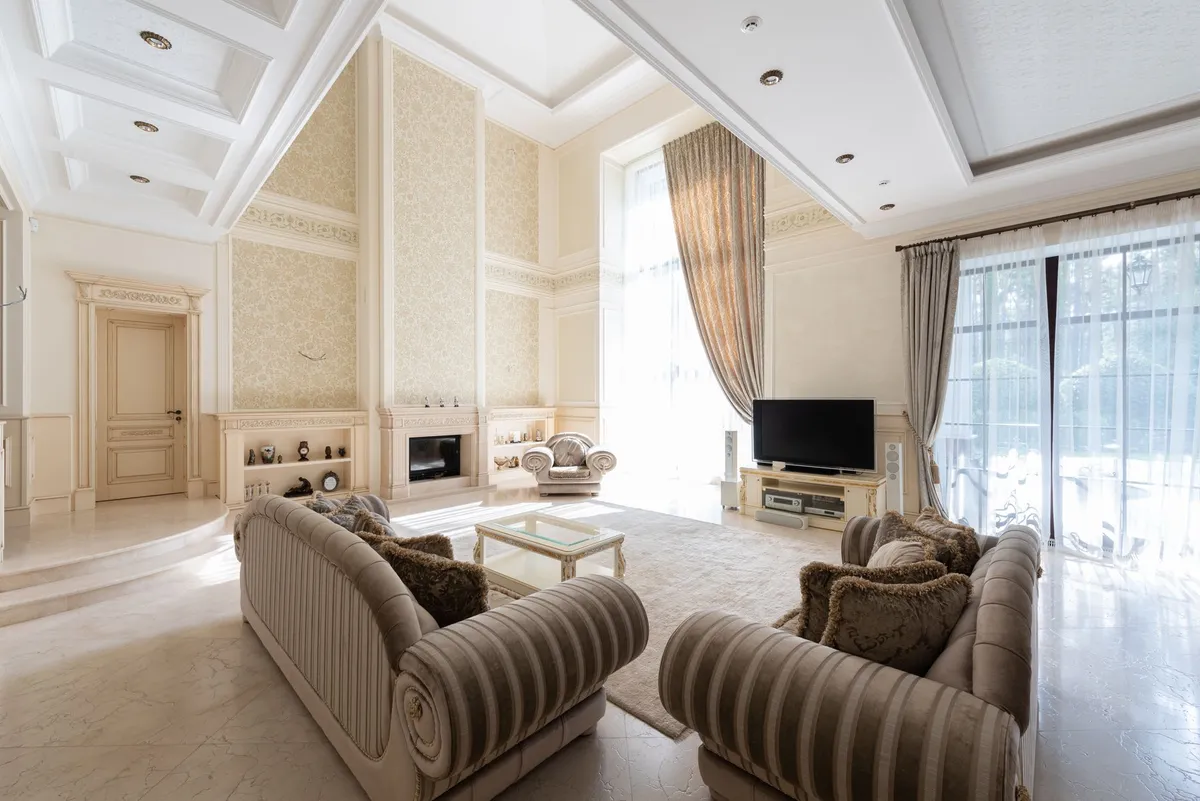
Anchor the contemporary luxury living room with a large, high-quality sofa — a modular sectional in performance linen or a classic 96-inch tuxedo sofa in velvet — and build outward from there. The coffee table should have presence: a slab of travertine, a solid bronze cylinder, a hand-cast glass form. Flanking the seating with a pair of architectural floor lamps (rather than a single ceiling fixture) gives the room a hotel-lobby quality that reads as intentional.
Art should be large enough to hold the wall: a single canvas or print at gallery scale says more than a grid of small frames. Keep the surface count low — a quality bowl on the coffee table and a stack of hardcover art books is a complete composition.
The Primary Bedroom
Contemporary luxury bedrooms achieve their effect primarily through bed quality and textile layering. A high-profile upholstered headboard in a quality fabric becomes the room's architectural focal point. Bedding in long-staple cotton or linen, layered with a quilted coverlet and one or two substantial euro shams, reads as effortlessly refined.
Bedside lighting on wall-mounted sconces rather than table lamps frees surface space and emphasizes the architectural quality of the room. A floating nightstand with clean lines and concealed cable management is worth the investment in spaces where visual calm is the priority.
The Kitchen
In contemporary luxury kitchens, the distinction between cooking space and gathering space collapses. A large island in a contrasting material — stone top over painted or lacquered cabinetry — becomes the room's social center. Integrated appliances eliminate visual noise. Cabinetry handles are reduced to minimal bar pulls or eliminated in favor of push-to-open mechanisms. Professional-grade ranges and ventilation hoods, when specified, double as sculptural elements.
The backsplash is an opportunity: a slab of the same stone used on countertops, running floor-to-ceiling, creates a material continuity that is distinctly luxurious. Zellige tile — hand-made Moroccan ceramic with slight variation in each piece — is a more affordable alternative that delivers similar artisanal warmth.
Lighting: The Detail That Distinguishes
Lighting quality is the most reliable indicator of a genuine luxury interior versus a collection of expensive objects in a room that hasn't been designed. Contemporary luxury lighting plans are layered:
- Architectural lighting: recessed downlights on dimmers, cove lighting, lit niches
- Statement pendants or chandeliers: sculptural light sources that function as art when unlit
- Task lighting: reading sconces, under-cabinet kitchen lighting, vanity mirrors
- Accent lighting: picture lights, shelf lighting, exterior landscape lighting visible through windows
Every circuit on a dimmer switch is a non-negotiable starting point. The ability to shift from bright task lighting to low evening ambience fundamentally changes how a room feels to occupy across the day.
Visualizing Your Luxury Interior Before Committing
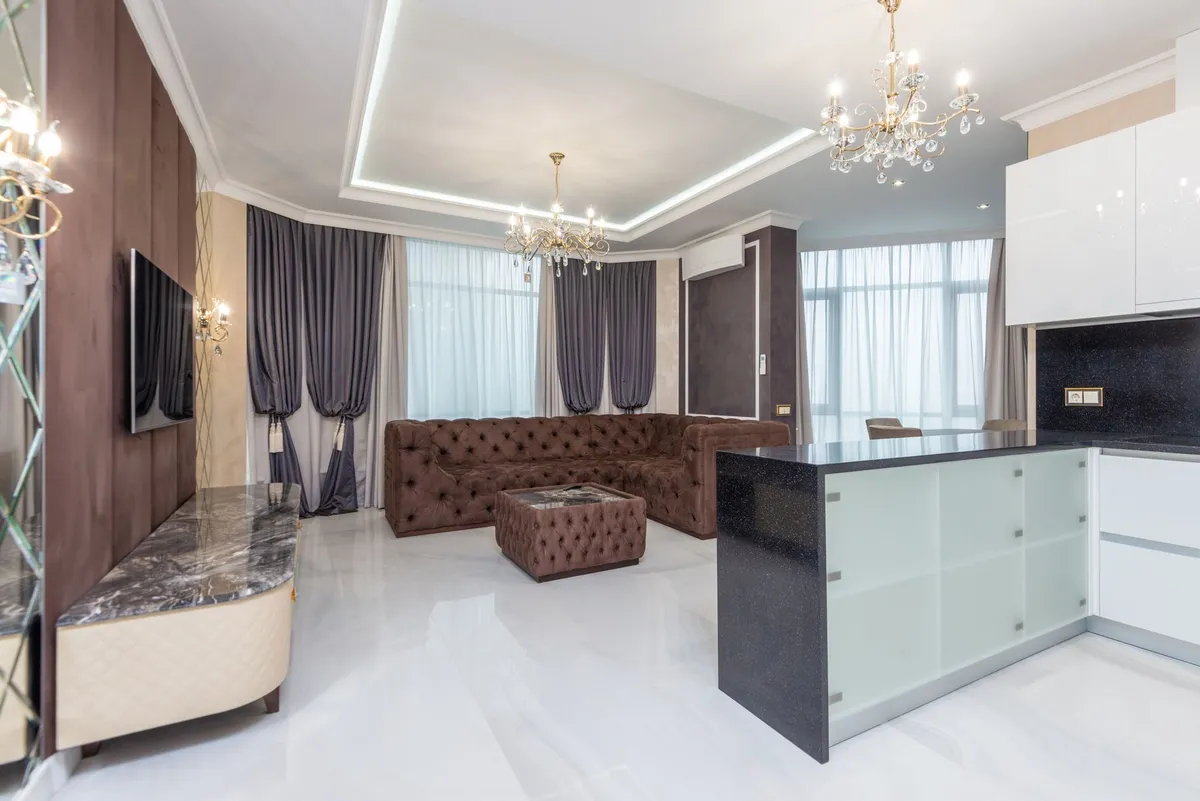
High-quality materials and custom furniture carry real financial risk when purchased without seeing how they work together in your specific space. An AI render via RoomRenovation.AI lets you test a full contemporary luxury direction — stone surfaces, layered neutrals, architectural lighting — in your actual room before committing to expensive purchases.
The examples gallery shows real-room transformations across the luxury spectrum. When you're ready to dive in, render pricing starts at just a few dollars — less than a single tile sample from a stone yard. Use the modern minimalist style preset as a starting point and iterate toward the warmer, more layered version that defines contemporary luxury.
Realistic Budget Expectations
Contemporary luxury interior design spans an enormous budget range because the principles are material-agnostic to a degree. The same spatial generosity and editing discipline applied with mid-market materials reads as aspirationally luxurious; applied with genuinely high-end materials it becomes the real thing. Rough benchmarks for a primary living room renovation in 2026:
- Aspirational ($15,000–$40,000): Quality upholstery, real stone accents, architectural lighting, art investment
- Full luxury ($50,000–$150,000): Custom cabinetry, slab stone, bespoke furniture, lighting design by a professional
- Trophy-level: No ceiling, with architectural interior design fees adding 15–30% of construction cost
FAQ
Can contemporary luxury work in a small space? Absolutely. The principles of editing, material quality, and spatial breathing room apply equally in a 400-square-foot apartment and a 4,000-square-foot home. In small spaces, investing in fewer, better-quality pieces produces a more convincingly luxurious result than filling the room with less expensive items.
How do I avoid a space looking cold rather than luxurious? Warmth comes from material tone and textile layering. Stone and metal can read cold in isolation; add linen, wool, and wood to introduce tactile warmth. Warm-toned lighting (2700–3000K) is equally important.
What's the single highest-impact investment in a luxury renovation? Flooring, consistently. The material underfoot affects how every other element in the room reads. A genuinely beautiful wood or stone floor elevates everything above it; a mediocre floor undercuts even exceptional furniture.
Is contemporary luxury a timeless style or will it date? The principles are enduring because they derive from quality and proportion rather than trend. Specific material fashions (certain marble patterns, particular hardware finishes) cycle, but the fundamental approach of edited abundance and material honesty ages well.
How do I find balance between luxurious and livable? Performance fabrics in quality textures (performance velvet, indoor-outdoor textiles) let you have sophisticated upholstery without anxiety about use. The most successful luxury interiors are deeply livable — the luxury is in the quality of experience, not in segregation from daily life.