
Contemporary Interior Design: Defining Today's Most Popular Style
Contemporary interior design explained. Current trends, signature elements, and how to create interiors that feel undeniably modern without chasing fads.
RoomRenovation.AI Team
Updated March 22, 2026
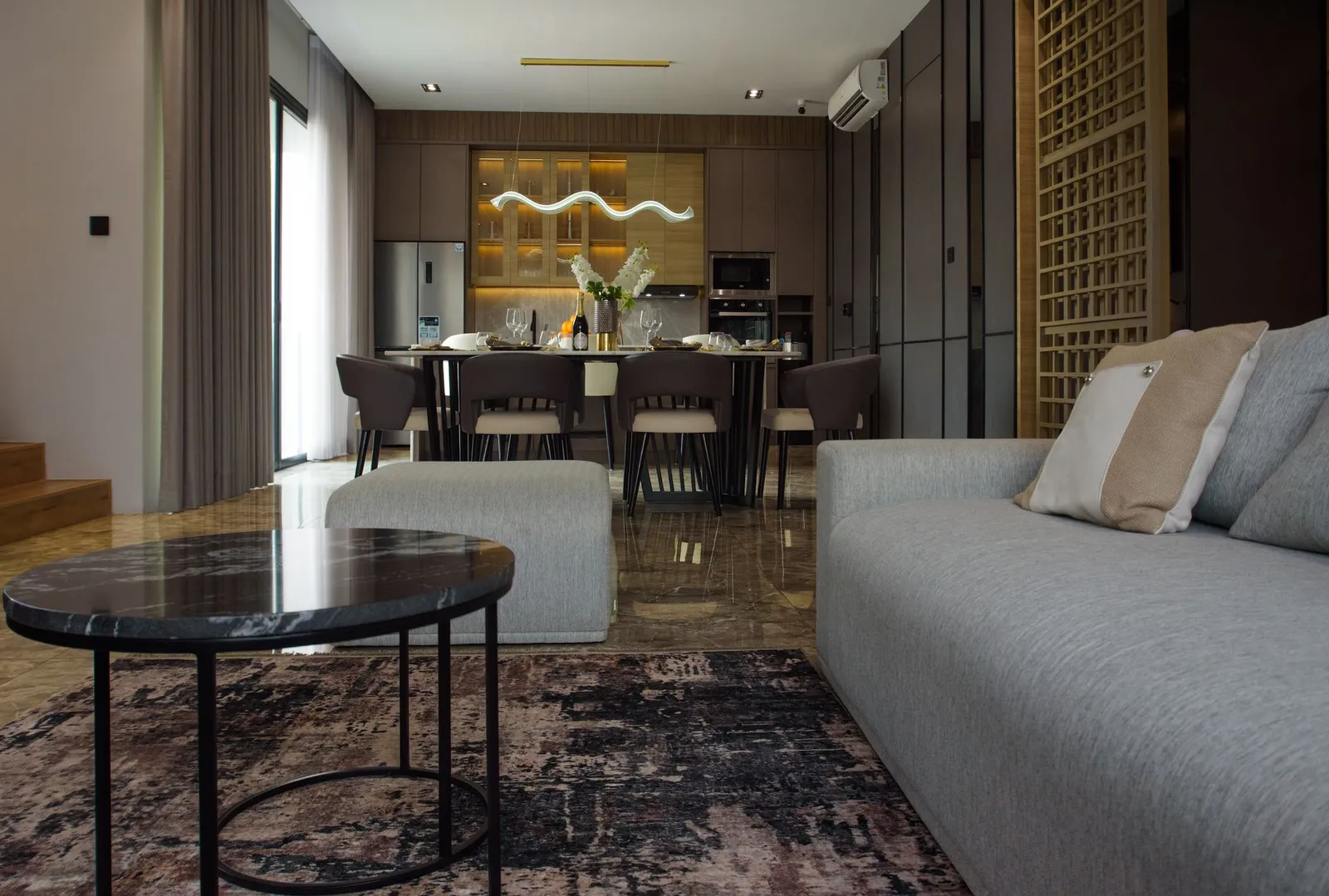
Contemporary interior design is the most misunderstood and misapplied label in residential design. It's often conflated with "modern" (a specific historical movement from the early 20th century), confused with minimalism (which is more severe and dogmatic), or reduced to a vague synonym for "current." Understanding what contemporary design actually is — and what distinguishes it from adjacent styles — is the key to using it effectively.
Contemporary vs. Modern: The Critical Distinction
Modern design refers to Modernism: the architectural and design movement that flourished roughly from the 1920s through the 1970s. It has specific dogmas — "form follows function," rejection of ornament, open floor plans, flat roofs, honest materials. Mid-century modern (popularized in the 1950s–60s) is a subset of this movement.
Contemporary design, by contrast, means "of the present moment." It draws from whatever design trends and aesthetic sensibilities are active right now. In 2026, that means clean lines with texture, a restrained but not austere palette, and a synthesis of influences drawn from Scandinavian minimalism, Japanese design, and a new appreciation for natural materials — without fully belonging to any single tradition.
Contemporary interiors evolve. A room that reads as quintessentially contemporary in 2020 may need updating by 2028. That's not a weakness; it's the style's defining characteristic. It's always reflecting the present cultural moment.
Signature Elements of Contemporary Design in 2026
Clean Lines Without Austerity
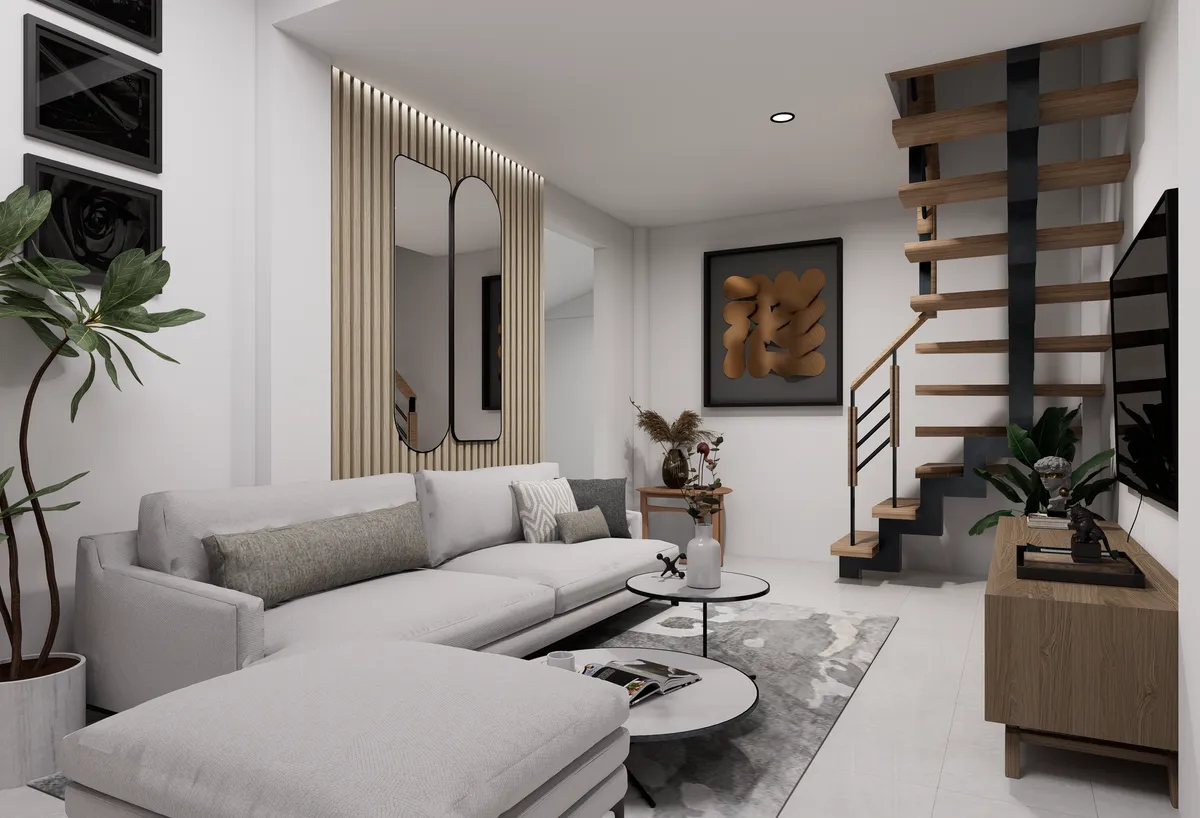
Contemporary rooms feature geometric clarity — furniture with defined silhouettes, cabinetry with minimal hardware, architectural details that are purposeful rather than decorative. But contemporary in 2026 has abandoned the cold sterility of 2010s minimalism. Rooms now breathe with texture, warmth, and livability. Curved forms have re-entered the vocabulary: curved sofas, round coffee tables, arched architectural openings.
A Restrained But Specific Palette
Contemporary palettes are sophisticated neutrals anchored by a specific tonal identity. Warm white or off-white walls, greige or warm gray as a base, with accents in earthy tones — terracotta, warm sand, sage green, warm black. The palette expresses temperature (warm or cool) consistently throughout the space rather than mixing warm and cool tones randomly.
Bold color accents appear, but deliberately: a deep forest green sofa in an otherwise neutral room, a rich terracotta accent wall in a primarily gray kitchen. Contemporary design in 2026 uses color with intention rather than as decoration.
Natural Materials With Modern Processing
The contemporary aesthetic in 2026 is firmly committed to natural materials — wood, stone, linen, leather, ceramic — but processed with precision. A white oak floor with a raw oil finish (not glossy lacquer), a marble countertop with a honed (not polished) surface, linen upholstery with tight, tailored construction. The materials are organic; the execution is precise.
Layered Lighting Architecture
Contemporary rooms treat lighting as architecture. Recessed ceiling fixtures are used minimally and supplemented by pendant lighting, integrated cabinet lighting, architectural wall sconces, and statement floor lamps. The layering creates depth and allows the mood of the room to shift between daytime functionality and evening intimacy.
Contemporary Kitchen Design
Contemporary kitchens in 2026 tend toward flat-front cabinetry in matte finishes (warm white, sage, warm gray, or wood-grain veneer), integrated appliances, and countertops in quartz, honed marble, or quartzite. Hardware-free cabinet fronts with push-to-open mechanisms or integrated finger pulls read as the most current approach.
Backsplashes have moved away from standard subway tile toward large-format stone panels, full-slab marble, or textured ceramic in organic, handmade-feeling finishes. The kitchen island, if present, often contrasts with the surrounding cabinetry — a dark island in an otherwise light kitchen, or a wood-base island in a cabinet kitchen.
See our kitchen renovation cost guide for what contemporary kitchen updates cost in 2026.
Contemporary Living Room Design
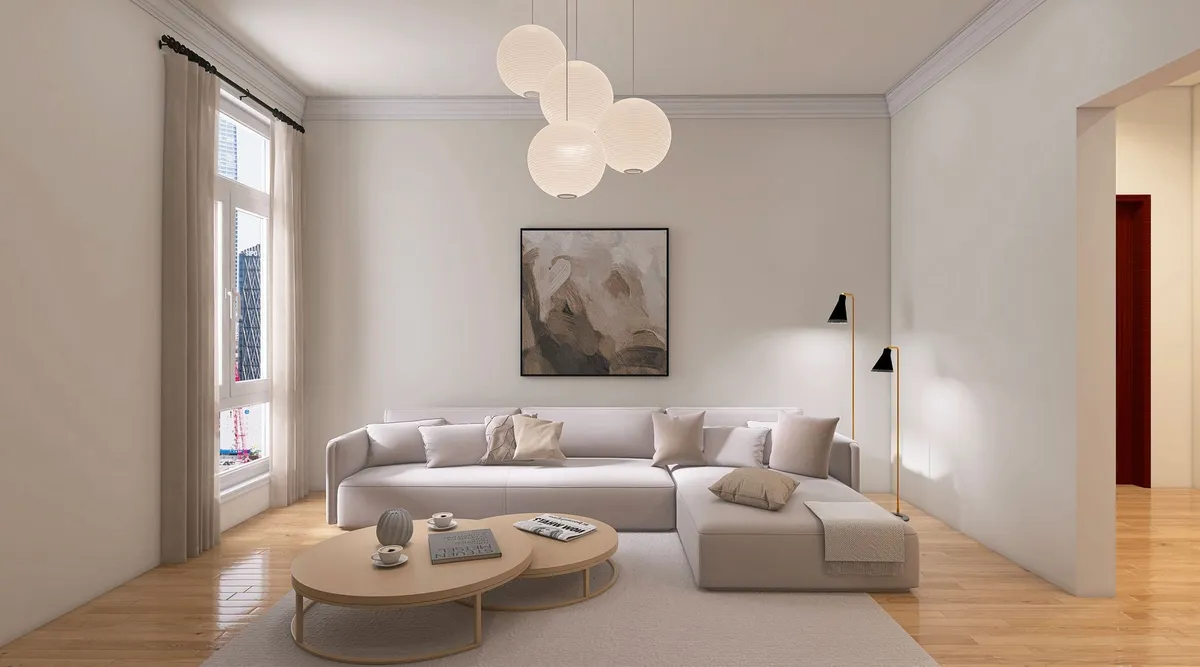
The contemporary living room is organized around a low-profile sofa (often modular or sectional) in natural upholstery, a large area rug that defines the conversation zone, and minimal but carefully selected accent furniture. The room avoids matching sets — instead, pieces are curated to share material or tonal relationships without being identical.
Art is treated as an architectural element: large-scale, leaning against walls or hung with precision. Decorative objects are few but specific — one ceramic vase, one sculptural object, a stack of design books. Contemporary rooms are edited, not sparse.
Contemporary Bedroom Design
Contemporary bedrooms feature low platform beds or bed frames with clean upholstered headboards, coordinated nightstands, and restrained styling. Bedding is typically textural — waffle weave, linen, textured cotton — in warm neutrals with one or two accent pillows rather than the layered-duvet-and-decorative-pillow approach of earlier decades.
Built-in storage solutions — wall-integrated wardrobes with flush, handleless doors — read as contemporary in a way that freestanding wardrobes don't. The bedroom design guide covers these elements in more depth.
What to Avoid in Contemporary Interiors
- Matching furniture sets — they read as retail showroom, not curated
- Excessive decorative accessories — contemporary rooms are edited; more than a handful of objects creates clutter
- Overly shiny surfaces — high-gloss cabinetry, polished chrome fixtures, and lacquered furniture belong to a different moment
- Cold, stark minimalism — contemporary in 2026 is warm and livable, not clinical
- Trend-chasing — true contemporary design feels current because it reflects genuine aesthetics, not because it incorporates every passing micro-trend
Visualizing Contemporary in Your Space
Contemporary design's adaptability is one of its strengths, but it also means the same principles can look very different in a 1920s craftsman versus a 2010s open-plan home. Upload your room to RoomRenovation.ai to see how a contemporary treatment would work with your specific architecture, natural light, and proportions. The AI renders are style-specific enough to show the difference between contemporary, minimalist, and Scandinavian approaches in your actual room. Try a free render first, or see the examples gallery for contemporary transformations across different starting conditions.
Contemporary Design and Renovation Costs
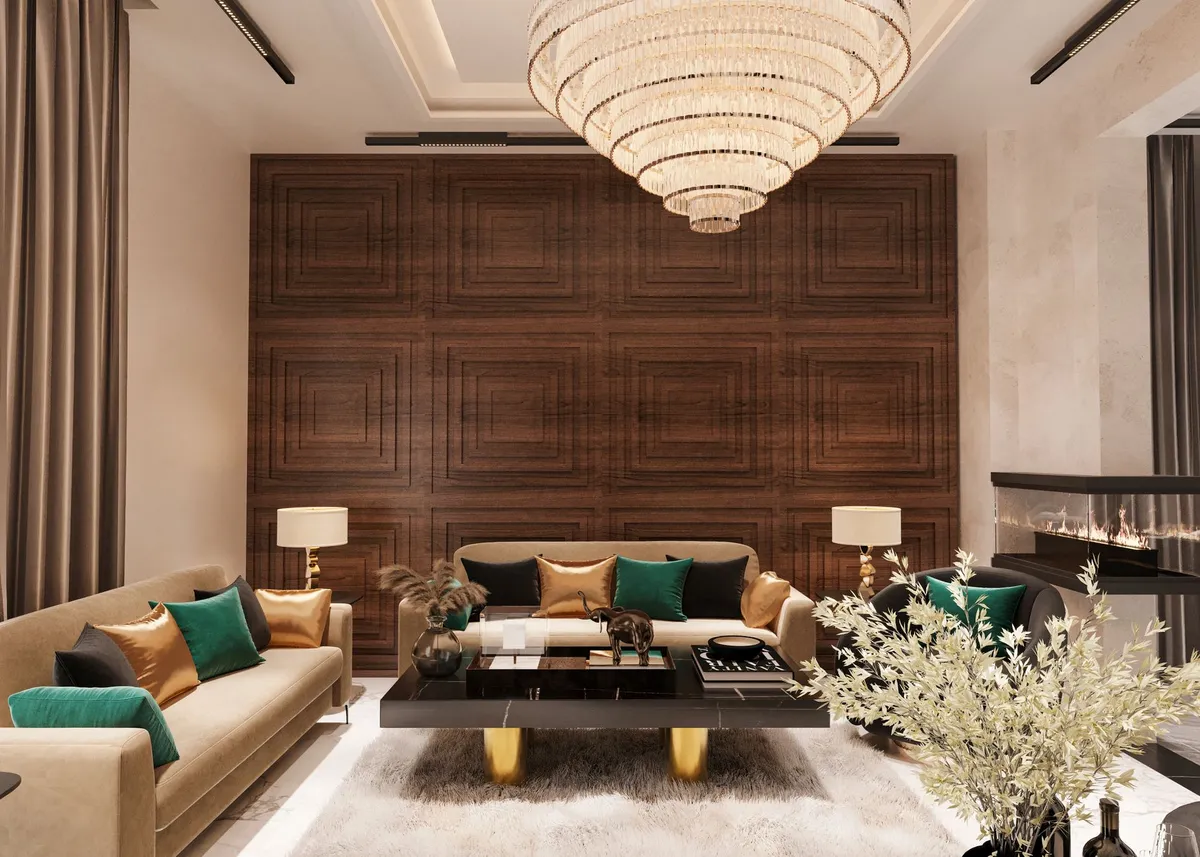
Contemporary interiors aren't inherently expensive, but the style's emphasis on quality materials over quantity makes the per-item spend higher than some decorative styles. A contemporary living room renovation might involve a high-quality sofa ($2,000–$5,000), a precision area rug ($400–$1,500), and minimal art and accessories, rather than a cluttered room of inexpensive pieces. The result costs the same or less but looks more considered.
Kitchen and bathroom renovations that pursue a contemporary aesthetic typically run $15,000–$45,000 for a kitchen and $8,000–$20,000 for a bathroom in 2026, depending on size and material quality. See our bathroom cost guide for detailed breakdowns.
FAQ
Is contemporary design timeless or will it date quickly? By definition, contemporary design reflects the current moment, which means it will need updating. But well-executed contemporary interiors built on quality materials and architectural clarity age gracefully — the specific styling updates while the bones remain relevant for decades.
Can I mix contemporary with other styles? Yes — deliberately. Contemporary design absorbs influences from other styles. A contemporary room might have a mid-century modern sideboard, Scandinavian textiles, and a Japanese ceramic accent. The contemporary synthesis of multiple influences is part of what makes the style feel current.
How is contemporary different from minimalist? Minimalism is dogmatic: fewer objects, no decoration, strict visual hierarchy. Contemporary design is more flexible — it allows for warmth, texture, accessories, and personality, as long as the overall effect is considered and uncluttered. Contemporary rooms feel curated; minimalist rooms feel radical.
What's the biggest mistake in contemporary interior design? The matching furniture set. Buying a sofa-coffee-table-end-table set from the same collection produces a room that reads as retail catalog rather than designed. Contemporary interiors mix pieces from different sources that share material or color relationships.