
Mid-Century Contemporary Interior Design: Updated Classics
Mid-century contemporary design blending iconic 1960s pieces with current trends. See how to style a fresh, timeless look that works in any room.
RoomRenovation.AI Team
Updated March 23, 2026
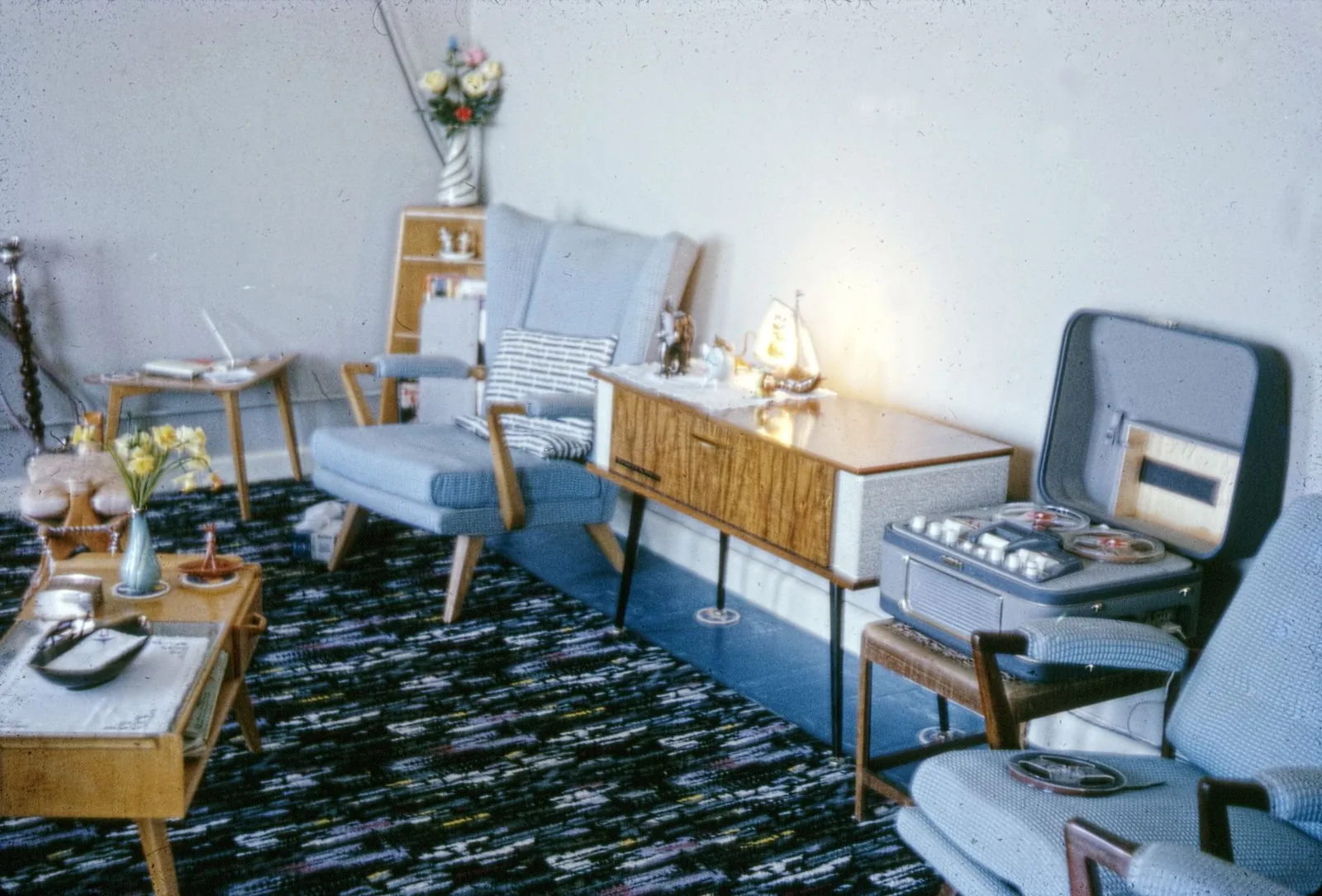
Mid-century modern design had its original moment between roughly 1945 and 1969, producing some of the most iconic furniture objects of the 20th century — Eames chairs, Knoll sofas, Saarinen tulip tables, Bertoia side chairs. The challenge for contemporary homeowners is that decorating entirely in period-authentic mid-century style can tip from inspired to museum-like: a room full of original and reproduction classics, executed without deviation from the era, sometimes feels more like a showroom than a place to live. Mid-century contemporary design solves this by using the proportion language, material honesty, and colorway sensibility of classic MCM within a current context — mixing a 1950s silhouette with contemporary textiles, updated color, and modern practicality.
What Makes Mid-Century Design Still Work in 2026
The enduring appeal of mid-century modern is not nostalgia alone. Several structural qualities make these pieces exceptionally well-suited to contemporary rooms:
- Tapered legs and elevated profiles: MCM furniture sits on slender legs, exposing the floor beneath. This visual continuity of floor plane makes any room feel larger — a significant practical advantage in apartments and smaller homes.
- Organic forms: The best MCM pieces derived their shapes from nature and human anatomy rather than from geometry alone. This gives them a warmth and approachability that geometric contemporary furniture often lacks.
- Material honesty: Visible wood grain, sculpted plywood, molded fiberglass, and natural leather were celebrated for their own character rather than concealed or imitated. This philosophy aligns directly with current preferences for honest, tactile materials.
- Enduring proportions: The best-designed pieces from this era simply got the proportions right in ways that haven't been bettered. A Wishbone chair is extraordinarily comfortable for its visual delicacy; an Eames lounge delivers a quality of support that contemporary pieces at many times the price struggle to match.
The Contemporary Update: What Changes
Mid-century contemporary is not about slavish period accuracy. The update involves several key calibrations:
Bolder and More Current Color
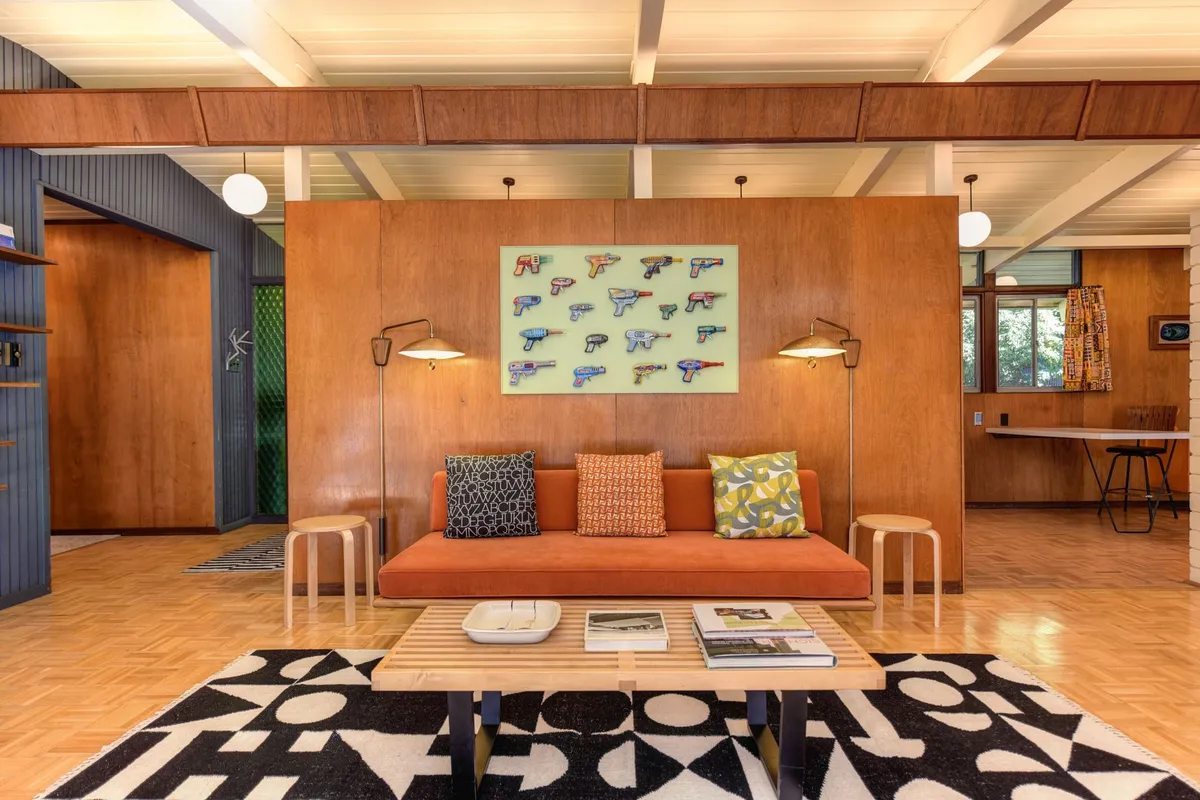
Original MCM color palettes — avocado green, harvest gold, burnt orange, mustard — are period markers that read as retro rather than contemporary when applied literally. The contemporary update shifts these toward more sophisticated equivalents: terracotta rather than burnt orange, sage or forest green rather than avocado, ochre rather than harvest gold, a dusty warm white rather than cream. These tonal adjustments let the palette feel current without abandoning the warmth that distinguishes MCM from cooler contemporary styles.
Integrated Technology and Practicality
Original MCM had to accommodate the technology of its time: record players, tube televisions, rotary phones. Contemporary rooms need to handle streaming systems, flat screens, EV chargers, and ubiquitous devices. Mid-century contemporary design incorporates these honestly rather than hiding them behind period-inappropriate cabinet styles. Low credenzas with integrated cable management, floating shelves with concealed cord channels, and flat-front media consoles in walnut veneer address the real demands of contemporary living while maintaining the visual language of the era.
Textile and Pattern Mixing
Original MCM upholstery was often in specific period patterns (Bertoia diamond weave, Knoll plaid, Maharam geometric) or solid-color wools. Contemporary practice is freer: layering a Saarinen womb chair in a current bouclé with a contemporary wool throw and a Berber-style rug grounds the mid-century silhouette in present tense without apology. Pattern mixing across scale — a large-scale abstract rug, small-scale throw cushion print, mid-scale curtain weave — is far more current than strict period accuracy.
The Core Furniture Vocabulary
Seating
The sofa in a mid-century contemporary room typically reads as low and linear: a platform silhouette in solid upholstery (bouclé, performance linen, quality velvet) with tapered solid-wood legs. Avoid button tufting, rolled arms, or nailhead trim — these are traditional details that conflict with the MCM vocabulary. Accent chairs are where MCM silhouettes sing: the Egg, the Womb, the Bertoia Diamond, and their contemporary derivatives bring sculptural character that rectilinear sofas cannot.
Case Goods: Credenzas and Sideboards
The low, long credenza or sideboard is possibly the most useful MCM furniture form: it provides storage, displays objects, and sits beneath windows without blocking light or views. In walnut veneer with tapered legs and sliding panel or tambour doors, it reads immediately as mid-century while functioning perfectly in a 2026 room. This is the piece worth investing in — a quality solid-walnut credenza can be a room's anchor for decades and retains value significantly better than upholstered pieces.
Dining
The Saarinen Tulip table (or its many inspired variants) is the quintessential MCM dining solution: a pedestal eliminates leg conflicts for seating, the organic form reads as timeless rather than dated, and it works in both round and oval configurations for different spatial needs. Pair with chairs that mix MCM form with contemporary material: a Wishbone chair in a current finish, or a molded wood shell with a contemporary upholstered seat cushion.
Materials That Bridge the Eras
Walnut and Teak
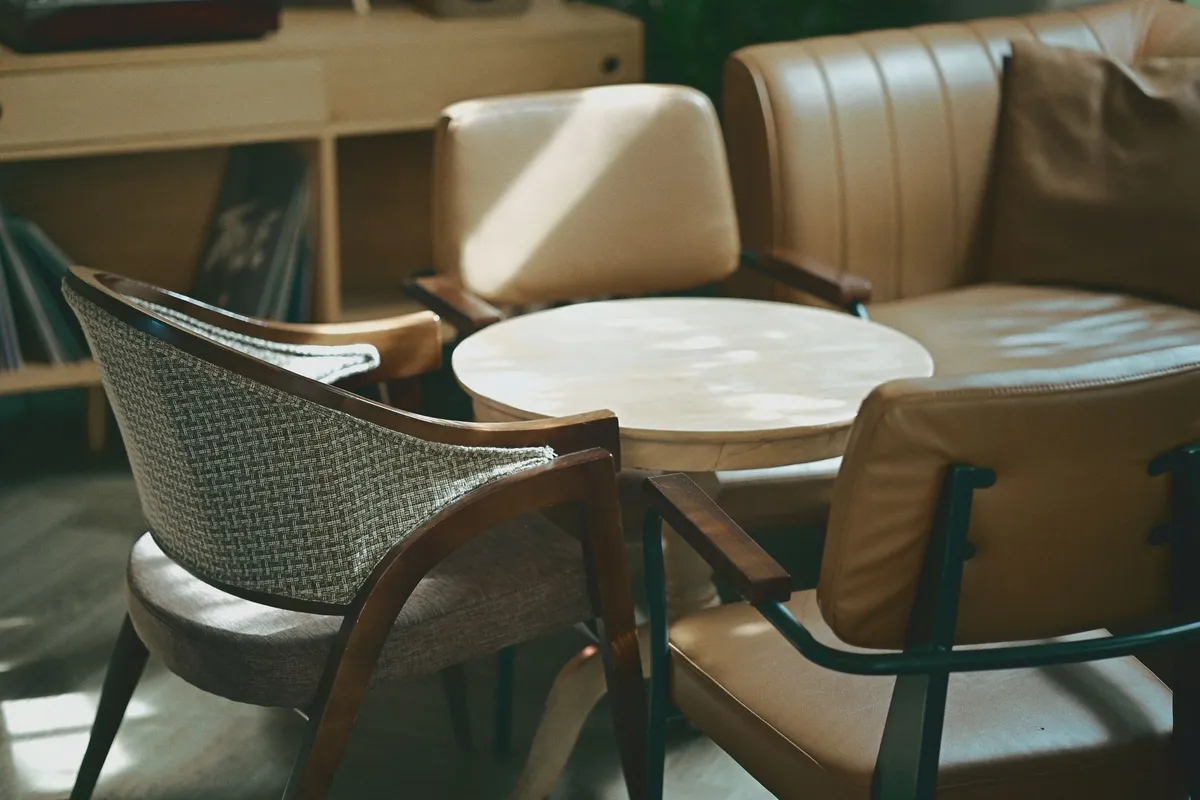
Dark-grain hardwoods — particularly American walnut and the now-protected teak that was plentiful in the MCM period — are the defining wood materials of the style. Contemporary alternatives to vintage teak include sustainably sourced teak from managed plantations, which delivers the same warm chocolate-to-amber grain with contemporary environmental credentials. Walnut is widely available and remains comparably affordable to other quality hardwoods.
Terrazzo
Terrazzo flooring — cement or resin matrix embedded with marble or glass chips — experienced an MCM-era peak and has returned strongly in contemporary interiors. It bridges the periods naturally: visually linked to the original era but now produced with current technology and available in contemporary color palettes. Terrazzo porcelain tile (a cost-effective alternative to poured terrazzo at $4–$9 per square foot versus $15–$30+ for poured) delivers the look accessibly.
Brass, Now Returned
Brass hardware and fixtures dominated the MCM period, then spent decades as the symbol of dated 1980s interiors, and has now returned as a sign of considered design. The contemporary version is typically satin or brushed rather than polished, and is used alongside contrasting matte black rather than universally. A walnut credenza with satin brass pulls alongside matte black sconces is a contemporary combination that reads as current and design-literate.
How to Avoid the Museum Trap
The distinguishing factor between a room that feels like a creative mid-century contemporary space and one that feels like a showroom is personal edit and layered imperfection:
- Mix authentic or high-quality reproductions with inherited pieces, personal finds, and genuinely contemporary items. A grandmother's ceramic lamp on a walnut credenza reads as personal; a perfectly coordinated all-reproduction setup does not.
- Introduce books, plants, and objects accumulated from life. The bookcases of mid-century contemporary rooms show evidence of reading, not curation for a photo shoot.
- Allow slight scale mismatches. A low MCM sofa in a room with 10-foot ceilings gains from a few floor plants that bridge the vertical gap — this is a creative response, not an error.
- Do not fear mixing decades. A chair from the 1980s with genuinely good lines — Baughman, Milo, Thayer Coggin production — belongs in a mid-century contemporary room; the philosophy of the era is more important than the date stamp.
Visualize Your Mid-Century Contemporary Room
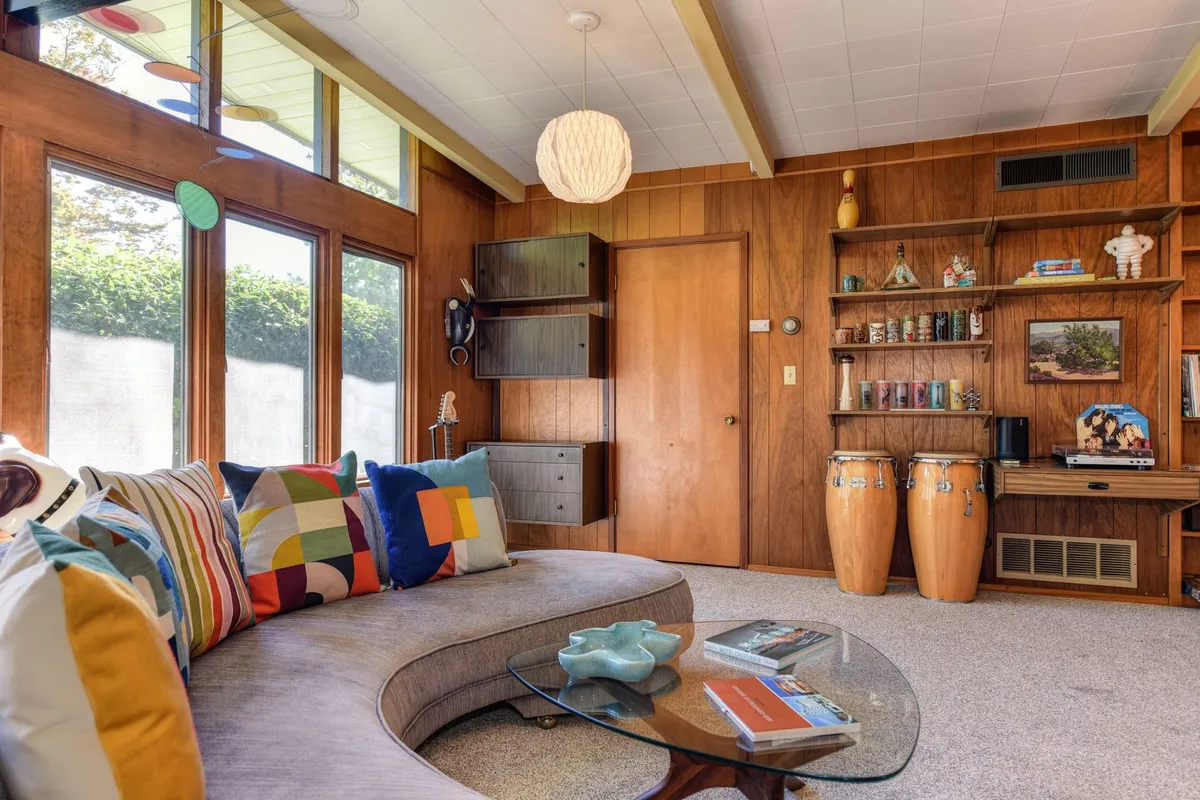
The specific combination of taper-legged furniture, walnut surfaces, and bold-but-muted color is easy to describe but harder to predict in your actual space. Lighting conditions and existing architecture affect how MCM elements read significantly. Use RoomRenovation.AI's room render tool to test a mid-century direction in your current space — see how walnut tones work with your flooring, how low MCM-profile furniture reads against your wall color, whether the warm palette you are considering actually suits your room's light. The examples gallery includes several mid-century transformations. See also Scandinavian style, which shares MCM's appreciation for natural wood and functional form but runs cooler and lighter. Check pricing for render options.
Budget Expectations in 2026
Mid-century contemporary furniture spans an enormous price range. Authentic vintage pieces from the original period command significant premiums: a verified Eames lounge and ottoman in rosewood can exceed $6,000 on the vintage market. Licensed Herman Miller and Knoll reproductions run $2,000–$8,000 per major piece. Quality mid-market interpretations in genuine walnut or oak with similar silhouettes range from $400–$1,500. The strategy that works best for most homeowners: invest in one or two genuine quality pieces (a walnut credenza, an iconic chair) and source the remaining furniture from quality mid-market retailers and the vintage secondhand market.
FAQ
What is the difference between mid-century modern and mid-century contemporary? Mid-century modern refers specifically to the design aesthetic from approximately 1945–1969. Mid-century contemporary incorporates those period elements but applies them in a current context — updated colors, mixed materials, contemporary textiles — rather than attempting period accuracy.
Can mid-century contemporary work with an open floor plan? Yes, and it often excels. The low, horizontal profile of MCM furniture is especially well-suited to open plans because it doesn't interrupt sight lines between zones. A walnut credenza on hairpin legs can function as a room divider while maintaining visual continuity across the space.
Should I buy vintage or reproduction mid-century pieces? Both have merits. Authentic vintage pieces carry genuine character and often represent good value compared to licensed reproductions; they require careful condition assessment. Quality licensed reproductions from authorized manufacturers maintain the original specifications and quality standards. Avoid cheap unlicensed reproductions, which often have poor joinery and materials that betray themselves over time.
What paint colors work best with mid-century contemporary furniture? Warm whites (Benjamin Moore's White Dove, Sherwin-Williams' Alabaster) and warm-toned neutrals are the most versatile backgrounds. A single accent wall in terracotta, sage green, or deep teal works well if the color is pulled through at least one or two other elements in the room.
How many MCM pieces do I need before a room reads as mid-century contemporary? Three coordinated pieces with shared visual language are typically sufficient: a sofa in the right silhouette, a wood case-goods piece (credenza or coffee table), and one sculptural accent chair. Beyond these anchors, the rest of the room can be quite contemporary.