
Bauhaus Interior Design: Form Follows Function
Embrace Bauhaus principles with functional furniture, geometric shapes, and industrial materials. Create clean, purposeful spaces.
RoomRenovation.AI Team
Updated March 24, 2026

Bauhaus interior design is built on a single, uncompromising idea: that form must follow function, and that beauty emerges from honesty about materials and purpose rather than applied ornament. Developed at the Dessau design school in early twentieth-century Germany and shuttered by the Nazis in 1933, the Bauhaus movement shaped the entire trajectory of modern design — from the chairs we sit on to the typefaces on our screens. In the home, Bauhaus principles produce spaces that feel simultaneously rigorous and serene: clean geometry, industrial materials used without apology, and furniture that looks exactly like what it is.
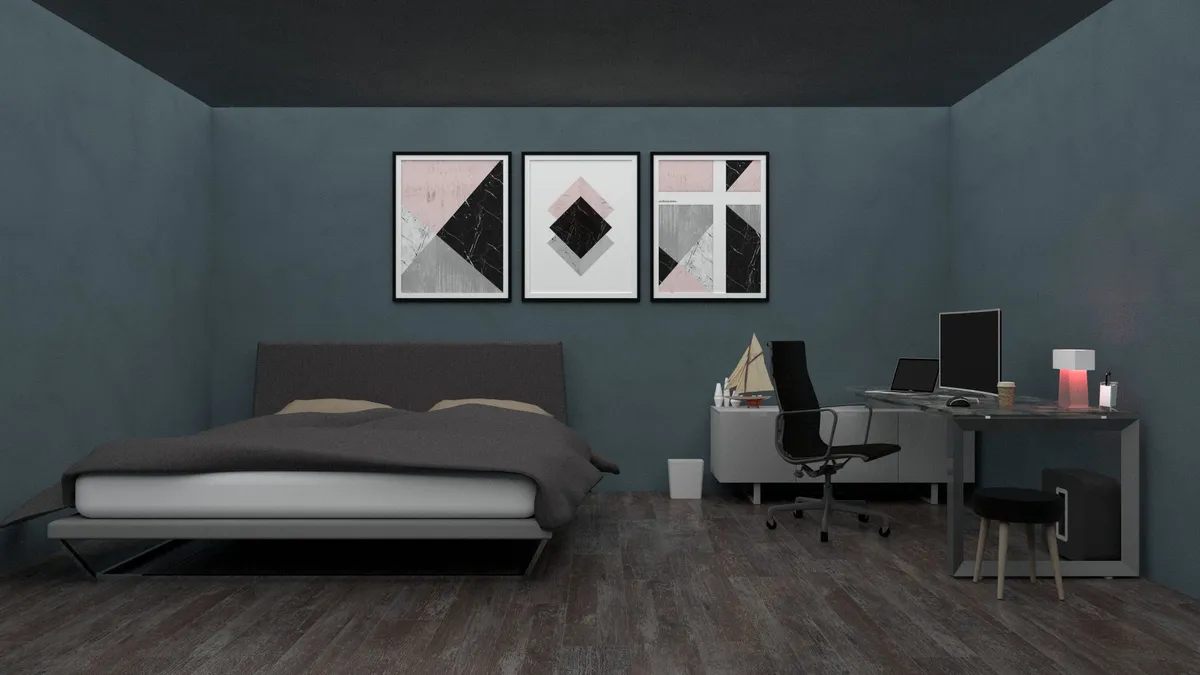
The Core Principles of Bauhaus Design
Understanding Bauhaus at the level of principles — rather than just aesthetics — makes it possible to apply the style authentically rather than decoratively. The key tenets that translate directly into residential interiors:
- Form follows function. Every object in a room should earn its place by doing something. Decorative objects for their own sake have no place in true Bauhaus design.
- Truth to materials. Steel looks like steel. Concrete looks like concrete. Wood grain is not hidden under thick paint. The nature of the material is part of the design language.
- Geometric simplicity. Circles, squares, and triangles are the compositional building blocks. Curves are intentional and structural, not decorative flourishes.
- Integration of art and craft. Bauhaus rejected the hierarchy between "fine art" and "applied craft." A well-designed chair is as serious as a painting.
- Restrained color. The palette centers on neutral structural tones — black, white, gray — with primary colors (red, yellow, blue) used as deliberate accents, not background noise.
Bauhaus Color Palette: The Itten Framework
Johannes Itten, the Bauhaus color theorist, established a palette rooted in primary relationships. For residential application, this translates practically as follows:
Structural Neutrals
White walls — true white, not warm cream — serve as the foundational plane. Charcoal, black, and concrete gray handle architectural elements: exposed structural columns, window frames, ceiling beams. These neutrals do the heavy lifting of the room.
Primary Accent Colors
A single primary color — Bauhaus red, a saturated cobalt blue, or chrome yellow — appears in one or two deliberate applications: a single armchair, a hanging pendant, a graphic rug. The key is restraint. Two strong accent colors in the same room begins to read as maximalist; one is enough.
What to Avoid
Terracotta, sage green, and blush — the palette of organic modernism — are not Bauhaus. Neither are the muted, desaturated earth tones of Scandinavian interiors. The Bauhaus palette is cooler, more industrial, and slightly confrontational in its clarity. If your color reads as "cozy," it's probably not Bauhaus.
Furniture: Function-First Pieces Worth Knowing
Several Bauhaus-era furniture designs remain in production today and anchor any authentic application of the style. You don't need original pieces — licensed reproductions are widely available — but understanding the originals clarifies what to look for when sourcing alternatives.
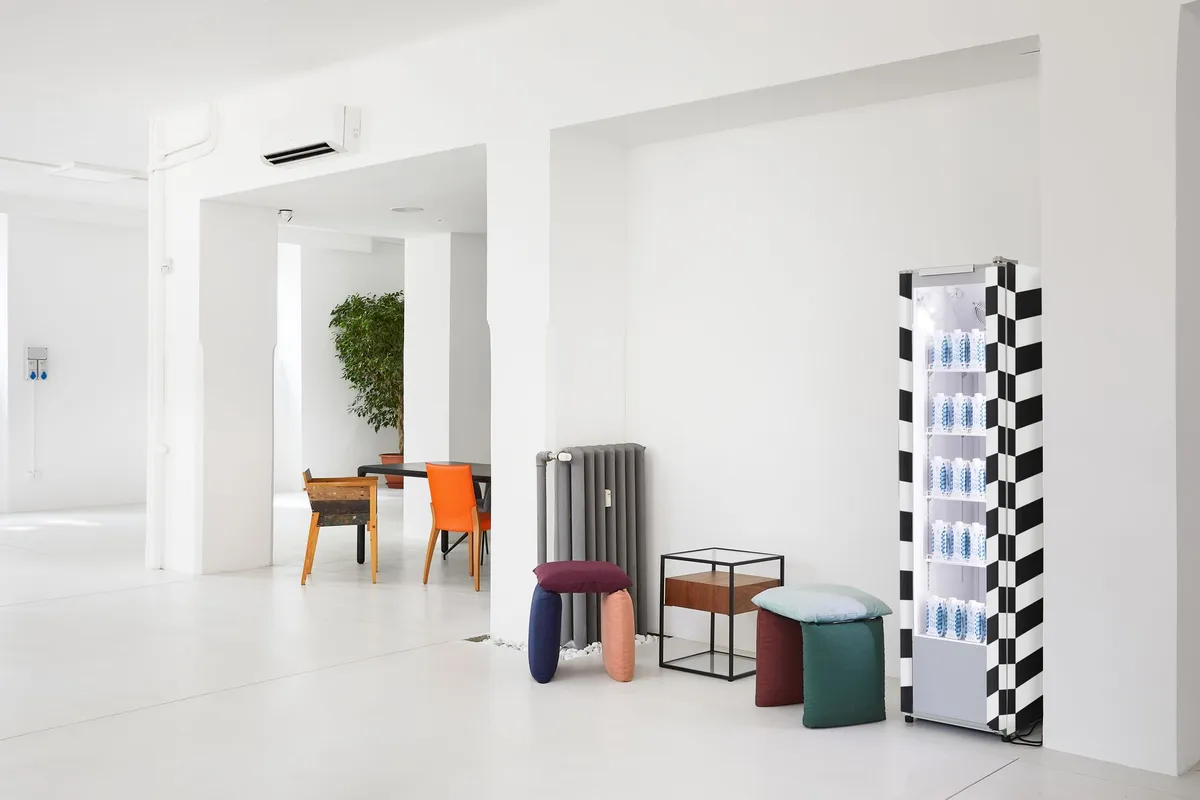
The Wassily Chair (Marcel Breuer, 1925)
Tubular steel frame, leather or canvas slings for seat, back, and arms. Designed in response to the geometric structure of a bicycle frame, it remains one of the most recognizable industrial furniture designs ever produced. A reproduction in black leather signals Bauhaus intent immediately.
The Barcelona Chair (Mies van der Rohe, 1929)
Technically exhibited at the German Pavilion in Barcelona, not the Bauhaus school — but Mies directed the Bauhaus in its final years, and the chair embodies the same principles: an X-frame of flat steel bars, tufted leather cushions, geometric precision. Licensed reproductions are widely available from $600–$2,500 depending on materials and quality.
The Cantilever Chair (Breuer, Stam, Mies — contested, 1926–27)
A chair with no rear legs, cantilevered from a continuous bent-steel frame. The design challenged assumptions about how chairs had to be structured, letting the material's tensile strength do what wood could not. Modern versions from established manufacturers run $400–$1,200.
Finding Bauhaus-Adjacent Furniture Without the Price Tag
Authentic Knoll or Cassina licensed reproductions are expensive. For budget-conscious applications, look for: tubular metal frames with leather or canvas seats, side tables with circular or square glass tops on metal legs, and storage furniture with flush fronts and minimal hardware. The material language matters more than the brand provenance.
Materials and Surfaces: Industrial Honesty
The surface palette of a Bauhaus interior draws from the materials of industry and construction, presented without romanticization:
Flooring
Polished concrete is the most architecturally correct choice, though it's a significant investment and installation undertaking. Large-format porcelain tile in concrete or light stone colorways achieves a similar effect for less cost. Pale oak or ash hardwood in wide planks is permissible — natural wood was part of the Bauhaus vocabulary — but avoid warm, heavily-grained species like knotty pine or American walnut, which read as too organic.
Walls
White plaster or flat white paint, smoothly applied. Exposed brick is borderline — it reads more industrial-loft than Bauhaus unless the brick is very regular and the overall palette is rigidly neutral. Exposed concrete is unambiguously appropriate.
Metal
Chrome, brushed steel, and black powder-coated steel are the correct hardware and fixture finishes. Brass and bronze have no place in strict Bauhaus application — they carry historical associations with decorative styles the movement explicitly rejected.
Lighting: Functional Geometry
Bauhaus lighting design is among the style's most influential contributions to contemporary interiors. The school produced lamp designs — most famously by Marianne Brandt — that treated the fixture as a piece of sculpture in its own right: spherical shades, adjustable armatures, chrome stems.
For residential application, look for: pendant lights with hemispherical or conical metal shades in chrome or matte black, adjustable wall-mounted task lights on articulated arms, and floor lamps with circular or cylindrical shades on minimal upright stems. Avoid fabric shades, decorative filigree, and anything that reads as "warm and cozy." The Bauhaus lamp illuminates; it doesn't soften.
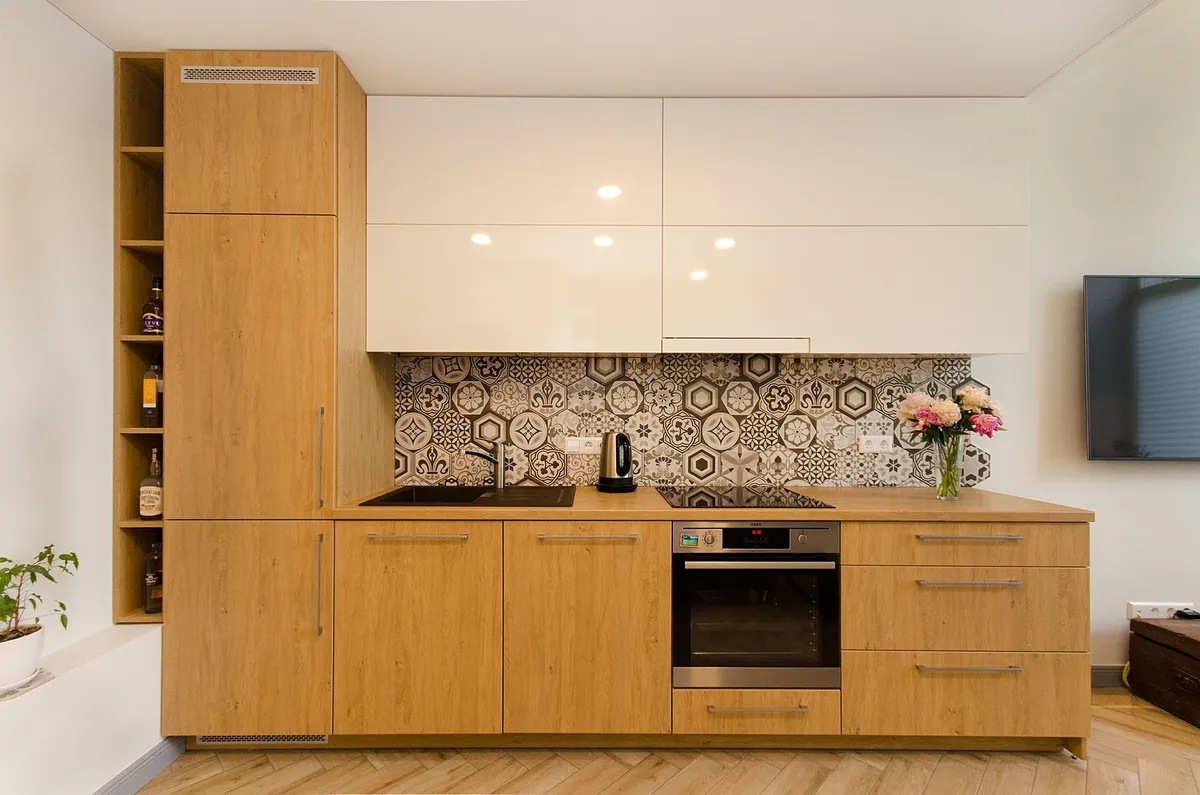
Applying Bauhaus Principles Room by Room
Living Room
Center the room on function: a sofa for seating, a table at the correct height for use, a lamp at the correct height for reading. Resist the urge to fill every surface. A single large-scale geometric artwork — black and white, or featuring one primary color — can serve as the room's visual anchor. See the living room design guide for spatial planning principles that work well with the minimalist Bauhaus footprint.
Bedroom
A platform bed frame with clean horizontal lines, white bedding, one or two geometric accent pillows in a primary color. Nightstands should be simple cubes or cylinders — no ornate legs, no decorative hardware. Task lighting over reading areas rather than purely ambient lighting.
Kitchen
Flat-front cabinetry in white, gray, or black. No visible hardware, or simple bar pulls in chrome. Stainless steel appliances. Concrete or white quartz countertops. Bauhaus kitchens look like laboratories — efficient, clean, intentional. Explore modern minimalist kitchen approaches for visualization ideas that overlap with the Bauhaus kitchen aesthetic.
Bauhaus vs. Related Styles
Bauhaus vs. Scandinavian Minimalism
Scandinavian design shares Bauhaus's commitment to functional simplicity but introduces warmth: natural wood in honey and amber tones, soft textiles, candlelight. Bauhaus is cooler, more ideologically rigid, and less interested in comfort as an aesthetic value. The Scandinavian design guide illustrates where these styles converge and diverge.
Bauhaus vs. Industrial Style
Industrial interiors celebrate rawness — exposed ductwork, salvaged materials, rough plaster — in a way that Bauhaus doesn't fully endorse. Bauhaus is more precise and manufactured-feeling; it shares industrial materials but presents them with greater geometric control. See the industrial design guide for comparison.
Visualizing Bauhaus in Your Own Space
One of the most useful things you can do before committing to Bauhaus is see it rendered in your actual rooms. The primary-color accent palette reads very differently in a bright, south-facing room than in a north-facing one. Polished concrete floors that look striking in photographs may make a bedroom feel cold. Use RoomRenovation.AI's free render tool to apply Bauhaus-style finishes to photos of your own space before purchasing anything.
Frequently Asked Questions
Is Bauhaus the same as minimalism? Related but not identical. Minimalism is a broad aesthetic principle applied across art, music, and design. Bauhaus is a specific historical movement with defined principles about the relationship between function and form, the integration of industrial materials, and the use of geometric structure. All Bauhaus design is minimalist in practice, but not all minimalist design is Bauhaus.
Can Bauhaus work in a small apartment? Exceptionally well. The style's discipline around not cluttering surfaces, its preference for furniture that is visually light (tubular steel takes up less visual space than heavy upholstered pieces), and its white-dominant palette all make small spaces feel larger. The constraint of Bauhaus principles is actually an asset in compact floor plans.
What budget should I expect for a Bauhaus-inspired living room? A furniture-only Bauhaus update — replacing key pieces rather than renovating the room — can be done for $3,000–$8,000 using quality reproductions and carefully sourced accent pieces. A complete room renovation including flooring, lighting, and built-ins typically runs $15,000–$35,000 depending on market and materials.
Do I need to follow all the rules strictly? No. Many successful contemporary interiors borrow selectively from Bauhaus — tubular steel furniture against warmer walls, geometric rugs with softer upholstery. The principles are a framework, not a doctrine. Understanding them helps you apply them with intention rather than accidentally.