
AI Bedroom Design Ideas for Small Spaces: Maximize Your Room
Small bedroom design ideas visualized with AI. See how to create spacious-feeling bedrooms in compact rooms using color, furniture, and layout tricks.
RoomRenovation.AI Team
Updated March 20, 2026
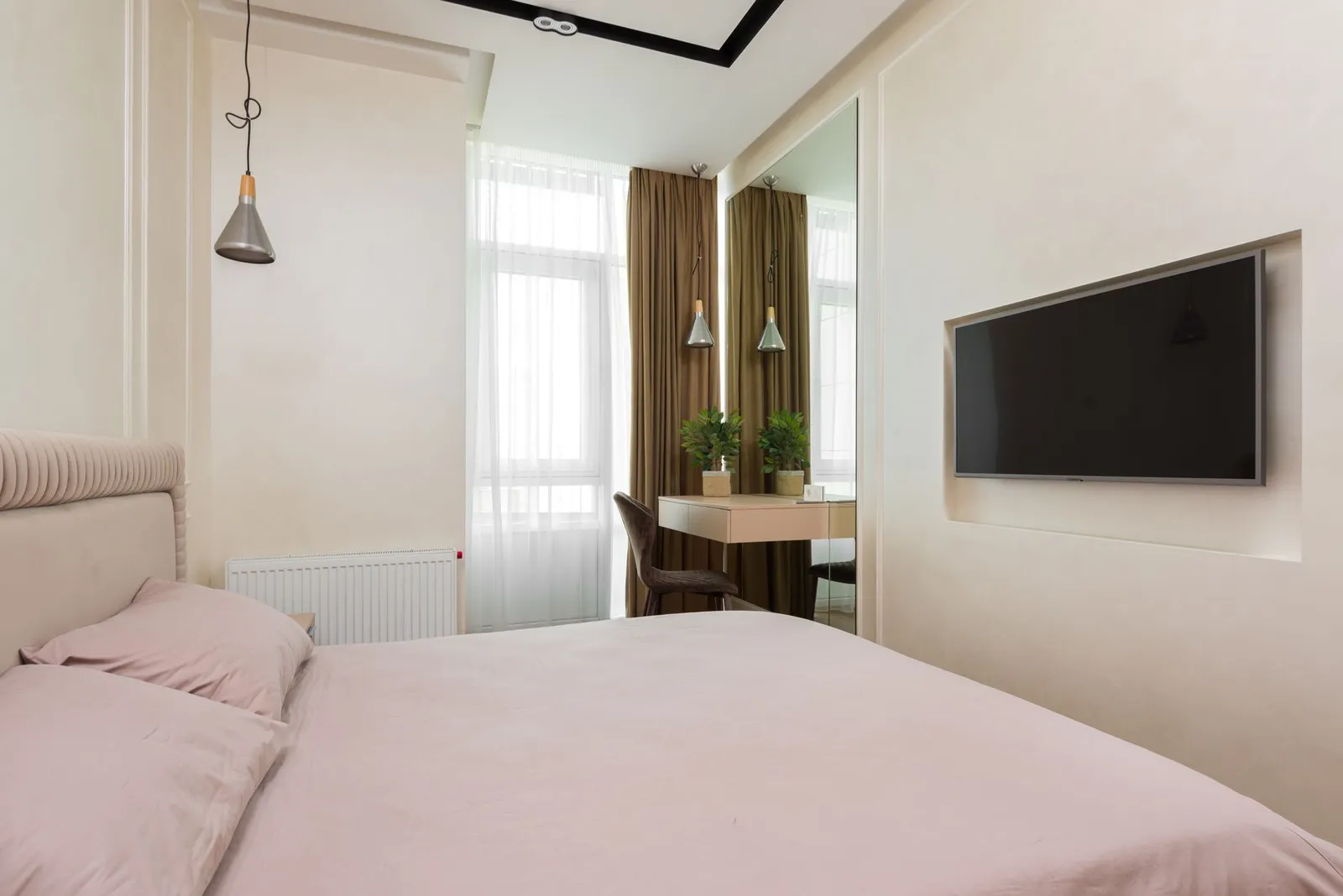
Designing a small bedroom that feels genuinely comfortable rather than cramped is one of the most common interior design challenges — and one where AI visualization has proven especially valuable. When you can instantly generate photorealistic renders of your actual room in different configurations, you can test scale, color, and layout theories that would otherwise require moving furniture or committing to paint before knowing if the idea works. This guide covers the most effective design strategies for small bedrooms in 2026, with specific, actionable approaches to each problem area.
Understanding Why Small Bedrooms Feel Small
Before applying design solutions, it helps to understand what actually makes a small room feel small. It's rarely pure square footage. More often, the culprits are:
- Furniture that's too large for the scale of the room — a king bed in a 10×10 room leaves no breathing room and makes every other piece feel like an obstacle
- Dark walls that absorb light rather than reflect it, compressing the perceived volume of the space
- Ceiling-height variation — low ceilings combined with tall furniture create a particularly oppressive effect
- Clutter and surface accumulation — visual complexity makes a space feel smaller than its dimensions
- Poor or misplaced lighting — a single overhead fixture casts shadows that flatten the room and eliminate the sense of depth
Addressing one or two of these factors thoughtfully can transform the perceived size of a room without touching its actual dimensions.
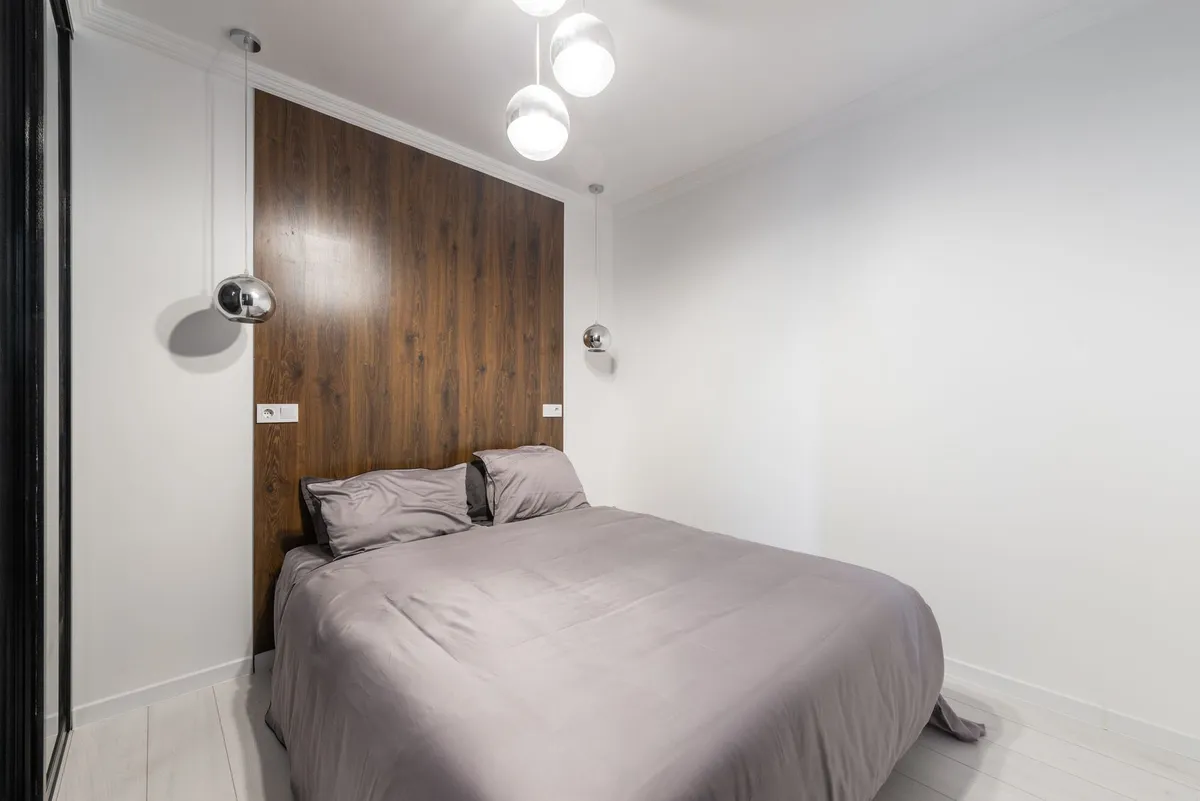
The Right Bed for a Small Bedroom
The bed is the largest piece of furniture in any bedroom, so it has the largest impact on how spacious the room feels. In a small space, the conventional wisdom is to go smaller — but the better principle is to go lower and smarter.
Platform Beds: Lower Visual Footprint
A platform bed with a low profile (12–14 inches to the top of the mattress) raises the apparent ceiling height by creating more visual space above the sleep surface. The room reads as taller. Compare this to a bed with a tall headboard and box spring, which cuts the room in half visually.
Storage Beds: Double-Duty Furniture
A bed with drawers integrated into the base eliminates the need for a separate dresser — and in a room where a dresser might occupy 20–25% of the available floor space, that's a significant gain. Hydraulic lift-storage beds take this further, providing access to the full area beneath the mattress.
Headboard Choice Matters
A wall-mounted, upholstered headboard that attaches directly to the wall — rather than a freestanding headboard attached to the bed frame — visually extends the wall surface and eliminates the gap between bed and wall where dust and items accumulate. A simple, upholstered panel in a light neutral reads as elegant and space-neutral.
Color Strategies That Create Perceived Space
Light, Reflective Wall Colors
Light walls genuinely expand a room optically. The most effective small-bedroom wall colors for 2026 are warm whites and soft greiges with yellow or pink undertones — not cool, stark whites, which read as institutional rather than cozy. Strong performers include Sherwin-Williams Accessible Beige, Benjamin Moore Pale Oak, and Farrow & Ball Elephant's Breath.
The Monochromatic Approach
When walls, bedding, and upholstery occupy the same color family at different tones — say, a dusty blue wall with ice-blue linen bedding and a slightly deeper navy throw — the eye reads the room as a continuous, expansive surface rather than a series of competing objects. This monochromatic layering trick works in small spaces better than high-contrast color schemes.
Dark Accent Wall: Counterintuitive But Effective
A single dark wall — most commonly the wall behind the bed — can actually make a small room feel larger by creating depth. When one surface recedes visually, it implies more space behind it. This works best when the remaining three walls are kept very light and the ceiling is white or off-white.
Mirrors: The Essential Small-Room Tool
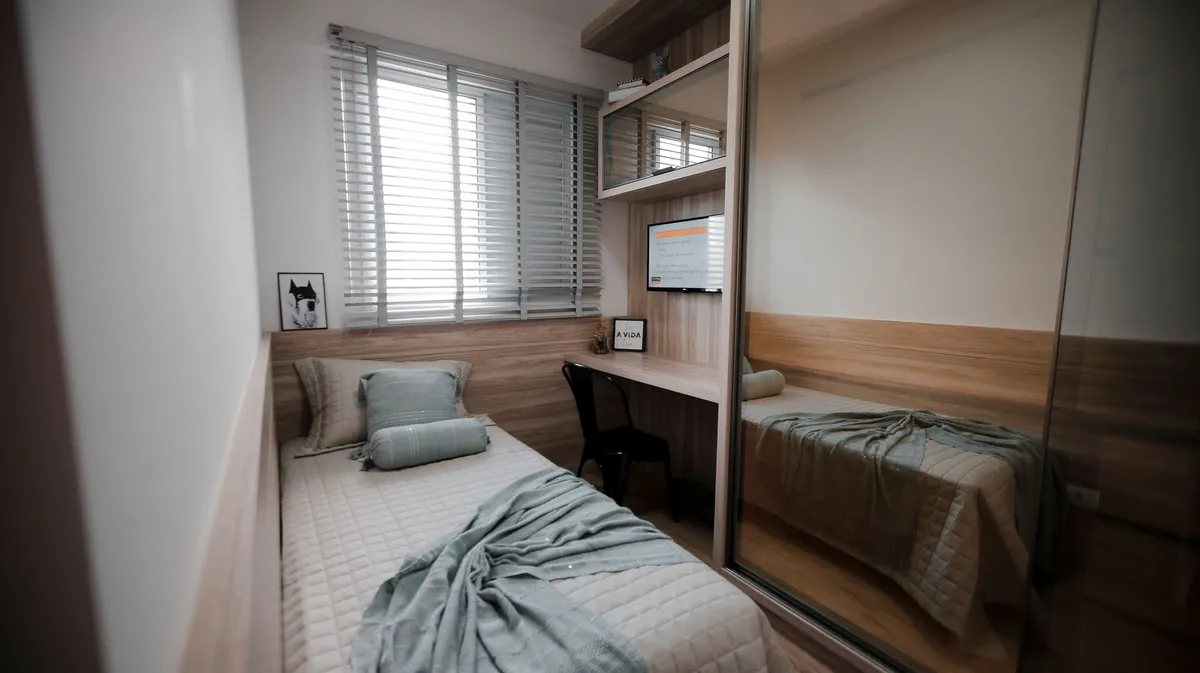
A well-placed mirror is the most effective single intervention for making a small bedroom feel larger. The key is placement and scale:
- A large mirror (at least 36×48 inches) on a side wall — not the wall you look at from bed, where it can disturb sleep — reflects the window and doubles the apparent depth of the room
- A floor-to-ceiling mirror on a closet door is one of the most cost-effective small-room interventions available
- Avoid a gallery of small mirrors — multiple small mirrors create visual clutter rather than spatial expansion
Lighting Layers That Open Up Small Bedrooms
The single overhead fixture common to most small bedrooms is the worst possible lighting configuration for making a space feel generous. Replace it or supplement it with layers:
- Wall-mounted bedside sconces instead of table lamps — they free up the nightstand surface entirely and create a horizontal light band at eye level that makes walls feel longer
- LED strip lighting behind or beneath the bed creates an indirect glow that defines the room's boundary and adds subtle depth
- A small pendant or chandelier instead of a flush-mount ceiling light — even in a room with modest ceiling height, a pendant that hangs 12–18 inches adds architectural interest that draws the eye upward, making the ceiling feel higher
- A floor lamp in a corner illuminates the room's extremities and visually pushes the walls outward
Storage Without Visual Clutter
Hidden and built-in storage is worth a significant investment in a small bedroom because it returns more floor area and visual calm than almost any other design intervention.
Vertical Storage
Floor-to-ceiling shelving or built-in wardrobes draw the eye upward and make rooms feel taller. They're also dramatically more space-efficient than low, wide furniture — a 12-foot-tall wardrobe occupies the same floor footprint as a 4-foot-tall dresser while holding three times the clothing.
Under-Bed Storage
Storage drawers or rolling bins under the bed capitalize on area that would otherwise be wasted. This is particularly valuable in studio apartments and children's rooms where every inch matters.
Nightstands: Scale Down or Go Floating
Traditional nightstands with legs take up floor space and add visual complexity. Wall-mounted floating nightstands — a single shelf bracket with a small surface — accomplish the same function while contributing zero floor clutter. In a very tight room, a simple wall-mounted shelf replaces the nightstand entirely.
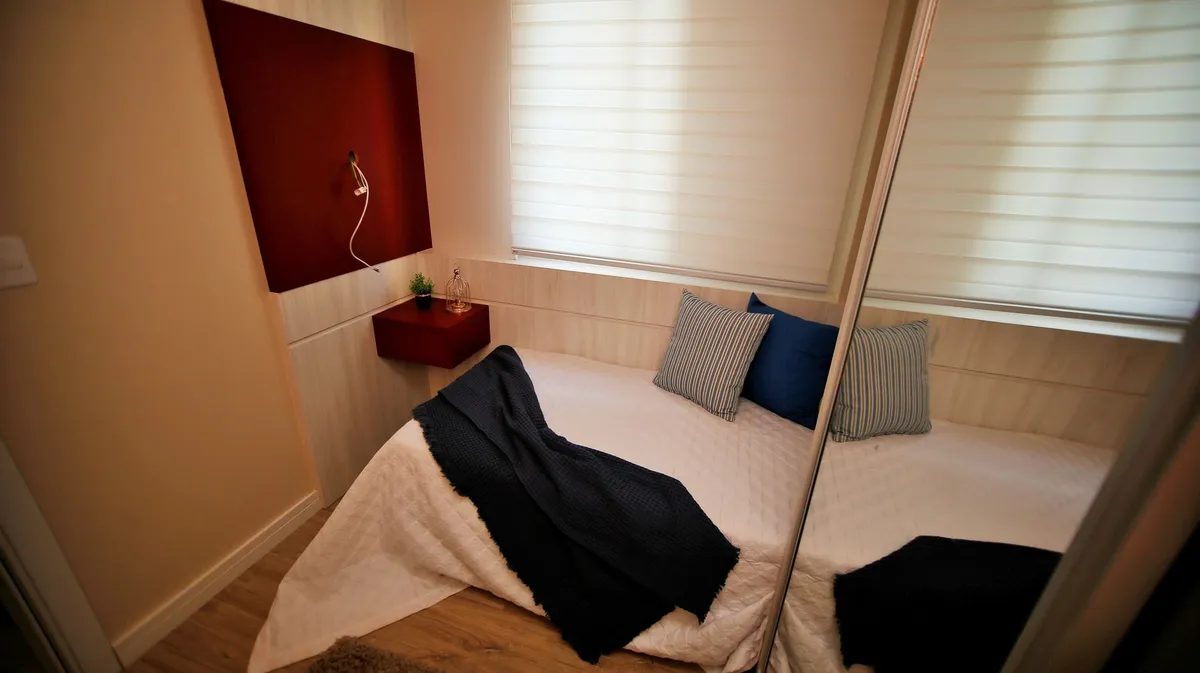
Furniture Arrangement Principles for Small Bedrooms
Beyond individual pieces, the arrangement matters enormously:
- Float the bed on the main wall — centering it creates symmetry that reads as intentional and spacious rather than jammed in
- Keep pathways clear. A minimum 24-inch clearance on both sides of the bed is the practical threshold below which a room feels impassably tight
- Use furniture with legs wherever possible. Furniture legs that expose the floor beneath them make rooms feel larger because the floor reads as continuous rather than interrupted
- Limit the number of furniture pieces. In a truly small bedroom (under 100 square feet), bed, one or two nightstands, and one storage piece is usually the correct ceiling. More furniture competes for attention and reduces perceived space
Using AI to Test Small Bedroom Ideas Before Spending
The challenge with small bedroom design is that you often can't tell if an idea will work until you've already committed — moved furniture, bought the bed, painted the walls. AI visualization solves this. Upload a photo of your bedroom to RoomRenovation.ai and try different style presets including Scandinavian or modern minimalist — two styles that consistently excel in compact spaces. The AI render shows your actual room, not a generic example, so you see exactly how a lower bed profile or lighter wall color would affect your specific space.
For a quick test at no cost, try the free room render with your bedroom photo.
FAQ
What size bed should I use in a small bedroom? Match bed size to room size with genuine clearance in mind. In a 10×10 room, a full (double) bed leaves comfortable walking space. A queen fits well in 10×12 to 11×12. A king should only go in rooms 13 feet wide or more. Prioritizing sleep comfort in a snug-but-workable space is usually better than struggling with a bed that dominates the entire floor plan.
Does painting a small bedroom a dark color really make it feel bigger? A single dark accent wall can create depth that makes the room feel larger — but all four walls in a dark color typically make a small room feel smaller and cave-like. The one-dark-wall technique works; a full dark room requires very confident design execution and usually benefits from higher ceilings.
What's the single most impactful change for a small bedroom? Eliminating furniture that doesn't earn its floor space. In most small bedrooms, a dresser is the first candidate. Replacing it with under-bed storage and a built-in wardrobe dramatically opens the room. If you can only do one thing, remove one furniture piece before adding anything new.
How do I add personality to a small bedroom without making it feel cluttered? Go vertical for art — one large piece rather than a gallery wall, hung higher than feels instinctively correct (top of frame 7–8 inches below the ceiling). Use textiles for color and pattern — a patterned throw or colorful pillowcase adds character without taking up floor space. And layer your lighting for ambiance rather than relying on a single overhead source.