
Small Bathroom Makeover Ideas: AI Visualization for Tiny Bathrooms
Small bathroom ideas visualized with AI. From paint tricks to layout优化, see how to make tiny bathrooms feel spacious and luxurious without expanding.
RoomRenovation.AI Team
Updated March 21, 2026
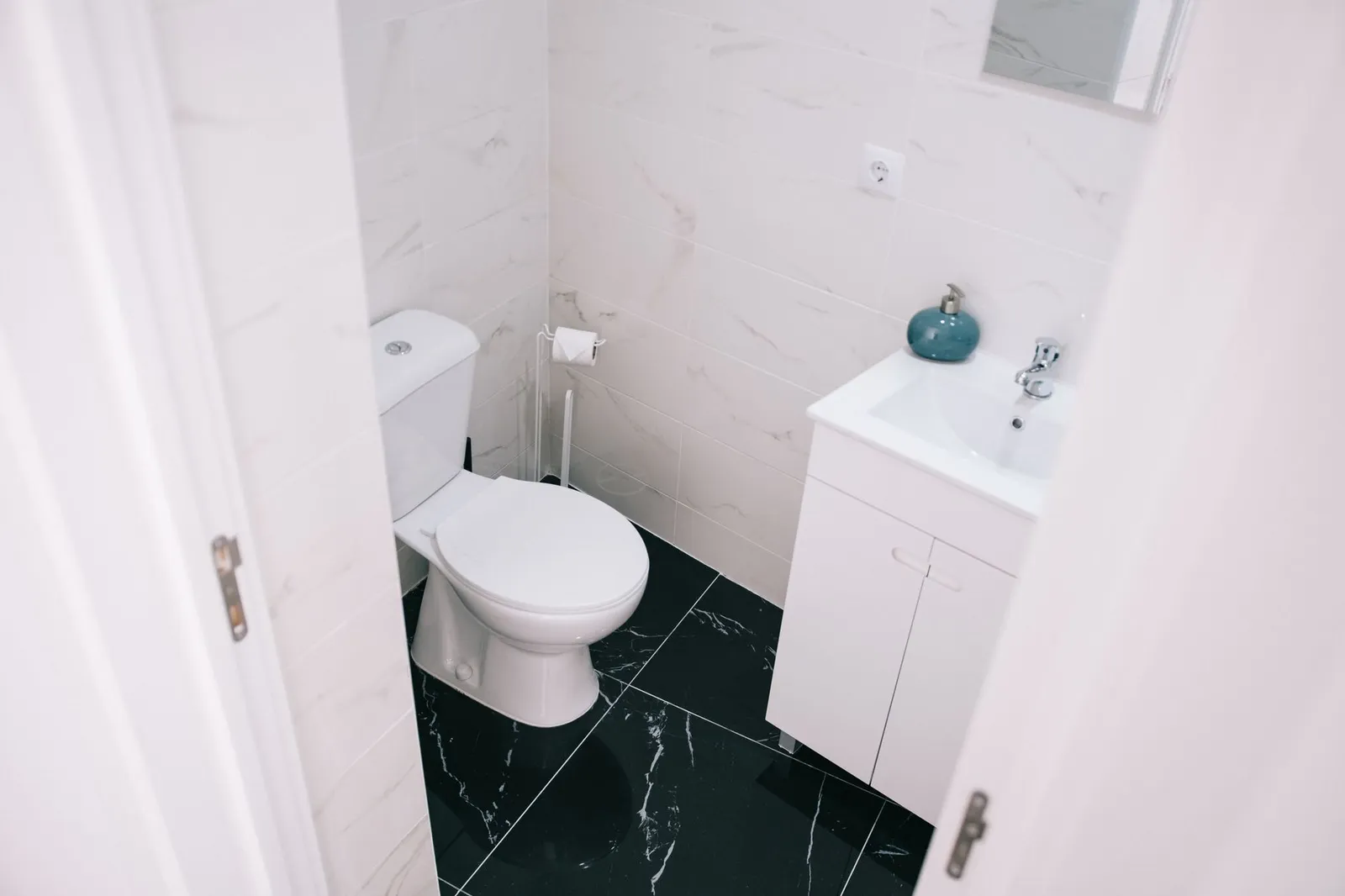
Small bathroom makeovers are among the highest-ROI projects in residential renovation — and among the most intimidating to plan. When you're working with 35 to 60 square feet, every decision has disproportionate consequences: a tile that feels fine in a showroom can visually shrink a room; a single fixture swap can make the same room feel airy and considered. AI visualization tools have made it genuinely practical to experiment with these decisions before committing to tile, fixtures, or paint.
Why Small Bathrooms Feel Smaller Than They Are
Most small bathrooms suffer from the same set of design mistakes rather than from actual size limitations. Dark paint on all four walls absorbs light. Excessive visual breaks — grout lines in multiple directions, contrast trim, competing patterns — fragment the space. Dated vanities with cabinet doors that swing outward eat into floor clearance. And single-point lighting from an overhead fixture leaves corners dark and makes the room feel cave-like. Correcting these specific issues typically transforms a bathroom more than any expansion project, at a fraction of the cost.
Tile Strategies That Expand Small Bathrooms Visually
Large-Format Tile
The counterintuitive truth about small bathroom tile: larger tiles with fewer grout lines make rooms feel bigger, not smaller. A 24×24 or 12×24 tile on the floor and shower walls reduces the number of grout lines the eye has to process. Grout lines are visual interruptions, and fewer of them creates a calmer, more expansive reading of the space. Pair this with a large-format tile in a light neutral — warm white, pale gray, soft cream — and the effect is significant.
Vertical Tile Runs
Running tile vertically from floor to ceiling, without a break for a half-wall or border, draws the eye upward and makes ceiling height feel greater than it is. This works especially well with subway tile in a vertical stack bond or herringbone pattern. A full-height tile treatment costs more in materials than a half-tiled wall, but the visual return is worth the investment in a small bathroom.
Continuous Flooring into the Shower
Using the same tile on the bathroom floor and shower floor (or through a curbless shower entry) removes the visual interrupt of a threshold and makes the room feel continuous and larger. This detail is common in high-end boutique hotel bathrooms for exactly this reason.
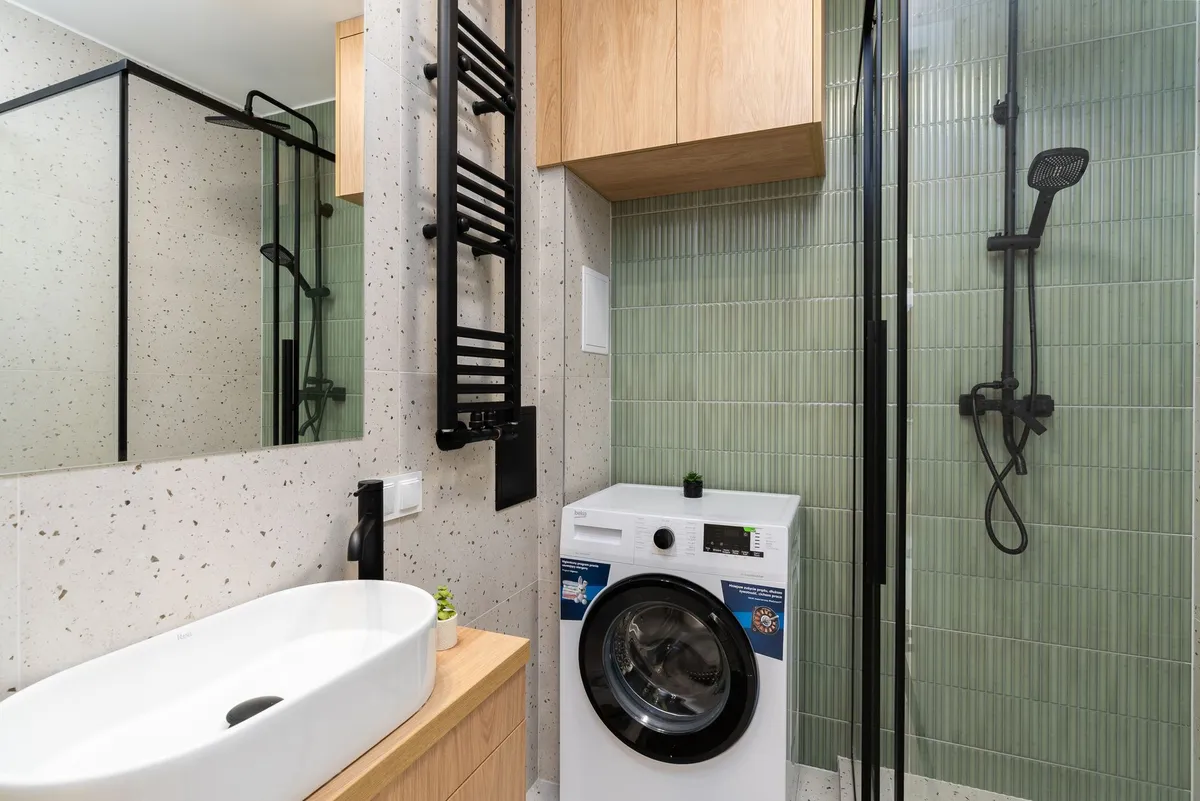
Fixture and Vanity Choices for Small Bathrooms
Floating Vanities
A wall-mounted, floating vanity exposes the floor beneath it, creating a visual gap that makes the room feel larger. This is one of the single most effective interventions in a small bathroom. The exposed floor can be cleaned easily (a functional benefit) and the continuous floor plane reads as more space. Floating vanities typically run $400–$1,200 for the vanity itself, plus $200–$400 for plumbing adjustment by a professional.
Round or Oval Mirrors Over Rectangular Ones
A circular or oval mirror softens the geometry of a small bathroom and creates a focal point without competing with the fixture lines. It also reflects more light angles than a rectilinear mirror flush to the wall. A quality backlit round mirror ($150–$400) adds both light and visual dimension.
Concealed Toilet Tanks
In-wall cisterns (concealed tank toilets) move the tank into the wall cavity, saving 6–8 inches of depth in the bathroom footprint. In a bathroom where the toilet sits across from a vanity, that 6 inches can change the room from uncomfortably tight to genuinely functional. Installation cost is higher than a standard toilet ($1,200–$2,500 installed) but the impact on small bathrooms is substantial.
Lighting: The Quickest Small Bathroom Fix
Replacing a single overhead fixture with a combination of overhead ambient light plus side-mounted vanity sconces eliminates the unflattering shadows that make small bathrooms feel utilitarian. Sconces mounted at eye level on either side of the mirror (rather than above it) provide even, flattering illumination for grooming and make the room feel like it belongs in a boutique hotel rather than a builder-spec house. Budget $150–$400 for two quality sconces plus an electrician hour or two if new wiring is needed.
Color and Paint Strategies
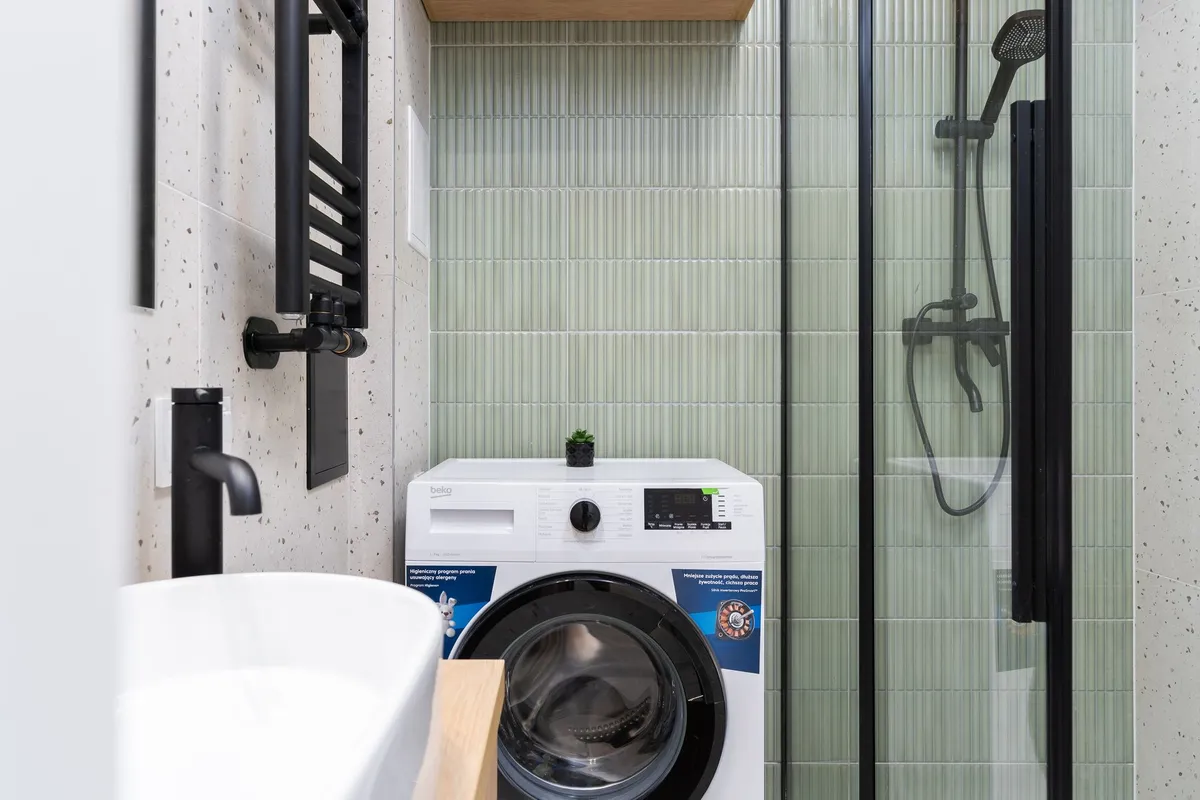
The small bathroom color question is frequently misunderstood. The advice to "keep small rooms white" is an oversimplification. Light neutrals do help — but a warmer, more saturated color on just the ceiling or one wall can actually make a bathroom feel more intimate and finished without shrinking it, if the rest of the room is kept light. Full-color approaches in small bathrooms (all four walls and ceiling in a deep navy or forest green) have become popular in design circles precisely because the contained space makes the color feel maximalist and luxurious rather than overwhelming.
The approach to avoid: a different color on every surface, high-contrast trim, and competing patterns in a small room. Visual fragmentation is the enemy of perceived space.
AI Visualization for Small Bathroom Planning
Small bathrooms are the ideal use case for AI room redesign tools because the stakes for bad decisions are high and the design variables are dense in a small footprint. Before selecting tile, paint, or fixtures, uploading a photo of your bathroom to RoomRenovation.ai lets you preview multiple treatments on your actual bathroom dimensions and lighting conditions. You can compare a large-format white tile with a floating vanity against the current setup, see whether a dark ceiling treatment would overwhelm or enhance, and evaluate lighting configurations — all without buying a single sample.
The bathroom renovation cost guide provides realistic estimates for each project type, which makes the AI visualization more useful because you can prioritize the changes that combine high visual impact with your actual budget.
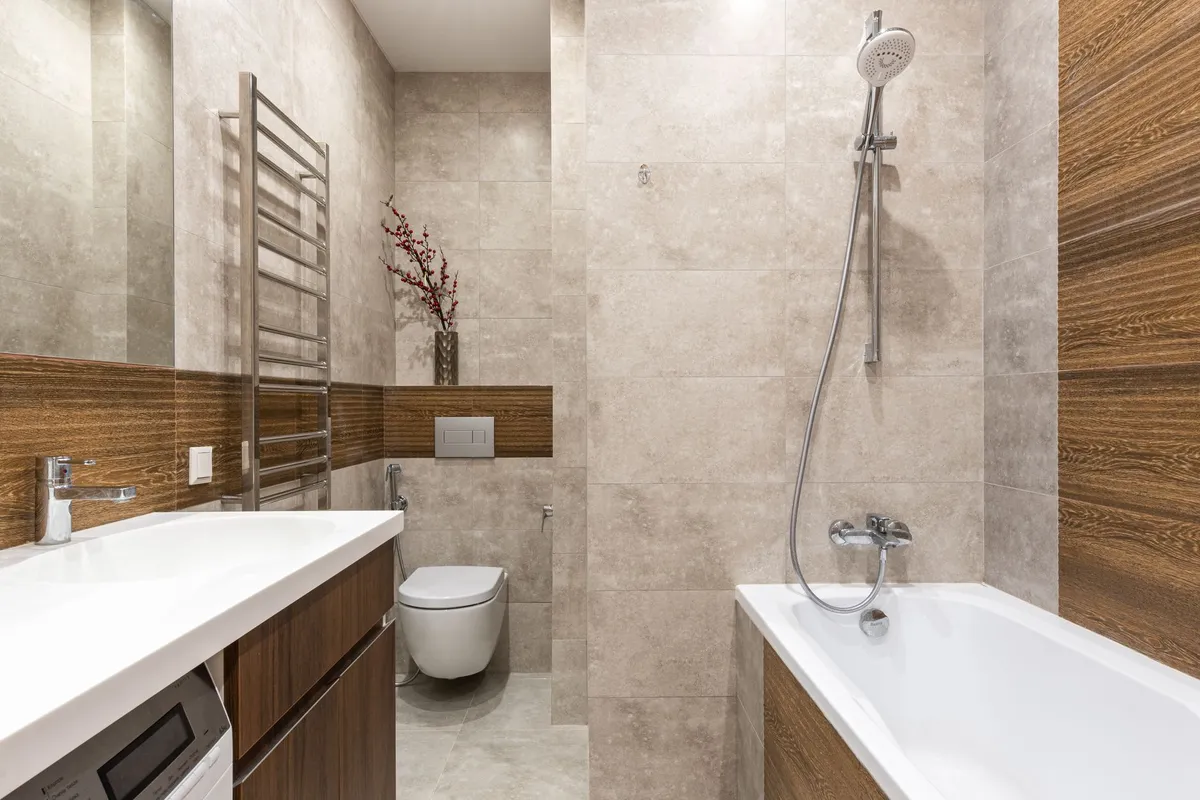
Budget Ranges for Small Bathroom Makeovers in 2026
- Cosmetic refresh ($500–$2,000): New paint, updated fixtures (faucet, towel bars, toilet paper holder), new mirror, better lighting, and accessories. No tile work or plumbing moves.
- Mid-range makeover ($2,000–$8,000): New vanity, tile work on one or two surfaces, updated toilet, new lighting, and hardware throughout. One trade (plumber or tiler) typically required.
- Full gut renovation ($8,000–$20,000+): Complete tile replacement on floors and walls, new shower or tub unit, new vanity and toilet, new ventilation, electrical updates, and layout changes if the footprint allows.
Quick Wins That Cost Almost Nothing
- Replace plastic toilet seat with a soft-close seat ($25–$60) — tactile quality improvement every single day.
- Swap builder-grade chrome hardware for matte black or brushed brass across faucet, towel bars, and robe hook — around $150–$300 total for a set.
- Add a heated towel rail ($80–$200 plug-in, or $400–$800 hardwired) — one of the best daily-experience improvements in a bathroom.
- Replace builder-spec ceiling vent with a quiet, high-CFM model ($40–$120) — reduces humidity and the mildew it causes.
FAQ
What makes a small bathroom look bigger? The most effective techniques: large-format light-colored tile with minimal grout lines, a floating vanity that exposes the floor, a frameless glass shower enclosure, good side-lit vanity lighting, and eliminating visual clutter. These changes are additive — each one helps, and together they transform the perception of a room's size.
Should a small bathroom have a walk-in shower or a tub? If the bathroom serves daily bathing for adults, a walk-in shower uses the space more efficiently than a tub-shower combo and feels more generous. If the bathroom must serve young children or if it's a resale consideration (buyers with children often prioritize tubs), keeping a tub makes sense. A curbless shower with no door is the most space-efficient single option.
How much does it cost to tile a small bathroom? Materials for a 50-square-foot bathroom typically run $200–$800 depending on tile selection. Labor adds $500–$1,500 for floor and shower wall tiling by an experienced tile setter. Total cost for tiling a small bathroom: $700–$2,300.
Can I use dark colors in a small bathroom? Yes, intentionally. A uniformly dark bathroom — all four walls and ceiling in the same deep color — creates a cocoon effect that feels luxurious rather than claustrophobic if the rest of the design is clean. What doesn't work is using dark color on one wall as an accent against a light room, which visually compresses the space.
How can I visualize bathroom changes before renovating? RoomRenovation.ai lets you upload a photo of your current bathroom and preview different tile, paint, and fixture configurations with photorealistic AI renders. It's the most effective way to avoid expensive renovation mistakes in a small space where every decision is visible from every angle.