
Abstract Interior Design: Bold Art as the Foundation of Your Space
Abstract interior design using bold artwork, unconventional color, and artistic expression as the core of room design. See how to build rooms around art.
RoomRenovation.AI Team
Updated March 24, 2026

Abstract interior design takes the most radical premise in residential aesthetics: that artwork — in its most expressive, non-representational form — is not a decorative addition to a room but the room's primary design driver. Rather than hanging art on a wall after furniture and finishes have been determined, abstract interior design inverts the sequence: the artwork comes first, and everything else — color palette, furniture selection, material choices — responds to and supports it.
This approach produces some of the most individual, charged, and visually alive residential interiors possible. It also requires genuine commitment and a higher tolerance for visual risk than most other design directions. Done with intelligence and discipline, it is extraordinary; done carelessly, it is chaotic. This guide explains how to tell the difference and build a room worth living in.
The Foundation: Selecting Art That Can Lead
Not every piece of abstract art is suited to organizing a room around it. Art that functions as a design anchor needs to be:
- Large enough to hold the wall: A piece lost on a wall cannot command a room. In most living spaces, the primary artwork should span at least 36–48 inches in its narrowest dimension; in larger rooms, 60 inches or more.
- Rich enough to sustain extended looking: A flat graphic print that reads completely on first viewing is decoration, not design leadership. Abstract art chosen as a design anchor should reveal itself over time — new details, spatial depth, tonal variation that rewards continued attention.
- Color-committed: Art that includes the room's entire palette, or definitively excludes certain tones, gives the design a clear directive. Muddy or indeterminate color palettes in the art make everything else harder.
- Personally meaningful: In abstract interior design more than any other approach, the art is a direct expression of the occupant's sensibility. Art selected for its investment value or trendiness rather than genuine resonance will fail as a room anchor.

Building the Room Around the Art
The Color Extraction Method
Once primary artwork is selected, extract 3–5 colors from it: the dominant tone, the supporting tone, the accent, and possibly a neutral. These become the room's color palette. If the painting contains deep cobalt, warm ochre, and raw sienna against white canvas, the room might use white walls, cobalt in a single upholstered chair, ochre in a large area rug, and raw sienna in ceramic objects on shelving. The art and room become visually integrated rather than juxtaposed.
This extraction method prevents the color conflict that occurs when artwork and room independently make strong color decisions that compete. The art is always the authority; the room defers to it.
Furniture as Visual Rest
Because the art carries the room's expressive weight, furniture typically functions as visual rest — surfaces that don't compete. This usually means upholstery in neutral tones (cream, warm gray, natural linen) with perhaps one accent piece in a color pulled directly from the artwork. Clean lines, modest profiles, and quality materials suit this supporting role; furniture with strong visual personality of its own can conflict with the art rather than complement it.
There are exceptions: rooms with multiple significant artworks or those where the aesthetic intentionally integrates strong color and pattern throughout — maximalist abstract interiors — can handle more assertive furniture. But the general principle holds: when art leads, furniture follows.
Lighting Art Properly
Nothing damages the impact of significant abstract work faster than poor lighting. Ceiling-mounted spotlights aimed at the art with correct beam angle (typically a 20–30 degree spot for a medium painting), adjustable track lighting, or dedicated picture lights are essential. Warm-toned lighting (3000K or below) generally flatters the warm tones common in expressive abstract work; cooler lighting (3500K+) suits work with cooler, more graphic qualities.
Avoid positioning art opposite windows where direct sunlight will fall on it: UV damage is cumulative and destructive, and glare renders the work visually inaccessible during daylight hours.

Gallery Walls: Curation Versus Accumulation
When abstract design involves multiple works rather than a single anchor piece, the gallery wall is the primary format — but gallery walls fail far more often than they succeed. The difference between a curated gallery wall and an accumulated pile of frames comes down to a few principles:
Commitment to a Visual Thread
Every successful gallery wall has at least one unifying principle that connects the works. This might be:
- Consistent frame material (all matte black, all natural wood, all raw metal)
- Consistent palette — works that all contain a shared color appear related even when their subjects and styles differ
- Scale relationship — a single large anchor piece surrounded by smaller works creates hierarchy and organization
- Medium — all photography, all works on paper, or all paintings create cohesion through material consistency
Abandoning all of these and simply arranging whatever art you own on a wall is how gallery walls become visual noise.
Proportional Spacing
Gallery installation typically calls for 2–3 inches between frames on smaller walls, 4–6 inches for larger installations. Insufficient spacing makes the wall feel crowded; excessive spacing makes the works feel unrelated. A consistent spacing decision, applied throughout, communicates intentionality even when the art itself is eclectic.
Floor-Planning Before Nailing
Lay all frames on the floor in their proposed arrangement before marking the wall. Live with the arrangement for a day or two, adjusting until the composition reads as cohesive from a standing distance. This prevents the damage and frustration of multiple rounds of wall-patching.
Abstract Design Beyond the Living Room
Bedrooms: Quieter Expression
Abstract design in a bedroom typically works at lower intensity than in public-facing rooms. A large work above the bed in a more muted color palette — calmer blues and greens, soft warms — can anchor the space without the visual energy that public-room abstract work often carries. The bedroom version of abstract design often leans toward calligraphic or gestural work rather than high-intensity color field.
Hallways and Transition Spaces
Hallways and entry spaces are actually excellent locations for bolder abstract work precisely because they are viewed in passing rather than lived with continuously. A dramatically colored large-scale piece in a hallway creates immediate impact and establishes the home's artistic identity for anyone entering, without the fatigue risk that the same piece might carry in a living room.
Home Offices
Research on creativity supports the intuition that visual stimulation in work environments can support cognitive engagement. A meaningful abstract work in a home office — positioned to be seen peripherally during work rather than directly in the screen's line of sight — provides this quality without the distraction of a view or a busy pattern.
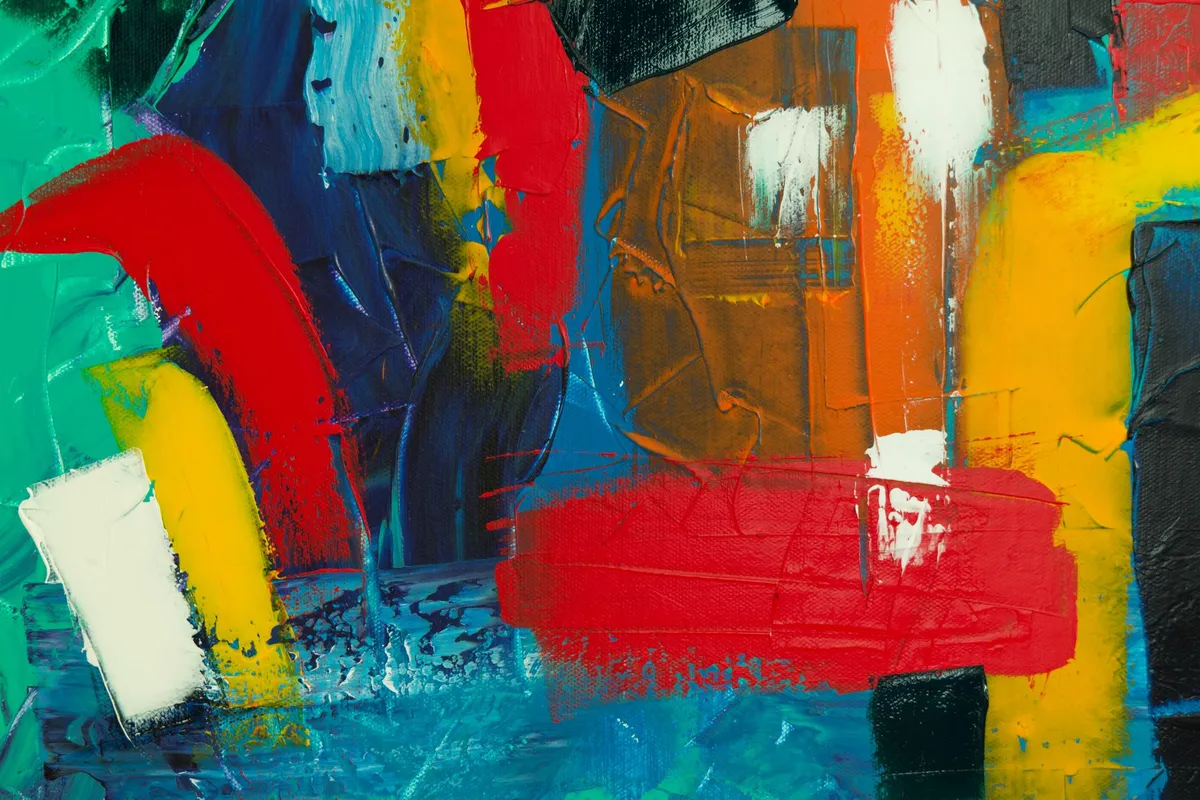
Sourcing Abstract Art Without a Gallery Budget
Investing in established artists at gallery prices is one path; there are others worth exploring:
- Emerging artists: Art school graduates and emerging artists working in abstract forms often produce work of genuine quality at $200–$1,500 for original pieces. Instagram, Saatchi Art, and local studio tours are productive discovery channels.
- Prints: Many significant contemporary abstract artists produce limited-edition prints at $100–$500 that deliver the color and compositional intelligence of the original work at accessible scale. Properly framed, they function as effectively as original works in most residential contexts.
- Commissions: Commissioning an emerging artist to create a piece in a specific size and color palette costs $300–$2,000 for a medium-scale work and produces art that integrates into a room's design because it was made for it.
- Art fairs and open studios: Local and regional art fairs typically offer better value than gallery prices and allow direct engagement with artists whose practice and context you can understand.
Seeing the Abstract Vision in Your Space
Abstract interior design is perhaps the direction where AI visualization adds the most value, because the combination of bold art with specific room conditions — lighting, existing flooring, architecture — is harder to predict than almost any other design decision. RoomRenovation.AI lets you test how a color-led abstract direction works in your actual room before committing. See the examples gallery for rooms where art-led design has been applied to real spaces. For further design inspiration and comparison, explore the minimalist style as a counterpoint — it shares abstract design's restraint while arriving from a different starting premise. Ready to try it? Pricing starts at a few dollars per render — far less than the cost of a single frame.
FAQ
Do I need to understand abstract art to use it as a design foundation? You don't need academic art knowledge — you need genuine personal response. If a work consistently captures your attention over minutes and weeks, it has the quality needed to anchor a room. Trust that response over any theoretical framework.
Can abstract interior design work in a family home with young children? Yes. Art at the appropriate height (above child reach for works on paper; framed and glass-protected for originals), durable upholstery in the room's neutral base, and wipeable floor surfaces are the practical accommodations. The visual approach doesn't require fragility.
How do I know if a gallery wall is working or just cluttered? Stand at the room's natural viewing distance (typically 8–12 feet) and ask whether the wall reads as a composed whole or a collection of separate things. A cohesive gallery wall presents itself as a single visual statement; cluttered accumulation presents as disconnected individual objects.
What if I love abstract art but find completely neutral furniture boring? Introduce furniture pattern through textiles — a patterned rug or printed cushions — while keeping upholstery solids neutral. The textile pattern can introduce visual energy without competing with the art's primary expressive role.
Is abstract interior design expensive? It doesn't have to be. The approach can be implemented with prints rather than originals, quality mid-market furniture in neutral upholstery, and basic gallery lighting. The investment is in design intelligence and selectivity, not necessarily in the price of individual components.