
Moroccan Interior Design: Vibrant Patterns and Exotic Warmth
Moroccan interior design with intricate tilework, lantern lighting, and vibrant colors. See exotic North African style adapted for Western homes with AI.
RoomRenovation.AI Team
Updated March 23, 2026
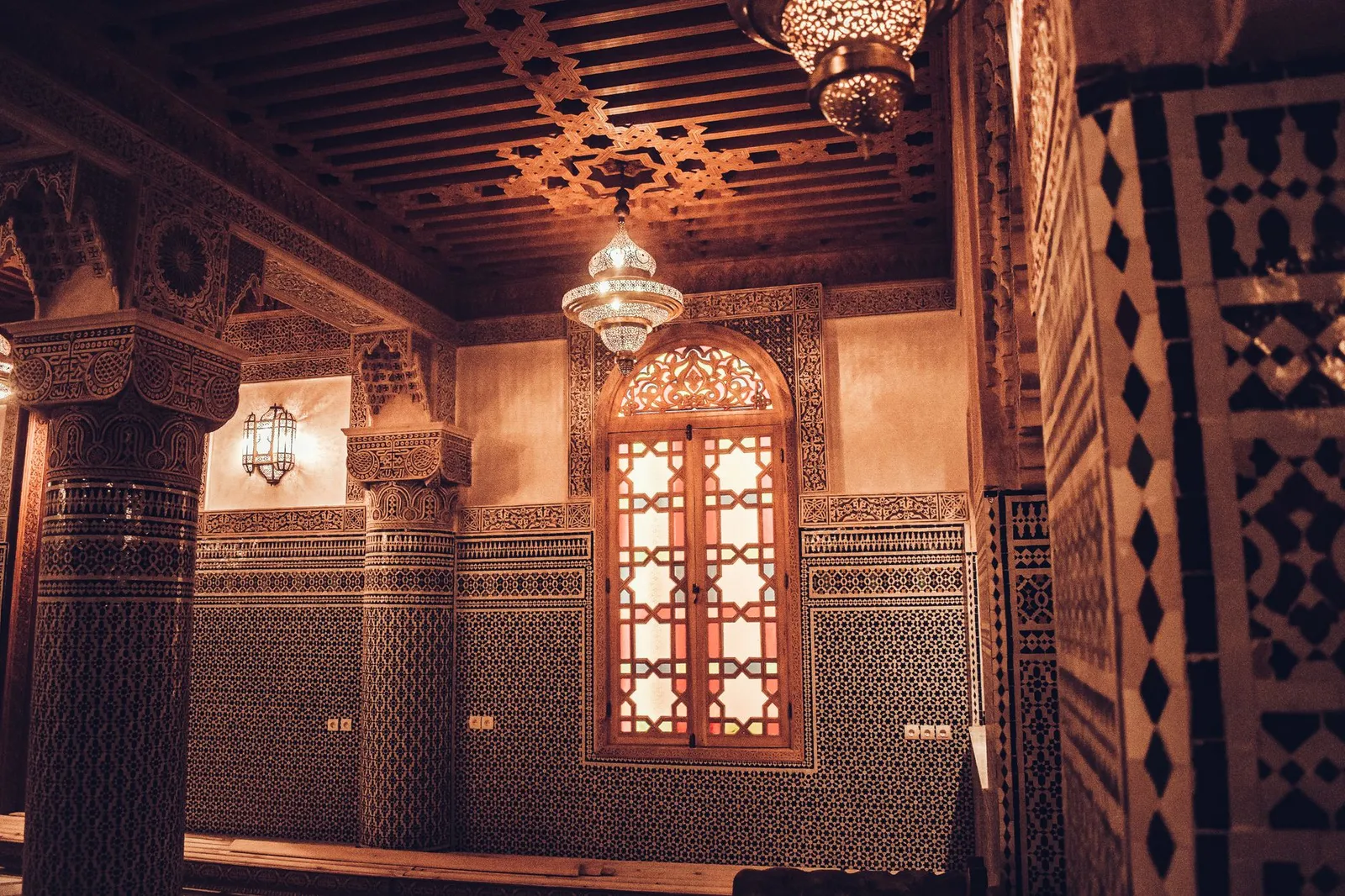
Moroccan interior design draws from one of the world's most sophisticated and sustained decorative traditions — a thousand-year synthesis of Berber, Arab, Andalusian, and Sub-Saharan African influences that has produced some of the most visually complex and emotionally affecting interiors anywhere in the world. Adapted thoughtfully for Western homes, Moroccan design offers warmth, pattern, handcraft, and a specific quality of light that few other styles can match.
The Foundations of Moroccan Interior Design
Understanding Moroccan design means understanding a few key elements that define the tradition:
Zellige Tilework
Zellige — hand-cut geometric ceramic tiles set into intricate mosaic patterns — is perhaps the most recognizable element of Moroccan design. Each tile is individually shaped and glazed, which gives zellige its characteristic slight irregularity and depth of color that machine-cut tiles cannot replicate. Traditional zellige patterns include eight-pointed stars, interlocking geometric frames, and arabesque floral forms. In Western interiors, zellige appears most naturally in kitchens, bathrooms, fireplace surrounds, and feature walls.
Moucharabieh (Carved Screens)
Intricately carved wooden or plaster lattice screens — moucharabieh — serve both functional and decorative roles in traditional Moroccan architecture. They filter strong sunlight, create privacy, and project extraordinary geometric shadow patterns across floors and walls when light passes through them. In Western homes, simplified interpretations in laser-cut wood panels or decorative screens bring this quality into dining rooms, bedrooms, and hallways.
Tadelakt Plaster
Tadelakt is a lime-based waterproof plaster applied in thin layers and polished to a smooth, slightly luminous finish. Traditional to Moroccan hammams (bathhouses), it provides warm, seamless wall surfaces in creamy whites, warm terracottas, and muted blush tones. In contemporary homes, tadelakt or tadelakt-effect plaster adds a quality of surface depth that paint cannot achieve.
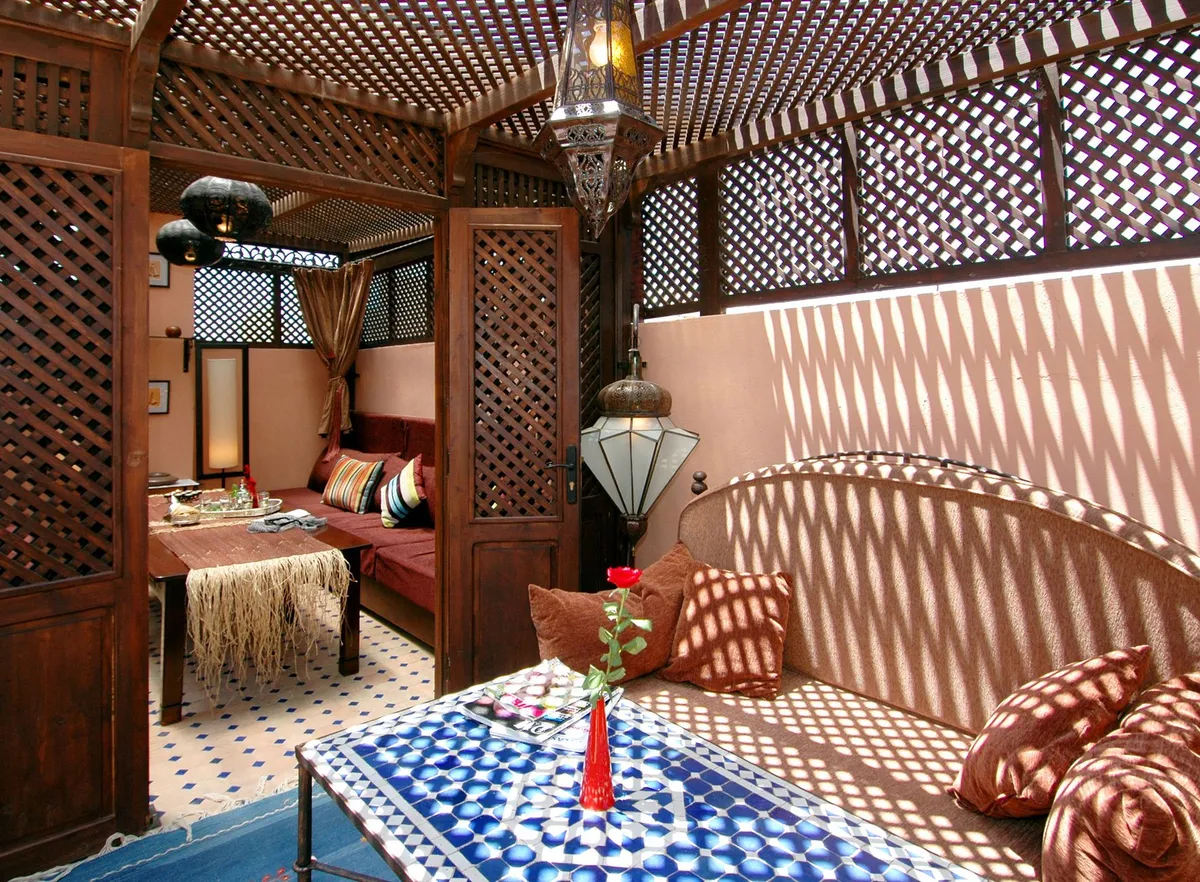
Color in Moroccan Interiors
The Moroccan color palette is extensive but internally coherent — it draws from the natural world of North Africa and the dyes available to Moroccan artisans for centuries:
- Saffron and turmeric yellow: The defining warm accent, used in tilework, cushion fabric, and lantern glass
- Terracotta and burnt sienna: Earth pigments that ground the palette in the ochre tones of Marrakech's medina walls
- Cobalt and Yves Klein blue: The cooler counterpoint, associated with Chefchaouen and traditional pottery glazes
- Deep plum and aubergine: In silk and velvet fabrics, particularly in seating upholstery
- Forest green and olive: In ceramic glazes and zellige tiles
- Warm neutrals as the foundation: Off-white tadelakt, warm cream plaster, or medium sand tones provide the surface against which other colors read most vividly
Moroccan color is not timid, but it is not random. Within each room, the palette typically anchors in warm neutrals with two or three accent colors drawn from zellige, lanterns, textiles, and cushions.
Moroccan Furniture and Seating
Traditional Moroccan interior seating is built-in and low — the banquette (or "banquette marocaine") is a long, upholstered platform that runs along one or more walls of a reception room, covered in fabric and piled with flat, square cushions. This model translates effectively into Western homes as a window seat, a dining bench, or a sectional configuration:
- Low, cushioned banquettes in fabric patterned with geometric or arabesque motifs
- Carved wooden tables — round or octagonal tables with carved geometric relief surfaces, often in thuya wood (native to Morocco), cedar, or walnut
- Poufs (ottomans) in hand-stitched leather — the Moroccan leather pouf has become one of the most globally recognized design exports; in mustard, cognac, and ivory, they add both seating and texture
- Carved screen room dividers that reference moucharabieh without requiring full architectural installation
Lighting: Lanterns as Architecture
No element is more transformative in Moroccan-inspired interiors than the lantern. Hand-punched metal lanterns — typically in brass, copper, or silvered metal — project intricate star and geometric patterns across ceilings and walls when lit, creating the most distinctive lighting effect in any residential style tradition.
Types of Moroccan Lanterns
- Pendant lanterns: Large statement pieces hung from dining room or living room ceilings, typically in aged brass or antiqued silver with colored glass inserts
- Floor lanterns: Tall, ornate lanterns used as architectural accent pieces in corners and beside doorways
- Table lanterns: Small punched-metal or colored glass lanterns on side tables and windowsills
- String lanterns: For outdoor courtyards and terraces — the Moroccan tradition of outdoor entertaining is as rich as the interior tradition
The quality of Moroccan lanterns varies enormously. Mass-produced reproductions have thin metal and lack the weight and projection quality of genuine hand-punched work. For the signature light-pattern effect, source authentic brass lanterns from Moroccan artisan importers or reputable craft marketplaces.
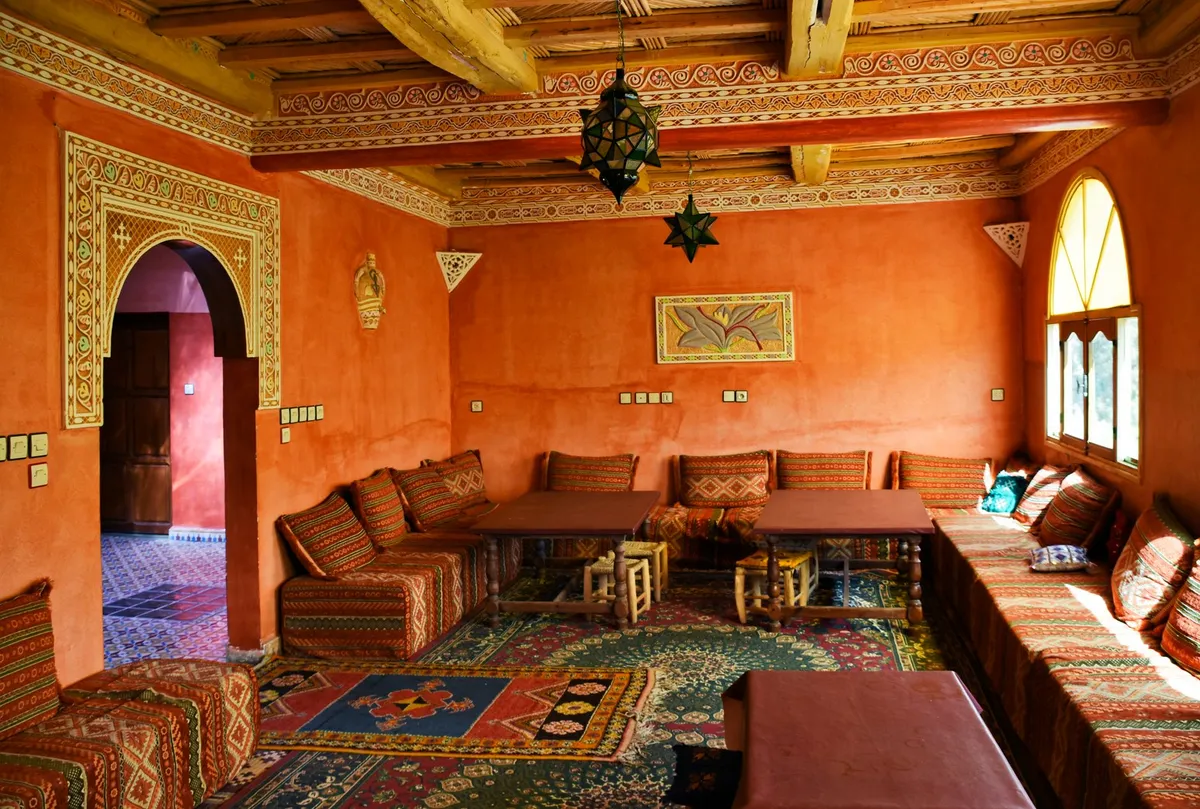
Textiles: The Layering Principle
Moroccan textile design is as sophisticated as its architecture. Key textiles to incorporate:
- Beni Ourain rugs: Handwoven Berber wool rugs in cream and ivory with simple geometric black patterns — one of Morocco's most globally recognized exports. Despite their exotic origin, they sit comfortably in Scandinavian, minimalist, and contemporary interiors as well as within fully Moroccan schemes.
- Kilim rugs and flatweaves: Geometric patterns in earthy reds, oranges, and blacks — more color than Beni Ourain and more appropriate for fully Moroccan rooms
- Sabra (cactus silk) cushions: A distinctive Moroccan fabric made from agave fibers, with a characteristic lustre and geometric or arabesque embroidery patterns
- Handira blankets: Traditional Berber wedding blankets in natural white wool with woven sequins and metallic thread — beautiful as throws, wall hangings, or tablecloths
The Moroccan approach to textiles involves generous layering — many cushions, multiple rugs overlapped or layered, throws on banquettes — rather than the more restrained "one rug per room" approach common in Western design.
Architectural Elements for Western Homes
If you're incorporating Moroccan design into an existing Western home, these architectural additions deliver the greatest impact:
- Arched doorways: Replacing square door openings with pointed or horseshoe arches is the single most impactful architectural intervention for a Moroccan interior. Even a freestanding carved archway frame can suggest the aesthetic without structural modification.
- Patterned tile floors: Encaustic cement tiles in traditional Moroccan geometric patterns for kitchens, bathrooms, and entryways. These are available from specialty tile importers at a wide range of price points.
- A feature wall: One zellige or cement tile wall in a bathroom or kitchen transforms the room without requiring the entire space to be redesigned.
- Carved plaster details: Even applied plaster medallions and border friezes in arabesque patterns can suggest traditional Moroccan architecture at relatively modest cost.
Curious what Moroccan design would look like in your specific room? Try an AI room render at RoomRenovation.ai — upload your room photo and visualize the transformation before spending anything on materials or renovation.
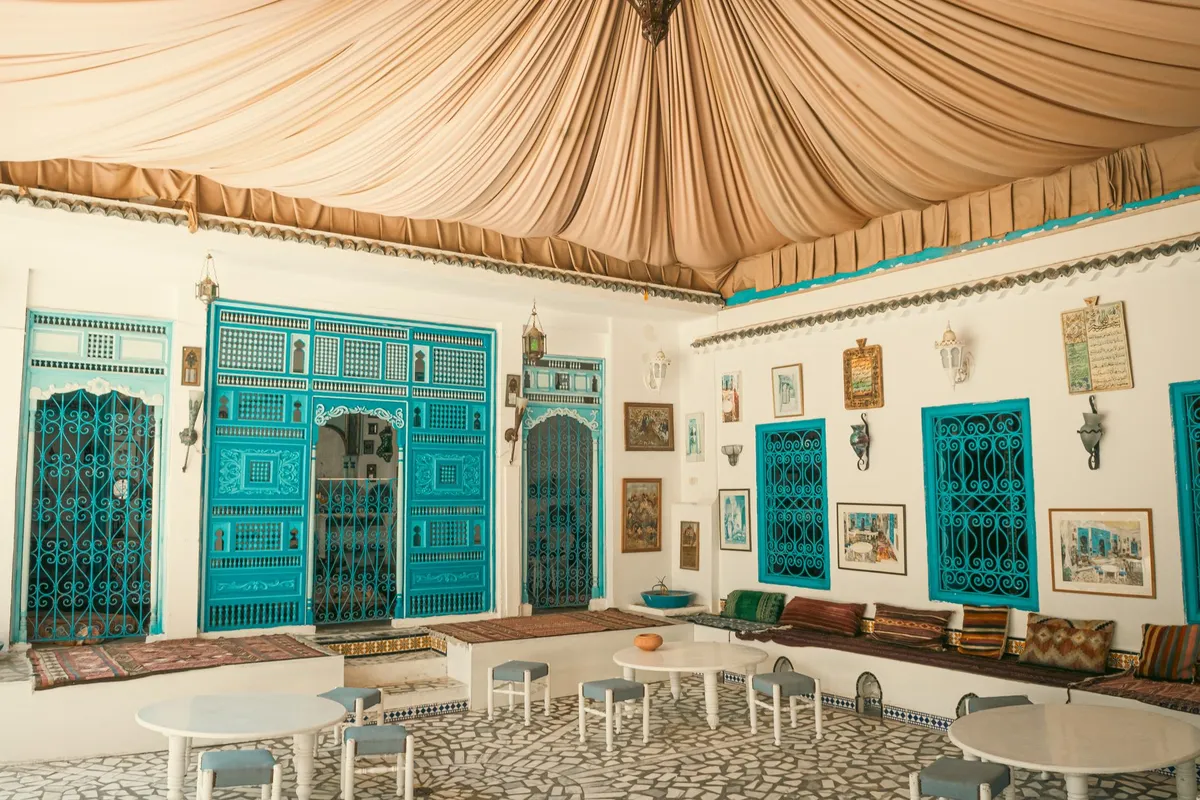
Common Mistakes in Western Moroccan-Inspired Interiors
- Theme park overload: A single lantern, one cushion with an arabesque print, and a Beni Ourain rug are not a Moroccan interior — but 50 lanterns, 12 poufs, and patterned wallpaper on every surface becomes a souvenir shop. The most effective Moroccan-inspired interiors choose 2–3 key elements and execute them with depth rather than quantity.
- Cheap reproductions of high-craft elements: Machine-cut "zellige" tiles, cast metal lanterns, and polyester kilims all undermine the handmade quality that gives the style its warmth. Invest in one or two genuine craft objects rather than filling a room with inferior reproductions.
- Ignoring light quality: Moroccan design depends on warm, low, directional light. Overhead cool-white lighting destroys the atmosphere. Switch to warm-temperature sources (2700K or below) and rely primarily on lanterns and floor-level light.
FAQ
Can I incorporate Moroccan design elements in a small apartment? Yes — Moroccan design actually scales beautifully to smaller spaces. A single brass pendant lantern, a Beni Ourain rug, and a few leather poufs can establish the aesthetic in a compact living room without overwhelming it. Small bathrooms are an excellent starting point for a patterned cement tile floor or zellige backsplash.
Where should I source authentic Moroccan furnishings? Specialty import retailers are the most reliable Western source for quality Moroccan goods. Online marketplaces like Etsy have many Moroccan artisans selling directly. For higher investment pieces — furniture, large rugs — working with a specialist importer who can verify origin and quality is worthwhile. Beni Ourain rugs in particular vary widely in quality and authenticity.
Is Moroccan design compatible with other styles? Yes — Moroccan elements blend particularly well with Bohemian, eclectic, and Mediterranean styles. A Beni Ourain rug works in a modern minimalist interior. Brass lanterns read beautifully in an otherwise contemporary kitchen. The key is using Moroccan elements intentionally rather than mixing styles randomly.
What's the most affordable way to introduce Moroccan style? Leather poufs, small punched-metal lanterns, and sabra silk cushion covers offer genuine Moroccan craft at accessible price points. A set of three poufs, two lanterns, and four cushion covers can establish the aesthetic in a living room for under $400, especially when sourced from importers rather than retail markup.
Can I see what Moroccan design looks like in my actual room before committing? Yes — try a free AI render at RoomRenovation.ai to see a photorealistic visualization of Moroccan or Bohemian style applied to your specific room from your own photo.