
Art Nouveau Interior Design: Organic Beauty and Flowing Lines
Art Nouveau interior design celebrating organic curves, nature-inspired motifs, and handcrafted elegance. See this romantic style adapted for modern homes.
RoomRenovation.AI Team
Updated March 22, 2026
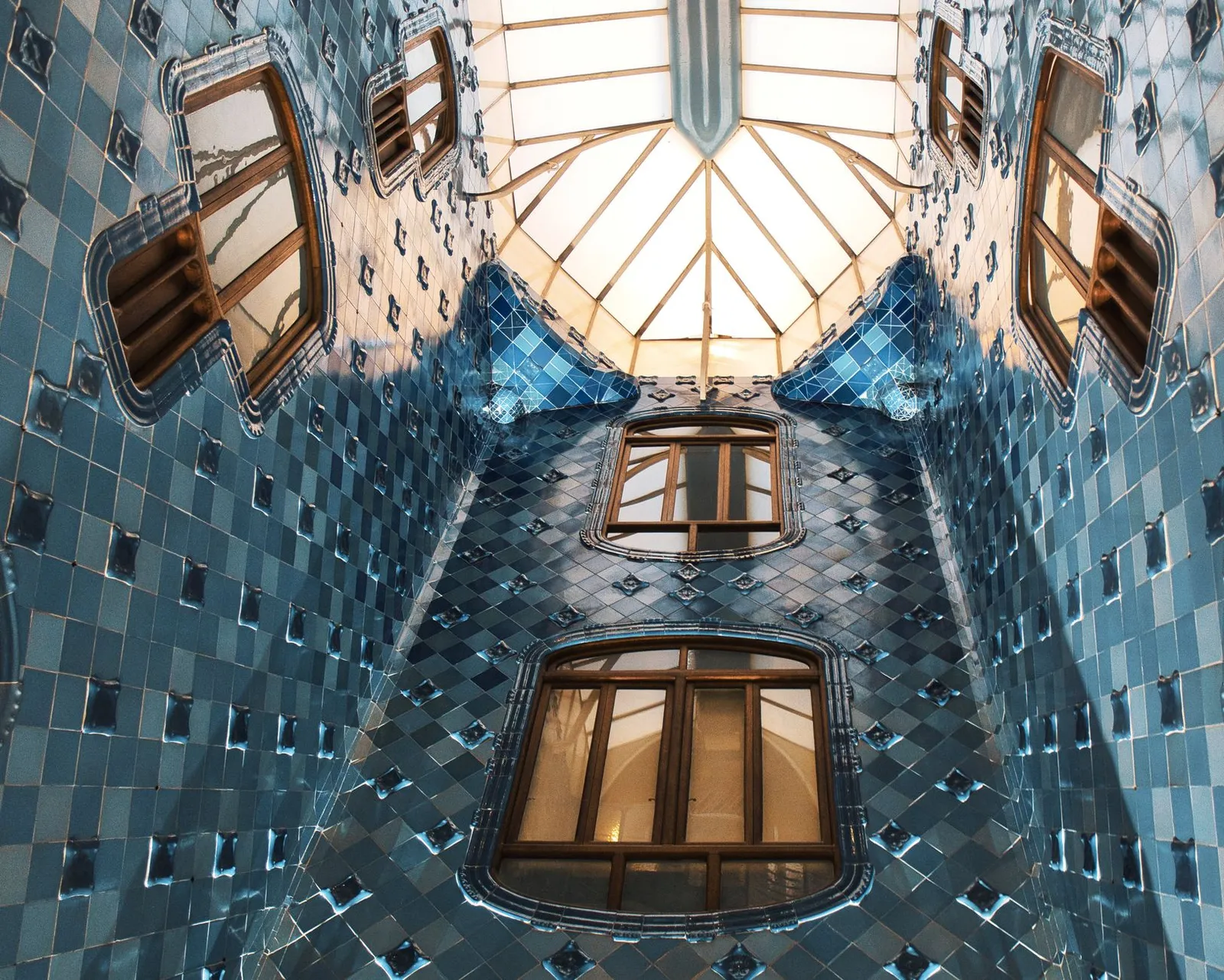
Art Nouveau interior design emerged at the turn of the twentieth century as a deliberate rejection of the industrial age's rigid geometry — a movement that turned instead toward the flowing curves of vines, the wing patterns of insects, the sinuous lines of water in motion. More than a century later, its core vocabulary of organic ornament, handcrafted surfaces, and nature-derived forms has proven remarkably adaptable to contemporary homes. This guide explains Art Nouveau's design language and how to translate it into real, livable interiors today.
The Origins: Why Art Nouveau Looks the Way It Does
Art Nouveau (roughly 1890–1910) arose simultaneously across Europe under different names: Jugendstil in Germany, Stile Liberty in Italy, Modernisme in Spain. Its unifying conviction was that art and craft should be inseparable, that everyday objects — door handles, lampshades, wallpaper, staircases — deserved the same design attention as fine art.
The movement's defining visual grammar came directly from nature: asymmetrical compositions, undulating curves, tendrils and blossoms as ornamental motifs, dragonflies and peacocks as recurring imagery. Hector Guimard's Paris Métro entrances, Louis Comfort Tiffany's stained glass, and Victor Horta's Belgian townhouses are the canonical references. All share that signature quality of structure that appears to have grown rather than been constructed.
Core Elements of Art Nouveau Interiors
The Line: Sinuous and Asymmetrical
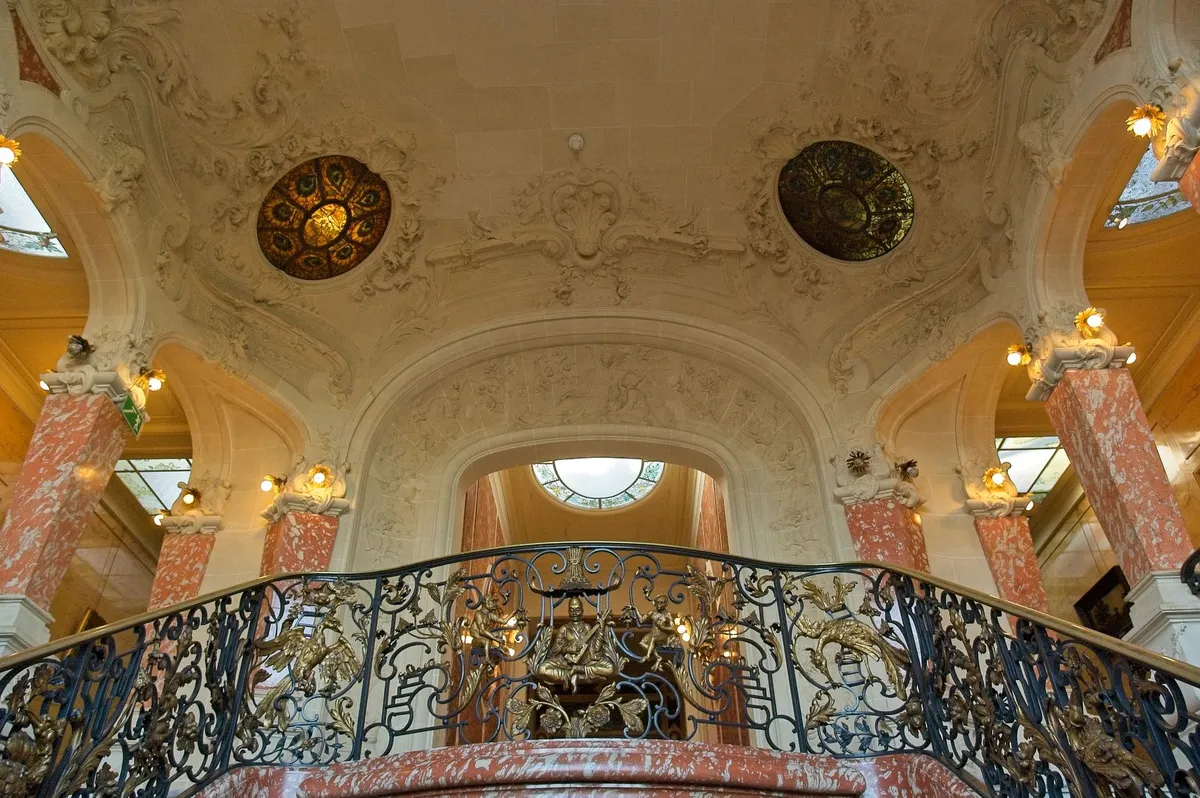
The "whiplash curve" — a single extended, asymmetrical S-curve or spiral — is the movement's most recognizable mark. In contemporary interiors it appears in:
- Curved furniture legs and chair backs that flow rather than angle
- Decorative moldings that follow organic rather than classical profiles
- Mirror and picture frames with botanical or figural sculpted edges
- Ironwork in balustrades, light fixtures, and door hardware
The Color Palette: Nature at Dusk
Art Nouveau color is distinctive: earthy but not muddy, rich but not loud. Key tones:
- Greens: sage, moss, verdigris — the dominant hue across most Art Nouveau interiors
- Golds and ambers: referencing sunset light, Mucha's poster palettes, amber glass
- Muted purples and mauves: particularly in decorative tiles and wallpaper
- Cream and ivory: as backgrounds that allow ornament to breathe
- Deep teals and peacock blues: in textiles, tiles, and statement furniture
Avoid bright, saturated modern color. The palette is always sophisticated, always slightly desaturated.
Materials: Handcraft Over Machine Production
Art Nouveau is philosophically committed to materials that show the hand of the maker. This means:
- Stained and art glass: Tiffany-style lamp shades, leaded glass panels, coloured glass inserts in cabinet doors
- Carved wood: mahogany, walnut, ebony — with organic motifs carved into furniture and architectural elements
- Ceramic and majolica tile: botanical patterns in muted glazes; pictorial tiles as wall art
- Wrought iron: for light fixtures, curtain rods, fireplace surrounds, balustrades
- Hammered copper and bronze: in hardware, vases, decorative objects
Furniture in the Art Nouveau Interior
Art Nouveau furniture is sculptural in a way that no other period matches. Chair legs curve like plant stems; cabinet doors have panels inlaid with wood marquetry of flowers and birds; bed frames have headboards that ripple upward like waves.
For contemporary rooms, authentic Art Nouveau antiques command significant prices at auction. More accessible approaches:
- Seek reproduction pieces in curved profiles with natural upholstery fabrics (silk, velvet, linen)
- Mix one or two statement antique or reproduction pieces with more neutral contemporary furniture
- Use Art Nouveau accessories — lamps, mirrors, frames, vases — to bring the style into a room without replacing all the furniture
Botanical Motifs and Nature-Derived Ornament
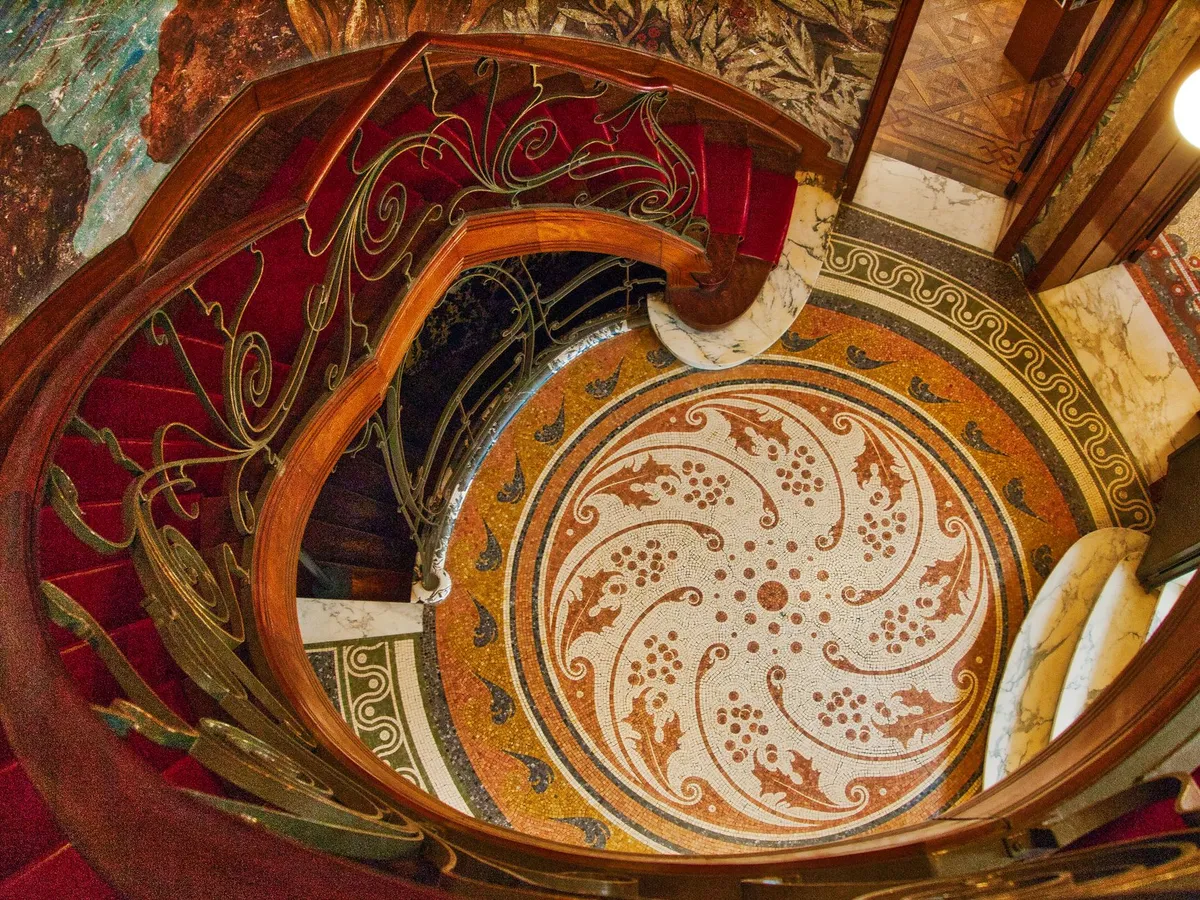
Nature imagery in Art Nouveau is never decorative in a superficial sense — it's structural. Vines are the architecture of cabinets; flowers are the columns of lamp bases; dragonfly wings are the frames of mirrors. To bring authentic Art Nouveau motifs into a contemporary interior:
- Wallpaper: botanical wallpaper in the William Morris tradition, or contemporary designers working in the Art Nouveau idiom. Look for repeating patterns with lily pads, wisteria, iris, or poppy motifs.
- Textiles: upholstery and pillow fabrics with organic weave patterns or printed botanical designs in the period palette
- Ceramics: hand-thrown pottery with botanical glazes; majolica with relief flower patterns
- Wall art: Alphonse Mucha prints (widely available as reproductions) are the easiest way to establish Art Nouveau atmosphere in a room instantly
Lighting: The Movement's Greatest Achievement
Art Nouveau produced arguably the most beautiful lighting design in decorative arts history. The Tiffany Studios lamp is its apotheosis — a sculptural base of cast bronze in organic form, a shade of hand-cut leaded glass that casts colored light across the room. Contemporary options:
- Art glass pendant lights in amber, green, or blue tones
- Wrought iron sconces with organic profiles and frosted glass globes
- Reproduction Tiffany-style table lamps — distinguish quality from kitsch by examining the glass quality and solder lines
- Pendant fixtures in verdigris-finished bronze with botanical-shaped shades
Avoid harsh overhead lighting. Art Nouveau interiors use layered, warm-toned light sources at multiple levels.
Adapting Art Nouveau for Modern Homes
Full Art Nouveau immersion — carved plasterwork, built-in cabinets with stained glass, original tile throughout — requires either a period property or significant renovation budget. The more practical approach is selective incorporation:
- One statement wallpaper wall in a botanical print
- An Art Nouveau mirror as the focal point of a living room or bedroom
- An art glass pendant replacing a generic overhead fixture
- Two or three Mucha prints in matching frames
- A curved-back velvet armchair in peacock green or deep amber
These five additions, layered thoughtfully, can establish genuine Art Nouveau atmosphere in a contemporary room without wholesale renovation. Want to see how Art Nouveau would look in your specific space? Try a render at RoomRenovation.AI or explore our full style library at the dashboard.
Art Nouveau vs. Art Deco: Understanding the Difference
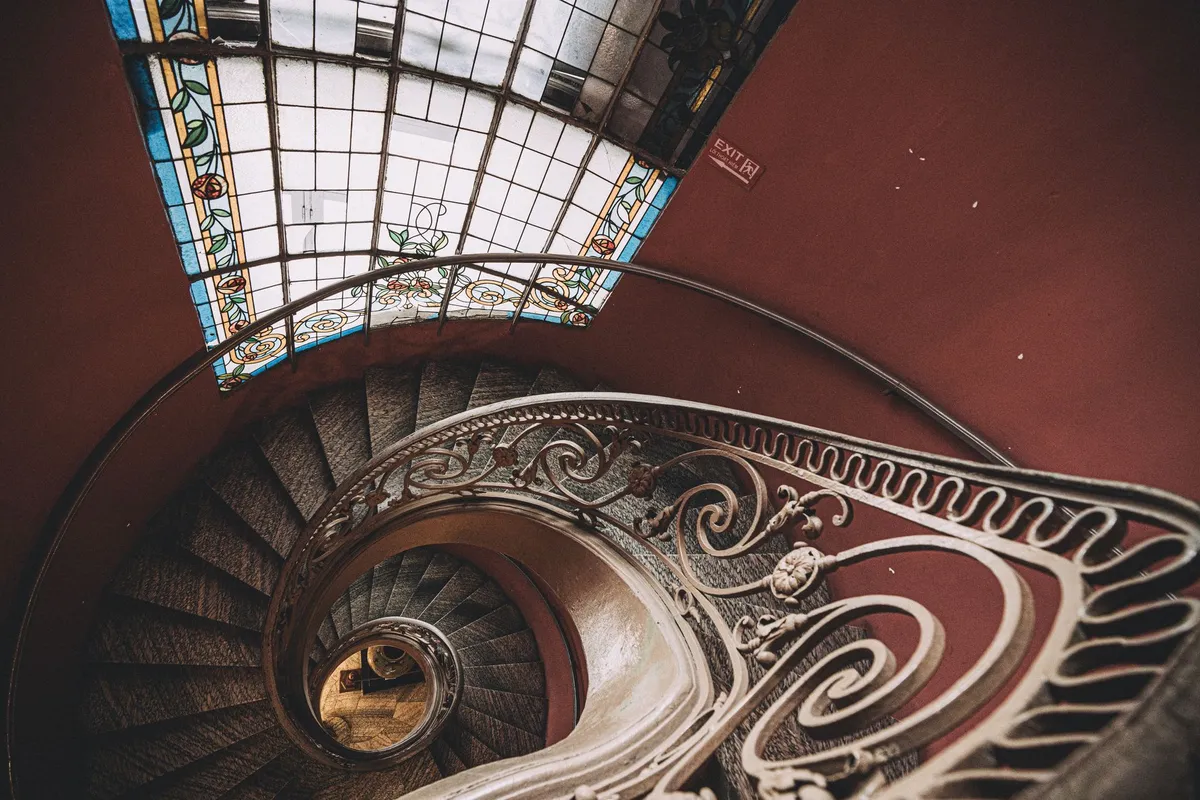
These two movements are frequently confused. Art Nouveau (1890–1910) is organic, curvilinear, and nature-derived. Art Deco (1920–1940) is geometric, angular, machine-inspired, and glamorous. Art Nouveau looks grown; Art Deco looks built. Art Nouveau is a vine; Art Deco is a skyscraper. Both are beautiful; they're design antitheses of each other. For Art Deco, see our style guides section.
FAQ
Is Art Nouveau interior design practical for everyday living? Yes, when approached selectively. A room with Art Nouveau accents — botanical wallpaper, organic-shaped furniture, art glass lighting — functions exactly like any other room. The style doesn't demand precious or impractical surfaces.
What rooms work best for Art Nouveau design? Living rooms and bedrooms respond best because they have the largest vertical surfaces (walls for wallpaper or plasterwork) and benefit most from the style's atmospheric lighting. Bathrooms with period-appropriate tile can also be stunning.
Where can I find Art Nouveau furniture and accessories today? Antique stores, estate sales, and online marketplaces like 1stDibs carry authentic period pieces. For reproductions, look at furniture makers specializing in European historical styles. Quality varies enormously — examine joinery and material quality carefully.
How do I try Art Nouveau style in my room before committing to purchases? Upload a photo to RoomRenovation.AI and generate an Art Nouveau render. You'll see immediately how organic curves, botanical motifs, and the period palette transform your actual space.