
Wabi-Sabi Interior Design: Finding Beauty in Imperfection
Embrace wabi-sabi with natural materials, handmade elements, and imperfection. Create a mindful, peaceful atmosphere.
RoomRenovation.AI Team
Updated March 24, 2026
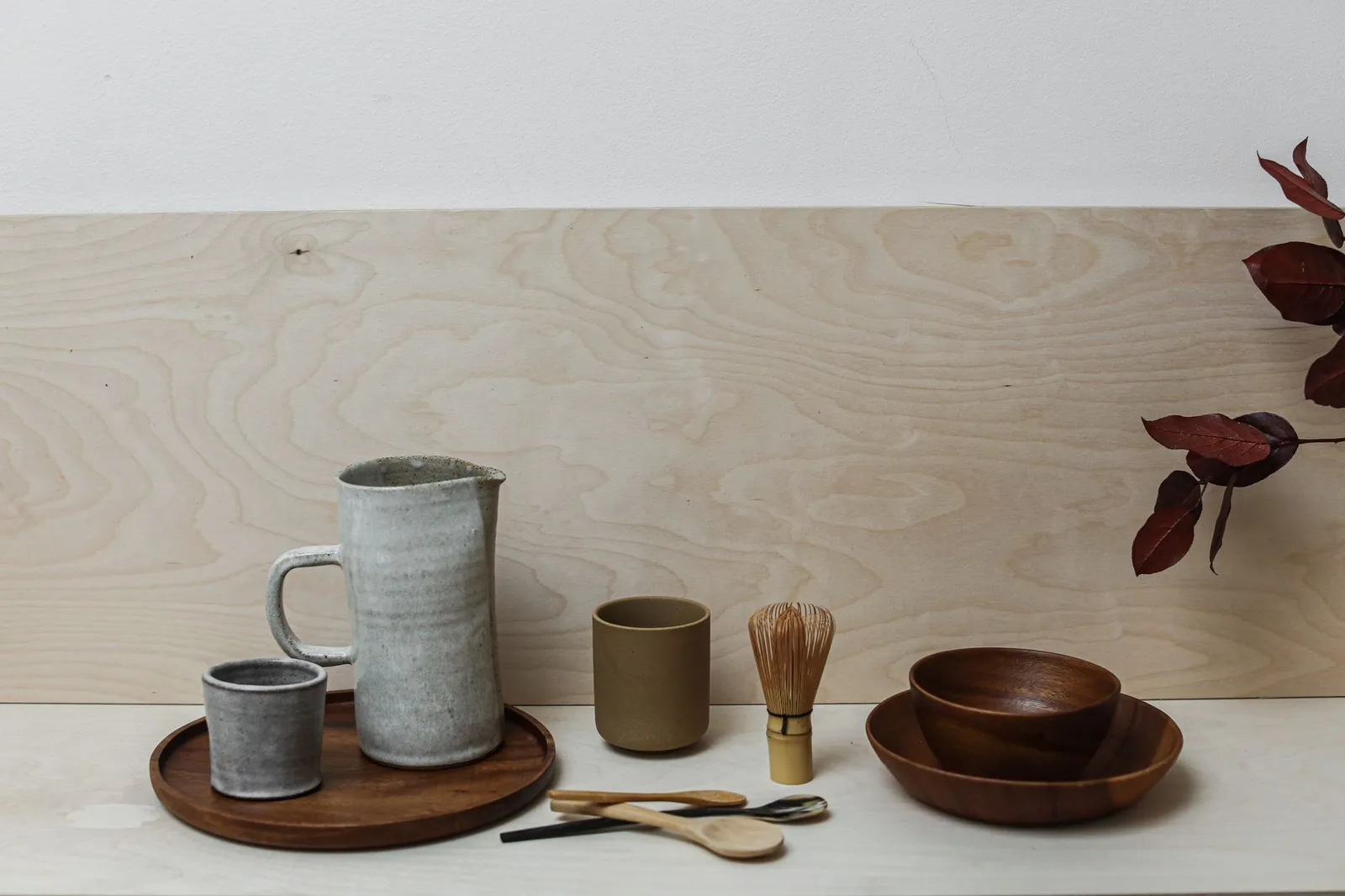
Wabi-sabi interior design is the Japanese philosophy of finding beauty in imperfection, transience, and incompleteness — applied to the way we design and inhabit spaces. The concept originates in Zen Buddhism and Japanese aesthetics, where the crack in a tea bowl is part of its beauty, the moss on a stone reveals its age and character, and a room that looks slightly worn is more honest and more alive than one that looks factory-new. Applied to contemporary interiors, wabi-sabi produces spaces that are genuinely restful, material-rich, and immune to the tyranny of perfection.
The Core Philosophy: What Wabi-Sabi Actually Means
"Wabi" originally referred to the solitary, melancholy beauty of poverty and simplicity — the hermit's hut, the monk's austere cell, the quiet satisfaction of a simple life. "Sabi" referred to the beauty that comes with age: the patina on metal, the weathering of wood, the fading of dye in fabric. Together, wabi-sabi describes an aesthetic sensibility that embraces the natural cycle of growth and decay, impermanence, and the humanizing quality of imperfection.
In design terms, this means: materials that show their age and their making, objects that carry the marks of use, surfaces that aren't perfectly smooth, rooms that feel assembled over time rather than purchased in a single shopping trip.
Wabi-sabi is often positioned as an extreme form of minimalism, but that framing misses important distinctions. Minimalism is a formal discipline — it removes elements according to a geometric and visual logic. Wabi-sabi removes excess, but what remains is chosen for its material quality, its age, its handmade character, its imperfection. A minimalist room might have a perfect white cube. A wabi-sabi room would have a slightly irregular handmade ceramic vessel.
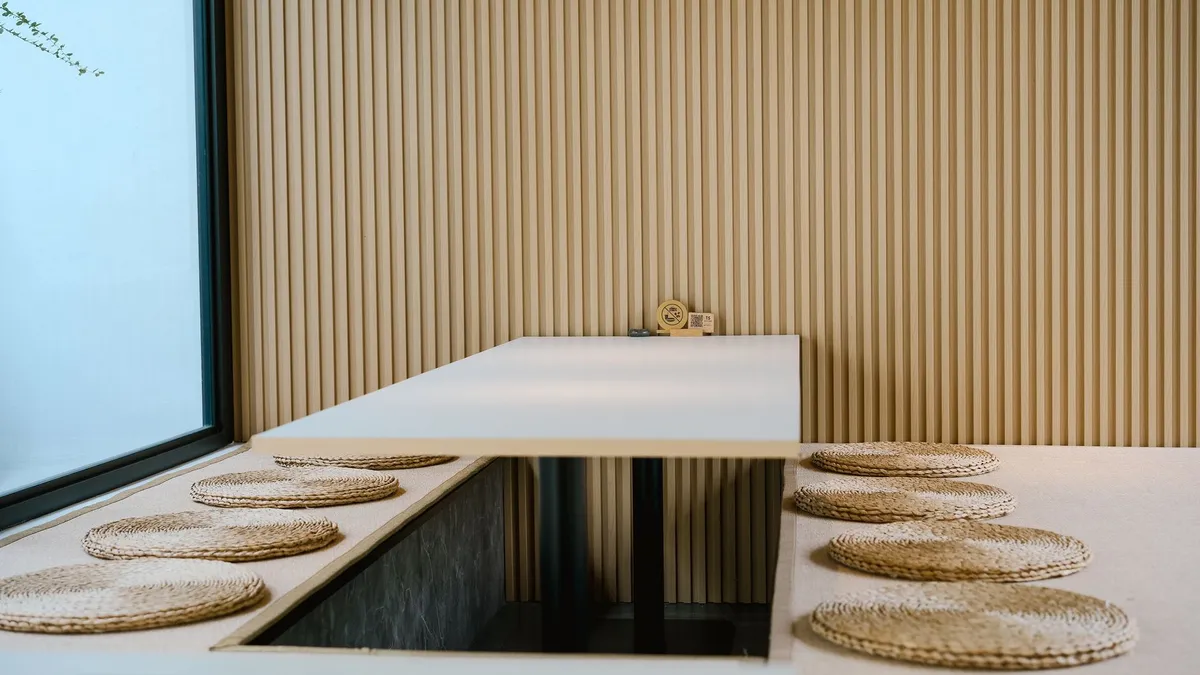
Materials: The Foundation of Wabi-Sabi Spaces
Wood in Its Natural State
Wood is the primary material of wabi-sabi interiors, but its treatment is specific. Heavily lacquered, perfectly smooth, or artificially grain-matched wood works against the aesthetic. The appropriate wood treatments are: raw oil or wax finishes that let the grain and character show through; reclaimed wood with visible history (nail holes, weathered color variation, saw marks); live-edge slabs that preserve the organic form of the original tree; and older wood that has developed a genuine patina over decades of use.
In Japan, sugi (Japanese cedar) and hinoki (Japanese cypress) are traditional wabi-sabi materials — they age beautifully, develop silver-gray tones when exposed to weather, and emit a warm, resinous scent. Western equivalents include aged pine, reclaimed barn wood, and weathered oak.
Clay, Stone, and Earth
Handmade clay tiles with slight variations in glaze and surface texture, raku-fired ceramics with unpredictable crackle finishes, rough-hewn stone, unfired clay plaster walls, and natural concrete are all authentic wabi-sabi materials. The common thread is that they come from the earth and retain evidence of that origin rather than being processed into perfect uniformity.
Clay plaster walls — applied by hand, with slight variations in texture and tone — are perhaps the most immersive wabi-sabi surface treatment available. The finish is warm, acoustic, slightly irregular, and improves with age in ways that painted drywall never does.
Natural Textiles and Fiber
Linen, raw cotton, hemp, jute, and undyed or naturally dyed wool are the wabi-sabi textile vocabulary. These materials wrinkle, fade slightly with washing, and develop a softness through use that synthetic fabrics never achieve. The slightly worn quality of an old linen duvet cover is more wabi-sabi than a perfectly pressed new one.
Handwoven textiles — with the slight irregularities that mechanical weaving eliminates — read as more authentically wabi-sabi than machine-made equivalents. Sashiko (Japanese running-stitch embroidery), indigo-dyed fabric with natural variation, and hand-knotted rugs all fit the aesthetic.
Color: The Quiet Palette
Wabi-sabi color is derived from the materials themselves rather than chosen from a paint chart. The palette is inherently quiet: warm whites and creams from plaster and paper, the golden-brown tones of aged wood, the blue-gray of slate, the red-brown of unglazed terracotta, the soft green of moss, the near-black of charred cedar (shou sugi ban), and the pale tone of undyed linen.
Introduced color, when it appears, is muted and complex rather than saturated: a deep indigo-blue rather than a bright primary blue, a dusty rose rather than pink, a mossy sage rather than a bright green. Colors that look like they've already lived in the light for a decade.
Walls in wabi-sabi interiors are almost always neutral — warm white, clay, or a pale stone tone — but the neutrals carry warmth and depth rather than the cool clinical quality of modern minimalism.
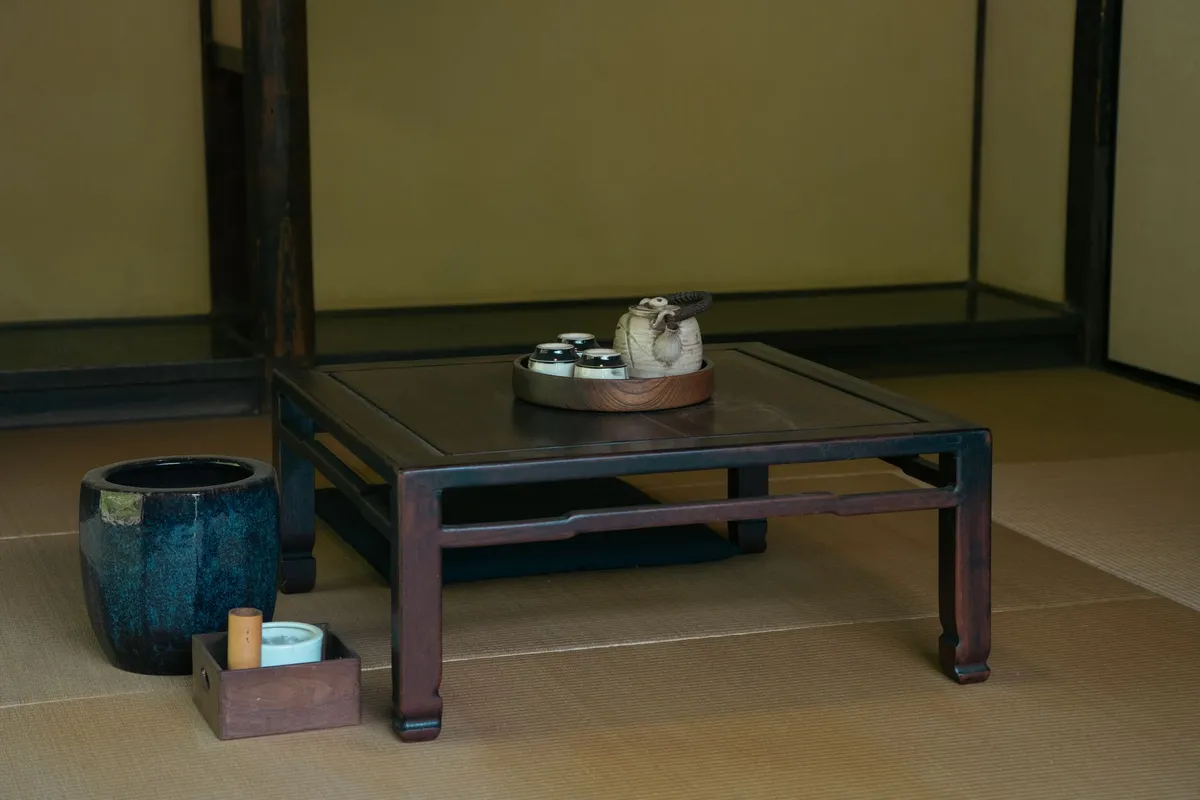
Objects and Curation: Less, But More Specific
Wabi-sabi spaces contain few objects, but the objects that remain are chosen for their specific material quality, age, or handmade character rather than for decoration. A single hand-thrown ceramic vase with an irregular glaze. A branch of dried flowers that has faded over months. A stack of books whose spines have softened with reading. A rough stone used as a paperweight.
The Japanese concept of "mono no aware" — the pathos of things, the awareness of impermanence — is directly applicable here. Objects in wabi-sabi spaces often carry specific histories or associations rather than being decoratively generic. Your grandmother's worn wooden spoon has more wabi-sabi than a new one from a kitchen store, not because of age itself but because the age is visible and meaningful.
The kintsugi tradition — repairing broken ceramics with gold lacquer, making the repair visible and beautiful rather than hiding it — is a direct material expression of wabi-sabi philosophy and a useful design principle: the history of an object is part of its beauty, not a defect to be concealed.
Furniture: Honest Construction and Natural Form
Wabi-sabi furniture is typically low (reflecting the Japanese tradition of floor-level living), handcrafted, and unpretentious. The details that conventionally signal quality — perfect joinery, mirror-smooth surfaces, matching grain — are less relevant than the honesty of construction and the quality of material. A simple stool in rough-hewn oak with visible tool marks has more wabi-sabi than a precision-machined designer piece in the same material.
Negative space is important: wabi-sabi rooms don't fill every surface. Furniture is placed with intention and then not added to. The room breathes, and the spaces between objects are as considered as the objects themselves.
Plants and Nature
Wabi-sabi design incorporates nature directly, but in forms that acknowledge seasonal change and impermanence rather than suggesting permanence. Dried branches rather than fresh flowers (which acknowledge the beauty of what was living). A single bonsai in a handmade pot. Moss in a shallow dish of water. A handful of pebbles from a significant place. Plants that are allowed to age and show their seasons rather than being replaced when they lose their showroom-perfect form.
Applying Wabi-Sabi to Modern Homes
Wabi-sabi doesn't require a Japanese-style home or architectural reconstruction. The principles translate into Western domestic spaces through material and attitude:
- Stop fixing minor imperfections — the scratch on the wooden floor, the patina on a copper pot, the slight variation in a handmade tile
- Replace decorative objects with a few objects of genuine material quality or personal meaning
- Introduce at least one handmade element into each room: a thrown ceramic, a hand-woven throw, a hand-crafted wooden shelf
- Choose linen, cotton, or wool over synthetic textiles; allow them to wrinkle and fade naturally
- Let spaces breathe — resist the urge to fill every surface and every corner
Upload your room to RoomRenovation.ai to see a wabi-sabi style render applied to your specific space. The renders show how neutral materials, quiet color, and restrained furniture would transform your room's character. Start with a free render.
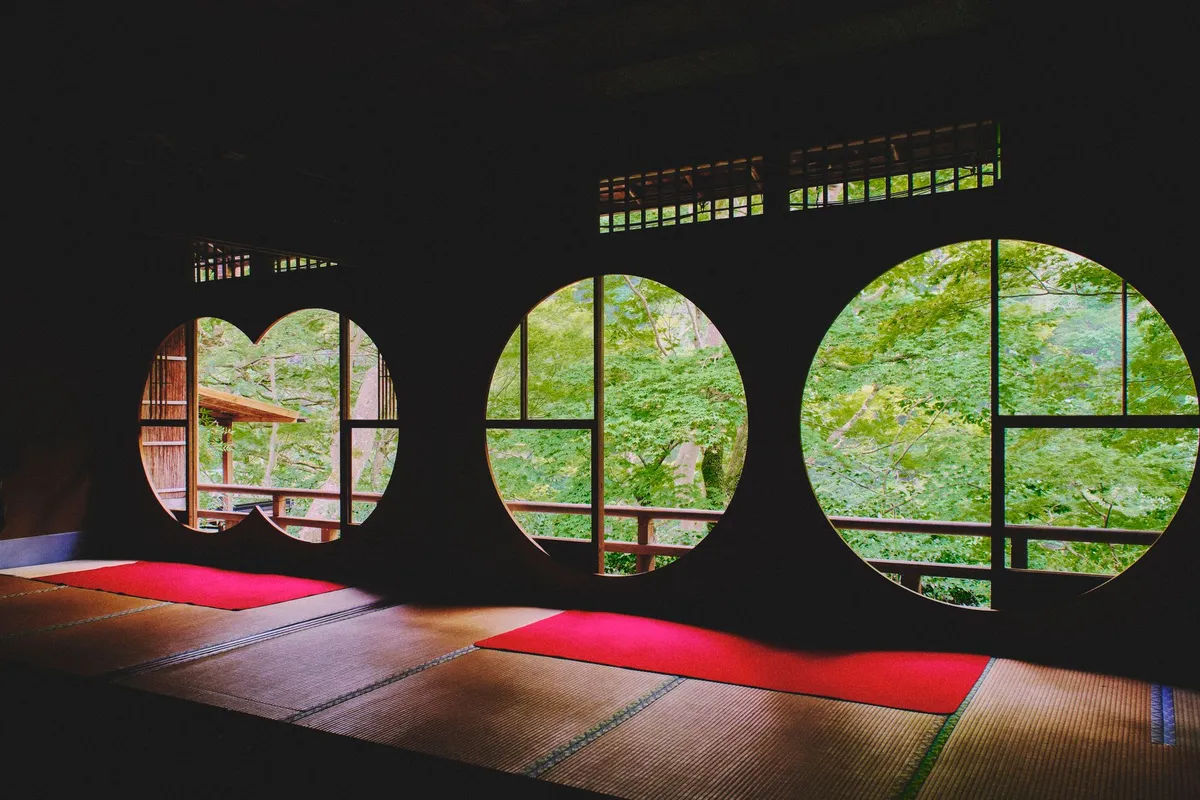
Wabi-Sabi vs. Japandi
Japandi — the contemporary fusion of Japanese and Scandinavian design — is often mentioned alongside wabi-sabi, and the styles share significant DNA. Both value natural materials, neutral palettes, negative space, and craft quality. The distinction is in attitude: Japandi tends toward more precision and visual perfection within its minimalism; wabi-sabi more explicitly embraces imperfection and impermanence. A Japandi room is perfectly minimal; a wabi-sabi room is comfortably imperfect. In practice, many contemporary interiors blend both sensibilities without strict fidelity to either.
FAQ
Is wabi-sabi just another term for minimalism? They overlap but are philosophically distinct. Minimalism is a formal approach to visual space — it removes elements to achieve geometric and visual purity. Wabi-sabi embraces the texture, imperfection, and age of what remains. A minimalist room can be cold and austere; a wabi-sabi room is warm and humanizing. Both are restrained, but for different reasons.
Can I practice wabi-sabi on a small budget? Wabi-sabi is inherently budget-compatible because it values found, aged, and imperfect things over new and expensive ones. Thrift store ceramics with interesting glazes, secondhand furniture in quality materials, dried botanicals, and natural linen from discount sources all support the aesthetic at minimal cost.
How do I avoid a wabi-sabi room looking simply neglected? Intentionality is the distinction. A wabi-sabi room is carefully considered — each object placed deliberately, the space clean and breathing, the imperfections welcomed rather than ignored. Neglect produces clutter and disorder; wabi-sabi produces quiet, specific, intentional sparseness with carefully chosen objects of genuine quality.
What's the single most impactful wabi-sabi change I can make to a room? Remove two-thirds of your decorative objects and replace generic ones with a single object of genuine material quality or personal significance — a handmade ceramic, a meaningful stone, a plant that has lived with you for years. The breathing space around one beautiful object is more wabi-sabi than a shelf of decorative things.