
Modern vs. Traditional Interior Design: Which Style Suits You?
Compare modern and traditional design aesthetics. Color palettes, furniture styles, and key differences to help you choose.
RoomRenovation.AI Team
Updated March 24, 2026
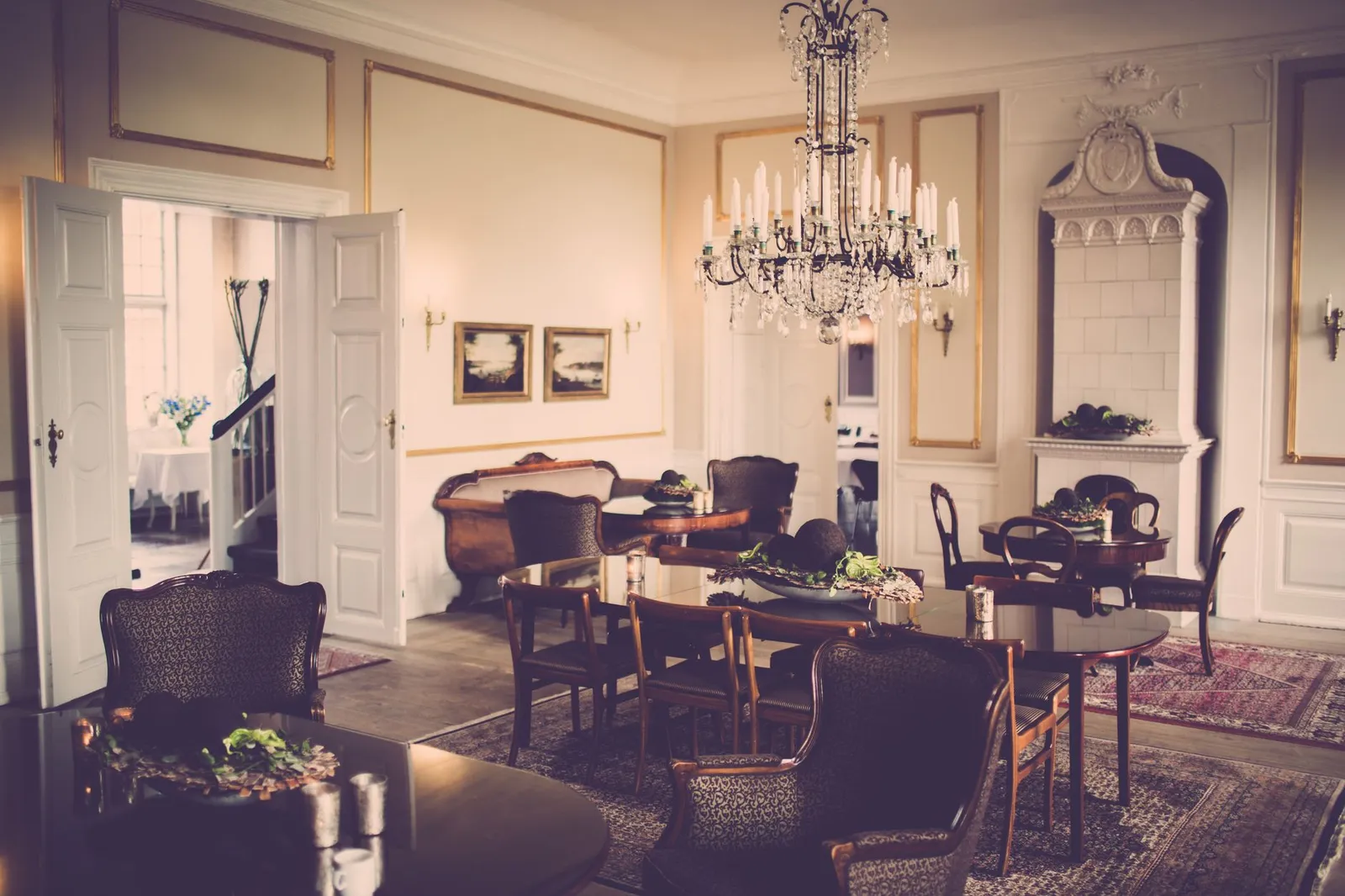
Interior design style is one of the few genuinely subjective decisions in a home renovation — there are no load calculations or code requirements governing whether you prefer shaker-style cabinets or flat-front ones, and both can be executed at equally high quality. Yet the choice between modern and traditional interior design has real practical implications: for how a home photographs, how it shows in a sale, what furniture works with its architecture, and — most importantly — how it feels to occupy day after day.
This comparison breaks down both styles across their defining characteristics, identifies the practical trade-offs between them, offers a third path that many homeowners find most satisfying, and gives you tools to identify which direction genuinely suits you rather than just what you think you should prefer.
Defining Modern Interior Design
In interior design, "modern" has both a precise historical meaning and a loose contemporary usage. Properly speaking, Modern design refers to the Modernist movement of the early-to-mid 20th century — Bauhaus, International Style, mid-century functionalism. Colloquially, "modern" has expanded to include any design that emphasizes clean lines, minimal ornamentation, functional priority, and formal simplicity.
Key characteristics of modern interiors:
- Simplified form: Furniture and architecture with clean, geometric shapes and no applied ornamentation. A modern sofa has straight or gently curved lines, no rolled arms, no tufting, no nailhead trim.
- Neutral palette with strategic contrast: Whites, grays, greiges, and blacks as foundational tones, often punctuated by a single bold accent or left as pure neutral.
- Honest materials: Steel, glass, concrete, and unornamented wood celebrated for their own character rather than painted over or dressed up.
- Open floor plans: Modern design philosophy resists compartmentalization; it favors flowing space where one zone moves into another.
- Minimal surface decoration: Few objects on surfaces; what is present is intentional and given adequate negative space.
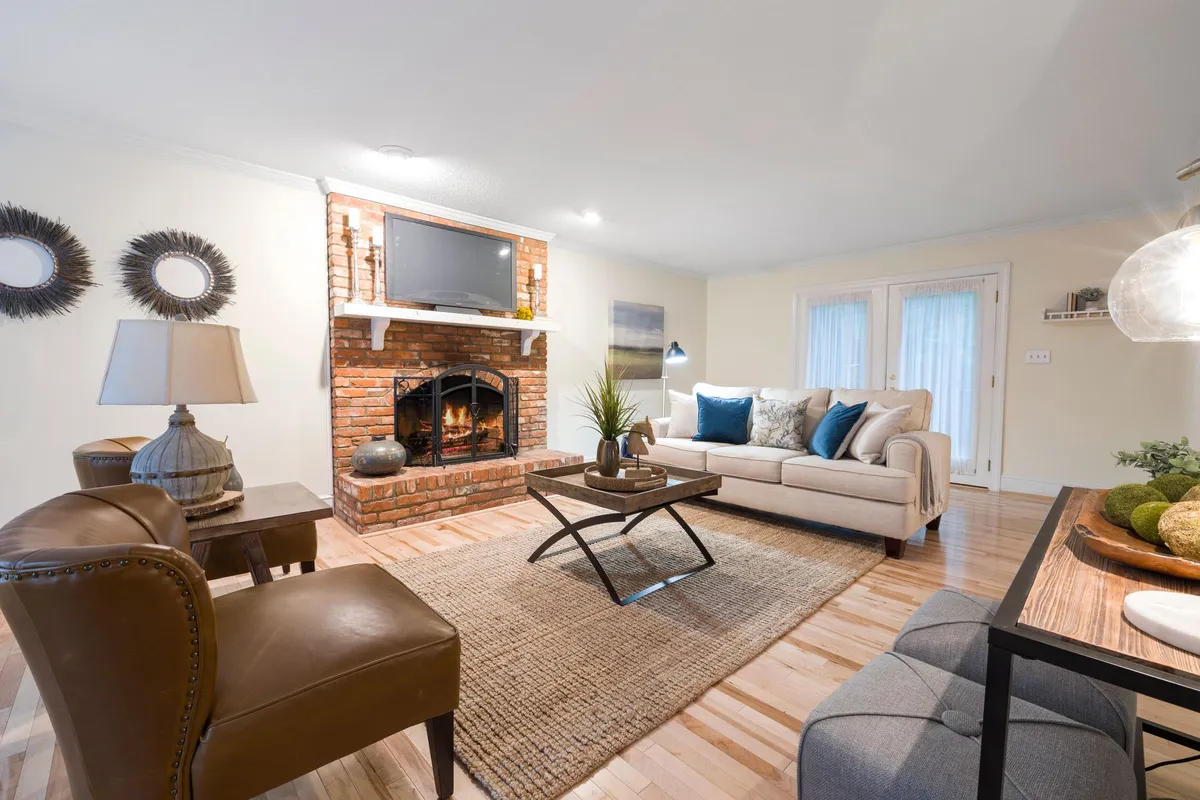
Defining Traditional Interior Design
Traditional interior design draws on the formal European residential aesthetics of the 18th and 19th centuries — Georgian, Federal, Victorian, Edwardian — and their American colonial and early republic counterparts. It is characterized by the opposite of Modernism's principles:
- Ornamentation as craft expression: Moldings, turned legs, carved details, decorative hardware — applied ornament is evidence of skill and cultural continuity, not excess.
- Warm color palettes: Creams, taupes, warm whites, muted greens and blues, deep reds and burgundies, gold accents. Color is used more liberally than in modern interiors.
- Pattern mixing: Layered prints and patterns — florals, plaids, stripes, toile — contribute visual richness. Traditional rooms are rarely dominated by solids alone.
- Symmetry as organizing principle: Balanced arrangements of furniture and décor create a formal, composed quality. Pairs of lamps, matched flanking chairs, centered artwork.
- Wood as primary material: Dark stained or painted wood furniture with traditional profiles dominates; mahogany, walnut, and cherry have traditional associations. Wainscoting, crown molding, and window casings in paint-grade wood are architectural signatures.
How the Styles Differ in Practice
In a Living Room
A modern living room might feature a low-profile sofa in solid performance linen, a glass-topped steel coffee table, a single large abstract canvas on a white wall, and a few precisely placed sculptural objects. The floor is hardwood or polished concrete; window treatments are minimal or absent. The room feels expansive, serene, and uncluttered.
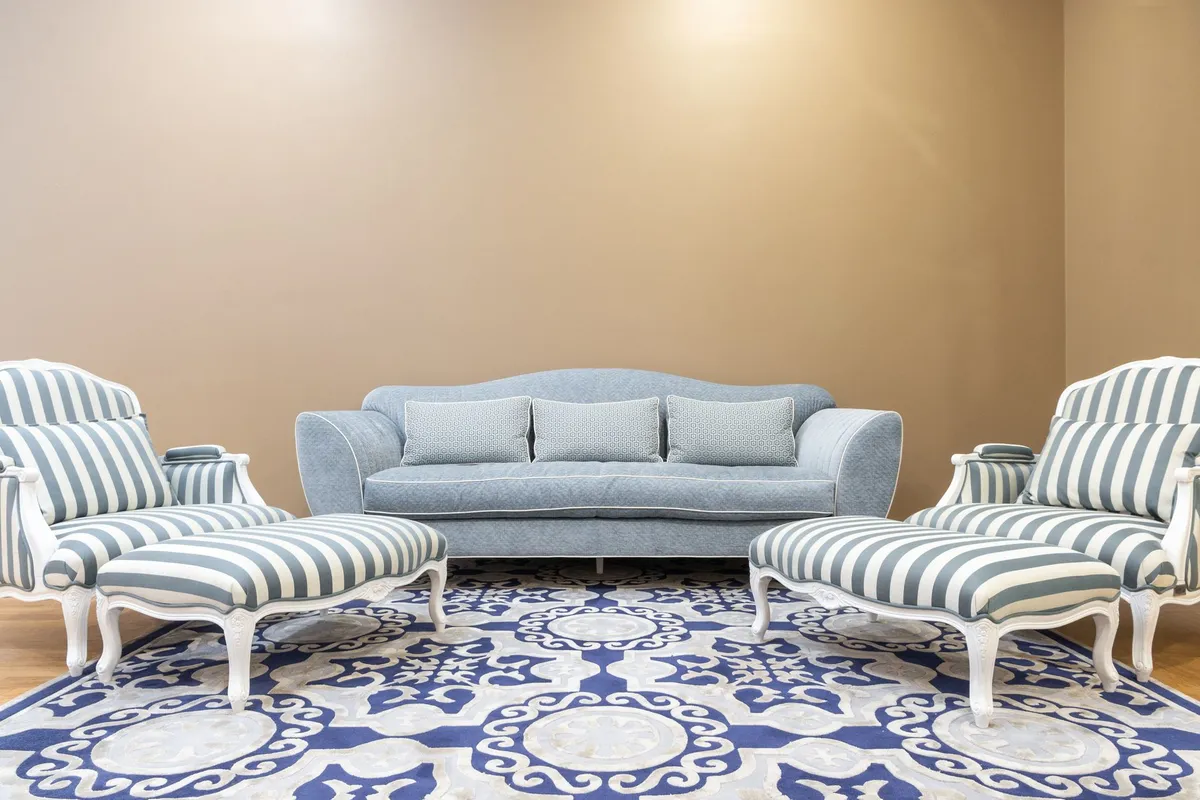
A traditional living room features a higher-profile sofa with rolled arms and perhaps a nailhead trim detail in a patterned or textured fabric. The coffee table is wood, perhaps with a lower shelf for books. The art arrangement is symmetrical. Draperies in a rich fabric — linen-cotton with a subtle pattern, or velvet in a deep tone — fall to the floor. A Persian or Aubusson rug anchors the seating. The room feels layered, warm, and complete.
In a Kitchen
A modern kitchen uses flat-front cabinetry in white, gray, or a dark tone with minimal hardware or integrated push-to-open mechanisms. Countertops are quartz or stone in a simple profile. Appliances are integrated or matte-finished. The result is graphic and clean.
A traditional kitchen uses shaker or raised-panel cabinetry, often in an off-white or painted color with polished or brushed hardware in a warm finish. Countertops may be butcher block or white marble. Open shelving displays collected ceramics. Decorative range hoods and apron-front sinks are signatures. The room feels kitchen-as-heart-of-home in a way modern kitchens are still working to achieve.
Color and Light
Modern and traditional interiors approach color and light very differently. Modern spaces tend toward higher contrast — white walls against dark accents, or a thoroughly neutral room with one deliberate injection of color. Natural light is maximized, window coverings minimized. The result is airy and graphic.
Traditional spaces tend toward lower contrast, warmer color across multiple surfaces, and layered light sources — sconces, table lamps, pendants, and firelight — that create pools of warmth rather than even ambient brightness. The result is intimate and enveloping in a way that many people find deeply comfortable.
Who Is Each Style For?
Personality and lifestyle have real implications for design style, and both directions attract distinct profiles:
Modern design suits people who:
- Find visual calm in simplicity and discomfort in clutter
- Want their architecture to be visually prominent (open plans, strong structural lines)
- Plan to update furnishings relatively frequently and want a neutral backdrop for those updates
- Are attracted to materials for their inherent character rather than for applied decoration
Traditional design suits people who:
- Find visual richness through accumulated layers of pattern, texture, and object genuinely satisfying
- Value the sense of permanence and continuity that traditional forms communicate
- Have or intend to acquire furnishings and objects that will live in the home for decades
- Want a home that photographs and lives warmly, particularly in northern or lower-light climates
The Third Path: Transitional Style
Most homeowners — when pressed to honestly examine their preferences rather than what they think they should want — fall between the extremes rather than definitively at one pole. The transitional style category exists to accommodate this reality: it takes the proportional clarity of modern form and the warmth of traditional palette and material, and combines them without the purism of either.
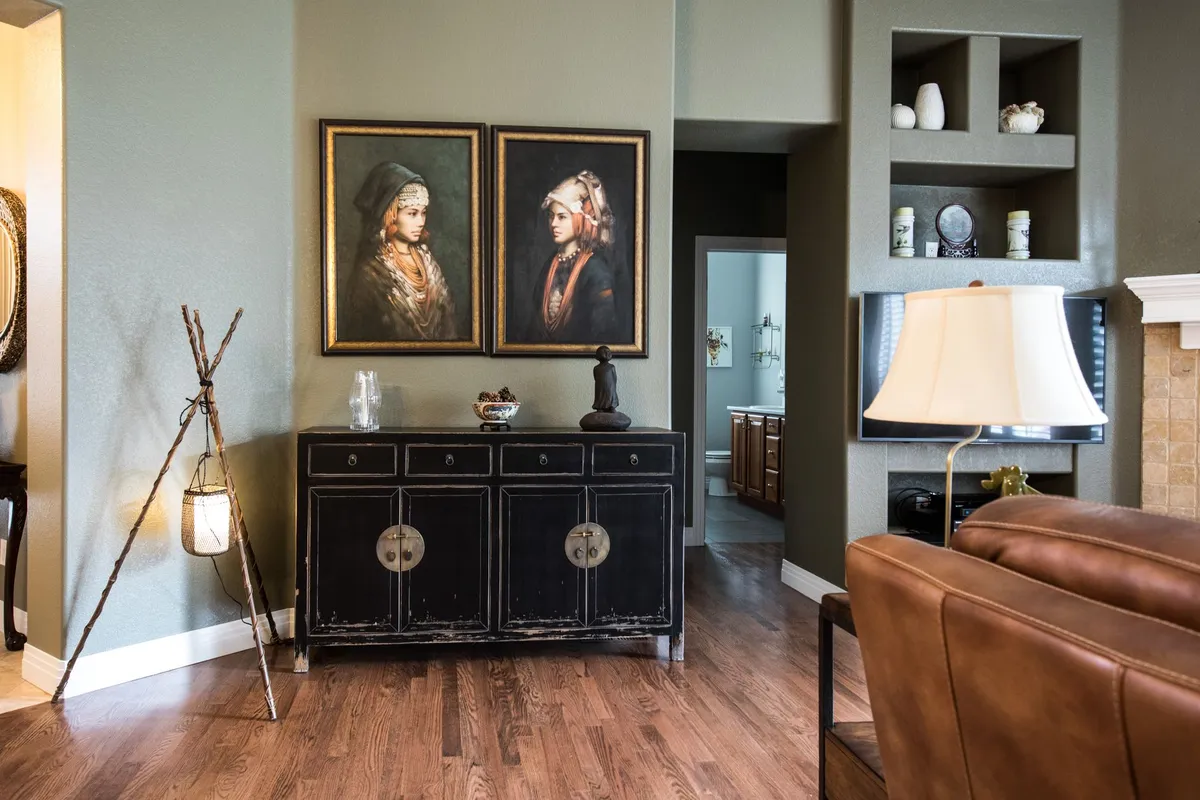
A transitional living room might feature shaker-style furniture (traditional form, modern simplicity), solid upholstery in warm neutrals without pattern, a wood coffee table with clean lines but in a warm tone, and a simple but substantial rug. The room reads as contemporary but warm, edited but not austere. It photographs well across a wide audience and appeals to the broadest buyer pool in resale — which is why transitional consistently dominates production builder specifications and high-volume interior design practices.
Transitional design is not the safe choice so much as the most accommodating one: it contains space for personality through object selection and art, while its neutrality of form makes nearly any collection of furnishings potentially at home within it.
Using AI to Compare Styles in Your Actual Space
Comparing modern and traditional styles from reference images and descriptions is useful but limited — what genuinely matters is how each direction reads in your specific home, with your existing flooring, windows, and light conditions. RoomRenovation.AI lets you apply a modern direction to your room photo and then a traditional or transitional direction to the same image, with the complete material language of each — so you are comparing how the styles actually look in your space rather than in someone else's.
Compare Scandinavian style (modern with natural warmth), modern minimalist (strict contemporary), and industrial (modern with materiality) as specific contemporary directions. See real transformation results in the examples gallery. The living room redesign guide covers the specific decisions for the room where this choice tends to matter most. Render pricing starts at a few dollars.
FAQ
Is modern or traditional design better for resale? Transitional style consistently performs best in resale scenarios because it appeals to the broadest buyer pool. Of the two poles, a well-executed modern interior in a market that values contemporary aesthetics (urban, higher price tier) tends to outperform; traditional performs better in suburban family markets where buyers are looking for warmth and permanence.
Can I mix modern and traditional elements successfully? Yes, but the mixing requires a consistent visual logic to avoid reading as indecisive. The most successful approaches either use traditional bones (architecture, moldings) with modern furniture, or modern architecture with traditionally styled, warmer furnishings. Committed eclecticism — mixing with full awareness and intent — also works when executed with intelligence.
Is modern design appropriate for an older home with traditional architecture? Modern furnishings in a Victorian or Federal home can create compelling contrast — the architecture's ornamental quality reads as a backdrop for spare contemporary furniture. However, some architectural purists argue for working with, not against, a home's historical character. There is no rule; the decision is personal.
Which style is easier to maintain? Modern design's minimal surfaces and sparse object count make cleaning faster. Traditional design's layered textiles, decorative objects, and ornamental surfaces require more dusting and more careful maintenance — though many people find this attention to their possessions satisfying rather than burdensome.
Does budget determine which style is achievable? Both styles have accessible and premium expressions. Modern design's quality benchmark is in material and construction quality rather than ornamentation, which can be expensive. Traditional design's ornamental complexity tends to cost more in labor (millwork, carved details, custom upholstery) but is achievable at modest cost through selective investment and vintage sourcing.