
AI Interior Design vs. Professional Interior Designer: Which to Choose?
Compare AI room visualization tools with professional interior designers. Cost, quality, personalization, and when to use each option.
RoomRenovation.AI Team
Updated March 24, 2026
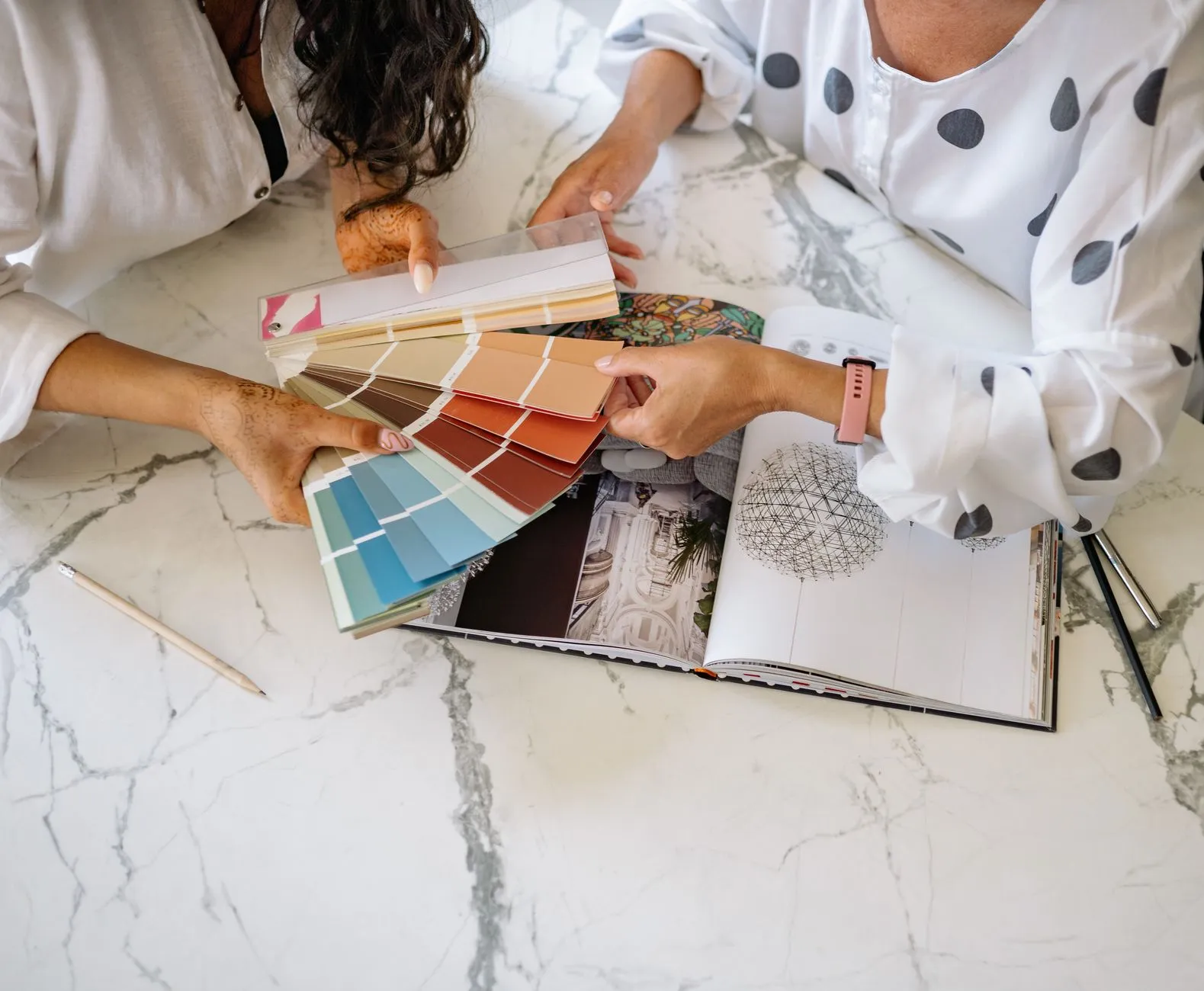
Deciding between an AI interior design tool and a professional interior designer is one of the most practical questions homeowners face before a renovation. Both paths lead to beautiful spaces — but through entirely different processes, at wildly different price points, and with different trade-offs in control, speed, and creative depth. This guide breaks down exactly where each option excels, where it falls short, and how smart homeowners are increasingly combining the two.

What a Professional Interior Designer Actually Does
Hiring a professional interior designer is a significant commitment of both budget and time. The engagement typically opens with a paid consultation — usually $150–$350 for the first session — where the designer evaluates the architecture of your space, asks detailed questions about how you use each room, and begins developing a sense of your aesthetic vocabulary. That conversation becomes the foundation for concept development: mood boards, annotated floor plans, material palettes, and furniture plans that get revised through multiple rounds of client feedback.
What separates good designers from a Pinterest board is the depth of technical knowledge behind those beautiful presentations. They understand load-bearing walls, egress requirements, fire-rated assemblies, lighting photometrics, and the way natural light shifts across a room through the day. They also have trade accounts with furniture houses, fabric showrooms, and tile suppliers that are not open to the public — giving their clients access to materials you simply cannot source on your own.
What Professional Design Costs in 2026
- Hourly consultation: $150–$350/hr (common for single-room advice)
- Flat-fee design package: $3,500–$12,000 for a single room, drawings and specifications included
- Full-service residential project: $15,000–$80,000+ covering design, procurement, and installation management
- Percentage-of-project model: 15–25% of total construction and furnishings budget, often used on larger renovations
Timeline matters too. From initial consultation to final installation, a full-service engagement routinely spans four to twelve months, and that's without factoring in supply chain delays on custom furniture or lead times on specialty tile.
What AI Interior Design Tools Actually Do
AI visualization tools — including the rendering engine behind RoomRenovation.AI's free room render — work from a photograph of your existing space and return redesigned versions in a chosen style, color palette, or material direction within seconds. You can test a Scandinavian scheme, then a moody industrial look, then a warm mid-century palette — all before spending a dollar on furniture or paint.
The core value is decision support at zero risk. Seeing your actual room with walnut floors instead of your current carpet, or your kitchen with sage green cabinetry instead of the existing white, removes the anxiety that drives bad renovation decisions. Most homeowners who abandon renovation plans mid-project cite "not being sure enough about the outcome" as a major factor. AI rendering eliminates that uncertainty cheaply.
What AI Design Tools Cost
- Free tiers: Available on several platforms including RoomRenovation.AI — limited renders, full quality
- Paid plans: Typically $12–$49/month for unlimited renders across multiple rooms and styles
- No procurement, no installation: The tool visualizes; execution is still your responsibility

Where AI Design Outperforms Human Designers
Speed and Iteration
A professional designer might show you two or three concept directions after three weeks of work. An AI tool shows you twenty variations in an afternoon. If your goal is rapid exploration — discovering which broad aesthetic actually resonates before committing to anything — AI wins decisively.
Cost for Early-Stage Decisions
Spending $5,000 on a design package before you've settled on whether you want contemporary or traditional is a poor use of money. AI tools let you make that foundational decision first, for next to nothing, so that when you do bring in a professional, you arrive with clarity rather than questions.
Decorating, Not Construction
If your project involves new furniture, updated textiles, paint, lighting, and accessories — but no structural changes — AI visualization gives you everything you need. Browse the design examples to see how much transformation is possible without touching a load-bearing wall.
Where Professional Designers Are Worth Every Dollar
Structural and Technical Complexity
Opening a wall between a kitchen and dining room, relocating plumbing, designing a custom built-in library, or specifying a radiant floor heating system all require technical expertise an AI cannot provide. Designers who specialize in renovations manage architects, structural engineers, and contractors — and prevent the expensive mistakes that happen when those relationships aren't coordinated.
Procurement and Trade Access
The best furniture is not always on Wayfair. Designers with showroom relationships can source pieces that aren't publicly available, negotiate better pricing through trade discounts, and coordinate delivery schedules so that everything arrives when installers are on site. That logistics value alone can partially offset their fee on large projects.
Accountability and Project Management
When a contractor installs the tile in the wrong orientation, or the paint crew misreads the finish specification, a professional designer catches it, documents it, and gets it corrected. On a project costing $50,000 or more, having someone whose professional reputation depends on your satisfaction is worth a great deal.
The Hybrid Approach: What Smart Homeowners Do
The most effective strategy isn't a choice between AI and a human designer — it's using both in the right sequence. Start with AI visualization to explore aesthetic directions, identify what genuinely excites you, and narrow your concept to one or two strong directions. Then bring those renders to a professional designer as a brief.
Designers repeatedly report that clients who arrive with visual references — especially renders of their actual room — shortcut the concept phase significantly. Instead of spending the first few sessions building shared vocabulary, you spend them refining and executing. That saved time translates directly into lower fees.

A practical workflow: use RoomRenovation.AI's free render tool to generate three or four style directions for your space. Share the images that resonate most with shortlisted designers during your consultation calls. You'll get sharper feedback, and the designer spends their expertise on refinement rather than exploration.
Decision Framework: Which Option Fits Your Situation
Choose AI Design Tools If:
- Your budget for the design process itself is under $500
- You're redecorating without structural changes
- You want to test styles before committing to any of them
- Your timeline is weeks, not months
- You plan to manage the execution yourself or work directly with contractors
Choose a Professional Designer If:
- Your renovation budget exceeds $50,000
- Structural changes, permits, and contractor coordination are involved
- You want a fully managed turnkey experience
- Custom fabrication, trade-only sourcing, or complex lighting design is in scope
- You simply don't have the time or inclination to manage the process
For most homeowners planning a mid-scale renovation, the answer is: start with AI to get clear on direction, then engage a designer for technical execution. Explore your options at your design dashboard, or take a first step with a free render of any room in your home.
Frequently Asked Questions
Can AI replace an interior designer entirely? For decorating, furniture selection, and paint choices, AI visualization tools handle the creative exploration well. For structural renovations, complex lighting design, or projects requiring contractor coordination and permitting, a professional designer's technical knowledge and trade relationships are genuinely irreplaceable.
How much does an interior designer cost for a single room in 2026? A flat-fee design package for one room — including concept, furniture specifications, and material selections — typically runs $3,500–$8,000. Hourly consultations start around $150–$350 per hour. Some designers offer limited "e-design" services for $500–$1,500 that deliver a digital plan without in-person visits.
Do interior designers use AI tools themselves? Many professional designers now use AI visualization as part of their own workflow, particularly for client presentations. The tools speed up concept rendering and make it easier for clients to visualize direction before formal drawings are produced. AI enhances the designer's process rather than replacing their judgment.
Is it worth paying for AI design tools when there are free options? Free tiers on most platforms — including RoomRenovation.AI — are sufficient for exploring initial directions. Paid tiers become valuable when you're working across multiple rooms, need higher-resolution outputs for contractor review, or want access to a wider range of style presets. Start free and upgrade only if you hit meaningful limits.