
How to Choose Your Interior Design Style
Find the perfect interior design style for your home with practical tips, style comparisons, and self-assessment guides.
RoomRenovation.AI Team
Updated March 24, 2026
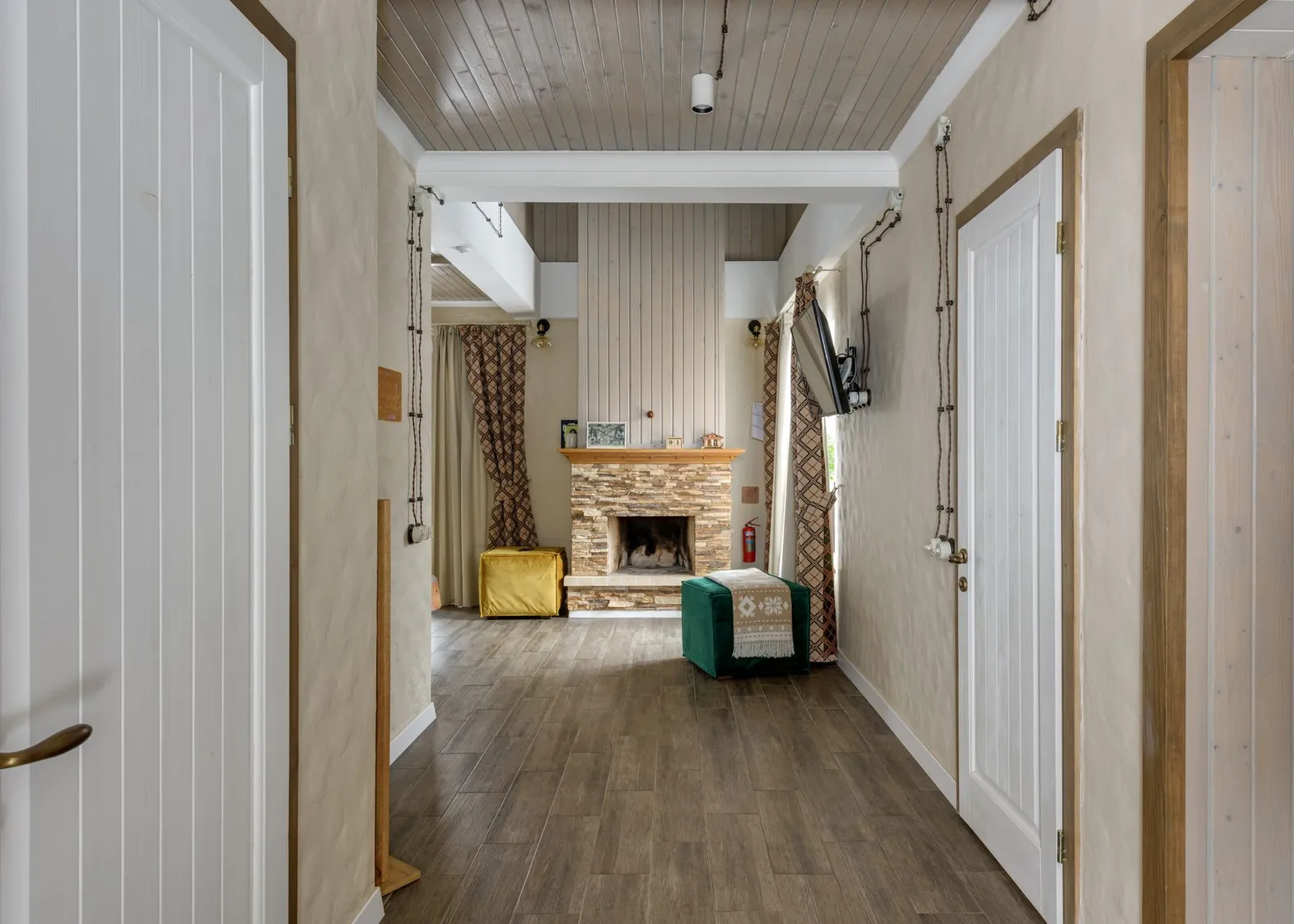
Most people don't choose their interior design style — it accumulates. They buy a sofa they liked at the store, a rug they found at a sample sale, a lamp a friend gave them, and eventually the room is a museum of decisions made in isolation that don't quite add up to a place that feels like home. Choosing a style deliberately — and understanding what that choice actually means — produces rooms that feel cohesive, personal, and livable in a way that accumulated interiors rarely do.
Why Style Choice Matters
A defined design style isn't about rigid rules — it's about giving yourself a filter. When you know your aesthetic direction, every purchase decision becomes easier: does this piece fit the filter or not? You spend less money on things you'll later regret and more on things that compound in value when they're surrounded by compatible pieces. A single beautiful linen sofa in a cohesive Scandinavian room is worth more to the space than five accumulated sofas in five competing styles.
The goal isn't to pick a style and never deviate. It's to give your instincts a north star.
Step 1: Take Stock of What You Already Love
Before any style research, go through your phone's saved images, your Pinterest boards, and any room you remember loving — in a hotel, a friend's house, a restaurant, or a magazine. What are those rooms' common threads?
Note these specific attributes:
- Color temperature: Are the rooms you love warm (creams, taupes, terracottas) or cool (whites, grays, blues)?
- Clutter tolerance: Are the rooms visually spare and minimal, or are they richly layered with art, books, and objects?
- Material preference: Do you gravitate toward natural wood and stone, or sleek lacquer and glass?
- Pattern appetite: Are the rooms solidly colored with textural interest, or do they use patterns (geometric, organic, floral)?
- Era reference: Do the furnishings feel contemporary, mid-century, traditional, or mixed?
Your pattern of preferences across these five dimensions will point reliably toward one or two style families.
Step 2: Understand the Main Style Families
Modern Minimalist
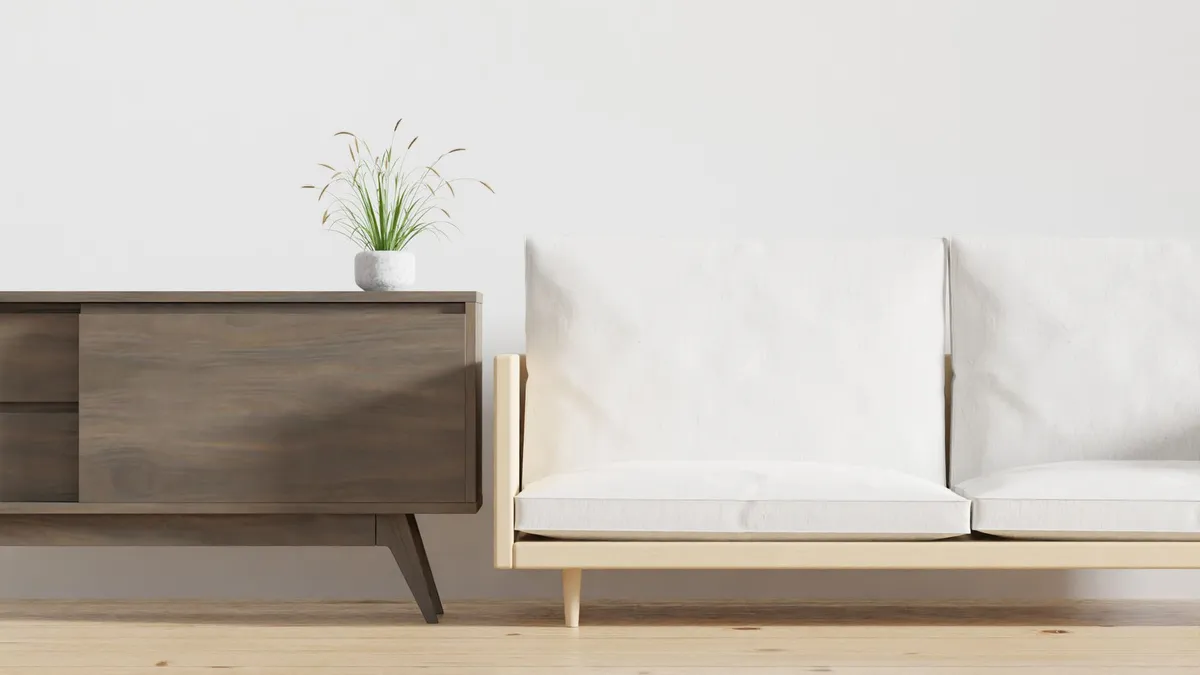
Defined by reduction: fewer pieces, each selected with great care. Neutral palette dominated by white, light gray, and natural wood. Clean-lined furniture without decorative detail. The quality of materials matters more than the quantity of objects. Good for: people who feel calmed by visual quiet and are disciplined about acquiring things. Challenging for: families with children, people who collect, people who need visual warmth to feel comfortable. See modern minimalist room renders.
Scandinavian
Often confused with modern minimalist, but warmer and more human. White and gray walls as the backdrop, but with more wood, more textile, more plant life. Furniture has graceful rather than severe lines; hygge (Danish coziness) is the animating concept. Good for: people who want simplicity but not austerity. Works across nearly all room types and house styles. See Scandinavian style examples.
Transitional
The deliberate balance between traditional warmth and contemporary clarity. Traditional shapes in contemporary materials, or contemporary shapes in traditional textures. The most widely applicable style for American homes because it ages well and appeals to the broadest range of aesthetics. Good for: mixed households, resale preparation, people who don't want to commit to a strong stylistic position.
Industrial
Raw materials — exposed brick, concrete, metal — with minimal softening. Originated in converted loft spaces but now applied in residential contexts through exposed beams, black-metal fixtures, reclaimed wood, and leather. Good for: urban spaces, people who like masculine aesthetics and honest material expression. Less successful in: suburban family homes, small rooms without architectural features to anchor it. See industrial style renders.
Bohemian
Pattern-forward, globally sourced, richly layered. Kilim rugs, macrame, velvet, global textiles, plants everywhere, vintage furniture, and personal collections on display. The most personal style — uniquely difficult to replicate because it's built from genuine accumulation rather than curation. Good for: people who collect, have traveled widely, or are visual maximalists. Requires discipline about quality within abundance or it reads as clutter.
Traditional/Classical
Period references (Colonial, Georgian, Federal, Victorian) with characteristic molding, symmetry, and formality. Dark wood finishes, patterned upholstery, and architectural detail. Good for: historically significant homes, people who value craft and permanence over trend. Challenging in: contemporary open-plan homes, very small spaces.
Step 3: Factor in Your Architecture
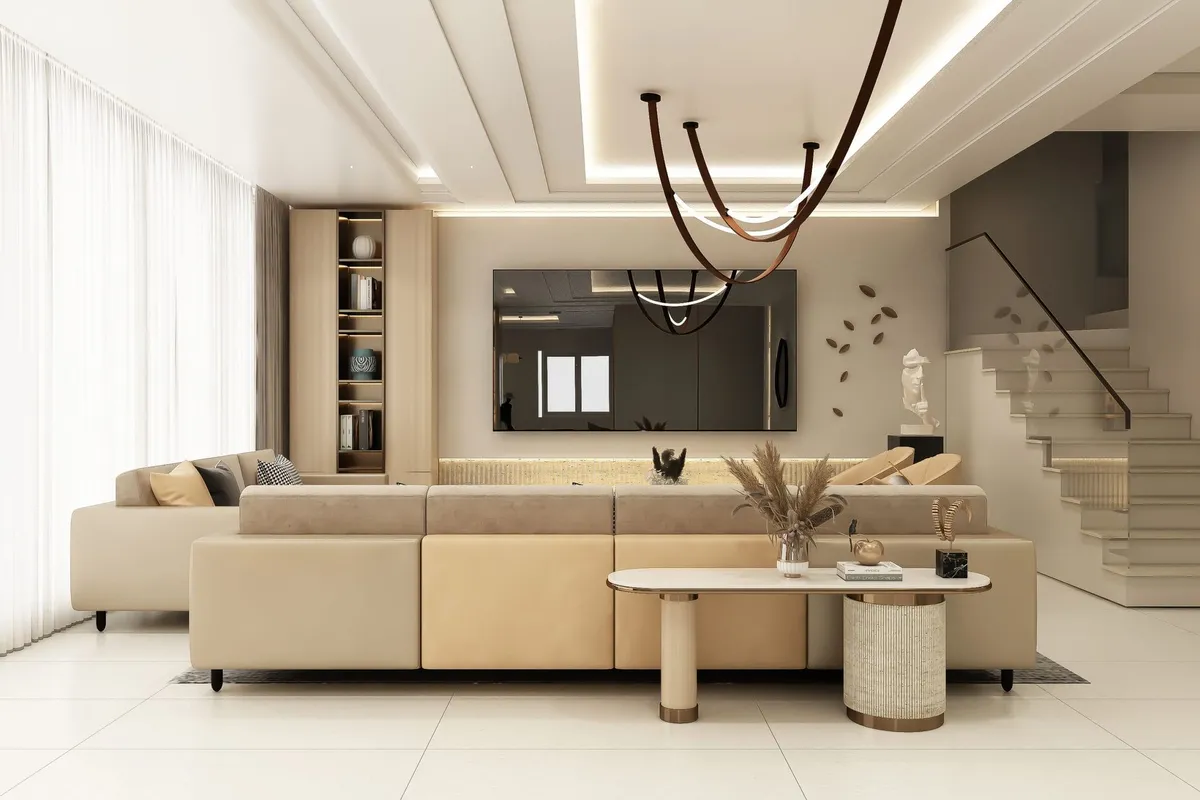
Your home's architecture should inform but not dictate your style choice. The general principle: work with the structure rather than against it.
- An 1890s craftsman bungalow resists cold modern minimalism but embraces transitional, bohemian, and Arts & Crafts aesthetics that honor its history
- A 1960s split-level with original hardwood floors is a natural candidate for mid-century modern — the style the house was designed to accommodate
- A 2010s open-plan contemporary works best with modern minimalist, Scandinavian, or transitional styles that respect the architectural clarity
- A loft or converted industrial space makes industrial and bohemian styles feel native rather than forced
Contradicting the architecture is possible and sometimes produces interesting results, but it requires more budget and skill to execute successfully.
Step 4: Test Before You Commit
Here's where AI visualization changes everything. Before buying furniture, repainting walls, or starting a renovation, you can test multiple style directions in your actual room with your actual architecture and light.
Upload a photo of any room to RoomRenovation.AI's free render tool and apply two or three style directions you're considering. The visual result in your specific space will tell you more definitively than any mood board or style quiz whether the aesthetic is right for your room. A style that feels exciting in magazine photos may feel wrong in your particular room's light or scale — and you'd rather know that before spending $3,000 on a sofa.
The design dashboard lets you iterate across all 30+ available styles on the same photo in minutes. Use it as a style shortlist tool: anything that doesn't pass the "does this feel right in my room" test gets eliminated; what remains is your actual shortlist.
Step 5: Layer Gradually
Even after choosing a style direction, the wisest implementation is gradual. Start with the foundation pieces that define the room — sofa, rug, primary light fixture — in the chosen style. Live with those for a few months before adding accessories and art. This prevents over-purchasing and allows the style to develop with your actual life in the room rather than against it.
Common Style-Choosing Mistakes
- Choosing for trend, not for yourself: Japandi was everywhere in 2022–2024. If it suits you, excellent. If you chose it because it was everywhere, it will feel dated in five years while your neighbor who chose a style she genuinely loves still lives happily in it.
- Choosing one style for the whole house: A house's different rooms have different characters and uses. The living room can be Scandinavian, the bedroom more bohemian, and the kitchen transitional. Consistent material threads (wood tone, metal finish, color temperature) unify a house even when specific styles vary by room.
- Skipping the architecture assessment: The biggest design mistakes happen when a chosen aesthetic fights the building's structure. Read the architecture first.
- Deciding without visualization: "I can picture it" is rarely as reliable as actually seeing it. Test before you commit.
FAQ
What if I like multiple styles? Most people do. The solution is to identify which style is primary (dominant in the main spaces) and which elements of other styles will appear as accents. A room that is 80% Scandinavian with 20% bohemian textile influence is coherent. An equal mix of four styles is usually not.
How do I know if a style will work in my specific room? Test it with AI visualization. Upload your room photo and apply the styles you're considering. Your gut reaction to the render in your actual space is the most reliable information available.
Can I change my style later? Yes, but furniture investments are expensive to reverse. Choosing carefully at the beginning — with real visualization rather than abstract preference — saves money and regret over time.
Does the style I choose affect my home's resale value? Transitional and modern minimalist styles have the broadest buyer appeal and produce the best staging outcomes for resale. Highly personal or maximalist styles may complicate resale but are perfectly valid for homes you plan to occupy long-term.
Where can I see examples of each style applied to real rooms? The RoomRenovation.AI examples gallery shows before/after renders across the full style library, all applied to real uploaded room photos. It's the most practical style comparison resource available for real-room contexts.