
Minimalist Interior Design: Declutter Your Space and Your Mind
Minimalist interior design beyond empty rooms. Intentional curation, hidden storage, and the psychology of spaces that promote calm and clarity.
RoomRenovation.AI Team
Updated March 22, 2026
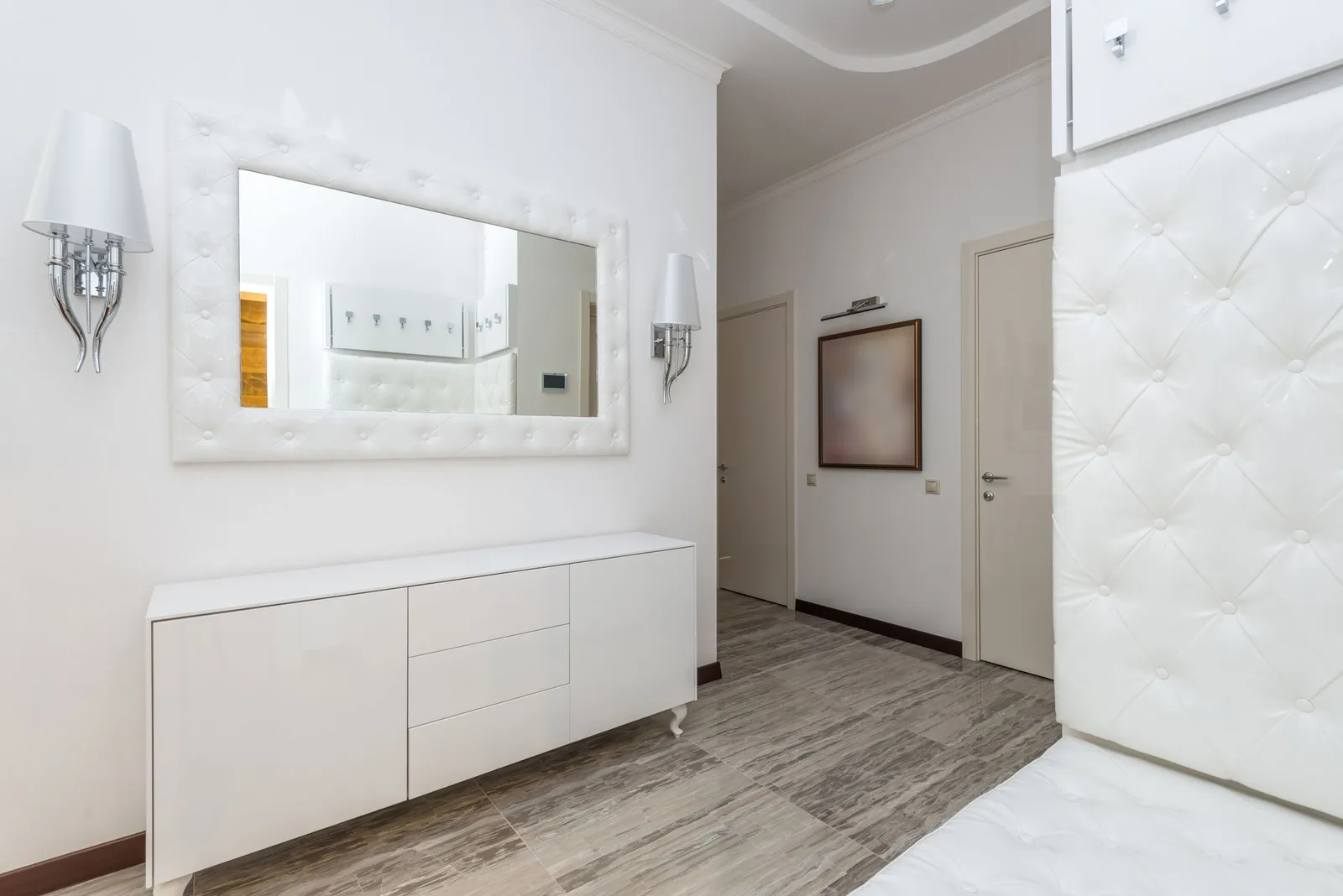
Minimalist interior design is widely misunderstood. The popular image — a white box with one black chair — has given the style a reputation for coldness and impracticality that most genuine minimalists would reject. True minimalism isn't about emptiness. It's about the disciplined curation of what belongs in a space so that everything present serves a purpose and earns its place. Done well, a minimalist room is one of the most psychologically restoring environments a home can offer.
The Psychology of Minimalist Spaces
Research on environmental psychology consistently shows that visual clutter elevates cortisol levels, disrupts focus, and degrades sleep quality. Our visual field is processed constantly and unconsciously — every object in a room demands a small fraction of cognitive attention even when we're not looking at it. Minimalist design reduces this baseline cognitive load, which is why entering a well-designed minimalist room often produces an immediate physical sense of relief.
This isn't a lifestyle philosophy — it's architecture. The goal is a space that gives the brain permission to rest.
What Minimalism Is Not
- Not cheap. Removing decorative distraction means every remaining surface and object is scrutinized. A bare minimalist room requires high-quality finishes, materials, and construction. You can't hide behind accessories.
- Not cold. Warmth comes from material choice, not quantity. A room of white walls, natural linen, and warm wood grain is minimalist and deeply warm.
- Not impersonal. A curated collection of five objects that genuinely matter is more personal than a shelf of fifty items selected by algorithm.
- Not rigid. There are expressly warm, layered, soft, and even colorful minimalist interiors. The constraint is intentionality, not style.
The Core Toolkit: How Minimalist Rooms Are Built
Concealed Storage
The single biggest enabler of minimalist interiors is storage that disappears. Built-in cabinetry flush with the wall, handleless drawers, pocket doors, and furniture with integrated storage allow life to happen while surfaces stay clear. A minimalist home isn't a home without possessions — it's a home where possessions have been given invisible homes.
Prioritize storage investment: deep kitchen cabinets to the ceiling, built-in bedroom wardrobes, living room media walls with concealed compartments. These pay dividends every day.
Tonal Color Palette
Minimalist rooms typically work within a compressed palette — two or three tones that vary in lightness rather than hue. Warm whites (Benjamin Moore White Dove, Sherwin-Williams Alabaster), warm grays, and natural linen tones are the most common base. Accent color is introduced through a single textile — a deep navy pillow, an olive throw, a terracotta ceramic — rather than distributed across every surface.
Monochromatic doesn't mean monotone. The texture variation within a single-color room — rough plaster, smooth paint, woven linen, matte wood — creates visual richness without color complexity.
Deliberate Material Choices
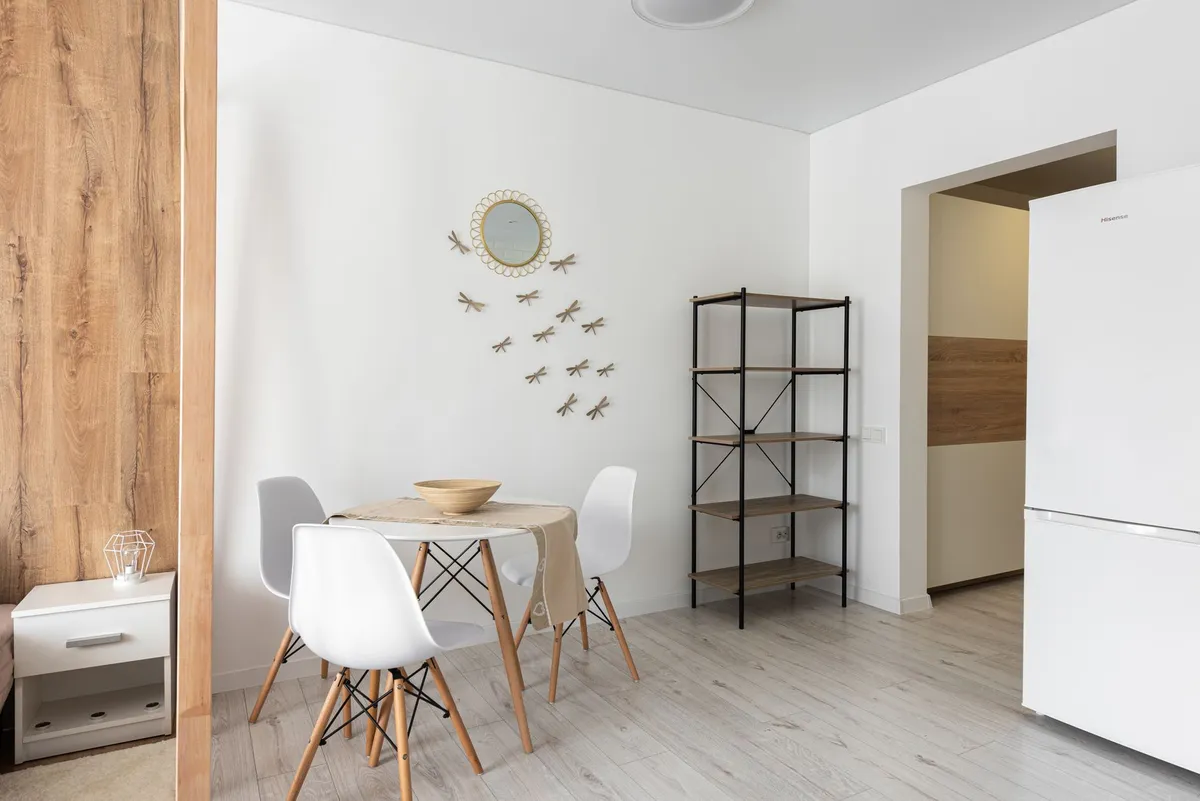
Minimalist rooms invest in fewer, higher-quality materials. The contrast between a bare plaster wall and a single piece of live-edge oak is more compelling than a wall covered in art. Standard material choices in minimalist interiors:
- Poured concrete or large-format stone for floors and counters
- White or light plaster or limewash for walls — texture replaces pattern
- Natural linen, cotton, and wool for all textiles
- Solid wood (often pale — ash, oak, maple) for furniture
- Matte-finish hardware in brushed steel or matte black
Furniture with Restraint
Minimalist furniture does more with less: a sofa that floats off the floor (opening visual space below), a dining table without a runner or centerpiece, a bed with a simple headboard and no footboard. The emphasis is always on the silhouette — the precise line of the piece — rather than surface detail.
A minimalist room typically has fewer furniture pieces than a conventional room, positioned with more deliberate spacing. The negative space between pieces is as intentional as the pieces themselves.
How to Declutter for a Minimalist Interior
The editing process is where minimalism is actually created. A useful framework:
- Remove everything from a surface. Then add back only items you genuinely use or genuinely love — not both criteria, either one is sufficient.
- Audit by category, not room. Gather all books, then decide which stay. Gather all decorative objects, then curate. Category editing prevents reshuffling rather than reducing.
- Give clutter a home, not a pile. If something doesn't have a designated storage home, either create one or remove the item. Piles accumulate where homes don't exist.
- Batch regularly-used items. Remote controls, chargers, and daily-use items belong in a single concealed tray or drawer. When everything has exactly one home, surfaces stay clear without effort.
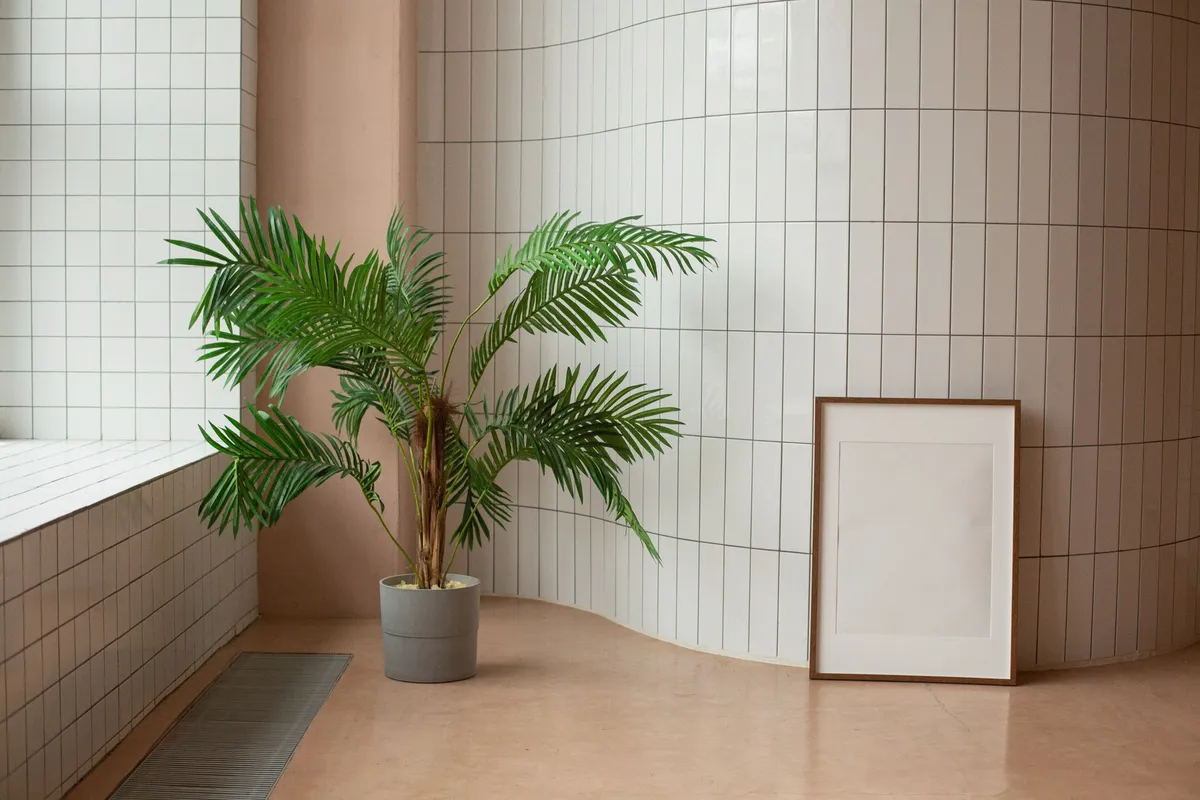
Minimalism in Different Rooms
Minimalist Living Room
A single sofa or sectional in a neutral tone, one coffee table, one lamp, and one piece of art sized correctly for the wall. The TV is either hidden in a flush-mounted media unit or embraced as a design object (OLED screens in black are less intrusive). Bookshelves with curated books only — remove decorative objects that aren't books. See our living room design guide for additional layout ideas.
Minimalist Kitchen
Handleless cabinets to the ceiling, integrated appliances behind panel doors, a single deep sink rather than double, and a clear counter with only the appliances used daily. Stone or engineered quartz in a single slab with minimal veining is the ideal countertop. See the kitchen renovation cost guide for budget planning. Explore our kitchen design guides for more.
Minimalist Bedroom
The bedroom benefits most from minimalist treatment because sleep quality is directly affected by visual environment. A platform bed, two matching nightstands, one lamp per side, and wardrobes with full-height flush doors are the foundation. Nothing under the bed (a common storage solution that visually clutters even when closed). No open shelving. Our bedroom design section covers material and layout options in depth.
Minimalist vs. Modern Minimalist vs. Japanese Minimalism
These three related but distinct approaches share the reduction principle but express it differently:
- Western minimalism: Often whiter, harder, and more architectural. Associated with European design from Mies van der Rohe forward.
- Modern minimalist: Softer version that integrates warm textures and organic shapes. The most popular contemporary variant. See our modern minimalist style guide.
- Japanese (wabi-sabi): Values imperfection and natural aging. Asymmetry, handmade objects, and organic materials. Warmer and more textured than Western minimalism.
Before Committing: Visualize First
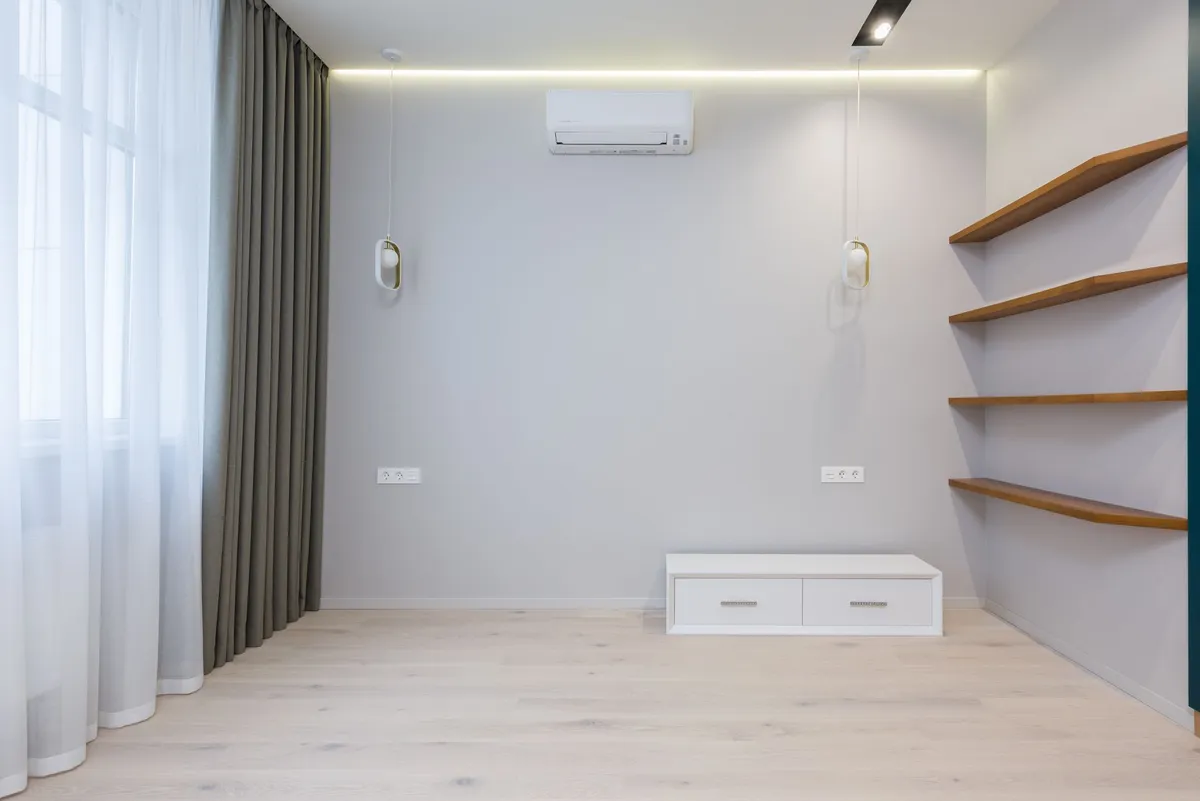
Minimalism is high-stakes in terms of design decisions — with fewer items in the room, each piece matters more. Before committing to a paint color, a sofa, or a full built-in cabinet project, use RoomRenovation.ai to see how the changes look in your actual room. Visualizing a stripped-back interior with your real walls and floors prevents costly mistakes. Pricing starts at just a few dollars — far less than a single furniture return.
FAQ
How do I live minimally with kids? The key is storage, not elimination. Children's rooms work well with toy storage behind closed cabinet doors, rotated toy selection (not all toys accessible at once), and purpose-built mudroom or entryway storage for school gear. The rest of the home can remain minimalist when children's items have genuine homes.
Can minimalism work in a rented apartment? Absolutely — and it's arguably easier because you can't make permanent changes. Focus on concealed storage furniture (beds with drawers, ottomans with storage), editing your belongings, and keeping surfaces deliberately clear. Removable wallpaper can add warmth to a white rental wall without damaging it.
What's the most common minimalist design mistake? Going too cold rather than too empty. Rooms that strip color and pattern but don't invest in warm materials (natural linen, solid wood, woven textures) end up feeling clinical rather than calm. Material quality and tactility are the antidote.
How does minimalism affect home resale value? Well-executed minimalism — particularly concealed storage, quality finishes, and clean architectural details — consistently commands premium pricing in real estate. What hurts resale is cheap minimalism: bare walls with no investment in quality, or sparse rooms that read as unfinished rather than intentional.
Do minimalist homes require a full renovation? No. The most impactful minimalist changes are subtractive: removing clutter, editing shelves, and clearing surfaces cost nothing. A paint change to warm white and the addition of a single quality linen throw can substantially shift a room's feel. Structural changes (built-in cabinetry, recessed shelving) enhance the style but aren't required to get started.