
Budget Bathroom Renovation Ideas: Transform Your Space for Less
Discover affordable bathroom renovation ideas that deliver maximum impact without maximum cost. Learn budget-friendly upgrades and smart design tricks.
RoomRenovation.AI Team
Updated March 31, 2026
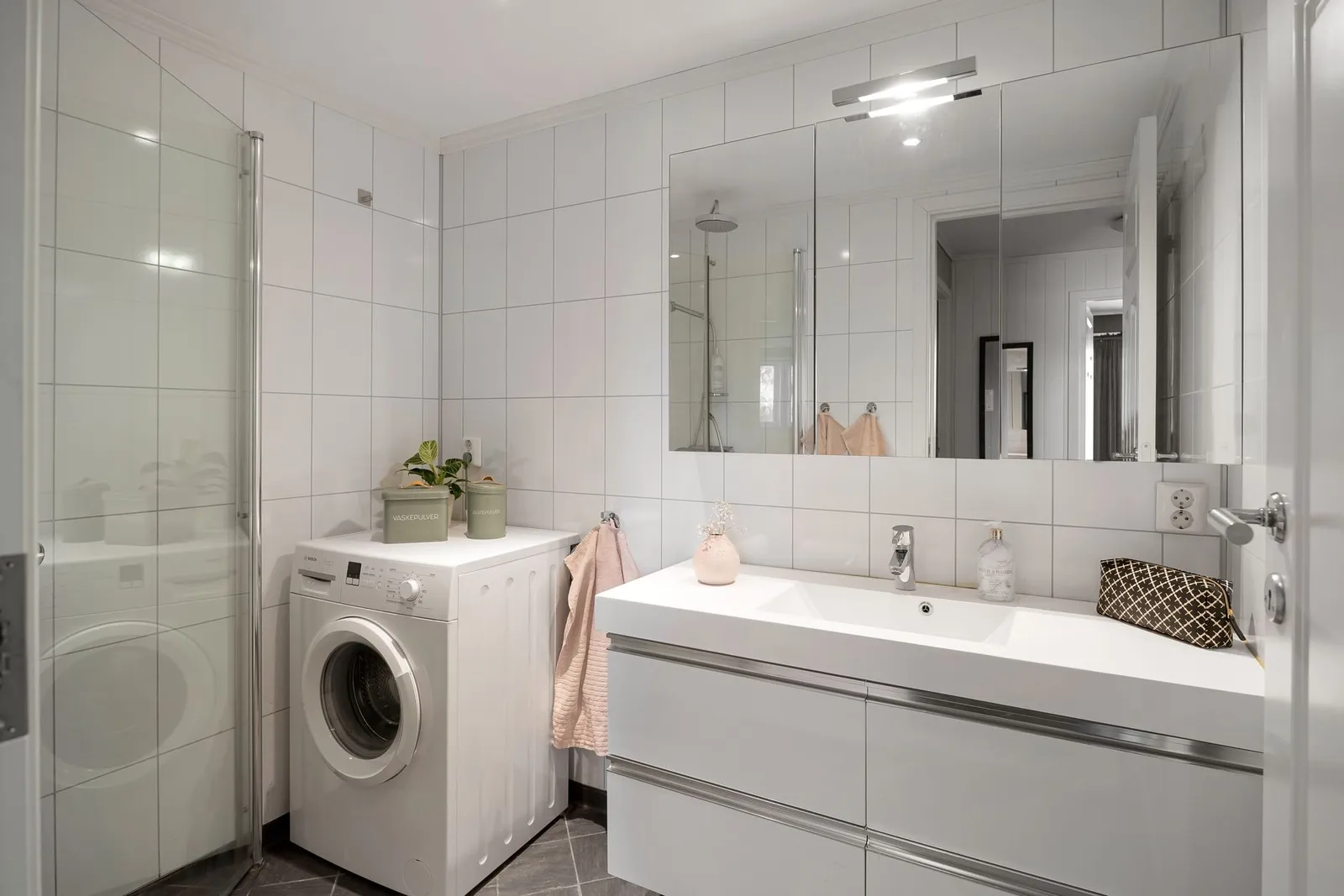
A budget bathroom renovation succeeds or fails on prioritization — not on how little you spend, but on spending precisely where it counts. The bathroom is one of the highest-utility rooms in any home, and the gap between a bathroom that works well and one that actively bothers you every morning is often bridged by targeted investments rather than wholesale gut renovations. This guide gives you a clear-eyed breakdown of what actually transforms a bathroom at different budget levels, with realistic 2026 costs and the decision logic behind each choice.
Setting a Realistic Budget: What Different Amounts Actually Buy
Before diving into tactics, calibrate expectations for what different budget levels deliver:
- Under $1,000: A meaningful cosmetic refresh — new paint, updated hardware, better lighting, accessories. The bones stay exactly as they are, but the room looks significantly more intentional and current.
- $1,000–$3,500: A targeted upgrade — one fixture category (vanity, or shower, or flooring), paint, hardware, and accessories. The room's character changes substantially in the areas you address.
- $3,500–$8,000: A material renovation — new vanity, new flooring, updated shower surround or tub refinishing, new fixtures, new lighting. The room feels genuinely new without moving plumbing or walls.
- $8,000–$15,000: A full cosmetic gut — everything except plumbing rough-in and structural walls is new. The room looks professionally designed and thoroughly modernized.
Moving plumbing, reconfiguring the floor plan, or adding plumbing where none existed (adding a second sink, adding a shower to a tub-only bathroom) adds $5,000–$15,000+ to any tier above. Avoid moving plumbing in a budget renovation.
The Highest-ROI Changes in a Budget Bathroom
Every bathroom renovation decision should be filtered through one question: will someone notice this, and will it bother them if it's wrong? Here's the impact hierarchy:
1. Lighting (Maximum Impact, Frequently Neglected)
The single most transformative and most frequently overlooked bathroom upgrade is lighting. A bathroom with good bones but poor light reads as dim, unflattering, and uninviting regardless of every other finish. Conversely, a dated bathroom with excellent layered lighting looks better than it should.
What good bathroom lighting requires:
- Vanity lighting positioned at eye level on both sides of the mirror (side-mounted sconces) or across the top of the mirror — never a single overhead fixture casting shadows on your face
- Warm bulb color temperature: 2700K–3000K. "Daylight" bulbs above 4000K are unflattering on skin tones and make the room feel clinical
- Sufficient foot-candles for grooming tasks — a minimum of 75 FC at face height
Budget for quality vanity lighting: $100–$400 for the fixture, $100–$250 for electrician installation if needed. Total: $200–$650 for the highest-ROI change in the room.
2. Vanity and Sink
The vanity is the focal point of most bathrooms and the object that most immediately communicates "updated" or "dated." Changing it without moving plumbing is entirely practical:
- Budget route ($200–$500): Paint existing wood-framed cabinets in a new color (navy, forest green, warm white), replace hardware, and add a new countertop slab or vessel sink on top of existing structure. Transformation is dramatic at minimal cost.
- Mid-range ($500–$1,200): A new freestanding or wall-mounted vanity from a home improvement retailer, with integrated sink and a quartz or cultured marble top. Most are designed for DIY installation by connecting to existing supply lines in the same location.
- Higher-end ($1,200–$3,000+): Custom or semi-custom vanity with solid wood construction, premium top material (natural stone, concrete, solid hardwood), and quality hardware. Worth it if you're planning to stay in the home long-term.
3. Flooring
Bathroom flooring is high-frequency contact material — you step on it barefoot every day, and its condition is immediately apparent. Replacing it without touching plumbing is generally straightforward:
- Luxury vinyl tile ($2–$6/sq ft material): Waterproof, durable, comfortable underfoot, and available in realistic tile, wood, and stone looks. The most practical budget flooring choice. DIY-installable in a small bathroom in a day.
- Peel-and-stick vinyl tile ($0.50–$2/sq ft): Genuinely suitable for a short-term or rental renovation. Not for a long-term installation but acceptable for 3–5 years.
- Porcelain or ceramic tile ($3–$8/sq ft material, $5–$15/sq ft installed): The durable long-term choice. Requires more skill to install and costs more, but lasts decades with proper grout maintenance. Encaustic cement tiles (Moroccan or geometric patterns) add significantly more character at $8–$15/sq ft.
For a 50-square-foot bathroom floor in luxury vinyl tile with professional installation, total cost is typically $400–$800. The same floor in porcelain with professional installation runs $750–$1,500.
4. Shower and Tub: Refinishing vs. Replacing
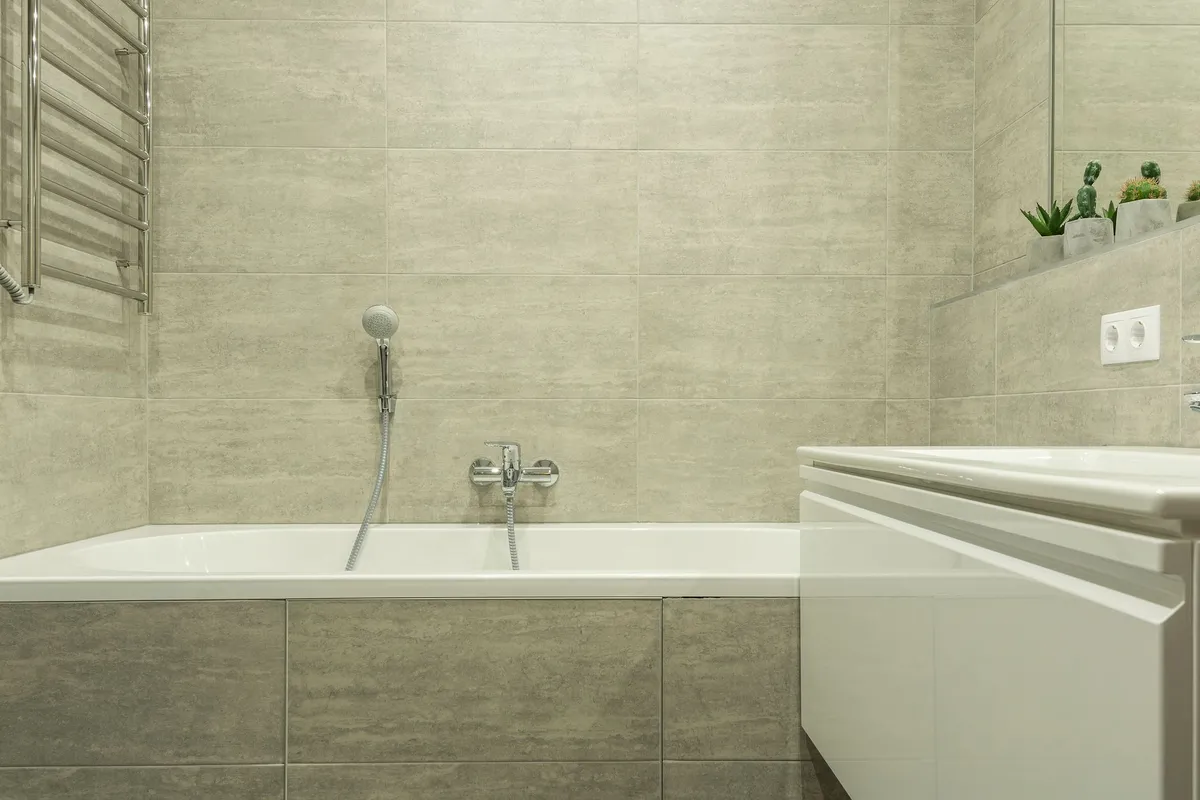
Replacing a bathtub is expensive when you factor in demolition, plumbing adjustments, new surround tiling, and installation — typically $3,000–$8,000 for a midrange replacement. In a budget renovation, professional refinishing (also called reglazing or resurfacing) is often the right answer:
- A professional bathtub refinish returns a stained, discolored, or crazed porcelain or fiberglass tub to a clean, smooth, new-looking finish
- Cost: $350–$650 for the tub, $200–$500 for a shower floor
- Durability: 5–10 years with proper care (no abrasive cleaners, re-caulk annually)
- Not appropriate for cracks, structural damage, or severely compromised fiberglass
For shower tile surrounds that are in poor condition, a budget alternative is tile paint (Rust-Oleum Tub & Tile paint system) at $50–$100 material cost, though professional application and durability is significantly lower than professional refinishing.
Smart Material Choices That Punch Above Budget
Subway Tile: Affordable Elegance
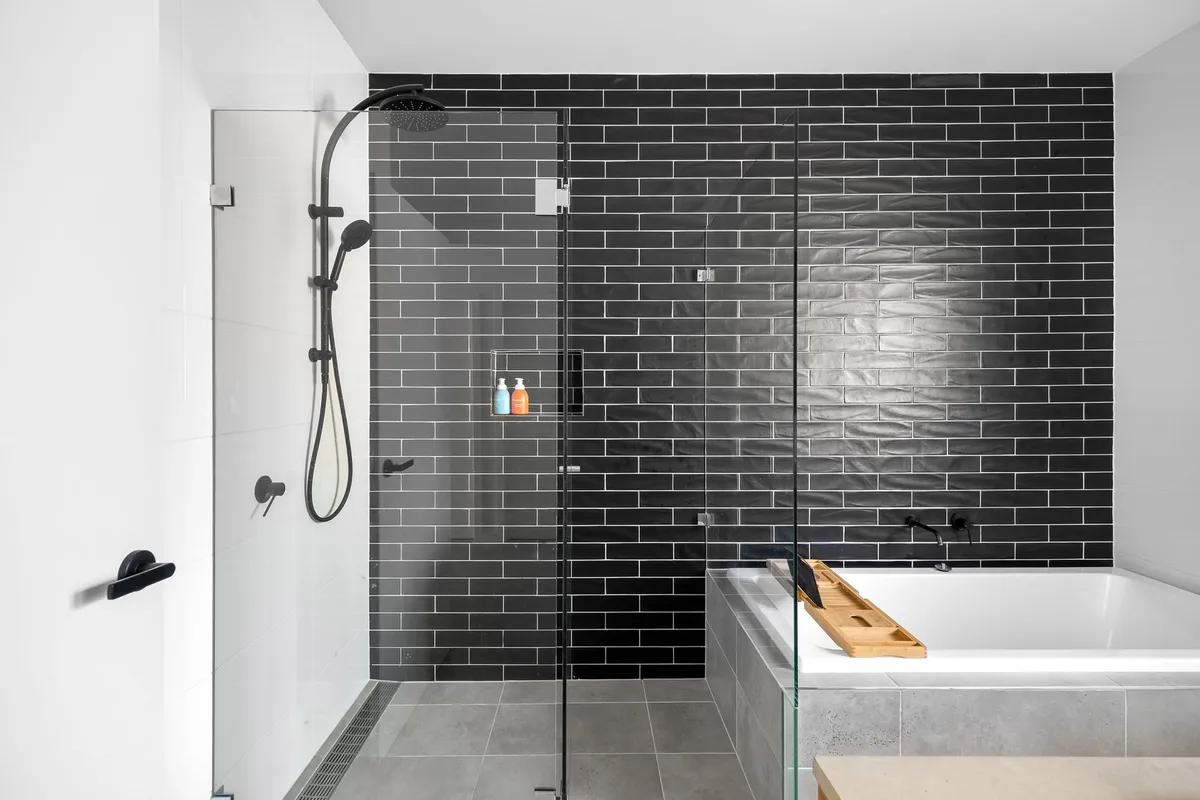
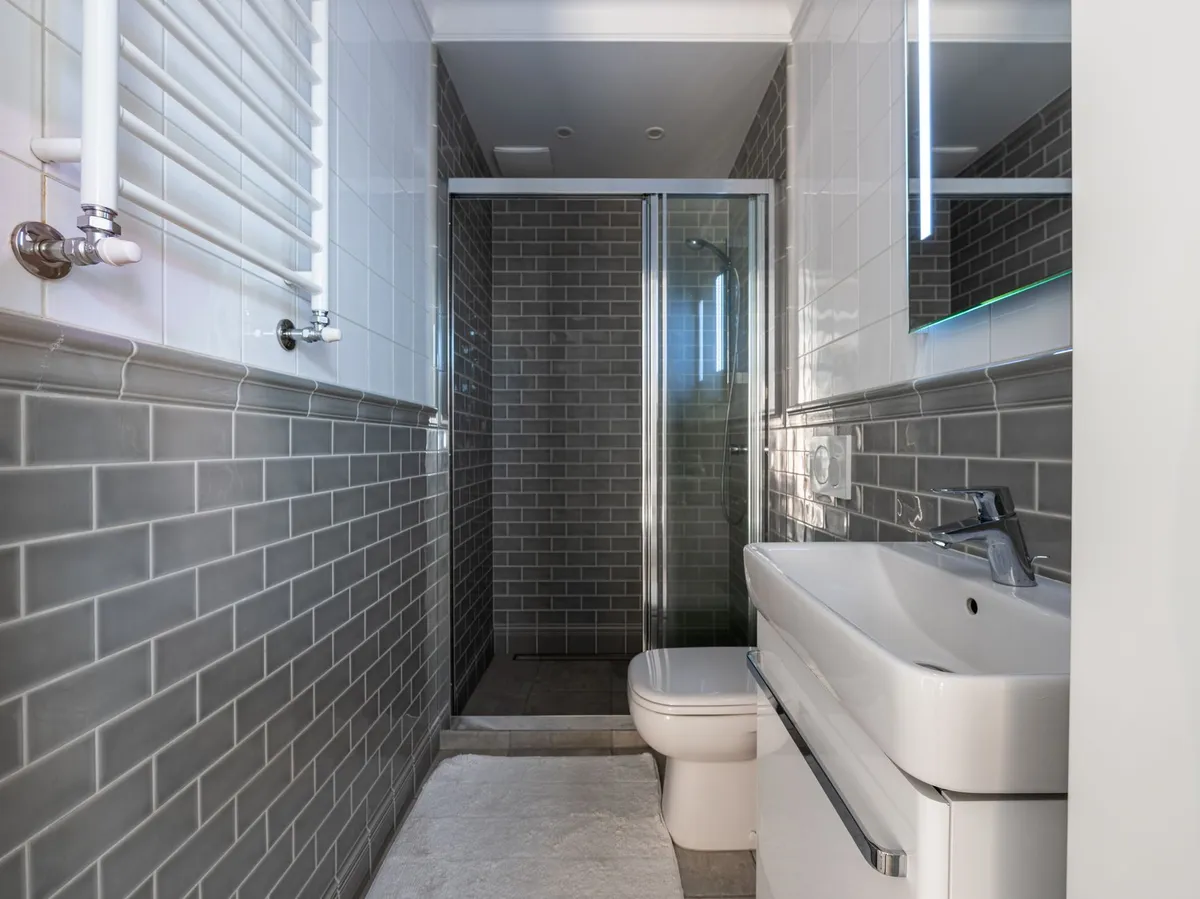
3×6 inch white ceramic subway tile remains the most cost-effective tile choice that reads as intentional and elegant rather than cheap. At $1.50–$4 per square foot, it works for shower surrounds, bathtub alcoves, and backsplashes. The grout color makes a significant difference — charcoal or dark gray grout with white tile creates a bold grid pattern; white grout with white tile creates a seamless, expansive look.
Faucet: Where Quality Pays
A quality faucet at $150–$300 outlasts a budget faucet at $50–$100 by many years, requires fewer cartridge replacements, and looks substantially better. Brands like Delta, Moen, and Kohler at the mid-range offer lifetime warranties on valves and cartridges. This is one budget category where spending at the midpoint rather than the minimum makes long-term sense.
Mirror: The Room-Expanding Move
A large mirror — 60 to 80 percent of the width of the vanity — does more for a bathroom's perceived size and quality than almost any other single element. Frameless mirrors (just the glass, polished edges) are the most space-efficient and visually clean option. A framed mirror with matte black, warm brass, or brushed nickel finish adds style. Cost: $80–$400 for a quality 36×48-inch mirror.
Where Budget Bathroom Renovations Go Wrong
The most common ways a budget renovation underperforms its investment:
- Mixing metal finishes inconsistently. Polished chrome faucet with matte black towel bar and brushed nickel lighting creates visual noise. Choose one finish and apply it consistently across all hardware.
- Skipping the floor in a surface renovation. New vanity and fresh paint on old worn tile flooring creates a jarring mismatch that makes the new elements look worse rather than better.
- Under-investing in caulk and grout work. Discolored, moldy grout lines undermine everything else in the room. Re-grouting or grout-painting is a half-day DIY project that makes an enormous difference for $30–$100 in materials.
- Overlooking ventilation. A bathroom exhaust fan that's inadequate or non-functional causes moisture damage that destroys renovations within a few years. Replace or upgrade the fan before spending on finishes.
Visualize Before You Buy
One of the most effective tools for a budget bathroom renovation is AI visualization — seeing how different tile choices, vanity colors, and lighting configurations will look in your actual bathroom before you purchase anything. Upload a photo of your bathroom to RoomRenovation.ai and generate photorealistic renders of different renovation directions, from minimal updates to full transformations. Renders start at a few dollars — a small investment that can prevent much larger mistakes. For the full bathroom renovation cost picture, see our bathroom renovation cost guide.
Budget Bathroom Renovation Checklist by Tier
Under $1,000
- New paint (bathroom-specific moisture-resistant formula)
- Replace all hardware: towel bars, toilet paper holder, robe hooks
- New mirror (if current one is small or damaged)
- Better vanity lighting or bulb replacement to warm temperature
- New faucet if leaking or very dated
- Regrout floor tile and re-caulk all joints
- Coordinate accessories: soap dish, wastebasket, hand towels
$1,000–$3,500
Everything above, plus:
- New vanity (freestanding, wall-mounted, or repainted existing)
- New flooring (LVT preferred for budget)
- Bathtub or shower refinishing
- New toilet if current one is old, stained, or poor-flushing
- New shower curtain, rod, and rings (for shower/tub combos)
$3,500–$8,000
Everything above, plus:
- New tile floor (ceramic or porcelain, professionally installed)
- Shower surround tile or solid-surface panels
- New light fixture (statement piece, not just practical)
- New shower door or frameless glass enclosure replacing curtain
FAQ
What's the cheapest way to update a bathroom that feels dated but functions fine? Paint plus hardware plus lighting is the minimum-investment maximum-impact trio. For well under $500, new paint in a on-trend color (warm white, dusty sage, greige), new coordinated hardware set, and a warm-toned vanity lighting fixture transform the room's character without touching any fixtures or flooring.
Can I tile over existing tile to save money? Technically yes, in many cases — if the existing tile is flat, firmly bonded, and in good condition. The risk is that adding tile on tile raises the floor height, can create transition edge issues at doorways, and adds weight the subfloor wasn't designed for. A licensed tile setter can assess whether it's viable in your specific bathroom. In many budget renovations, luxury vinyl tile over existing tile is a more practical and reliable approach.
Is it worth hiring a designer for a budget bathroom renovation? For a straightforward cosmetic update, probably not. For a renovation in the $3,500–$8,000 range where material selection errors are costly to correct, a single 2-hour design consultation ($150–$300) can pay for itself by preventing wrong tile choices, mismatched finishes, or layout decisions you'll regret. Many kitchen and bath showrooms offer complimentary design consultation with purchase.
How long does a budget bathroom renovation typically take? A cosmetic refresh (paint, hardware, lighting, accessories) can be completed in a weekend. A mid-range renovation involving new flooring, vanity, and fixture replacement typically takes 3–7 days of professional work. A full gut (except plumbing move) runs 2–3 weeks. Plan for 20–30% more time than the initial estimate in all cases.